


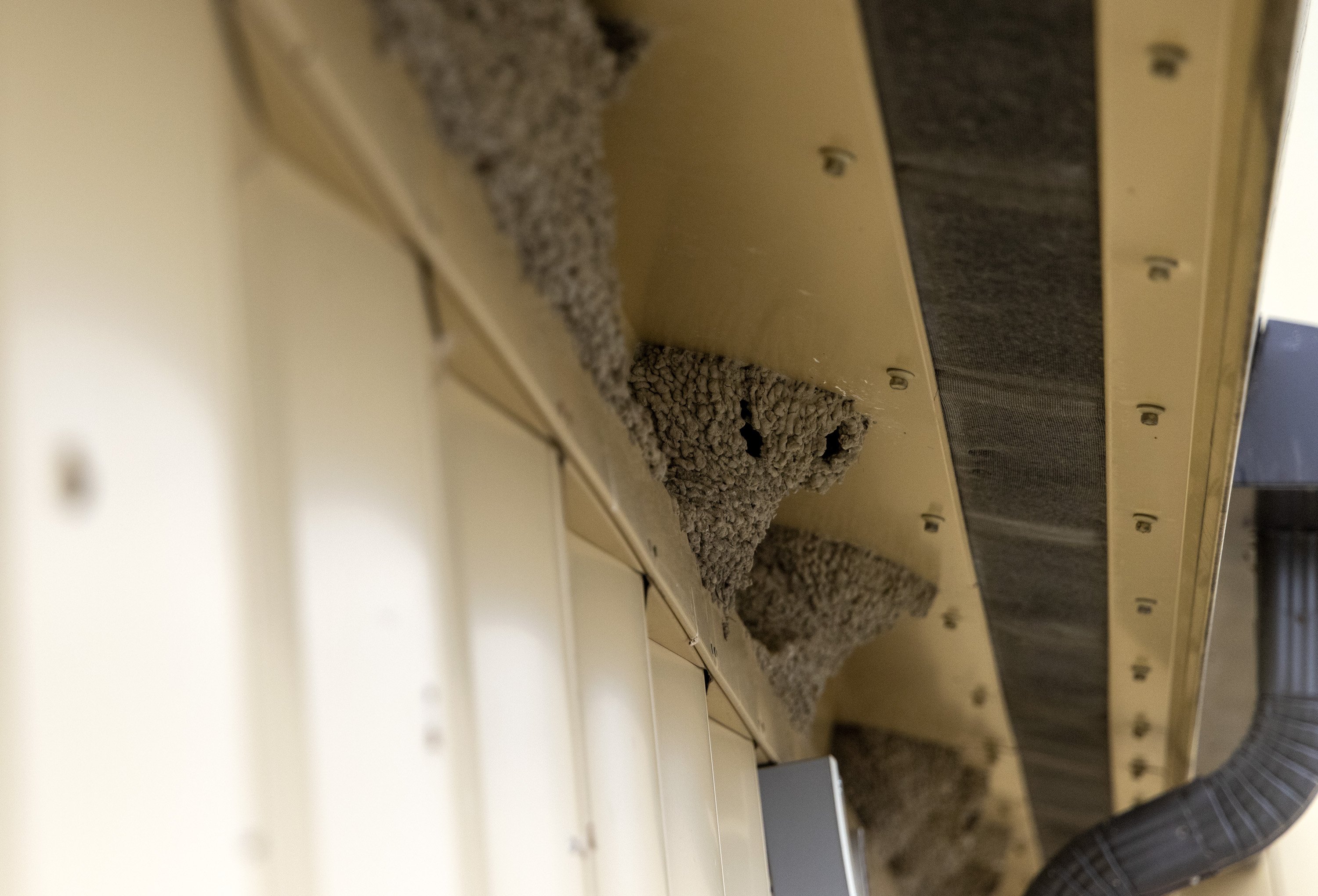
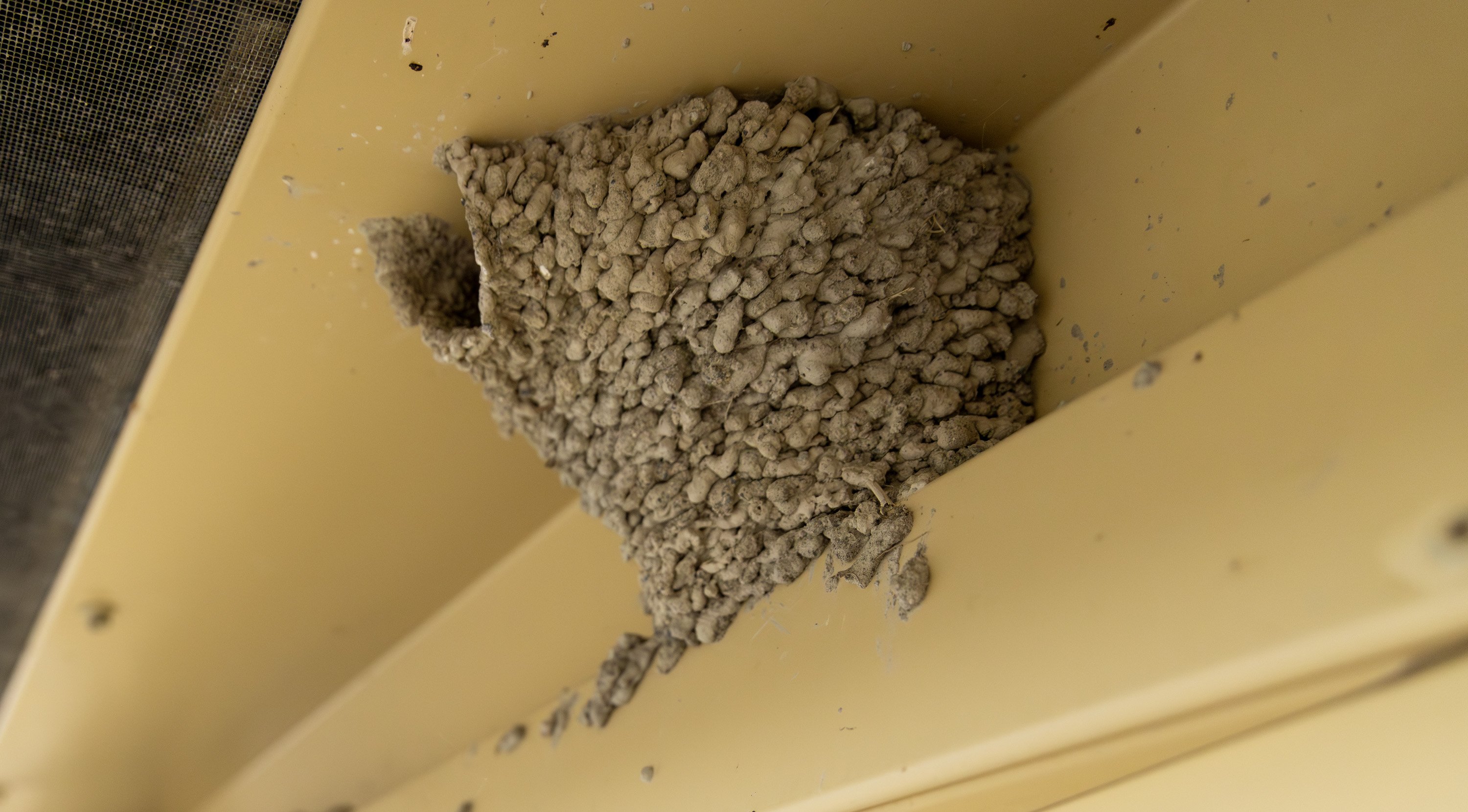
SKOWHEGAN — They look something like a wasps nest, but lumpier. Or some kind of oddly-shaped, avant-garde pottery. And sort of like a gourd.
These structures, which line the walls under the eaves of the former Bloomfield Elementary School in Skowhegan, are home to cliff swallows — small songbirds that build their nests from mud in large colonies.
And it just so happens that the Bloomfield building, now used for special education and career and technical programs, is home to what is believed to be one of the largest cliff swallow colonies in Maine. A group of Skowhegan Area High School students and a teacher are studying these nests to help state ornithologists who are looking at why Maine’s cliff swallow population — classified as “threatened” — is on the decline.
Kate Drummond, a chemistry and environmental science teacher at the high school, said she first became aware of the Bloomfield colony three years ago, when some nests were knocked down. The school’s Eco Team, which Drummond advises, this year has taken up studying the cliff swallow colony as its main focus.
Along with the study, the team is planning to make an educational sign about the birds and their distinctive homes.
“This is a unique project that is likely not happening at any other school in Maine,” Drummond said.
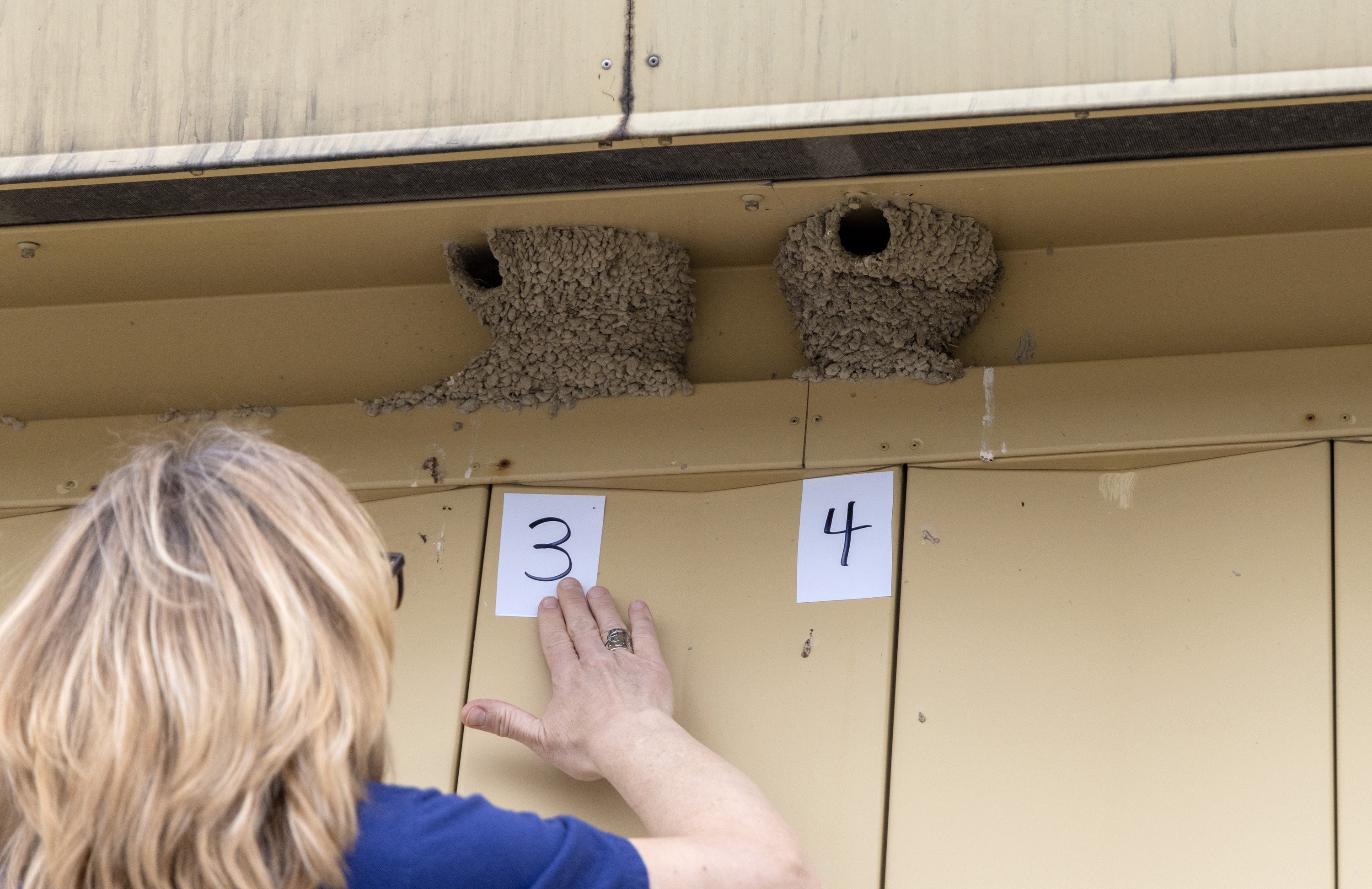
On Tuesday, Drummond and two Eco Team members, ninth-grader Kayla Burgess and 10th-grader Cora Oberg, both of Skowhegan, were out with a ladder labeling each nest with a magnetic number to prepare for monitoring efforts in the coming months.
At the top of the first wall they examined, about 50 feet long, they counted 20 nests. A dozen more were on the next wall, about 95 feet long.
Burgess and Oberg said they plan to return next week with Drummond to finish labeling the nests. A quick inspection of the building showed at least another 10 or so. Last year, there were 42 active nests, Drummond said.

The birds, which Drummond said migrate to South America in the winter, are due back by the first week of May. They typically summer in Skowhegan through the end of August, she said.
Drummond believes they are drawn to the Maine School Administrative District 54 campus because of the surrounding wetlands: The habitat provides mud for nests and insects to eat.
The data the Eco Team plans to collect for IF&W in the next few months includes the number of adult and juvenile birds, whether nests are active or inactive, detailed weather conditions and the presence of disturbances like dogs and construction.
“Really just the normal things for tracking,” Oberg said.

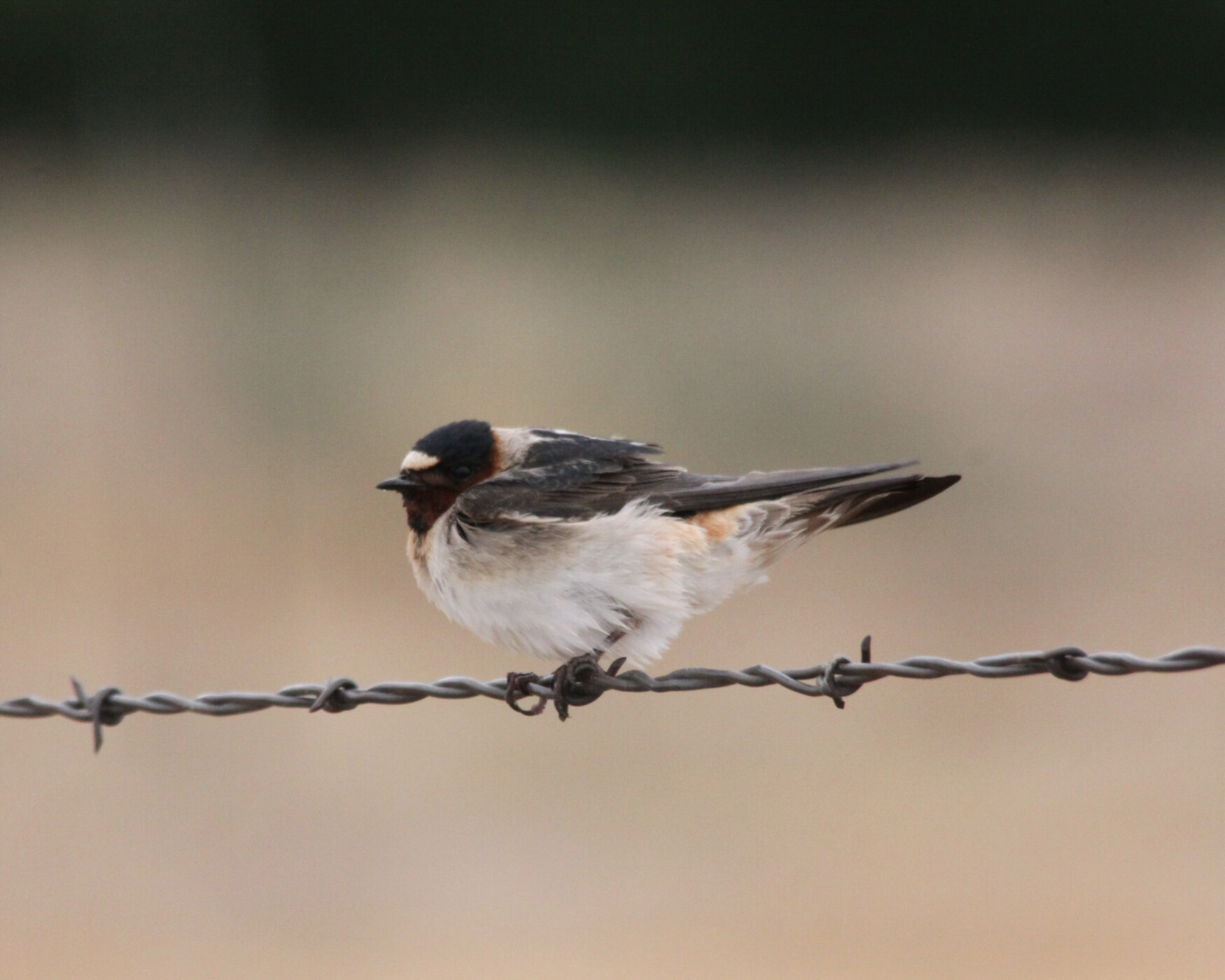
Historically, cliff swallows nested on cliffs near suitable mud and food sources, but now they nest on human-built structures like buildings, bridges, barns and culverts, according to the state’s 2025 Wildlife Action Plan. They have “dark iridescent upperparts, pale underparts, a buffy rump, a chestnut throat, and a distinctive tan-white forehead patch.”
The species’ population is on the decline due to removal of nests for maintenance, competition with invasive species and other pressures like prey declines and pesticide exposure, the plan says.
Nest colonies in other parts of the country can reach hundreds or thousands, according to Dr. Mackenzie Roeder, a songbird specialist with the Maine Department of Inland Fisheries and Wildlife. In the Northeast, Roeder said, colonies are typically 10 nests or fewer. Some with 50-100 have been documented in Maine, although those are uncommon.
Roeder said via email the study of the Skowhegan colony is serving as a pilot for broader statewide monitoring efforts. The department this year is launching a community science initiative called Maine Nest Quest, encouraging people to find and report nesting colonies of cliff and bank swallows.
Maine Nest Quest is part of a larger project focused on declining populations of aerial insectivores, or birds that eat insects, which will guide monitoring and conservation efforts for the next five to 10 years, Roeder said.
“The goal is to better understand the “conservation landscape” for these species — where they are occurring statewide, what structures they’re using for nesting, what features they key in on when selecting nest sites, and what they’re eating during the breeding season,” Roeder said. “From there, we can identify priority colonies for more detailed monitoring.
“These swallows are experiencing steep population declines, and there isn’t a single clear cause, it’s likely a combination of factors. By monitoring colonies like this one, we can track things like nest success, return rates, and timing, and begin to understand what may be driving those declines in Maine.”
Roeder called Skowhegan’s Eco Team “incredible conservation partners and advocates.”
“That kind of local involvement is critical for long-term conservation success,” she said, “and all of their hard work helps us to collect crucial data and refine monitoring approaches that we will expand statewide.”

We invite you to add your comments. We encourage a thoughtful exchange of ideas and information on this website. By joining the conversation, you are agreeing to our commenting policy and terms of use. More information is found on our FAQs. You can update your screen name on the member's center.
Comments are managed by our staff during regular business hours Monday through Friday as well as limited hours on Saturday and Sunday. Comments held for moderation outside of those hours may take longer to approve.
Join the Conversation
Please sign into your CentralMaine.com account to participate in conversations below. If you do not have an account, you can subscribe here. Questions? Please see our FAQs.