

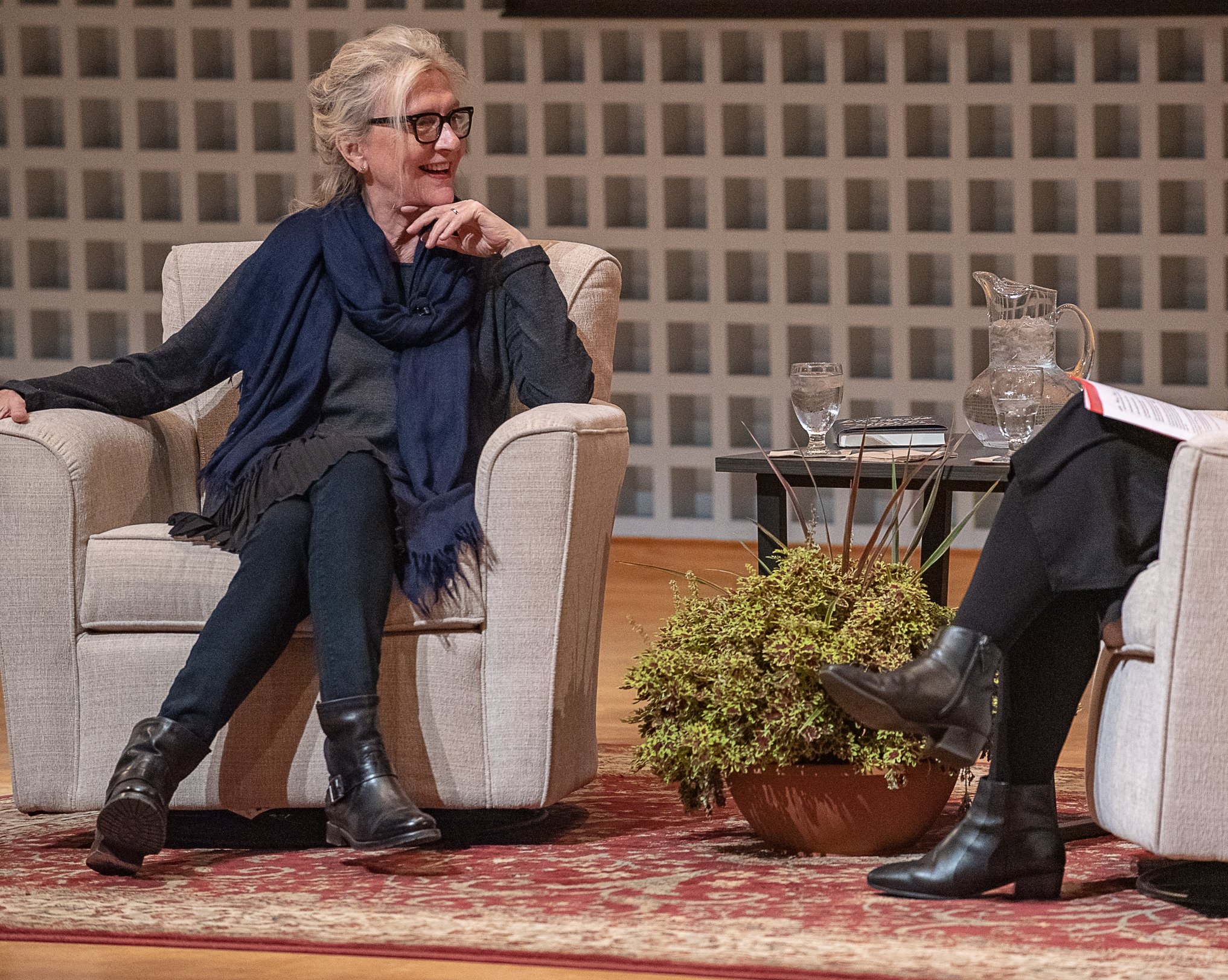
Elizabeth Strout’s books might be known for recognizable Maine settings, but her stories always start with a character.
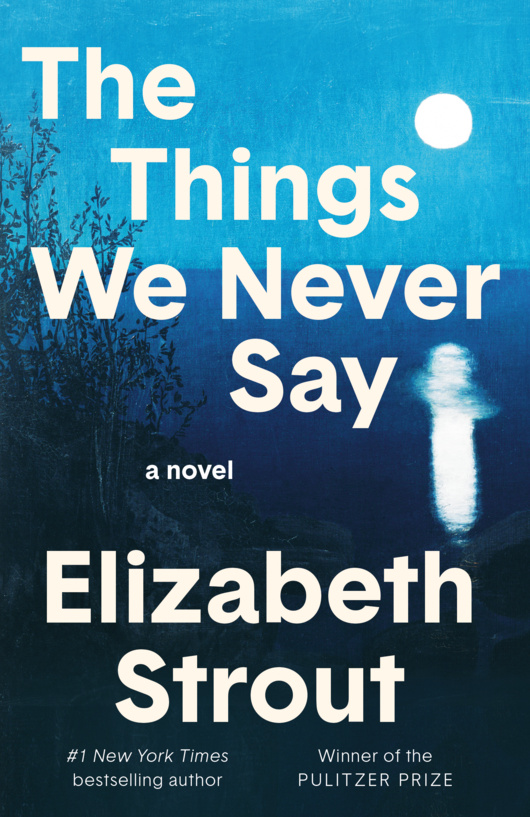
She says the title characer of “Olive Kitteridge,” her Pulitizer Prize-winning 2008 novel, just appeared to her out of nowhere and the story followed. Her latest novel, “The Things We Never Say,” followed a similar development path. The book goes on sale May 5.
The character of Artie Dam, a nice and seemingly ordinary guy, came to Strout after seeing an obituary photo. He’s a high school history teacher in his late 50s, living along the Massachusetts coast, sailing his boat on the weekends and dealing with secrets and self-discovery.
Strout’s last book, “Tell Me Everything,” came out in 2024 and combined her best-known characters and Maine settings, the coastal town of Crosby and the mill town of Shirley Falls. Besides Olive Kitteridge, that book included Lucy Barton, who was the focus of “My Name is Lucy Barton” (2016) and three other novels. Bob Burgess first appeared in “The Burgess Boys” (2013) and two other novels before showing up in “Tell Me Everything.”
Strout’s first novel was “Amy and Isabelle” in 1998, and she’s written 10 others since. “Olive Kitteridge” won the Pulitzer Prize in 2009 and was adapted into an HBO miniseries starring Frances McDormand. “Tell Me Everything” was announced as an Oprah’s Book Club pick when it came out, as was “Olive, Again” in 2019.
Strout, 70, was born in Portland and grew up splitting her time between Harpswell and Durham, New Hampshire, where her father was a professor whose focus was parasitology — the study of parasites — at the University of New Hampshire. She got an English degree from Bates College in Lewiston in 1977, then a law degree from Syracuse University, and worked briefly in legal services before moving to New York City and becoming an adjunct professor of English at Manhattan Community College.
For years, Strout has split her time between New York and a home on the Midcoast, but now spends more time in Maine.

When her new book comes out, she’ll be doing a few talks and events, mostly in the Northeast. She’ll be appearing May 13 at the The Music Hall in Portsmouth, New Hampshire, just over the Maine border.
In advance of her events, Strout took a few minutes to talk about her new book. Answers have been edited for length and clarity.
Where did you get the idea for Artie?
A friend of mine in Ithaca sent me a page of obituaries, that’s just the kind of thing he does once in a while. I just remember there was a man’s face and his last name was Damm, with two M’s, and he looked so pleasant. He had these big wire-rimmed glasses, and I can still see his face in that photo. As Henry James used to say, there’s a germ (of an idea) that hangs around for a while before you really get going, right? I think that must have been the germ of Artie Dam. And then I made his name Dam, because I didn’t want it to have two M’s.
You’ve said in describing Artie that ordinary people are extraordinary. What do you mean by that?
I’ve always felt that about people. I see the most average-looking person walking down the street and think, “Oh, what’s going on in your head?” I really do think that ordinary people are extraordinary and Artie is just one more of those characters who seems to be quite ordinary. And then as he gets older he discovers certain things, and his life is rearranged slightly, and he comes to understand more of the world than he thought he had.

Do you feel like this book is darker than some of your others?
The kind of literature that I’m trying to write has very much to do with a person’s time and place in history. I think the time in history (present day) for Artie is darker. And yet I’m always looking for what I call moments of grace in my work. I think that in spite of the dark times that he’s living through, he manages to find real moments of grace, moments of real connection.
How did you decide to set the story in Massachusetts, with new characters?
I just thought, “I’m done for the moment with all you people, bye, bye.” I thought I’d go down the coast, because the coast is familiar to me, but Massachusetts is culturally quite different. So it felt like a fresh start. It was refreshing.
Did you do any research?
Jim (Tierney, her husband) and I drove down. We took a few days and drove up and down the coast of Massachusetts, because I always need visuals to work from. We found a private road. We saw somebody who was probably the wealthy neighbor. We just saw things that were helpful for me. There were towns there with those really large, old houses that are very close to the sidewalk. That’s something I don’t see in Maine.

Do you feel the same way about Artie as Olive or Lucy?
Whatever character I’m writing about, I always really love. With Artie, I think it’s because he’s so essentially good. I always find it interesting to write about good people, though it’s much easier to write about badly behaved people. But I think that he’s just a good person trying to live his life, who, at the beginning doesn’t really have too much of a sense of who he is.
I’m always character driven and they just arrive in different ways. Olive really just showed up, just boom, she was right there. Lucy arrived as a voice, which is why I had to write it in the first person. It was a very breathy voice, which was distinctly hers.
Do you think you’ll do more books with Lucy or Olive?
I just don’t know. I think Lucy’s pretty much gone. But they’ve always felt gone for me every time I finished a book, and then they’d show up again.
Do you know what your next book will be about?
I’m sort of playing around with something, but I’m not sure yet.
Do you enjoy talking about your books at live events?
I’ve always enjoyed questions from the audience, they’re frequently very touching and interesting. They bring up things I hadn’t realized I was giving to a reader. A lot of these have been switched over to conversations, which I find easier than readings, which were always a little tense-making for me. I wasn’t sure if people would listen to me up there alone. I feel safer with somebody there to help me and get me going.

We invite you to add your comments. We encourage a thoughtful exchange of ideas and information on this website. By joining the conversation, you are agreeing to our commenting policy and terms of use. More information is found on our FAQs. You can update your screen name on the member's center.
Comments are managed by our staff during regular business hours Monday through Friday as well as limited hours on Saturday and Sunday. Comments held for moderation outside of those hours may take longer to approve.
Join the Conversation
Please sign into your CentralMaine.com account to participate in conversations below. If you do not have an account, you can register or subscribe. Questions? Please see our FAQs.