


High school sports coverage is proudly supported by Maine State Credit Union.

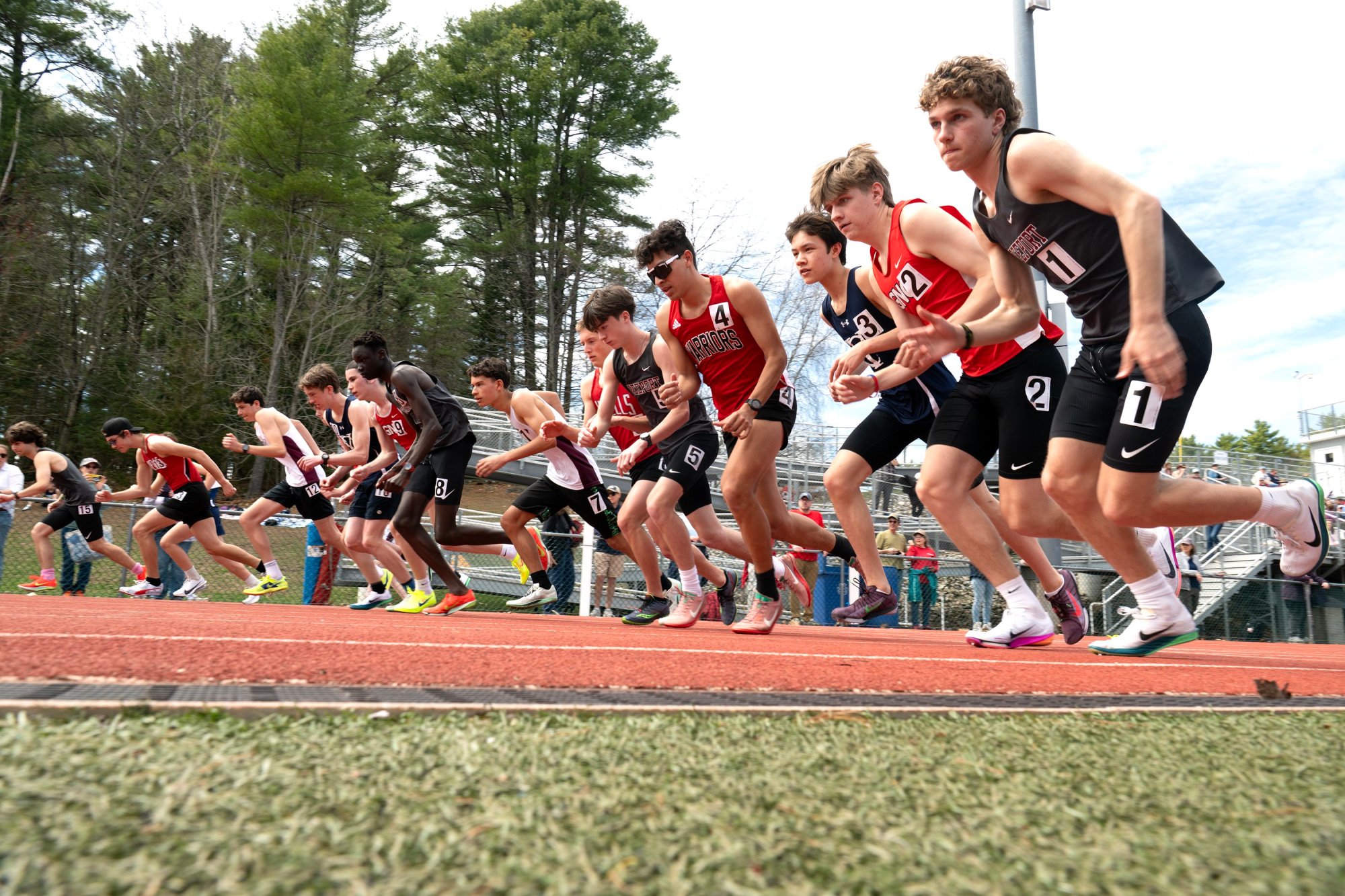
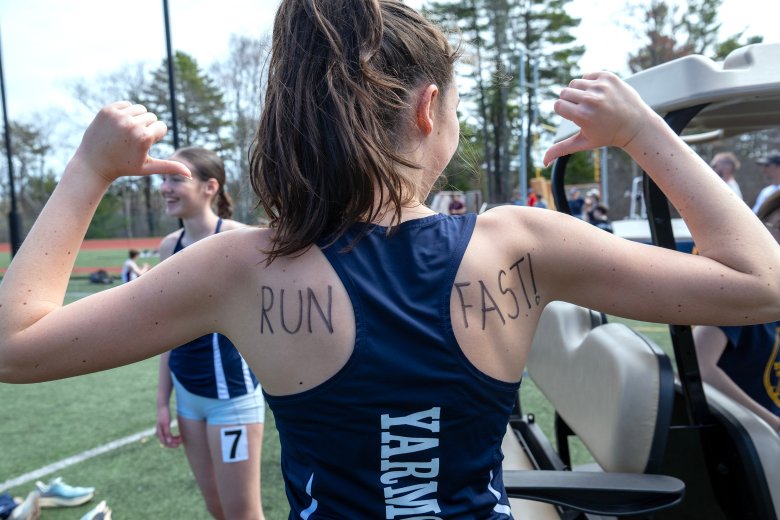
They call it the “pain cave,” and early last week, Madelyn Hutchins and the rest of the York track and field team’s distance runners were certainly feeling it.
During a particularly grueling day of practice, one runner remarked to coach Matt Weber that the classic mid-to-late-race discomfort that long runs produce was setting in. Weber’s response, Hutchins recalled, was one that resonated with the Wildcats.
“He said, ‘Everyone is in pain; it’s about who has the best poker face,’” Hutchins said. “I think that’s something you just have to remember because everyone is going through the same pain as you. … It’s really a mental thing; and if you let yourself think about it and say, ‘This is awful,’ you’re going to get in your own head.”
That, athletes say, is an aspect of distance running that’s often overlooked. While proper training and physical ability are certainly major pieces of the equation, it’s the mental side of it that runners count on to carry them through long, grueling races.
Few, if any, active Maine high school distance runners have won more races than Marshwood senior Henri Rivard. After claiming the Class A 800-meter title last spring, Rivard ran to the Class A cross country championship in the fall, then won 15 of 16 races — including the mile and 800 at the Class A championship and mile at the New England championships — during this winter’s indoor season.
That level of winning, Rivard said, requires suffering, and great runners must be willing to get into that pain cave to prevail. The Varsity Maine Boys Indoor Track Athlete of the Year uses the halfway mark as his inflection point — the more he pushes, the closer he is to a release from the pain.
“If you can make it through half of the race, the rest of it is all mental,” Rivard said. “At the end of the day, we know that the pain only lasts a minute or two after the race before you’re fine, so it’s just about having that mentality to be able to get yourself through that.”
Lee Harper, Madison’s cross country coach and assistant track coach, says distance running is 90 percent mental. Harper urges his runners to test the limits of their capabilities, and as they gain more and more experience, those athletes tend to surprise themselves.
“Your body can always go more than you think it can,” Harper said. “There’s a lot of pain involved, and you have to build up over time, but you can almost always do more than you think you’re capable of. Competition is where you see that, so if you do your preparation, when you have setbacks, you learn to work through those.”
Madison sophomore Craig Paine and York senior Zoe Carroll believe distance running is 80 percent mental and 20 percent physical. Waterville senior Charley Flees puts the mental-physical split at 70-30, Madison senior BryAnna Hagopian calls it 60-40, while Freeport senior Alex Gilbert and Waterville junior Owen Beale-Tate say it’s 50-50.
“It’s very mental — you’ve got to be mentally tough,” Beale-Tate said. “When you’ve gone seven laps and have one more, you’ve got to realize that it’s all-or-nothing and get deep in the pain cave. That’s one thing my coach has always talked to me about: how deep you can get in the pain cave and how long you can manage to stay in it once you get there.”
The mental challenges of distance running begin before the race even starts. That’s the point, with the entire race ahead of her, when Madison junior Leah Harper feels the most anxious. As runners step up to the starting line, the thought of a long race ahead can be daunting.
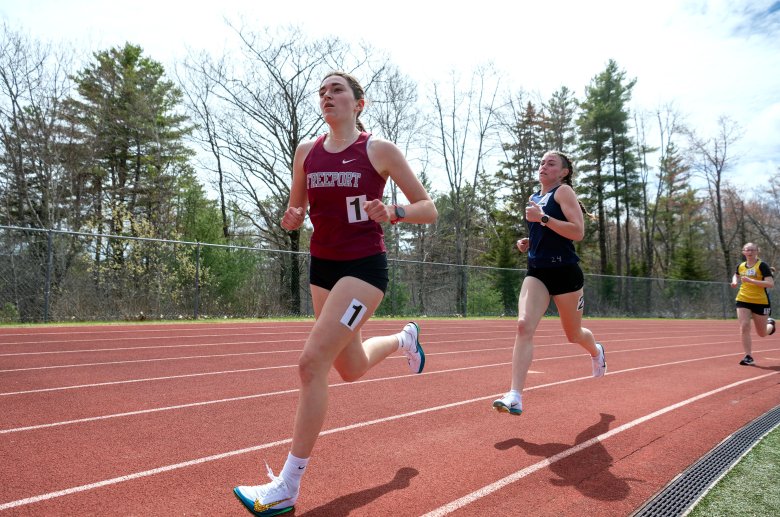
To make it seem manageable, Carroll breaks down each race into quarters. In the 3,200, for instance, she first tells herself to get through the opening 800. After the second 800, Carroll can focus on the third, which she deems toughest. Once that’s in the rearview mirror, the Northwestern University commit is in the zone for the final 800.
“In the opening 800, I just try to find my pace, and from there, I just take it piece-by-piece,” Carroll said. “I think compartmentalizing it is important. If you think about it all as one race, it can get really overwhelming, but if you think about it in terms of each 800 or each lap, it’s really helpful.”

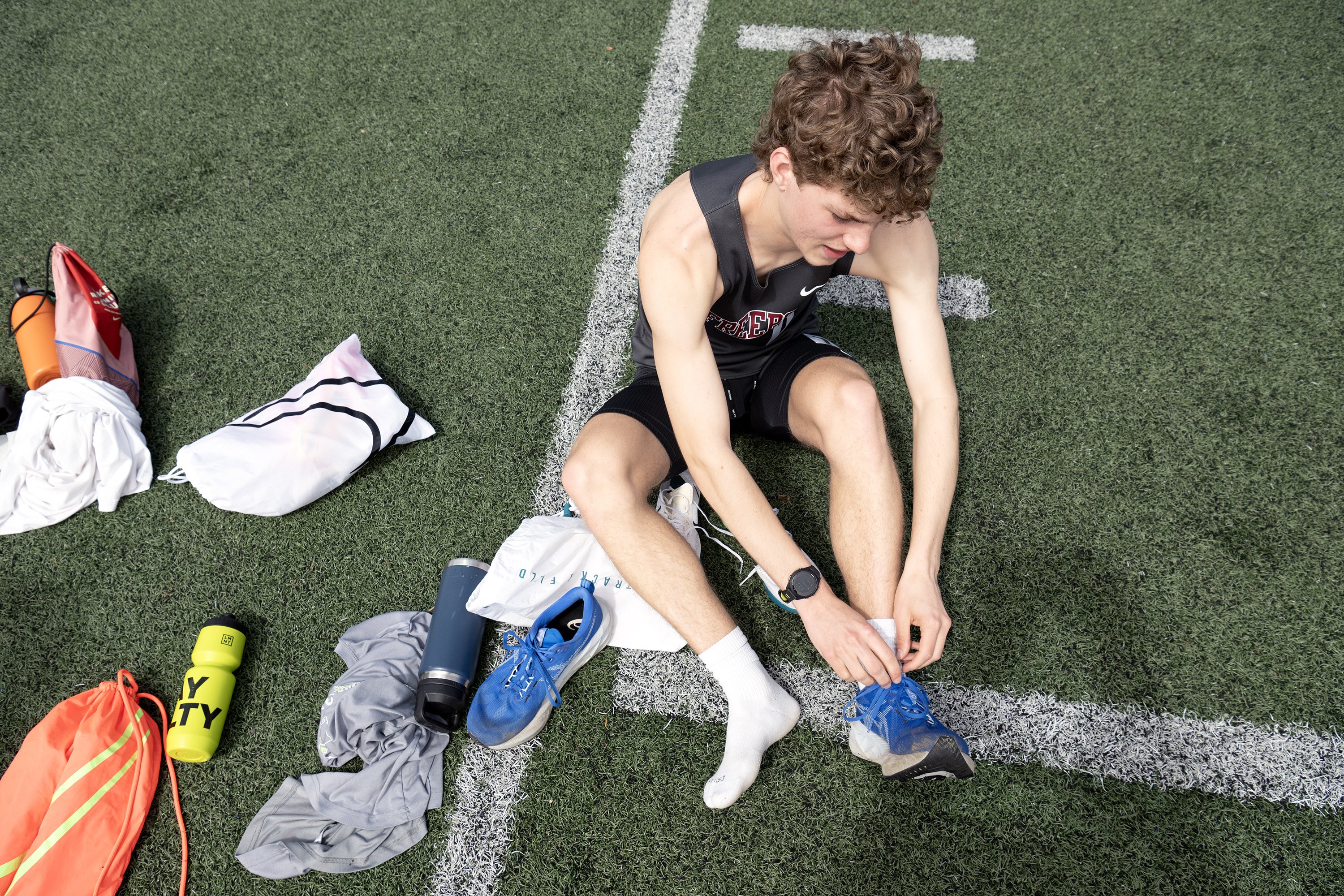
Gilbert, who also breaks races into quarter segments, is mindful of how he’s going to approach a long day. At last year’s Class B meet, he ran the 800, 1,600 and 3,200 while also competing on Freeport’s 1,600 relay team. Those four separate bursts add up to 3 1/2 miles of running, which requires more than physical prowess.
“You have to have your head in the right place and focus on having good recovery throughout the week,” Gilbert said. “In between events, it’s just making sure I can get a little bit of a cooldown in as well as some water and whatever food I can hold. It definitely takes a mental approach.”
Mental fortitude goes a long way in one of the most isolating sports. There’s no dugout or bench from which to bond with your fellow athletes, nor is there a teammate to whom you must pass a ball, puck or baton. Instead, good runners are all alone for long stretches of time.
Yet that’s precisely what many distance runners like about sports such as track and cross country. Hagopian, who won the Class C cross country title in the fall, said that the state of mind that comes from a long run around the track or through the woods is her raison d’être.
“In training, when you’re on a nice run, you can just get lost in your mind thinking,” Hagopian said. “When you’re done, it’s just such a good feeling — satisfactory — and when you can translate that to a race, it feels even better.”






We invite you to add your comments. We encourage a thoughtful exchange of ideas and information on this website. By joining the conversation, you are agreeing to our commenting policy and terms of use. More information is found on our FAQs. You can update your screen name on the member's center.
Comments are managed by our staff during regular business hours Monday through Friday as well as limited hours on Saturday and Sunday. Comments held for moderation outside of those hours may take longer to approve.
Join the Conversation
Please sign into your CentralMaine.com account to participate in conversations below. If you do not have an account, you can subscribe here. Questions? Please see our FAQs.