

By most accounts, the teenager had a rough childhood. His dad would hit him, his half sister recalled, and their mom often smelled of alcohol. Many said the boy displayed violent tendencies from a young age.
He was removed from his parents’ custody by age 6 and put in the care of another family member. It became a familiar routine. For years, he bounced through more than a dozen unstable homes and unsafe family environments. It did little to improve his mental health.
So when another family member, a cousin, finally offered to be his 17th foster home in 2023, the family and state child welfare officials hoped it would provide him much needed stability.
No one expected it would end how it did.
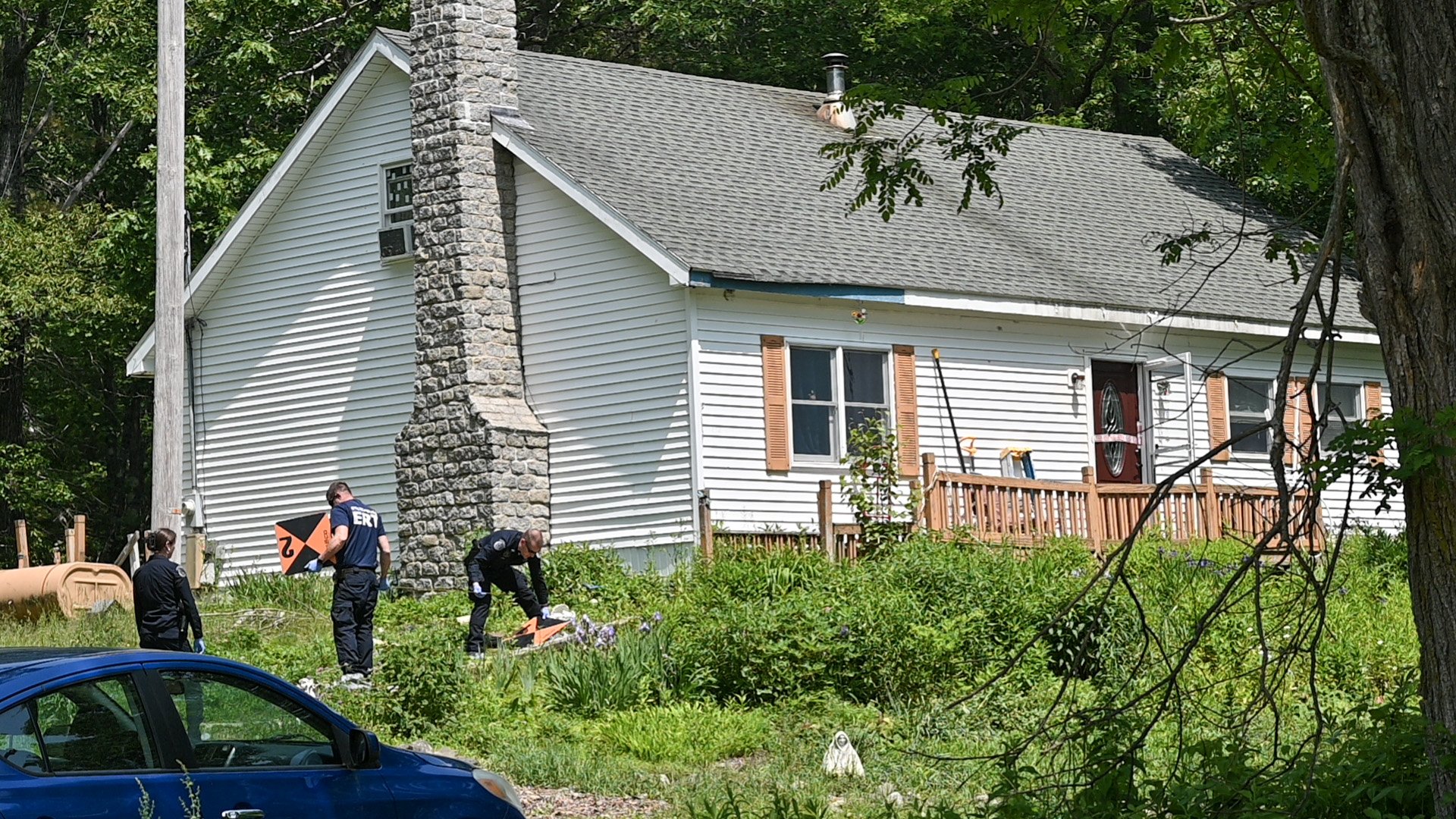
Police were sent to the home in Chelsea on the night of June 11, 2025. A woman who called 911 lay injured in the front lawn. Her fiancé, Ty Carter Hunnewell, and his adopted father, Christopher Hunnewell, were dead inside the house. The teenager had killed them, the caller said.
The 16-year-old was arrested and has since been charged with murder. The Portland Press Herald/Maine Sunday Telegram is not yet naming the suspect because he is a juvenile pending the outcome of court proceedings.
Details about the teen’s upbringing in the rural Kennebec County town southeast of Augusta were made public for the first time last month during a bind-over hearing, a court proceeding to determine whether he will be tried as an adult. The hearing lasted three days as relatives, caseworkers and attorneys presented facts about the boy’s early life.
Family members said Christopher Hunnewell had taken the boy in as a foster child two years prior and had raised concerns about his mental health, but that their interactions with caseworkers had become sparse to nonexistent.
“I had vocalized that there was something wrong here. I knew for a long time if he stayed, something horrible would happen,” Jessie Carter Hunnewell, the man’s wife, told the Press Herald shortly after the killings. “No one listened.”
The family did not want to be interviewed for this story. In prior conversations, Carter and others said they believe the killings could have been prevented.
For years, Maine has been plagued by a series of deaths of children whose short lives intersected with the state’s child protective system. In most cases, a high-profile death was followed by internal reviews of practices to see what might have gone wrong and calls for reform to ensure it didn’t happen again.
But the Chelsea case represents an entirely different dynamic. The child who entered the system wasn’t the one killed but the one suspected of doing the killing. Several experts told the Press Herald it’s the first time in Maine this has happened.
They cautioned against viewing the killings as an indictment of Maine’s child welfare system alone. Though Maine’s Office of Child and Family Services has been marred in recent years by high turnover and excessive caseloads, it exists within Maine’s broader healthcare and behavioral health systems.
And those systems have been faltering for years.
“Anybody who’s helping to take care of kids in some capacity, educators, medical providers, are all part of the child welfare system. And there are plenty of places where kids fall through the cracks,” said Mark Moran, social services director at Bangor’s Northern Light Eastern Maine Medical Center and former chair of Maine’s Child Death and Serious Injury Review Panel.
“Sometimes,” he added, “it’s a matter of kids needing services and resources that don’t exist.”
THE CHILD’S HISTORY
The teenager never really had a stable home. The Office of Child and Family Services had been involved with him since his birth in 2009, program administrator Melissa Beaulieu said during last month’s hearing.
His mother had a blood alcohol content of 0.2% when the boy was born, she said, more than double Maine’s limit for driving under the influence. Caseworkers believed she’d been drinking throughout the pregnancy.
The child was placed in the care of his father, who was out on probation following several years in federal prison on drug charges. The state ordered the mother not to contact her son and closed the case a few months later. But the boy’s situation didn’t improve.
During last month’s hearing, the boy’s half sister testified that their father had bounced in and out of the criminal justice system. She said she witnessed him physically and sexually abuse the boy, although it’s not clear if he was ever charged.
Their mother, meanwhile, ignored the no-contact order. She moved back in with the family and soon began using alcohol and drugs again, her daughter testified.
In 2013, the Office of Child and Family Services received an anonymous tip about the boy’s living conditions. When caseworkers visited their house, Beaulieu said they found cigarette butts, animal feces and empty alcohol bottles inside his room. The child, about 5 at the time, was taken into state custody.
What followed was a series of turbulent family placements and foster homes that seemed to fall out from under him.
One of his caretakers, a family member, was arrested for drug trafficking. Other foster parents said they weren’t equipped to handle the boy’s behavior, which Beaulieu said included cutting himself with a steak knife and making threatening and sexually explicit comments toward other children at school and at home.
Walt McKee, who is representing the boy, did not respond to questions about his time in the child welfare system.
“Seventeen homes is many more placements than is typical. And in every one of those moves is trauma for the child,” said Melissa Hackett, coordinator of the Maine Child Welfare Action Network. “And it becomes increasingly difficult to find an appropriate placement that can meet those needs.”
Beaulieu said the boy was hospitalized over suicidal ideation in spring 2023. He spent two weeks there before being placed in the care of his cousin, Christopher Hunnewell, who had also been abused as a child, according to Carter, his wife.
Hunnewell wanted to offer the boy the resources he never got, she said. But the situation there soon deteriorated. “We noticed early on he really had some mental issues,” Carter said last year.
Steven Carey is an attorney who has served as the boy’s guardian ad litem, a court-appointed position tasked with representing the child’s best interests, since 2020. Carey testified last month that he had visited the home in fall 2024 and told state officials the boy needed to be removed.
Family members said the boy bounced between schools. Carey said at times, the boy wasn’t going to school at all. He had been diagnosed with a mood disorder. The family, troubled by his behavior, moved his mattress from his bedroom to the kitchen floor.
Carey said another visit a few months later was “better but still rocky.” He last saw the boy in April 2025 and thought the situation had improved. Carey said the family was doing “everything they could to keep him there.”
Two months later, Hunnewell and his adopted son would be found dead inside their home.
CHILD WELFARE SYSTEM BUCKLING UNDER ITS OWN WEIGHT
Maine’s child welfare system has been under duress for years.
Between 2019 and 2024, the state’s foster population grew at a rapid pace. In 2023, Maine was removing children from abusive or neglectful situations at a higher rate than nearly anywhere else in the country.
That was partly in response to a number of high-profile deaths of kids in the child welfare system. In some instances, caseworkers failed to monitor children in abusive environments. In others, conflicting guidelines led them to overlook visible signs of trauma.
The rising caseload has resulted in what some staff members previously described as a “broken” system, with caseworkers being stretched to the brink and working mandatory overtime to meet kids’ needs.
Christine Alberi serves as Maine’s child welfare ombudsman, an independent position that investigates complaints and advocates for the safety of kids in the state’s custody. She noted that there is an “enormous gap” between services available for young children in Maine compared with those for older teenagers, like the boy in Chelsea. Often, kids who are close to aging out of the system receive less intensive care than they require.
“My office has been necessarily critical of child welfare casework and at times the direction of child welfare set out by its leaders. And there is not nearly enough money invested in children who have suffered trauma,” Alberi wrote in an email. “However, it should be noted that this year, for the first time in years, we have seen some incremental improvements.”
The state’s 2026 and 2027 budgets will each allocate more than $17 million specifically toward Maine’s child welfare system. The number of kids in state custody, while still high, has fallen since peaking in 2024. Vacant caseworker positions have fallen nearly 54% over the last three years, according to Lindsay Hammes, spokesperson for the Department of Health and Human Services.
But the state’s child welfare system, experts note, is still subject to the same headwinds as the rest of the state’s healthcare system: Shuttering facilities, staffing shortages and the challenges of offering services in sparsely populated rural areas have made expanding Maine’s behavioral health infrastructure an uphill battle.
DHHS often endures the most scrutiny whenever there is a tragic outcome. Hackett, with the Maine Child Welfare Action Network, said that’s because services on the “crisis end of the spectrum” are generally the most visible.
But it’s the upstream services that could stem issues before they present themselves, she said, that are the most acutely lacking.
“We really have to ask the bigger questions about why so many kids are so unsafe. And that really brings us to much broader questions about parental substance use, unmet mental health needs, domestic violence and housing,” she said.
It remains unclear whether such services would — or even could — have prevented the tragedy in Chelsea. Lawmakers have called for an investigation into the case and how DHHS handled it following statements from the victims’ relatives and reporting from the Press Herald and Morning Sentinel.
That investigation will only begin once the teen’s criminal case is concluded, according to Peter Schleck, who heads the state’s Office of Program Evaluation and Government Accountability.
Assistant Attorney General Katie Sibley, who’s prosecuting the case, said it will likely take at least a month for the judge to decide whether the teen will be tried as a juvenile or an adult. A potential trial could take months or even years.
The boy has been held at Long Creek Youth Development Center in South Portland since the killings nearly a year ago. If he’s tried as an adult and found guilty of murder, the charge will carry a minimum sentence of 25 years in prison.
Juveniles, on the other hand, can only be detained until their 21st birthday, even if they’ve been convicted of the most serious crimes. In 2023, a Maine teenager found guilty of murdering his girlfriend was sentenced to a fraction of the time he would have served had he been tried as an adult.
Editor’s note: This story was updated on May 10 to provide additional context about the boy’s time in Chelsea and to correct Jessie Carter Hunnewell’s name and the relationship between Ty Carter Hunnewell and his partner.
