

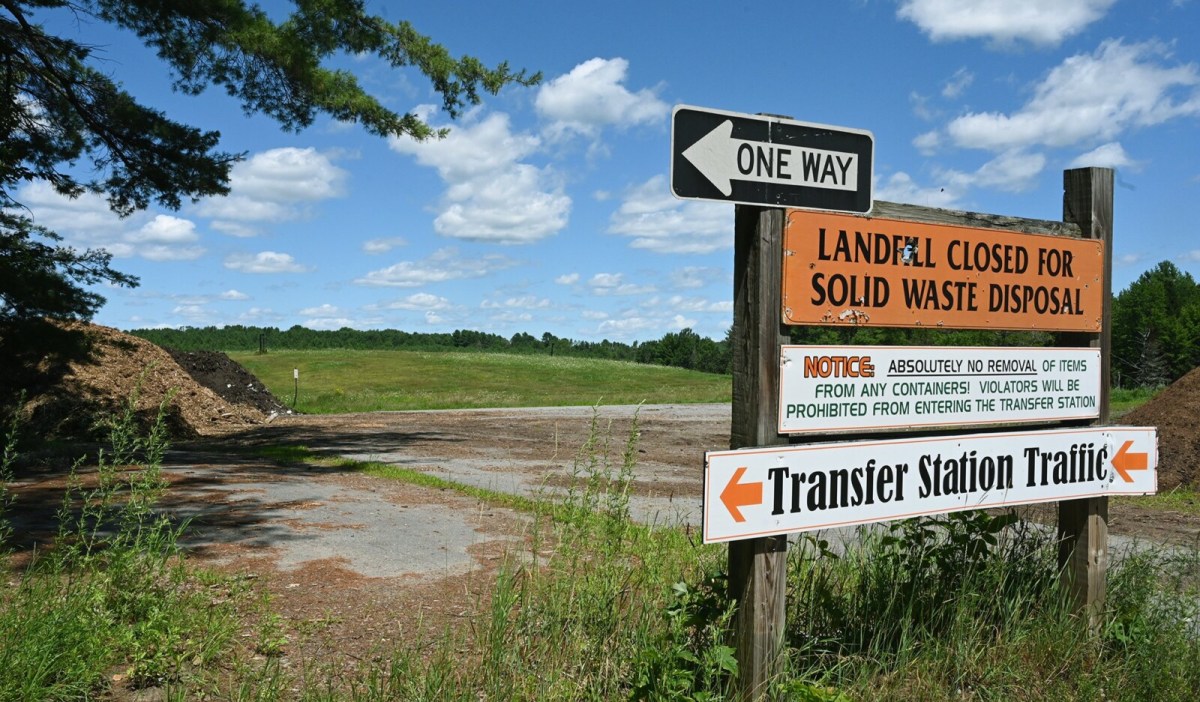
SKOWHEGAN — Town voters will have their chance next month to decide whether their property taxes should cover disposal fees for trash that hauling companies bring to the landfill.
But at the annual town meeting June 8, how voters will be asked about whether to continue paying for disposal of all of Skowhegan’s trash will be less than straightforward, as officials changed their mind about their budget proposal at the last minute.
Voters will effectively make the decision when they vote on how much surplus funds to use in 2026-27 budget and how, if at all, that money should be designated.
The town’s longstanding practice of paying to dispose of commercial trash, believed to be unique for a town of Skowhegan’s size, has drawn nearly two years of debate.
Both the select board and budget committee, whose recommendations for each budget article appear on the town meeting warrant, decided earlier this month to slash the solid waste and recycling budget by $250,000. The move cut about 37% of projected tipping fees to allow a phasing out of the town’s payment for disposal of commercial waste with several months’ notice.
That brought the amount voters are asked to raise and appropriate for the solid waste and recycling department from $1.31 million to $1.06 million.
The select board, however, largely agreed while finalizing the town meeting warrant Tuesday night that the cut may have been premature.
“We need to take it seriously,” said Chair Whitney Cunliffe. “I’ve heard from a lot of you guys, and I do think that it’s not fair to bring it on you if you hadn’t had a public hearing. This really needs discussion and maybe bringing a consultant in.”
To effectively put the option before voters on whether to continue paying for haulers’ tipping fees, the select board now recommends using $750,000 from surplus funds to offset taxation and $250,000 to go toward what was cut from the solid waste budget proposal.
The budget committee, meanwhile, recommends using $1 million in surplus funds to offset taxation, with no designation for solid waste disposal, or anything else.
Neither the board nor the committee made alterations to the article for solid waste disposal, which remains at $1.06 million, $250,000 less than what department head Cynthia Kirk originally proposed.
Budget committee Chair Christian Savage said the two recommendations on how to use surplus will give voters a choice of what to do.
Kirk, for more than a year, has suggested the town stop paying for the disposal of commercial waste — or at least consider it. The idea gained traction after workshops with select board members. Former Town Manager Nicholas Nadeau, who died by suicide earlier this year, had mentioned potentially bringing in a consultant to study how the town disposes of trash and recycling.
Even so, Kirk said Tuesday night she was surprised town officials decided to begin cutting back on budgeted tipping fees in this coming year’s budget proposal.
“I definitely want more public input,” Kirk said.
According to Kirk’s research, Skowhegan is the only municipality of similar population in Maine that pays for commercial trash disposal.
Kirk’s original budget proposal showed $667,600 anticipated for tipping fees. Ten years ago, in 2015, the town paid about $500,000 for disposal. Disposal fees are expected to continue increasing each year.
Currently, the town pays tipping fees for all trash brought to the Waste Management Crossroads Landfill in Norridgewock — residential or commercial, hauled directly or from the town transfer station.
Skowhegan residents can buy a transfer station sticker — $10 for two years — and bring their trash there. Residents, landlords and businesses can also hire a licensed commercial hauler to pick up their trash and bring it to Norridgewock.
The tipping fees for the loads the haulers bring to Norridgewock from Skowhegan are charged to the town’s account. Residents who hire haulers may need to pay the hauler for the service and dumpster placement but otherwise are not supposed to pay the tipping fees for disposal, as the town pays those.
About three-quarters of the town’s trash is brought to Norridgewock by haulers, rather than from the transfer station, Kirk said. That includes both residential and commercial sources.
The problem, Kirk has said, is there is no guarantee that haulers, who may work in multiple towns, are not mixing other trash in with Skowhegan’s, which they are not supposed to do. That means it is possible Skowhegan taxpayers have been paying for the disposal of waste from other municipalities.
“I have searched loads,” Kirk said, “and I have found trash from other towns that has been billed to Skowhegan.”

We invite you to add your comments. We encourage a thoughtful exchange of ideas and information on this website. By joining the conversation, you are agreeing to our commenting policy and terms of use. More information is found on our FAQs. You can update your screen name on the member's center.
Comments are managed by our staff during regular business hours Monday through Friday as well as limited hours on Saturday and Sunday. Comments held for moderation outside of those hours may take longer to approve.
Join the Conversation
Please sign into your CentralMaine.com account to participate in conversations below. If you do not have an account, you can subscribe here. Questions? Please see our FAQs.