


Kingfield residents continued pushing back against Bowdoin College’s proposed campsite development during a planning board meeting last week. Meanwhile, students and representatives from the college say fears about traffic congestion are largely unfounded.
Bowdoin’s proposed campsite sits on 20.7 acres along Iron Bridge Road that the college acquired in November of 2024 along the Carrabassett River. The application seeks seven campsites, allowing 28 tents, a picnic area and a service building, which would house bathrooms and water access. The site will be called the Finnegan McCoul Woodruff Mountain Center, named after the late Bowdoin student and Outdoor Club member.
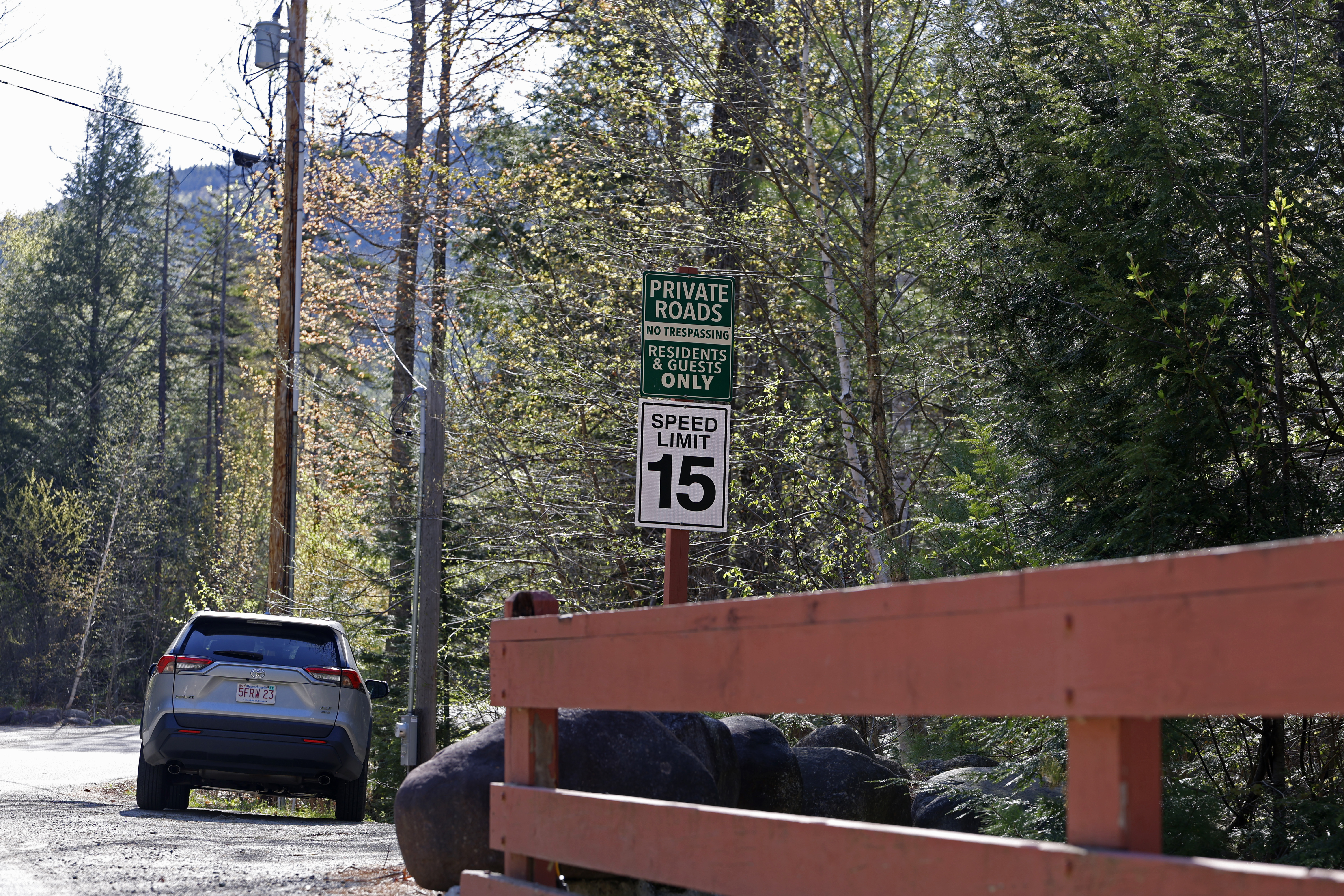
The proposed site is accessed via Claybrook Road, which is directly off Route 27 where drivers first must cross a one-lane bridge over the river. Iron Bridge Road is off Claybrook Road. Both are dead-end private roads with residences along them. Bowdoin’s property is before the dead end on Iron Bridge Road.
Much of the community opposition to the project focuses on Iron Bridge Road.
At the May 4 planning board hearing, Kingfield residents raised concerns about the traffic that the campsite would bring to their road.
Jillian Monahan, a resident of Iron Bridge Road, spoke about potential backups that would be caused by seven vans all turning onto the bridge. She said wait times for those needing to cross the bridge behind the vans could leave cars on Route 27 for minutes.
“Imagine sitting on (Route) 27 for nearly two minutes where you’re at a standstill,” Monahan said.
At the meeting, John Simoneau, director of capital projects for Bowdoin College, said the college used a 2021 traffic study that projected a chance of two opposing vehicles needing to cross the bridge once every 6.7 minutes. It recommended the bridge be widened when the average reaches every 5 minutes.
In terms of Bowdoin-specific traffic, the college said there would be at most seven 12-person vans at the site for a total of 84 students and a some group leaders, with 12 students at each of the seven pads.
Cathie Martin from the Iron Bridge Road said she and the other residents of the subdivision there are confused by the changing numbers stated in past meetings and in the application.
“I feel like we have received so much different information,” Martin said. “There’s just a lot of inconsistencies with all of the things that we’ve heard, and the math doesn’t add up.”
Evan Braude is a sophomore at Bowdoin College. Since enrolling she has been on multiple trips with the outing club. She explained that the maximum capacity trips would realistically only happen for a week in the fall, when the college has its orientation trips for new students.
“There is that one week a year where there are a substantial amount of students,” Braude said. “But for most of the year, it’s a van or two, occasionally on a weekend.”
Braude said students like her are excited about the project, because it will give them another opportunity to explore western Maine.
“This is an opportunity for more students to have access to skills and opportunities that they wouldn’t otherwise have access to,” she said. “We can go to the Kingfield area for the day, but that involves a four-hour round trip, whereas with this site, we would be able to, by having an overnight, spend more time developing those skills.
Bowdoin also expressed in its proposal that it would be willing to contribute to road maintenance, including sanding, bridge repairs, and winter snow removal.
Currently the college said the site is mainly intended for fall through spring usage, with the possibility for occasional use in the summer.
Though there was speculation that the college would build an insulated lodge on the property for the winter, Outing Club Director Mike Woodruff said at the May 4 meeting that plans for a permanent structure are not happening. He said winter use would fall to a small group of students who are more experienced campers. Woodruff’s son is the namesake for the proposed site.
“Are there students in our organization who are hardy enough to want to camp out, go ski and go snowshoeing? Yes. Is there 84 of those who are going to want to do that every weekend of the winter? Not even close,” Woodruff said.
Though Bowdoin has since walked that plan back, the college has left the option open for the future.
“Earlier aspirations to build more permanent accommodations on the site are beyond the scope of this application,” Bowdoin Communications Director Doug Cook said in an email.
Monahan said she thinks Bowdoin didn’t put enough thought into the location, and hasn’t kept residents in mind.
“I don’t think they researched this, the property, and if they did research it, then they clearly have a disregard for an entire neighborhood,” Monahan said. “I mean, who puts a campground in a subdivision?”
Annie Craig, a resident of the Iron Bridge Road subdivision, said she thinks that much of the blame falls on outdated zoning laws in Kingfield. She lives directly next to Bowdoin’s property, and she said that she and others in her neighborhood are surprised that such a development could be placed in a residential area.
“I think considering the rapid decrease in land availability in the Carrabassett Valley region, that could become an issue again,” Craig said. “This is an opportunity to look at some potentially problematic ordinances.”
The planning board plans to take up the Bowdoin campsite proposal again at its June 2 meeting.

We invite you to add your comments. We encourage a thoughtful exchange of ideas and information on this website. By joining the conversation, you are agreeing to our commenting policy and terms of use. More information is found on our FAQs. You can update your screen name on the member's center.
Comments are managed by our staff during regular business hours Monday through Friday as well as limited hours on Saturday and Sunday. Comments held for moderation outside of those hours may take longer to approve.
Join the Conversation
Please sign into your CentralMaine.com account to participate in conversations below. If you do not have an account, you can register or subscribe. Questions? Please see our FAQs.