


WATERVILLE — A group of high schoolers wants a clear view of the night sky, and it’s helping the City Council make that happen.
The Waterville Youth Council is currently drafting an ordinance to regulate public lighting in Waterville to reduce light pollution and promote dark skies.
Youth council co-chairs Penny Graham and Taylor Amuso said they picked light pollution as their issue because it’s a fixable problem. When lights are off, the pollution goes away. When cities design their lighting fixtures to keep the sky dark, they prevent the pollution. They also save money.
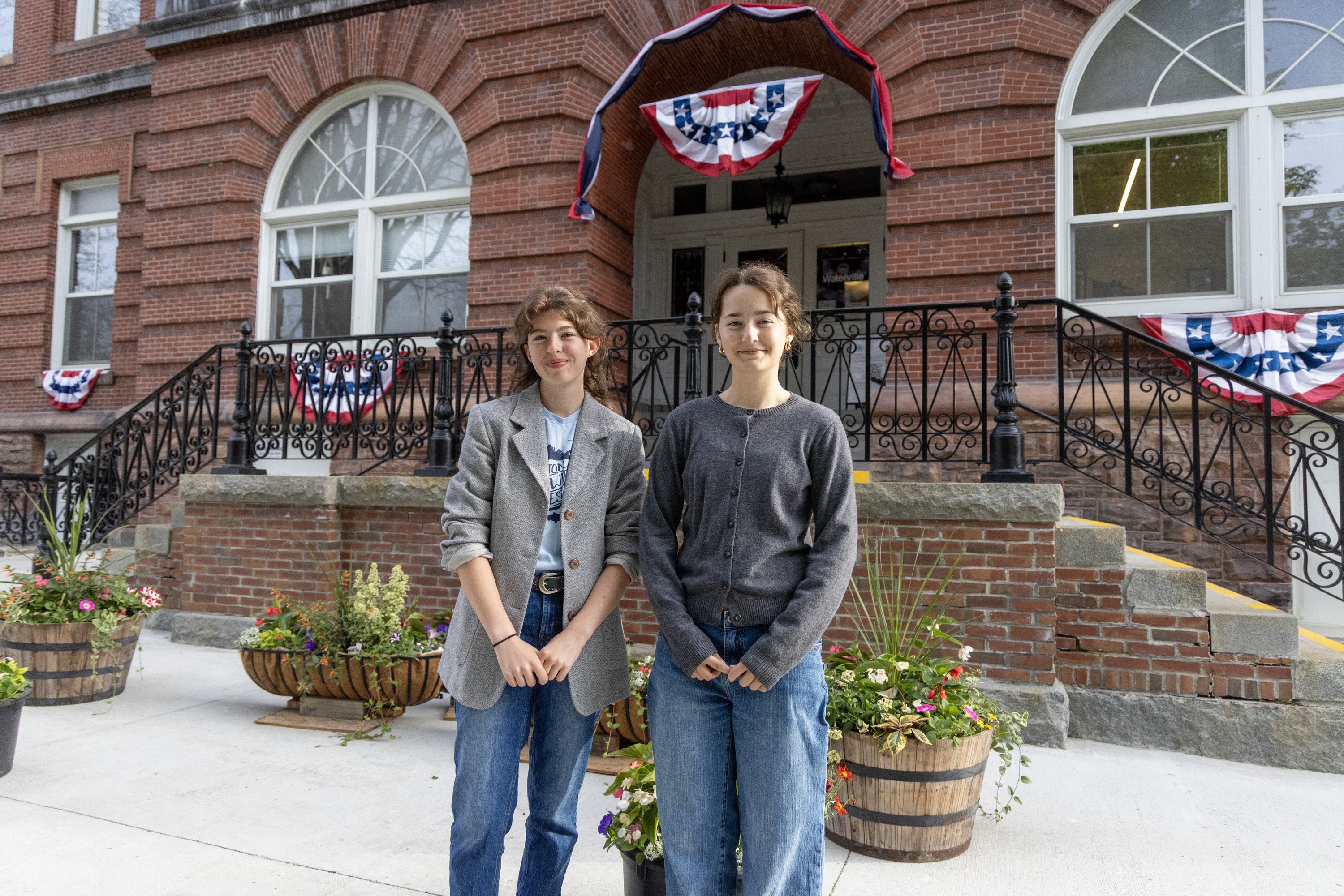
“It’s a pretty tangible thing. You can get a grasp on it and what you can do to work against it, but it’s not really something that people think about day to day,” Graham, 16, said. “It’s one of those things where once you hear about it you’re thinking, ‘Oh, this is something that we really could do something about, and we could do something about soon.'”
The youth council’s ordinance, which Graham and Amuso hope will be ready for council consideration in June, is modeled on similar ones in other communities. It’s also partly inspired by a state law that requires all public lighting that is installed or replaced after Oct. 1 comply with certain dark sky regulations.
John Meader, an astronomy educator and founding member of Dark Sky Maine, said this type of policy is perfect for combatting light pollution because every little bit helps.
“I don’t see anything in black and white,” Meader said. “I take whatever I can get.”
Why dark skies matter
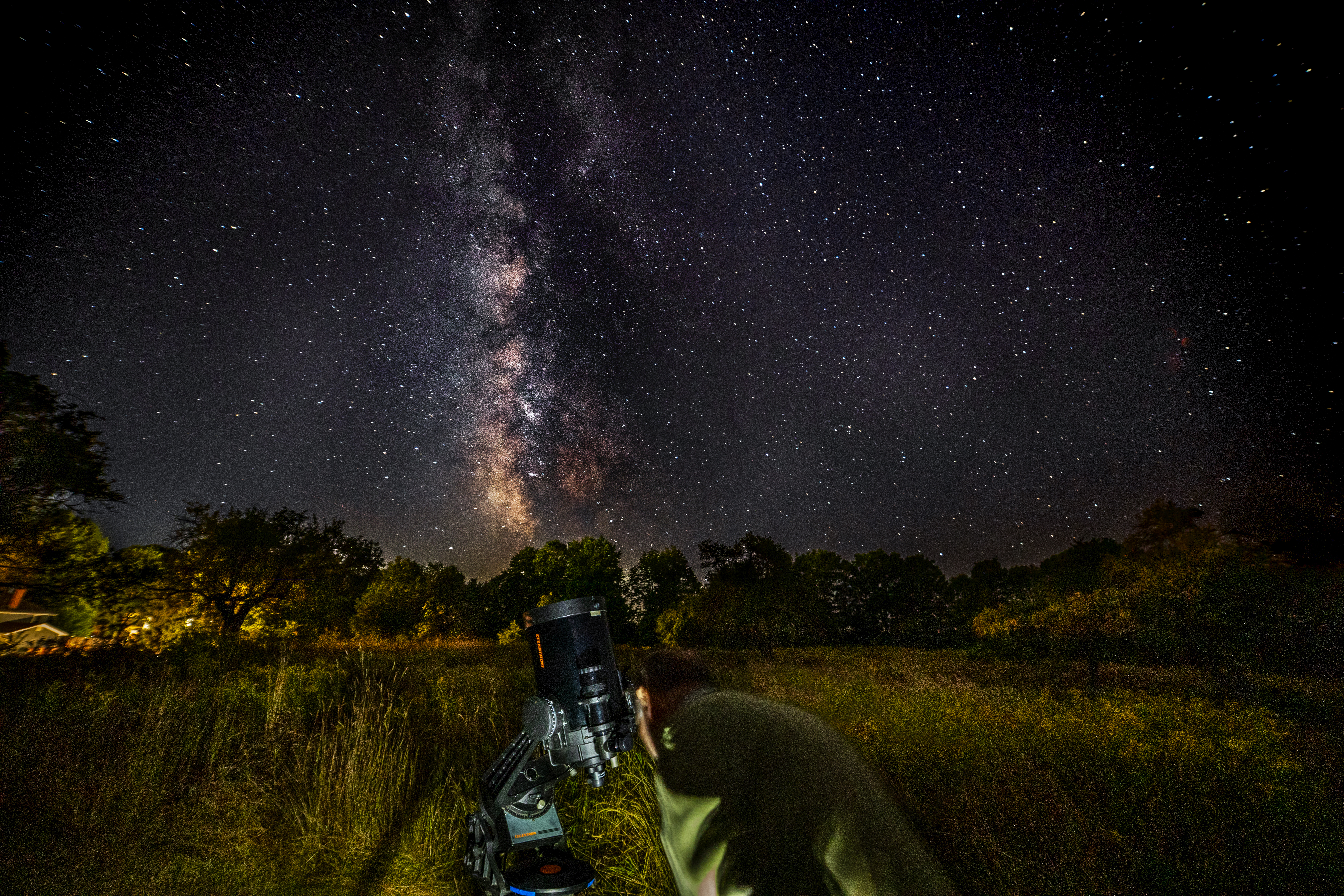
Ten years ago, a new atlas showed that 80% of Americans cannot see the Milky Way from where they live. Since then, light pollution has gotten only worse. It adversely impacts birds’ migration patterns, endangers fireflies and expels bats from areas where they could be eating mosquitos. It has also been linked to cancer, as it suppresses melatonin production, which prevents glandular cancers.
Chicago, Pittsburgh, and other large cities are addressing light pollution, and a group of local teens is asking Waterville to do the same.
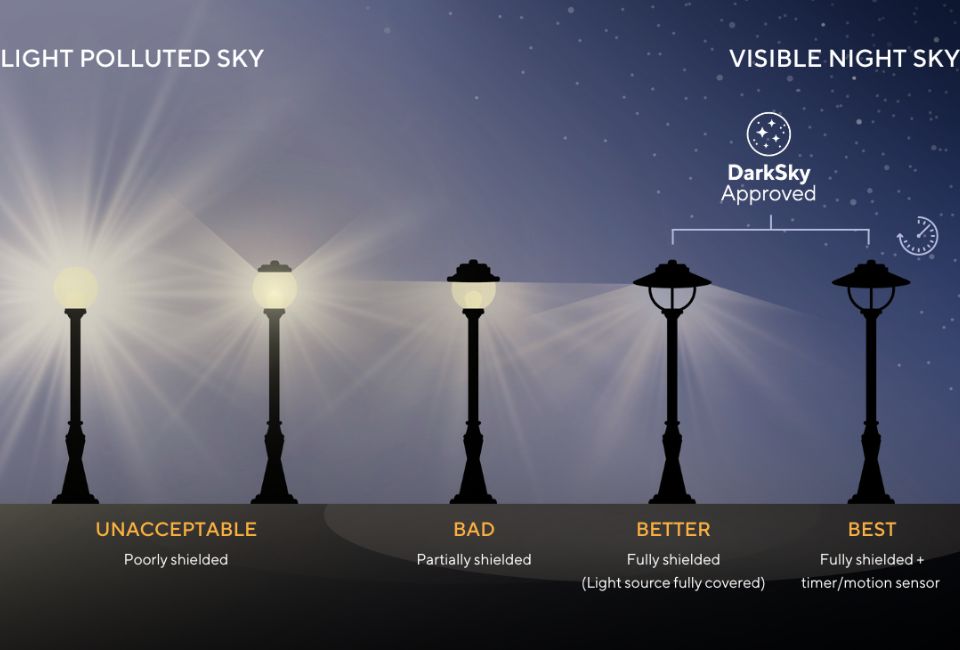
Lighting that is dark sky compliant is usually capped, so the bulb is not visible and shines only downward, illuminating a cone of light on the ground. It is warm in tone, and it meets standards for brightness. This doesn’t mean the lighting is not effective, it just means its efficient. Even lights for a sports field can be dark sky compliant, as they are at Bowdoin College in Brunswick.
Maine is home to some of the darkest skies east of the Mississippi, but it is not immune to the harmful impacts of light pollution. Serena Sanborn, a Maine master naturalist and dark sky advocate, said it hurts people beyond the physical health impacts.
“I worry that it’s disconnecting us more and more from the natural world. We’re growing up with people who’ve never seen the Milky Way and don’t have a connection to our planet more and more,” Sanborn said. “Our ancestors all saw the sky in those ways, right? They were able to tell about harvests, but it also connected them to something beyond themselves.”
Councilor Spencer Krigbaum, D-Ward 5, said Maine’s legacy of dark skies is part of what makes dark skies such an exciting initiative.
“A lot of people in Maine have grown up with dark skies … you’ve seen the stars, you’ve seen how beautiful it is out there, and as Maine continues to grow in certain areas, that’s kind of getting dialed back,” Krigbaum said. “So when we talk about this stuff, it has a lot of resonance. It’s a thing that really aligns both local politics, the youth council’s endeavors and the community.”
Every year during Dark Sky Week, people and businesses are encouraged to dim their lights at night, which Mayor Michael Morris endorsed at a City Council meeting earlier this month.
At that meeting, Meader and Sanborn said people often think of lights as a safety and security issue — they feel safer on brightly lit streets. But, they said, this is a fallacy.
Glare from bright lights makes it harder to see anything not directly illuminated, which Meader said makes it easier for people to hide in the dark. Sanborn said this is especially bad on the Two Cent Bridge, a pedestrian walkway between Waterville and Winslow over the Kennebec River, where lights are so bright in some places that you can’t see anyone coming.
“We’re not like: Shut off all the lights. We don’t want it pitch black,” Meader said, emphasizing that he supports helpful street lighting. “We just want lights to do what they’re supposed to do, which is help people on the ground. No one’s getting mugged 50 feet in the air.”
What an ordinance would do
The city ordinance the youth council is drafting would impact only public lighting. But Graham is hoping that if Waterville leads by example, residents and businesses will follow.
“If our city buildings can implement responsible lighting, surrounding businesses, even if they’re private, may really see the benefits in that,” Graham said. “(They) may in the future, when they’re also considering new lighting choices, consider responsible, dark sky-friendly lighting.”
Sanborn said people who move toward dark sky-compliant lighting at their homes will notice fireflies in their yards and may find that bats are eating more mosquitos. They might see more moths, which are important pollinators, and hear frogs after dark. These are all animals whose functions in an ecosystem are affected by light pollution, and they’re part of what the youth council would like to save.
Graham, Amuso and other youth council members are also excited to be able to have an impact on an issue as overwhelming as climate change.
“It was set in motion with the idea that we do have the power to make a difference, and we do have to have the power to help the environment,” Amuso, 18, said. “It’s starting to seem like we’re really going backwards in terms of environmental regulations, and this kind of thing is just proof that if you want to make a difference, you can.”
The Waterville Youth Council is advised by Morris, Krigbaum and Jessica Graham (who is Penny’s mother), a social studies teacher currently on hiatus to earn her doctoral degree in history. With these advisors behind them, Amuso and Penny Graham feel good about getting the City Council to support their ordinance, and they are in the process of incorporating feedback from city departments.
Krigbaum said the City Council fully supports the ordinance as far as he’s aware. City departments suggested that a city policy might be a better format than an ordinance. Krigbaum said he’s confident either format would be effective.
Councilor Scott Beale, D-Ward 6 said he’d like to support and ordinance like this.
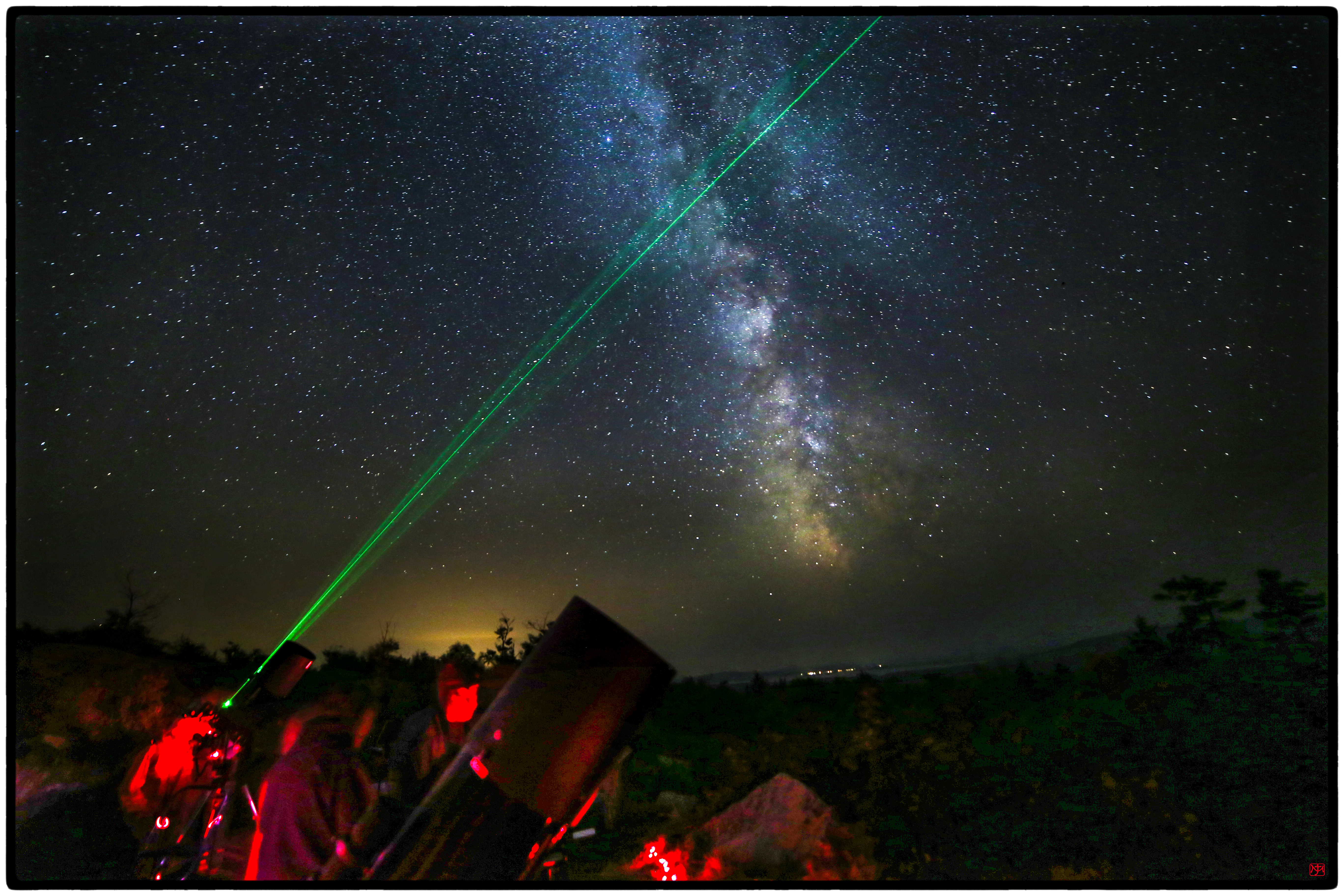
The youth council is working with Meader’s Northern Star Planetarium to host a star party on Friday, where Meader will give a tour of the stars, telling star stories, and Sanborn will take attendees on a spring frog exploration. In case of rain or clouds, the party will move to the Paul J. Schupf Art Center at 93 Main St. for an indoor projected night sky tour.

We invite you to add your comments. We encourage a thoughtful exchange of ideas and information on this website. By joining the conversation, you are agreeing to our commenting policy and terms of use. More information is found on our FAQs. You can update your screen name on the member's center.
Comments are managed by our staff during regular business hours Monday through Friday as well as limited hours on Saturday and Sunday. Comments held for moderation outside of those hours may take longer to approve.
Join the Conversation
Please sign into your CentralMaine.com account to participate in conversations below. If you do not have an account, you can register or subscribe. Questions? Please see our FAQs.