


A new petition effort would implement a rare form of ranked-choice voting in Augusta’s local elections and eliminate ward-based representatives in favor of citywide elected officials.
The petition has already drawn stiff opposition from city councilors who represent Augusta’s four wards, who have argued the move would disconnect city representatives from their neighbors.
The effort pits a largely academic idea used in only one other Maine city against the fierce neighborhood-based culture of Augusta. The format would need to be approved by voters in a referendum before its implementation.
Councilor Eric Lind said he was surprised, and even confused, by the petition. He has represented Ward 4, which covers the northeastern section of the city, since 2018. He said he’s taken great pride in responding to neighborhood-specific questions and concerns from his constituents.
He’s lived in Ward 4 most of his life, and he said he thinks his hyper-local knowledge has improved his ability to serve the area on the city council.
“I think it’s one of the worst things I’ve seen come down the pike in a long time,” he said. “It’s a strange thing. It kind of came from nowhere. It’s just a strange, strange thing.”
Supporters of the effort believe the changes would represent Augusta voters more accurately across the city.
Currently, there are four at-large councilors in addition to the four ward-specific representatives and mayor.

Under this ranked-choice system, petition organizer and Augusta resident Cormac Manning said, “more residents are more likely to get a councilor that they voted for.”
Petitioners began collecting signatures last week.
HOW WOULD IT WORK?
From the voters’ perspective, the format works exactly the same as the ranking system Maine voters have used since it was first approved in 2016. Voters would fill in their ballot with multiple ranked choices.
More than 80% of Maine voters said they were comfortable filling out a ranked-choice ballot in a 2024 survey.
This proposal counts ranked votes differently, though.
Usually, if no candidate receives a majority after the first count, last place is eliminated, second-choice votes are reallocated to the other candidates, and results are counted again. This process continues until one candidate accumulates more than 50% of the vote and is declared the winner.
In a proportional ranked-choice voting system, the votes are reallocated from the top down. If a candidate reaches the threshold to be elected, “excess” votes are reallocated to those voters’ second-choice candidate, and so on.
Manning said this system makes sure that every vote counts the maximum amount — that no vote is “wasted” on the top candidate.
The system works best in a nonpartisan election with multiple winners — say, a race where five candidates are running for three seats on the school board or city council. In that case, the threshold would be 25%; as soon as one candidate hits that number, excess votes for the winner would be reallocated to voters’ second choice. If no candidate crosses the threshold in a round, then the lowest vote getter is eliminated and their second-choice votes are reallocated. The process continues until enough candidates meet the threshold to fill all the seats.
That’s where the second half of the proposal comes in: the elimination of ward representatives in favor of citywide elected officials.
Currently, the Augusta City Council and Augusta Board of Education each has one multi-winner election every three years. Implementing proportional ranked-choice voting would necessitate multiple winners of every election, while ward-specific seats need only one winner.
Each half of the proposal supports the other, petition organizer and Democratic candidate for Kennebec County Register of Deeds Kevin Lamoreau said. Switching ward seats to at-large seats was Lamoreau’s idea, using Portland — the only other city in Maine that uses this system for local elections — as an example.
“Making the ward seats at-large seats, you suddenly would have two-winner and three-winner elections,” he said.
THE PUSHBACK
Ward 3 Councilor Michael Michaud posted on Facebook for the first time about the petition on May 22.
“Please be advised your advocate may not be there if you sign,” he wrote.

That’s been Michaud’s biggest concern since Manning first came before the council with his proportional ranked-choice voting proposal in April — councilors won’t have on-the-ground knowledge of neighborhood-level issues, and constituents won’t have a point of contact.
“I take a lot of pride in the fact that I can work with my constituents to mitigate whatever their issues are, and I have a concern that if there are eight at-large counselors, who are they going to reach out to?” Michaud said. “If they get somebody that’s in Ward 1, how much attention are they going to to pay to their issues?”
Both Michaud and Lind said they were concerned about the possibility of all eight councilors living in the same neighborhood.
Even all the councilors living on the same side of the river would be cause for concern, Lind said. Residents of Augusta, the only municipality bisected by the Kennebec River, have long held deep cultural pride in the city’s east and west sides. Many residents, Lind said, still brag about their middle school being on the east or west side.
“This whole thing is cultural,” he said. “Ward representation is part of the DNA of the city of Augusta.”
Manning said his conversations with Augusta residents have revealed a more nuanced picture. Augustans often live in one ward, work in another and send their child to school in a third.
The lines are blurry, he said, and removing them altogether could even prevent a local version of the partisan gerrymandering race happening at the national level.
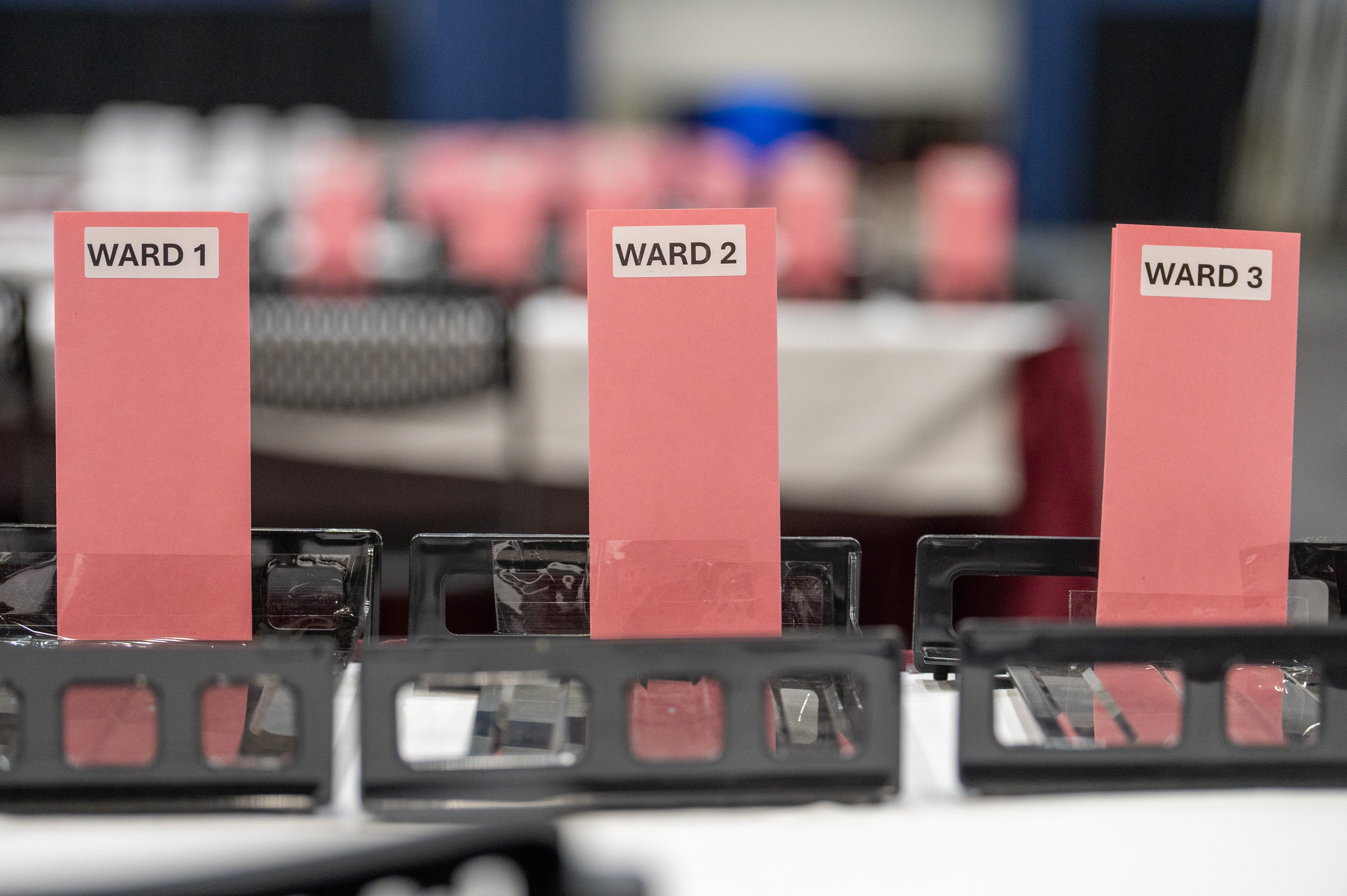
But Lind has other criticisms of the proposal: that not enough candidates run anyway — he’s run for council unopposed three times — and that none of the ward councilors were consulted before Manning, Lamoreau and others asked the city for petition papers.
“I want to hear the argument, and I want to hear both sides, but to pile this ward thing on top of (ranked-choice voting) just negates the whole thing,” Lind said. “At that point, no one wants to even go to the second part and talk about ranked-choice voting because it’s the elimination of the wards that is getting people so upset. They never came before the council to talk about this ward elimination.”
The proposal would require changing the city’s charter, a process Manning, Lamoreau and others began by taking out petition papers.
They’ll need 1,606 valid signatures — or 20% of Augusta’s voters in the last gubernatorial election — to send the two measures to a citywide referendum.
If it gets that far, Augusta voters will have a chance to choose their own election format in the ballot box.

We invite you to add your comments. We encourage a thoughtful exchange of ideas and information on this website. By joining the conversation, you are agreeing to our commenting policy and terms of use. More information is found on our FAQs. You can update your screen name on the member's center.
Comments are managed by our staff during regular business hours Monday through Friday as well as limited hours on Saturday and Sunday. Comments held for moderation outside of those hours may take longer to approve.
Join the Conversation
Please sign into your CentralMaine.com account to participate in conversations below. If you do not have an account, you can subscribe here. Questions? Please see our FAQs.