


Black fly season in western Maine does not arrive quietly.
It announces itself in your ears, around your eyes, behind your neck and anywhere else it can find exposed skin.
Whether on Bald Mountain in Weld, the Whistle Stop Trail in Jay or Mount Washington in New Hampshire, black flies and other biting insects can quickly turn a promising hike, run or mountain excursion into a test of preparation, patience and pain tolerance.
The warning came in stages.
The first was on Bald Mountain Trail, where we went up at night to see the stars. I wore a headlamp, which helped on the trail but also seemed to invite every bug in the woods.
Within minutes, insects were swarming around my head, drawn into the light and bouncing against my head net. It is an awkward sensation, knowing bugs are hitting your face and head, but also feeling relief because they are not biting you. The head net worked.
The night sky made the climb worth it. The descent was another matter. At night, every rock, root and uneven step has to be studied through the small circle of a headlamp. Somehow, I did not fall, which is more than I can say for a recent daytime hike.
Then came a run in Jay. It started normally enough on the Whistle Stop Trail: headphones in, Spotify on and running playlist queued up. But as I approached French Falls, I realized my mistake.
The bugs were waiting. I tried to outrun them, which is not a serious strategy but feels briefly logical when insects are swarming your head. I cut my losses, left the trail for the sidewalk on Main Street and headed home.
The bigger lesson came on a recent Mount Washington hike.
The forecast sounded almost perfect, at least by Mount Washington standards: summit temperatures in the 50s and winds of 15 to 30 mph. For anyone hiking above the treeline, that sounded like enough wind to keep the bugs somewhere else. That assumption did not survive the mountain.
We started at about 7:30 a.m., climbed up the Cog access trail and reached the summit of Mount Washington. There were summit pictures, the usual sense of relief and watermelon, of course.
Then came the surprise. It was warm, and there was almost no wind. The summit reading showed 0 mph. By the time we left, it had climbed to about 9 mph, still far calmer than expected for Mount Washington.
The weather was so good that before heading down the Jewell Trail, we decided to visit Mount Clay (Mount Reagan since 2003), the 5,533-foot summit north of Mount Washington.
By about 3 p.m., after more than six hours of hiking, we started down the Jewell Trail. I had imagined it as a softer wooded descent, the kind of trail that becomes gentler once it drops below the open rock. It was not.
The trail was rocks, boulders and awkward footing, painful on tired feet and easy to stumble on after a long day. Then the bugs arrived.
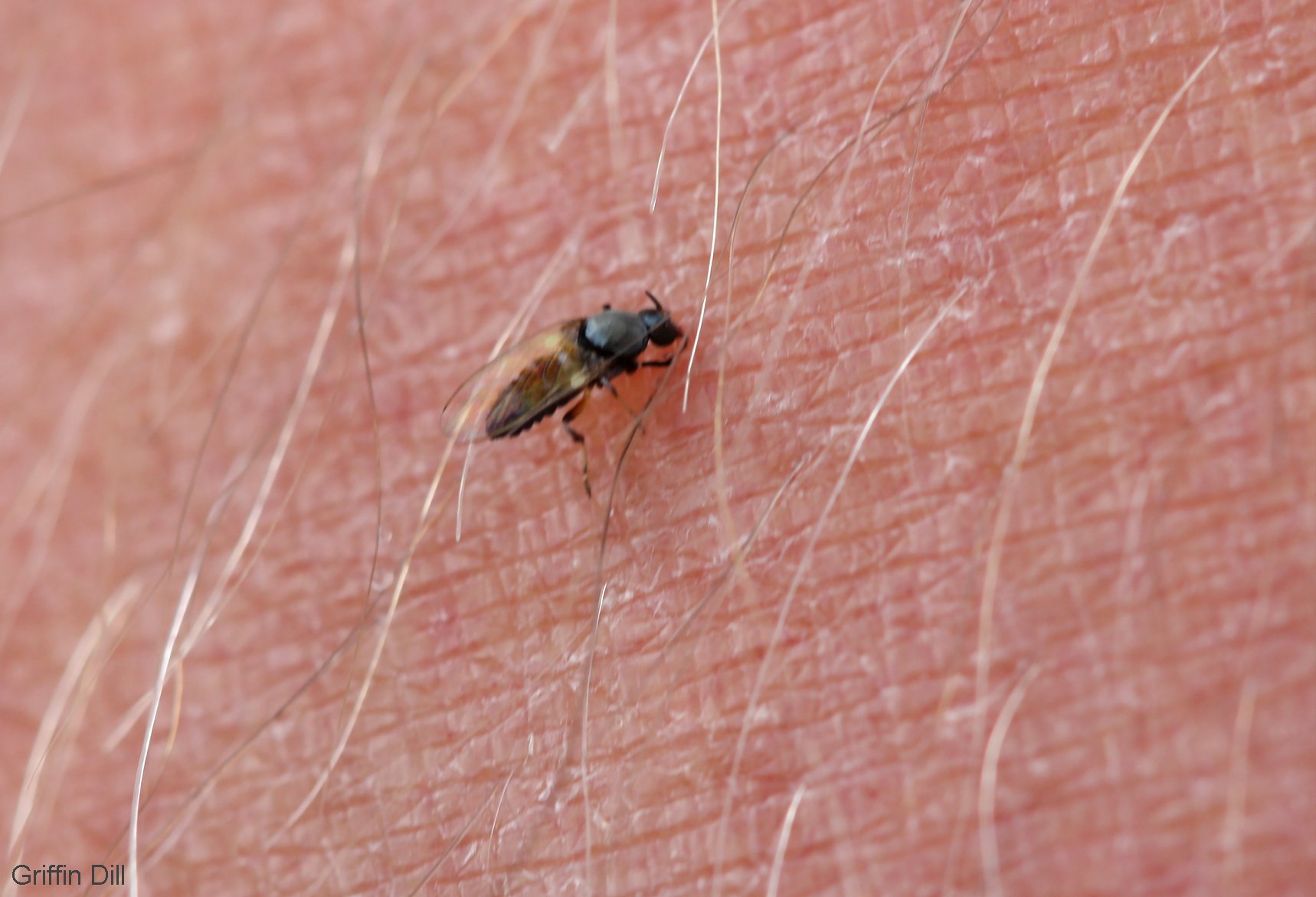
Not long into the descent, I noticed them buzzing around my head, constant and close. I had not prepared for black flies because I expected the forecasted wind to do the work. Instead, the air was still, the trail was warm and the black flies treated the back of my neck, ears, forehead, cheek and arms as open terrain.
By the end, I had large welts behind both ears, one on my forehead, a giant one on my cheek, several on the back of my neck and more on my arms.
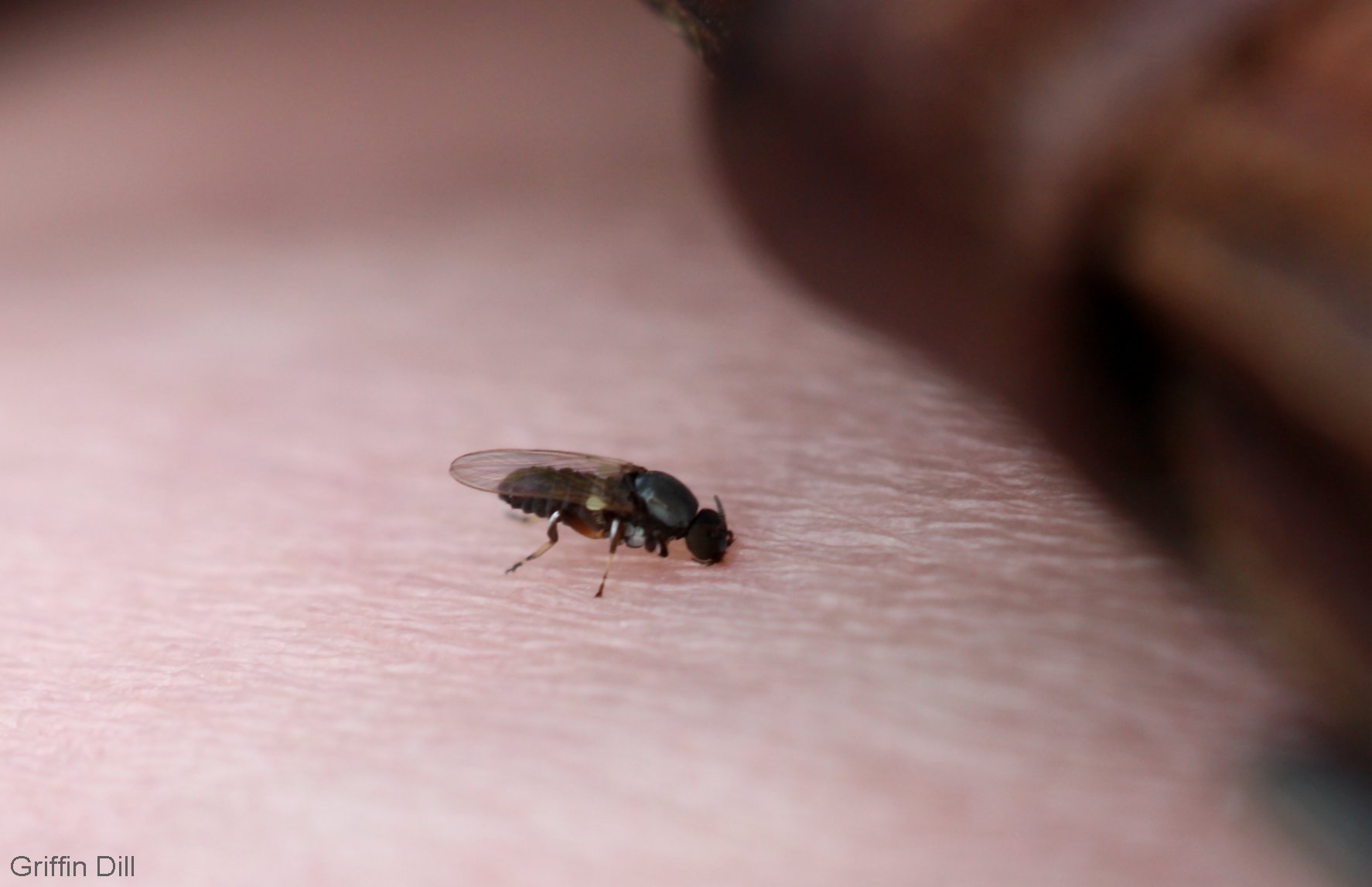
Anyone who has hiked with a group knows biting insects do not always distribute themselves equally. Black flies and other biting insects are drawn by carbon dioxide, body heat, sweat, scent, movement and dark clothing.
On the Jewell Trail, I was apparently the chosen one.
As we neared the end of the descent, heat and exhaustion took over. The watermelon from earlier made a return appearance. My knees felt weak. My feet hurt. My hands had blisters from gripping trekking poles. It was demoralizing to watch people move quickly past, some practically running, looking cool and carefree with minimal gear and no bulky backpack like mine, while I was bug-bitten, dripping in sweat and just trying to keep moving.
We made it down after about 11 hours.
Mount Washington is famous for wind, cold and fast-changing weather. On this day, the weather was kind. The Jewell Trail was not.
PREPARE FOR FORECAST FAKE-OUT
James F. Dill, pest management specialist and director of the Diagnostics and Research Lab at University of Maine Cooperative Extension, said black flies breed in clean running water, including brooks, streams and rivers, unlike mosquitoes, which breed in still, stagnant water.
Dill said cleaner rivers and streams create better breeding sources for black flies. They may rest on foliage in wooded areas, he said, but they are active fliers that search for hosts near running water and can move “quite a ways from their breeding sites.”
The bites themselves are different from mosquito bites. Mosquitoes pierce the skin. Black flies cut or slice it and feed from the blood, which can help explain why the bites may leave angry, swollen welts.
“Everyone reacts differently to insect bites,” Dill said. “Even siblings may react differently. Younger people may react more than older people.”
As for how to avoid them, Dill offered one strategy that sounded appealing but was not exactly practical. “Run faster than the flies can fly.” he said. “Just kidding.”
The real answer is more familiar: repellent, long sleeves and pants, light-colored clothing and a bug head net. Dill said synthetic or natural insect repellents can help, though natural repellents may need to be applied more frequently.
For anyone heading out in western Maine or beyond during black fly season, the lesson is simple: do not let a good forecast make insect repellent optional. Conditions can change quickly, and wooded trails can be warmer, calmer and more bug-friendly than exposed summits.
Black fly bites can linger. By day three, the swelling and itching may still be part of a normal local reaction, especially after multiple bites or large welts. After bites happen, wash the area, use a cold pack to reduce swelling and avoid scratching. Over-the-counter hydrocortisone cream or an antihistamine may help with itching and swollen welts.
Dill said it is best to consult a doctor if swelling persists or there are questions or concerns, or if the swelling worsens, the skin becomes increasingly red, warm, painful or streaked, there is pus, fever, swollen glands or a general feeling of being unwell.

We invite you to add your comments. We encourage a thoughtful exchange of ideas and information on this website. By joining the conversation, you are agreeing to our commenting policy and terms of use. More information is found on our FAQs. You can update your screen name on the member's center.
Comments are managed by our staff during regular business hours Monday through Friday as well as limited hours on Saturday and Sunday. Comments held for moderation outside of those hours may take longer to approve.
Join the Conversation
Please sign into your CentralMaine.com account to participate in conversations below. If you do not have an account, you can subscribe here. Questions? Please see our FAQs.