
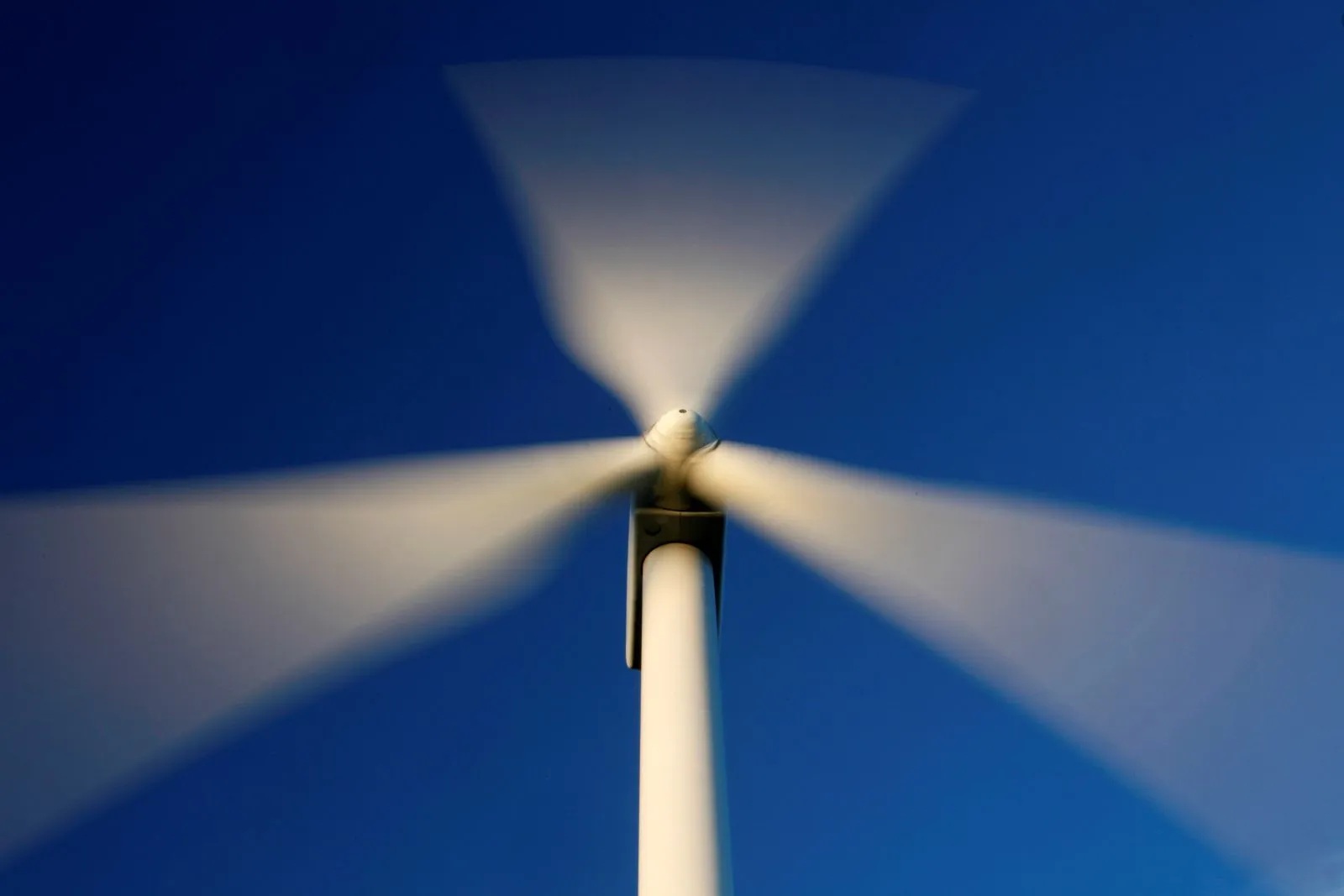
The Maine Public Utilities Commission has tried to encourage the development of large-scale renewable energy projects in Aroostook County for years. That saga may finally reach a resolution as the commission closes its latest round of bidding today and says it may begin making awards this month.
The commission, which regulates electric and other utility services, issued this latest request for proposals in December 2025 for both renewable energy generation — such as wind and solar farms — in northern Maine, as well as new transmission infrastructure needed to get at least 1200 megawatts of power to the New England grid, enough to power hundreds of thousands of homes.
This is the second time in five years that the Public Utilities Commission has issued a request for proposals, or RFP, for renewable energy in Aroostook County. The commission made selections following a 2021 request for proposals but ultimately ended the procurement process in 2023 without finalizing the deals. Even before 2021, energy companies have tried to develop projects in the region for years.
“This RFP builds on prior stakeholder input and regional transmission planning to move renewable energy projects in northern Maine from concept to reality,” the commission’s chairman, Philip Bartlett, said in a press release in December.
Northern Maine is “a fantastic wind resource,” according to Eliza Donoghue, executive director of the Maine Renewable Energy Association.
That wind power, if put on the grid, could help Maine and other New England states meet rising electricity demand as well as their renewable energy goals as climate change prompts policymakers and the energy system to find ways to shift away from fossil fuels.
But Aroostook County lacks transmission lines going south to export that energy, and the state and developers have been “trying to unlock that puzzle of how to make that happen for a long time,” Donoghue said. Northern Maine has its own electric grid, linked to New Brunswick, Canada, rather than to the rest of Maine and New England.
The previous bid to build a new transmission line was deemed too expensive, and the plans also faced opposition from landowners along the 140-mile proposed route, which would have cut through Albion, Palermo, Freedom, Thorndike and Unity as well as other communities.
This time, Maine is working with Connecticut, Massachusetts, Rhode Island and Vermont. The goal is for all five states to share the costs of building new transmission infrastructure that would connect Aroostook County to the regional grid in central Maine. The grid operator, ISO New England, is also soliciting separate but related bids for transmission upgrades farther south.
Both the Public Utilities Commission and ISO New England are keeping their solicitation processes confidential, so it’s not publicly known what projects are under consideration. But dozens of energy companies big and small, specializing in both wind and solar, have signed up to receive updates on the commission’s online docket. The list includes local companies as well as major multinationals such as Italy’s Enel, France’s Engie and Norway’s Equinor.
Cheap wind power, expensive transmission lines
In 2021, the Maine Legislature passed a bill “to require prompt and effective use of the renewable energy resources of northern Maine” and tasked the Public Utilities Commission with making that happen. Efforts had stalled since an initial attempt, but both the commission and onlookers said this time should be different.
“This time they started working with all the other states in advance,” said Jack Shapiro, climate and clean energy director at the Natural Resources Council of Maine. “It really helps to have the cost and the benefits shared across New England. That’s what’s different this time.”
Those benefits include wind farms generally being cheaper to build and operate than new fossil-fueled plants.
“It’s basically the biggest opportunity that we have for low-cost renewable energy in the medium term,” Shapiro said. Once wind turbines go up, “they just keep turning, every time the wind blows.”
Wind also tends to be the strongest at night and in the winter, when New England needs energy the most and costs tend to be the highest. The natural gas supply in winter is limited because most gas is going to local distribution companies that heat people’s homes and have long-term contracts. Not much is left for power plants that buy gas on the spot market, according to Shapiro. During these times of peak demand and limited supply, ISO New England has to call on “peaking” plants that run largely on oil and are more expensive to bring online, he said, and those plants are a major driver of high energy costs in the region.
While building renewable energy has gotten cheaper, transmission lines remain expensive.
The projects approved by the Public Utilities Commission during its 2021 solicitation would have had a net cost of approximately $1.7 billion over 30 years. (The transmission line was estimated to cost ratepayers about $2.78 billion, and the wind farm was estimated to save ratepayers about $1.08 billion.)
These projects ultimately fell through. The COVID-19 pandemic and inflation raised costs for the developers, LS Power and Longroad. Maine brought Massachusetts into the process but only at the last minute, and the various parties were unable to finalize the terms of their power purchase and transmission service agreements.
Both of the state senators representing Aroostook County at the time, Democrat Troy Jackson and Republican Trey Stewart, had supported the effort. So did business groups, including the Aroostook Partnership and the Maine Chamber of Commerce, which said they hoped the proposed projects would bring jobs and economic development to the area.
Politicians and interest groups have been quieter this time around, though that may change once the state announces its selections.
The transmission line proposed by LS Power in response to the 2021 request for proposals drew stiff opposition from landowners who may have had parts of their properties taken by eminent domain or were concerned about the project’s potential effects on the nature of the rural region. Many advocated for the Northern Maine Renewable Energy Program to use existing transmission corridors or to build underground rather than aboveground transmission lines.
Another thing that’s changed since 2021 is the federal government’s approach to energy policy. The Trump administration has prioritized fossil fuels and nuclear energy, rolling back subsidies and programs that encouraged renewable energy development. In some cases the administration has actively discouraged or obstructed new renewable energy projects, most notably by pausing offshore wind leases and paying companies not to develop planned offshore wind farms.
According to the American Clean Power Association and reporting by the Financial Times and other news publications, required Federal Aviation Administration and Pentagon reviews of more than a hundred wind projects have been delayed, in many cases for months.
One would-be developer in Aroostook County, EDP, had submitted its proposed Number Nine Wind Farm to the Federal Aviation Administration for review in January.
“I think it remains to be seen what the long-term effects are of these sort of desperate shenanigans at the federal level,” Shapiro said.
The northern Maine projects selected by the Public Utilities Commission likely would not begin construction for another few years, he said, adding that the “best-case scenario” would be for projects to be up and running in the 2030s.
This story was originally published by The Maine Monitor, a nonprofit and nonpartisan news organization. To get regular coverage from The Monitor, sign up for a free Monitor newsletter here.
We invite you to add your comments. We encourage a thoughtful exchange of ideas and information on this website. By joining the conversation, you are agreeing to our commenting policy and terms of use. More information is found on our FAQs. You can update your screen name on the member's center.
Comments are managed by our staff during regular business hours Monday through Friday as well as limited hours on Saturday and Sunday. Comments held for moderation outside of those hours may take longer to approve.
Join the Conversation
Please sign into your CentralMaine.com account to participate in conversations below. If you do not have an account, you can subscribe here. Questions? Please see our FAQs.