


WATERVILLE — Michael Dunson was first prescribed opioids in the early 2000s. He said it ruined his life.
In 2020, Dunson, 48, lost the Waterville apartment he shared with his brother. After his brother died, Dunson couldn’t afford the rent, and he ended up on the streets. He blames his opioid addiction.
While he was experiencing homelessness Dunson sometimes worked, but sometimes couldn’t. He lost both of his legs to diabetes-related infections, and he battled opioid addiction the whole time.

Dunson, who is staying at the Mid-Maine Homeless Shelter, credits the shelter for his two years of addiction recovery.
He’s been one of Waterville’s homeless people, but he’s on a path to secure housing for himself.
More people in Maine are experiencing homelessness since the pandemic, but not at the same rates everywhere.
While some people have raised concerns about increasing homelessness in Waterville after seeing more people on the streets during warmer months, that doesn’t necessarily indicate an increase because local experts say the population of people without permanent houses has held steady.
WHY DOES HOMELESSNESS SEEM TO BE ON THE RISE?
“What people are seeing is that the signs of homelessness are more noticeable,” said City Councilor Rebecca Green, D-Ward 4.
The Mid-Maine Homeless Shelter doesn’t turn anyone away in the winter. The shelter was designed for 48 beds, but routinely houses 65 people. When the warming center is open, it gets funding for 20 extra beds, but in winter often more than 100 people stay in the building.
But the shelter doesn’t have the funding to make that a policy year round.
“Most Mainers know that if they leave somebody outside, there’s a high risk they’re going to suffer,” Katie Spencer White, CEO at Mid-Maine Homeless Shelter and Services, said. “Once spring comes and through summer, those resources dry up, and everybody is outside.”
Waterville police Maj. Jason Longley said more people are experiencing homelessness in the city compared to 10 years ago. But while the police force has had a few more interactions this year than it did last year, he said the number of homeless people in Waterville has been somewhat stable.
Longley credits the police force’s Community Impact Team, which is dedicated to public health and community trust, with taking an active role in serving people who are homeless and connecting them with services. The team has a police officer, a paramedic, a social worker and more officials who offer support.
But White said a changing housing market and increasing costs haven’t helped find permanent solutions. And not all forms of aid actually make an impact. When the factors causing homelessness are constantly changing, White said serving everyone well is difficult.
“It sometimes feels that every time that we pivot and do something new and innovative, the population of people that we need to serve is no longer what it was 12 months ago,” White said. “We’re seeing that, frankly, across the whole state.”
HELP IS AVAILABLE BUT IT CAN TAKE TIME
The federal Housing Choice Voucher Program helps cover housing costs for eligible individuals and families. Participants usually pay about 30% of their housing costs, with the voucher program covering the rest.
Dunson has struggled to get and keep housing because of his addiction, the cost of housing, and his injuries. These factors are causing homelessness nationwide, and Dunson said it’s important to understand something.
“We don’t want to be this way,” Dunson said. “But we do realize our choices.”
Dunson has a housing voucher, and he said it’s an example of how counselors and advisors helped him in his journey. They didn’t fill out paperwork for him and they didn’t force him into recovery. He said they taught him how to fish, so to speak.
“When you deal with homelessness and you’re an addict, homelessness does not apply because you have an addiction to rival with,” Dunson said. “Nothing takes precedence over that addiction.”
The Waterville Housing Authority manages vouchers for the Waterville area and currently has 328 voucher holders. But the waiting list is five years long, and has been for five years. Diane Townsend, executive director of the Waterville Housing Authority, said currently more than 700 applicants who fit the criteria are on the waiting list.
The waiting list for a public housing program, which provides designated low-income housing options, is at least a year long.
“The way prices are for things, one small hiccup if you don’t have a backup plan, or you don’t have people to help with your backup plan, you can be in trouble,” Townsend said. “Folks who haven’t had to deal with that in their life, or haven’t worked with people who have that happen to them, don’t understand that.”
With a housing voucher, Dunson has hope for stable housing, which will help him in his recovery. He said his recovery is like a baby — it needs constant care and attention. Nothing is more important to him.

Foster McClure, 69, first became homeless at 14. He’s lived his life in and out of shelters, and works whenever he can. He also battles bipolar disorder, schizophrenia and depression.
McClure needs medication for these disorders, which he’s currently not taking, and he also takes blood pressure medication, antibiotics for an infection and is awaiting surgery for a stomach condition. With ongoing health issues, McClure has trouble collecting cans to redeem for deposits.
Waterville has made strides in serving its homeless population, by making its shelter low-barrier and creating a homelessness task force in response to complaints from local businesses. Last winter, the shelter saw a 76% reduction in overdoses because it changed the way it staffs shifts, focusing on overdose prevention first.
In May, volunteers collected 3,900 syringes during a cleanup effort at Head of Falls park.
Carla Caron, executive director of the Waterville Area Soup Kitchen, said she feels people have reached a reckoning point. So much of addiction treatment over the last few years has focused on harm reduction, a method of treating addiction that prioritizes disease prevention and survival over sobriety. In many ways it has worked, with the state seeing a decline in fatal overdoses. Portland managed to collect 86% of the needles it distributed.

Caron supports clean needles, but she said she thinks its time to start treating addiction in the homeless population.
Caron knows how hard addiction recovery can be. She’s lived it. She also knows that homelessness makes recovery so much harder. Without a safe, warm place to sleep, without reliable transportation, without a steady schedule, getting treatment is hard.
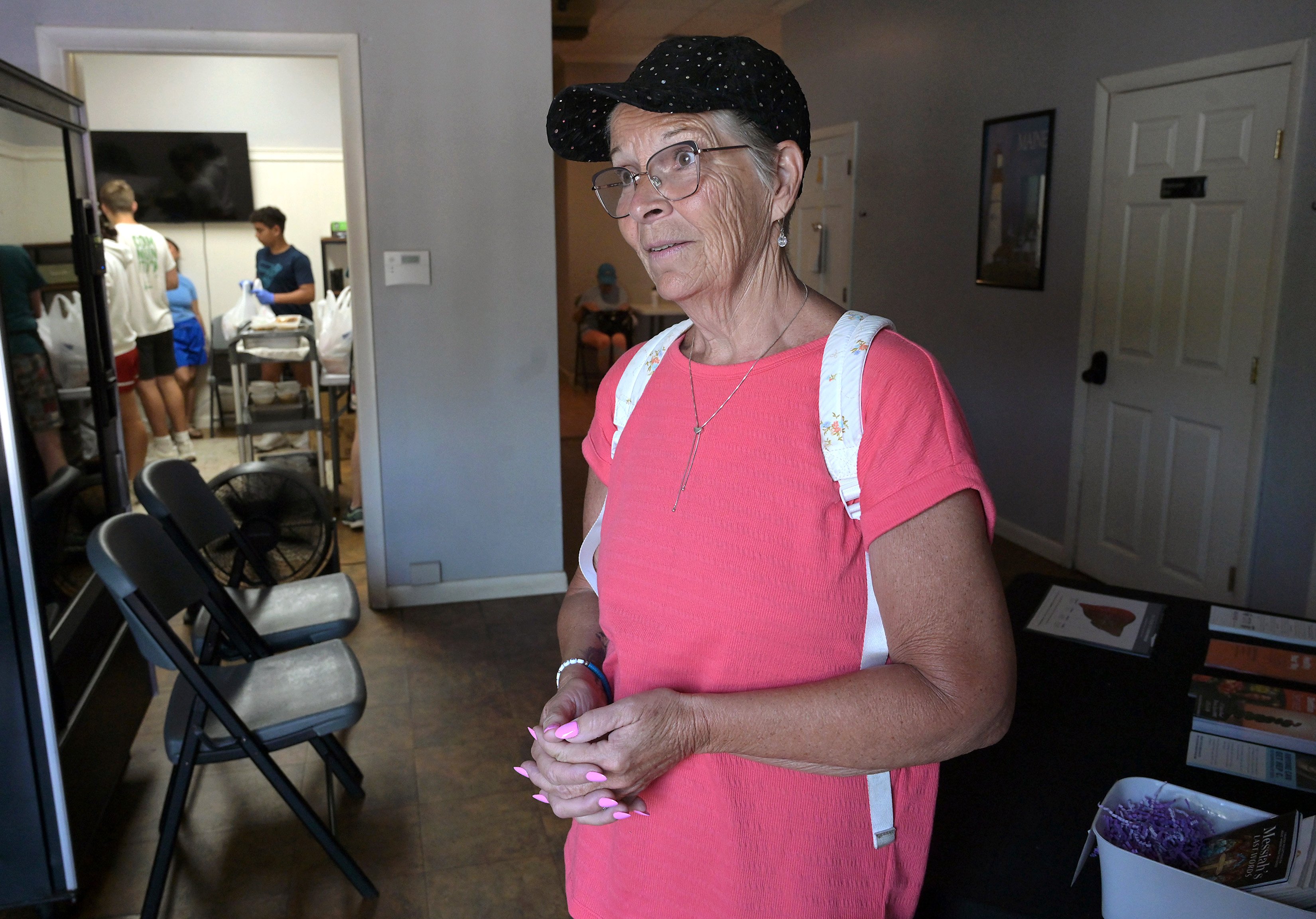
But she’s hopeful. About a third of the people the soup kitchen serves are experiencing homelessness, Caron said.
She thinks the best way to help them is to ask herself, “What can I do right now?”
WHAT’S THE SOLUTION?
Caron is focused on connection over correction. At the soup kitchen, everyone knows her. She helps where she can, and she comes to them from a place of love, even if she disagrees with their choices.
Now she wants to bring recovery services — programs that use drugs like methadone and Suboxone, which treat withdrawal symptoms — to the soup kitchen.
Harm reduction is often described as meeting people where they are. She thinks meeting people where they are physically, like the soup kitchen, is the way forward.
Waterville Fire Department is one of a handful of EMS agencies in Maine participating in a Suboxone pilot program to treat withdrawal symptoms after opioid overdoses.
If Caron can bring an agency to offer treatment services at the soup kitchen, she said Waterville would really be treating addiction where its happening. She thinks this is the answer.
“Waterville is going to be a model,” Caron said. “Not just for the state of Maine, but for the nation.”
Dunson agrees that treatment like this is the answer. Next month he’ll attend a conference about opioid addiction and recovery, and thanks to his housing voucher he’ll have an apartment soon. He wants to become a recovery coach, because he knows how hard it is, and because he believes recovery works. It’s everything to him.

We invite you to add your comments. We encourage a thoughtful exchange of ideas and information on this website. By joining the conversation, you are agreeing to our commenting policy and terms of use. More information is found on our FAQs. You can update your screen name on the member's center.
Comments are managed by our staff during regular business hours Monday through Friday as well as limited hours on Saturday and Sunday. Comments held for moderation outside of those hours may take longer to approve.
Join the Conversation
Please sign into your CentralMaine.com account to participate in conversations below. If you do not have an account, you can subscribe here. Questions? Please see our FAQs.