

Standing out on a limb with safety ropes and a chain saw, Jason Fitch of J & L Tree Co. prepares to cut limbs recently from a giant silver maple that could have fallen on a home on Upper Main Street in Waterville.
2012

Posted inNews
Icy weather contributor in Fairfield crash

FAIRFIELD — Icy weather was a contributing factor in an accident Saturday that injured three people, tore a car in half and closed U.S. Route 201 for four hours.
advertisement

Posted inSports
COLLEGE FOOTBALL: Grandson a chip off Shiro block

It’s been a pretty rough year for Ted Shiro, the former Waterville High School and Colby College athlete who is now well into his ninth decade.
Posted inNews
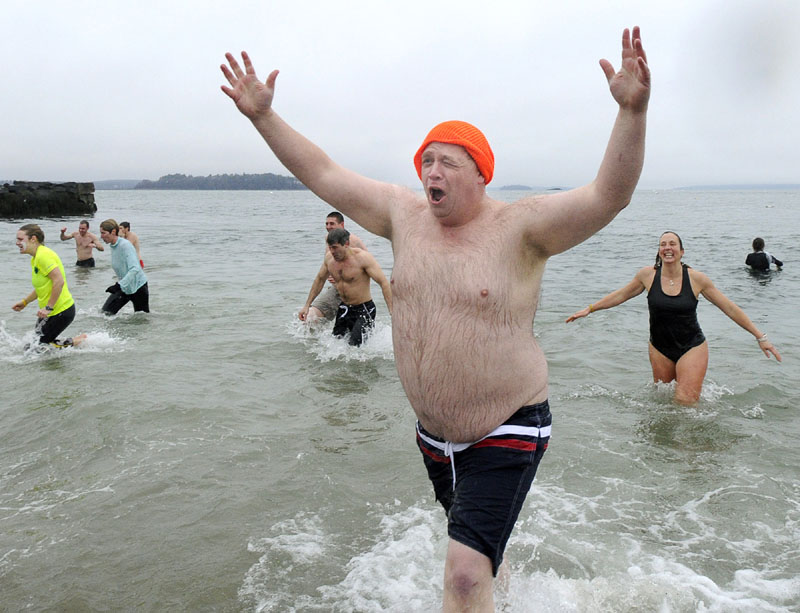
Polar b-b-bears t-t-take the plunge

PORTLAND — A steel gray sky spitting sleet and rain and temperatures hovering near freezing made the icy waters off East End Beach on Saturday look like the last place any sane person would venture.

Posted inNews
Missing child cases often difficult to investigate

Experts in police procedures say missing-child cases are among the most difficult to investigate, in part because family members must be viewed as both victims and potential suspects.
Posted inAyla Reynolds, News
Crime-scene tape comes down at Violette Avenue home
WATERVILLE — Police investigating the disappearance of 20-month-old Ayla Reynolds have finished their investigative work involving the Violette Avenue home where she was seen last.
Posted inNews
ON THE EDGE: Just another auld lang syne
It’s here. 2011 is passing into history. So I’ve been going through this stack of year’s end magazines to see how everyone famous feels about it.
Posted inNews
Cheryl, Larry Barkow commit to new life as full-time caregivers

FARMINGTON — When Dr. Jeffrey Johnson started treating Alice Osborne, who has dementia, he thought she had little chance of surviving more than a few weeks.
Posted inOpinion
CHARLES KRAUTHAMMER: Is it the fate of intelligent species in universe to destroy themselves?
Huge excitement. Two Earth-size planets found orbiting a sun-like star less than a thousand light-years away. This comes two weeks after the stunning announcement of another planet orbiting another star at precisely the right distance — within the so-called “habitable zone” that is not too hot and not too cold — to allow for liquid water and therefore possible life.