

Shortly after Gov. Janet Mills entered the Democratic primary to take on U.S. Sen. Susan Collins, the early and unexpected frontrunner in the race faced a sudden onslaught of negative headlines about comments he made online and for having a tattoo linked to Nazi imagery.
Like the candidate himself, they seemed to come out of nowhere.
Graham Platner, an oyster farmer and military veteran from Hancock County, had been drawing hundreds of people to town halls across the state and raising millions of dollars. He has no political experience, and that is part of his appeal.
The recent disclosures are a textbook example of opposition research, a well-known and standard practice of deeply researching political candidates to identify their strengths and, more importantly, their weaknesses.
While the negative press and advertising that follows can seem like dirty politics, it’s become a critical part of vetting candidates and drawing early contrasts during a campaign.
“Opposition research has been around forever,” said Brett Di Resta, a longtime opposition researcher who now teaches about it at George Washington University and the University of San Francisco. “Everyone who runs should go through it. You’re signing up to run the country. I don’t think it’s unfair to check and see what you have said or done in the past.”
Platner has taken aim at the Democratic Party for pushing the narrative that his past should be disqualifying and is using that to enhance his outsider credibility.
So far, it’s working. Although his campaign has seen some defections, supporters are still packing his town hall events.
Whether that lasts is unclear, as is whether more information comes out about his past.

WHAT IS OPPOSITION RESEARCH?
There are two main types of opposition research — defensive and offensive.
Defensive research is usually conducted by a prospective candidate to identify weaknesses before deciding to get into a race, while offensive research looks for weaknesses in an opponent. Both look into a candidate’s personal and professional history.
If the subject is already a public office holder, that research typically includes reviewing past policy positions, votes, speeches and public comments. If the subject is a newcomer, researchers will look at online comments, business dealings and publicly available financial records, including any tax liens or lawsuits.
“We are the factual foundations for campaigns,” Di Resta said. “You find these things. You document these things. And then you use them in your campaign.”
Opposition research can be time consuming and expensive, so it’s typically done by national groups, including major political parties and their official campaign arms, as well as special interest groups.
The fruits of that labor can enter the public debate in several ways. It can be introduced publicly by a candidate about their opponent, though that risks making that candidate look negative.
More often than not, the research is presented to journalists on background, which allows a reporter to independently confirm the information and craft a story. Those tips can come from a campaign, an ally or some other third party, including whistleblowers.
The headlines generated from those stories are then used and amplified in ads and commercials, especially by third party groups, such as Super PACs.
HOW HAS IT BEEN USED?
Opposition research has been used at all levels of campaigning.
In 1988, Al Gore attacked then-Massachusetts Gov. Michael Dukakis during a Democratic presidential primary debate over a nearly two-decade-old prison furlough program, which allowed some prisoners serving life sentences to earn short, unguarded time out of jail.
At the time, Willie Horton was released on his 10th furlough and escaped to Maryland, where he tortured and raped a woman. Horton, a Black man, had been serving a life sentence for armed robbery and murder.
While Gore didn’t mention Horton by name, Republican Vice President George H. W. Bush seized on the attack and a third-party group ran television ads featuring the incident and Horton’s mugshot, a move widely recognized as amplifying racist stereotypes.
More than a decade later, Bush’s son was involved in another opposition dump — only this time, the younger Bush was on the receiving end.
In the final week of the 2000 presidential election, local TV stations in Maine broke a story about George W. Bush having been cited for drunken driving while in Kennebunkport.
The incident happened in 1976 when Bush was 30 years old. But the charge resurfaced 24 years later in the closing days of a tight race against Gore after a TV reporter overheard an attorney discussing it at a courthouse. That lawyer, as it turned out, had ties to the Democratic National Committee.
Opposition research has also been used in state-level races.
Independent gubernatorial candidate Eliot Cutler’s business dealings with China were questioned in what became known as the Cutler Files in 2010. Cutler said the site contained false information and its creator was eventually fined for campaign finance violations.
In 2018, Republican gubernatorial candidate Shawn Moody was the subject of a New York Times story about settling a 2006 sexual discrimination complaint that had been filed with the Maine Human Rights Commission by a former worker.
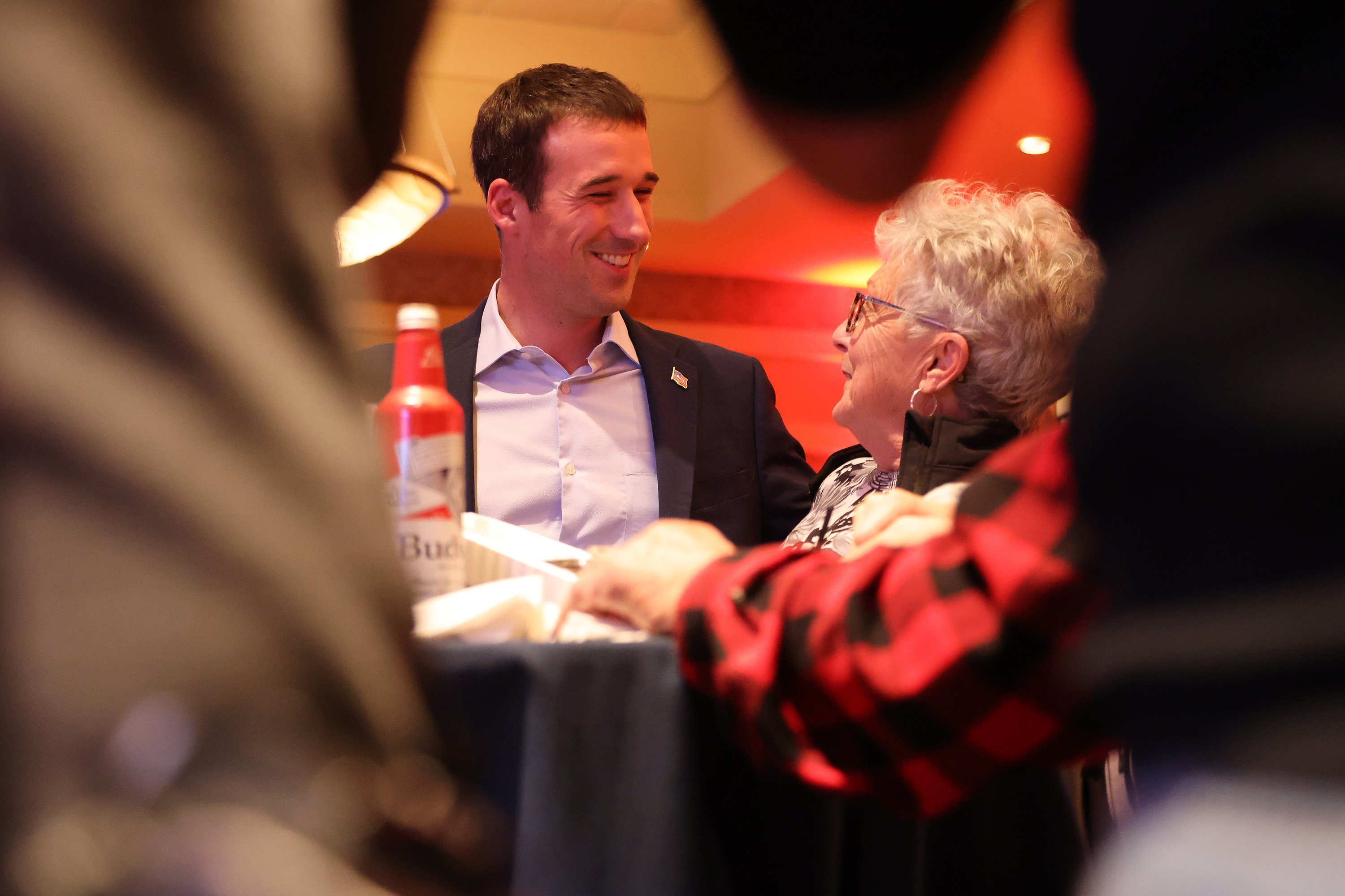
And in 2024, former state Rep. Austin Theriault, R-Fort Kent, was attacked in ads for missing legislative votes while running for the Maine 2nd Congressional District seat. Opponents called him “no show Theriault.”
Theriault said he believes the attack may have contributed to his narrow defeat to Democratic U.S. Rep. Jared Golden.
“It was a funny but unfortunate story that I wish we would have had the resources and money to push back on,” Theriault said. “It was an amateurish attack but it may have been effective.”
Theriault, who ran as a gun rights candidate, also made national and local headlines after details surfaced about him calling the police on a man with an AR-15 rifle, even though the man was not committing a crime.
AN EMBARRASSMENT OF DIGITAL MATERIAL
While opposition research is not new, researchers today have vastly more sources of information as people spend more time online, documenting all aspects of their lives with photos and videos and expressing their opinions — or trolling others — on social media sites such as X and Reddit.
Di Resta said he used to have to travel to various cities and visit local courthouses so he could review reams of public records and court documents, including volumes written by hand, to dig up a candidate’s background.
That’s not the case today.
“From a research perspective, the difficulty went from collecting information to analyzing the information because you now have so much information that previously didn’t exist,” he said.
The amount of data online can present a challenge for younger candidates, including Platner, who grew up with easy access to the internet and a variety of social media platforms on which they could express their opinions and get into arguments with people from all over the world.
“Social media wasn’t around for people who have been in politics for 40 years,” said Lonna Atkeson, the eminent scholar of political science and director of the LeRoy Collins Institute at Florida State University. “There’s just a lot more fodder there.”
Theriault said the prospect of having online posts come back to publicly haunt a candidate discourages younger people from running for office, though he was careful to say his statement does not apply to the Democratic primary for U.S. Senate, which he said is “a different animal.”
“They don’t want to put themselves or their families through this,” he said.
MAINE’S U.S. SENATE RACE
The major candidates in the Democratic primary are using opposition dumps in different ways.
Platner, 41, has been using the disclosures to solidify his outsider status and to project authenticity. He’s been running against the political establishment, including Senate Minority Leader Chuck Schumer, who reportedly recruited Mills.
Platner said on a national podcast, in which he disclosed the existence of a tattoo that resembled a Nazi symbol after getting calls from journalists, that national operatives warned him not to run and threatened to “destroy my life.” (Platner said he wasn’t aware of the resemblance and has since covered the tattoo.)
He and his supporters have doubled down, and Platner continues to pack town hall events.
They have noted that the opposition dump came only days after Mills entered the race. Platner said at an Ogunquit town hall on Oct. 22 that “the machine turned on.”
“I am running as a Democrat, despite my party trying to destroy my life,” Platner said at another public event in Damariscotta a few days later, which his campaign said drew about 700 people.
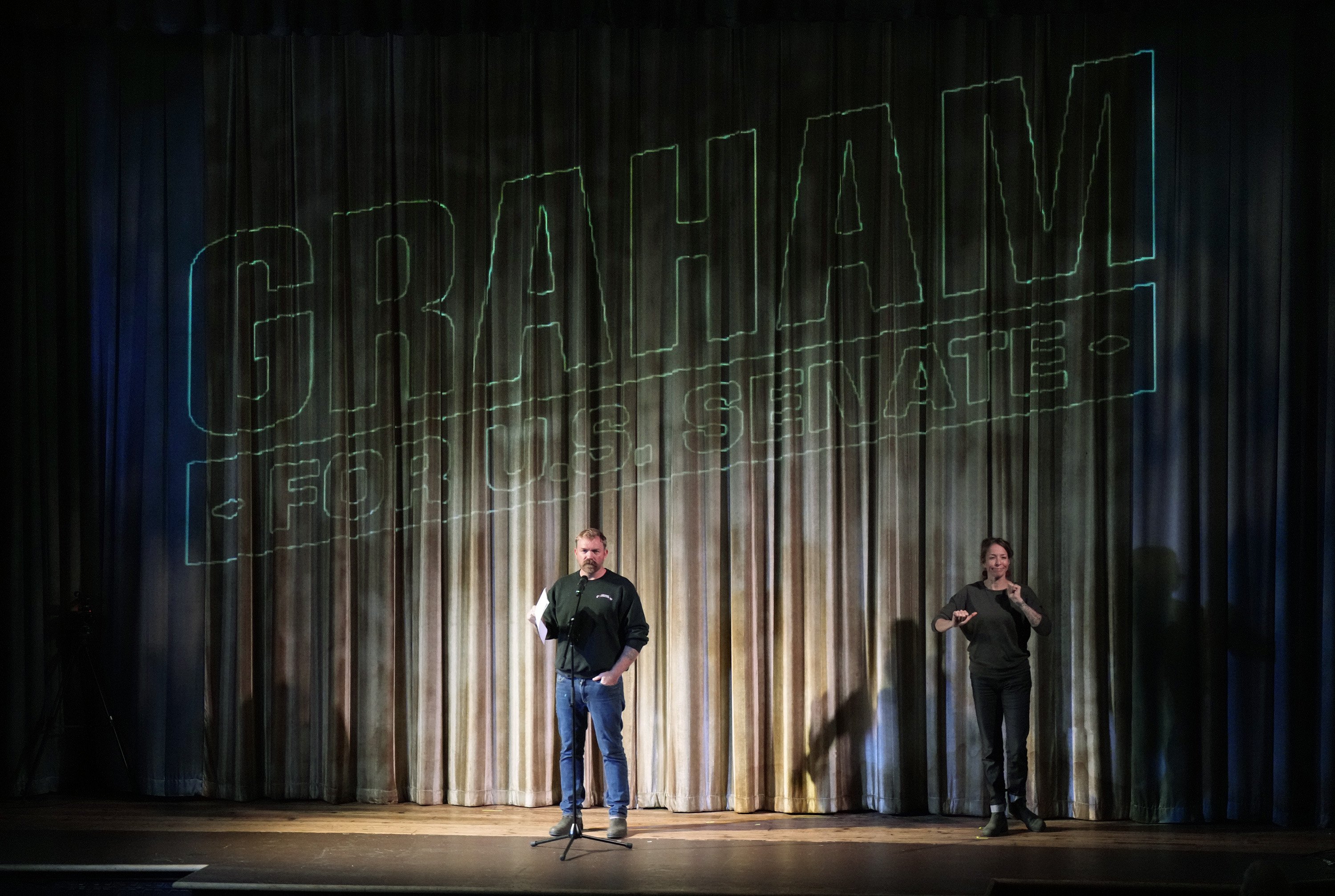
That message seems to be resonating, even after his Maine political director resigned because of the controversy, his campaign manager left after less than a week on the job, citing his wife’s pregnancy, and his campaign finance director left Friday, saying they disagreed over “professional standards.”
Mills, a 77-year-old former state lawmakers, district attorney and attorney general, has tried to stay above the fray. Her campaign has focused on her experience serving in public office for decades and having a well-known personal and policy record — and a record of winning two statewide elections.
Before the disclosures, Mills would swat away questions about Platner, saying she didn’t know anything about him other than that his dad was a prominent attorney and his mother a successful business owner.
As the opposition research became public, she has criticized Platner’s reported comments when asked by reporters, saying she “obviously” disagrees that rural white Mainers are racist and stupid and that all cops are bastards. And she called his tattoo “abhorrent.”
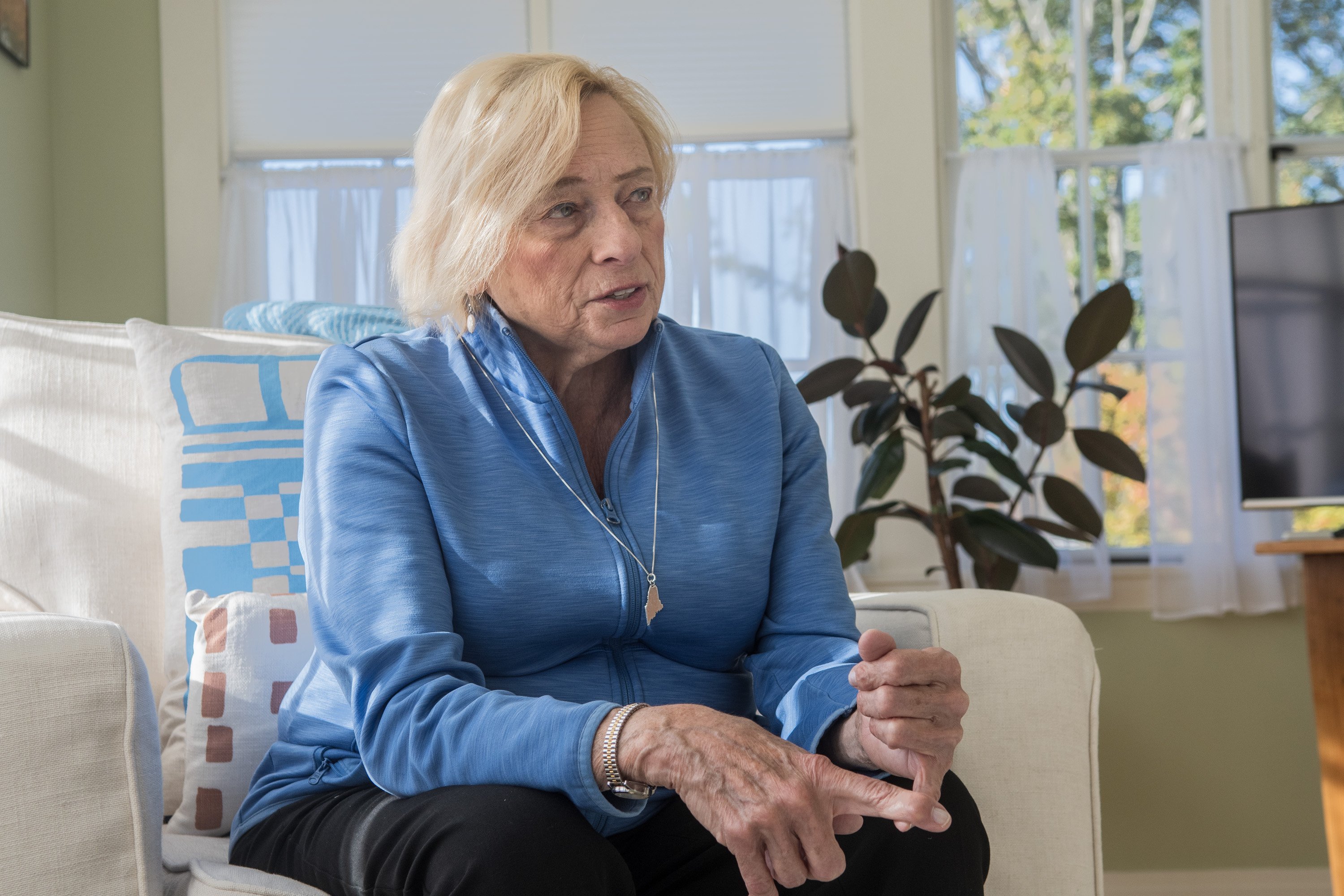
Mills has not called for Platner to drop out, instead saying it’s something for voters to decide.
Jordan Wood, a 36-year-old Bristol resident and former Capitol Hill staffer, is also running in the primary. He called on Platner to leave the race because of his tattoo and his previous use of homophobic slurs, which were reported by “The Advocate.”
“With Donald Trump and his sycophants demonizing Americans, spewing hate, and running roughshod over the Constitution, Democrats need to be able to condemn Trump’s actions with moral clarity,” Wood said. “Graham Platner no longer can.”
It’s unclear where voters will ultimately land. Early polling indicated Platner had a major lead, but it was conducted just as the opposition research was being released. However, the primary is still seven months away and voters sometimes have short memories.

We invite you to add your comments. We encourage a thoughtful exchange of ideas and information on this website. By joining the conversation, you are agreeing to our commenting policy and terms of use. More information is found on our FAQs. You can update your screen name on the member's center.
Comments are managed by our staff during regular business hours Monday through Friday as well as limited hours on Saturday and Sunday. Comments held for moderation outside of those hours may take longer to approve.
Join the Conversation
Please sign into your CentralMaine.com account to participate in conversations below. If you do not have an account, you can subscribe here. Questions? Please see our FAQs.