

In a video posted in January, content creator Margaret Skiff and a friend shuffle down an ice-covered brick sidewalk in Portland, taking baby steps in their going-out boots while bending their knees and spreading their arms to balance themselves or, if necessary, break their falls.
Comments on the post, viewed 39,000 times on TikTok, offer advice (different footwear, hands out of pockets), share tales of wiping out and commiserate about the conditions of the city’s at times impassable streets.
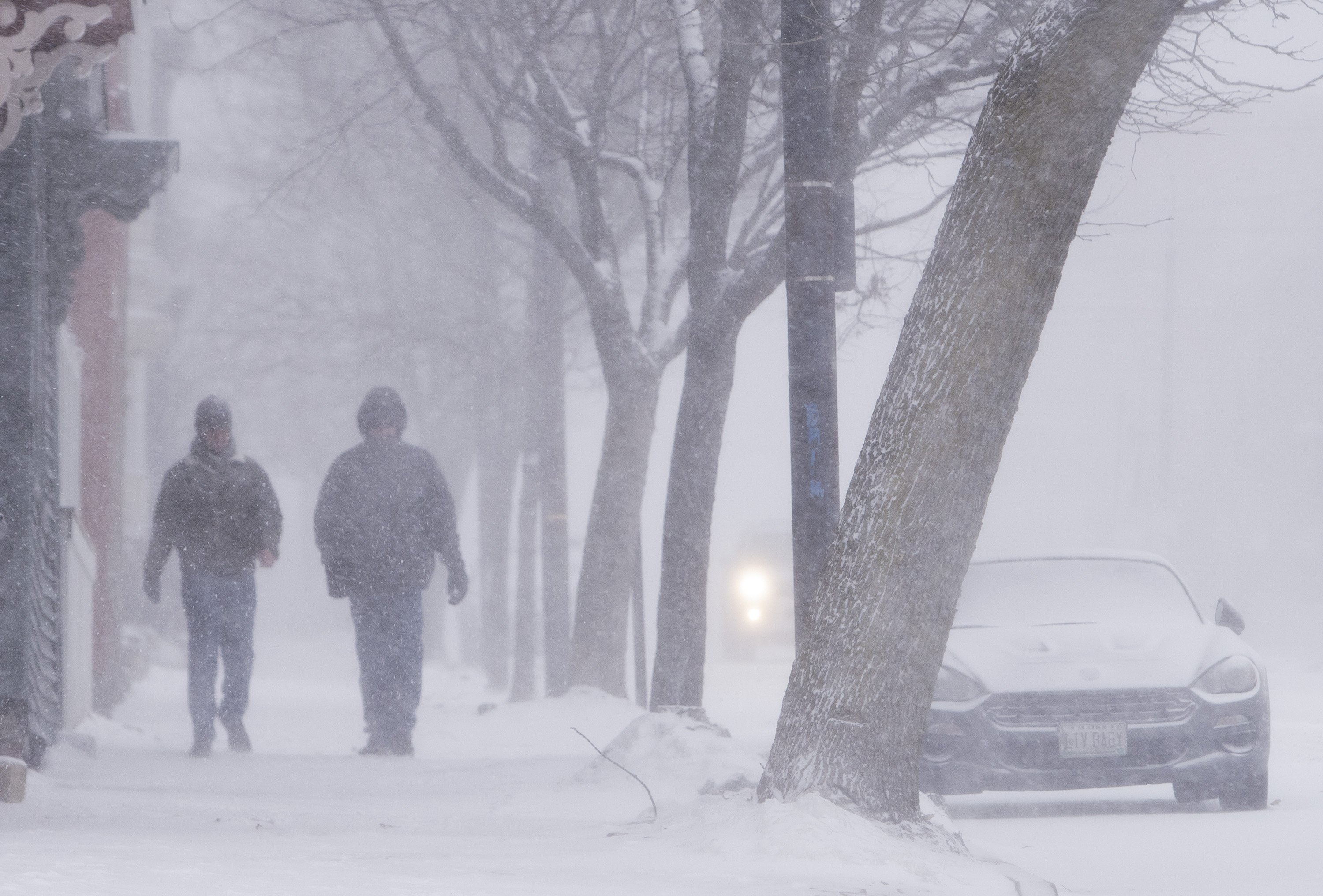
The scene this winter, which got off to a cold and snowy start, has gone from hellscape to wonderland and back more than once. Just as it seemed we were entering a new phase —where the biggest hazard was stepping through a thinning layer of ice into the puddle below — we got hit with a one-two punch of snow that kept me off the streets early this week. And we know, for at least the next month or so, it could happen again anytime.
If you’re determined to keep trudging along or itching to get back outside as spring approaches, a few pointers.
1. Leave your Bean Boots at home
One of the bright spots of the start of winter in Maine is pulling your Bean Boots out of the closet, more weathered than the year before. Unless you keep a strict resoling schedule, that likely also means they’re slipperier. Leon Leonwood’s idea in stitching a rubber sole to a leather upper, creating the Maine Hunting Shoe, was to keep feet comfortable, warm and dry while tramping through damp woods, not while traversing icy sidewalks so your step count stays respectable. When you’re going to be navigating an icy or snowy urban environment on foot, choose something with better tread, or at least invest in traction devices to slip over them.
2. Beware of brick
Here’s another case of form over function: the charming brick sidewalks that dominate Portland’s peninsula. In addition to their smooth surfaces being slicker to walk on than their concrete counterparts, complaints about their incompatibility with winter include that their grooves make them difficult to shovel and uneven spots are hard to see in snow. I understand that danger first-hand, having sprained my ankle on a heave last spring when there was nothing obscuring it.
3. Avoid steep streets
Last winter, local comedian Nikolai Lane posted a video with his take on what he sarcastically deemed the “Top Five Chillest Sidewalks in Portland, Maine,” pointing out locations of icy patches and snow bank barriers as he counted down to Mellen Street, ranked No. 1 because of its incline. Commenters on his and Skiff’s videos have chimed in about other steep stretches that are impossible to climb when icy, including High Street and the hill on Deering Avenue as it approaches Congress.
I’ll never forget looking up at the glaze coating Cumberland Avenue from the bottom of Munjoy Hill one year and seeing no option other than to request what had to be the shortest-ever Uber ride to my apartment a couple blocks away.
4. Tell on your neighbors
Sidewalks that haven’t been shoveled are less predictable hazards, but there is something you can do about them — complain. As of Jan. 20, the city of Portland had received around 300 reports of properties violating its requirement to clear sidewalks within 12 hours of the end of a storm for businesses or 18 hours for residences. By the end of that month, 38 property owners were billed for snow removal at a cost of $175 an hour. According to the addresses on an invoice from the contractor, there are clusters of these scofflaws near Carleton Street on the West End, Boynton Street in Parkside and Riverside Street (or maybe that’s just where the tattletales are).
5. Heed the hedges
I’ve noticed there are some property owners who attempt to comply with the snow removal rule but clearly don’t think like walkers. These are the people who shovel thin paths within the sidewalk, not taking into consideration the girth of their overgrown hedges, forcing pedestrians to perform a sideways limbo maneuver in order to get by. Be sure to look out for these situations before choosing a route; once you’re trapped on the inside of a snow bank, there’s no easy way out.
6. Work from home
If you need a fresh argument for keeping your hybrid work schedule, look no further than MEMIC’s Walk Safe campaign, which points to work parking lots as the most common place people fall and hurt themselves, according to data on file with the Portland-based workers’ compensation insurance company. That’s followed by walking to a client or third-party residence. That means, if it’s under 37 degrees, snowing or there’s a high dew point or fog (conditions MEMIC says require caution), you have an excuse to cancel those social plans, too.
7. Consider the beach
No, really. Sometimes, the weather creates conditions that make walking along the street or on trails just too dangerous, and there’s no way around it.
If you still want to get your steps in and refuse to go to the gym, you might have better luck at the beach, the preferred winter walking locale of some. Even when snow accumulates there, an outgoing tide will clear a swath by the shore. Although walking on sand is generally not my idea of a good time, it beats falling on ice.

We invite you to add your comments. We encourage a thoughtful exchange of ideas and information on this website. By joining the conversation, you are agreeing to our commenting policy and terms of use. More information is found on our FAQs. You can modify your screen name here.
Comments are managed by our staff during regular business hours Monday through Friday as well as limited hours on Saturday and Sunday. Comments held for moderation outside of those hours may take longer to approve.
Join the Conversation
Please sign into your CentralMaine.com account to participate in conversations below. If you do not have an account, you can register or subscribe. Questions? Please see our FAQs.