

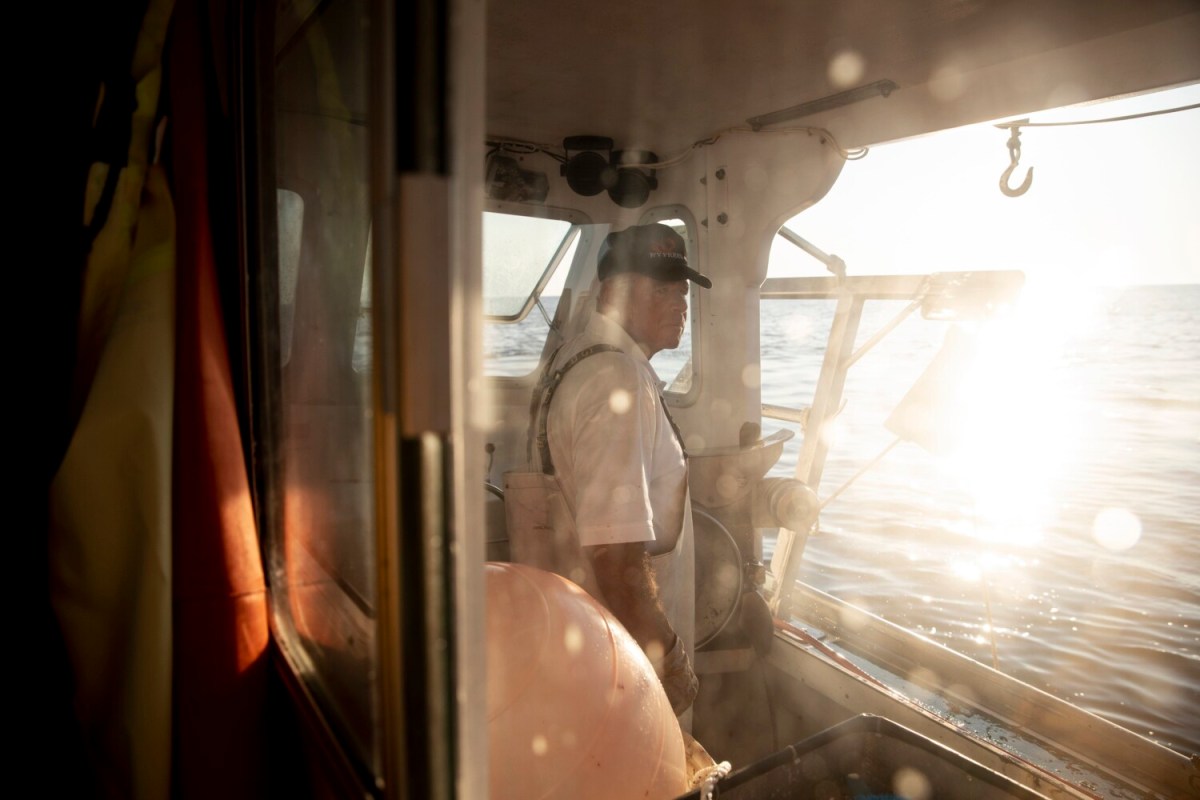
A fifth-generation Vinalhaven lobsterman is petitioning the U.S. Supreme Court to overturn a federal regulation requiring commercial lobster boats to be monitored by GPS trackers 24 hours a day.
In paperwork filed this week, Frank Thompson is challenging a 2023 regulation that requires all federally licensed lobster vessels in the Northeast to install trackers that transmit the ship’s location to the government at least once per minute.
Thompson argues the continuous, warrantless surveillance is a violation of his Fourth Amendment protection from unreasonable search and seizure. Fishing regulators say the data improves understanding of the lobster population and can inform future rules.
According to the rule adopted by the Atlantic States Marine Fisheries Commission, these trackers must remain active whenever a vessel is in the water, including times when the boat is docked, moored or being used for recreational purposes.
Like many other Maine lobstermen, Thompson regularly uses his lobster boat for personal or community activities, like family day trips, emergency rescue operations, and transporting sick residents or students to the mainland.
In his petition, Thompson, an outspoken critic of government regulations, argues that where a lobsterman fishes is a proprietary trade secret that has great monetary value and provides him with a competitive advantage in the industry.
“His decisions concerning the movements of his fishing vessel and the placement of his
traps are the result of hard work and knowledge passed down through his family over many decades,” the petition reads.
A district court dismissed Thompson’s first lawsuit, citing a legal exception for closer government oversight of highly regulated industries such as commercial aviation and trucking. Conservation groups cheered the dismissal as a step toward accountability. The 1st U.S. Circuit Court of Appeals in Boston upheld the ruling in November.
The new petition is asking the nation’s highest court to intervene.
“Under this rule, lobstermen like Frank are being subjected to unending, invasive surveillance and threatened with the loss of their licenses and livelihoods to force compliance,” said attorney Mark Miller of Pacific Legal Foundation.
According to Pacific Legal Foundation, which is representing Thompson for free, anybody who violates the mandate could face big financial penalties, potential jail time, and federal moratoria that could shutter entire state fisheries.
The Supreme Court has not yet announced whether it will hear the case.
But Matt Gilliam, a foundation lawyer, said he believes the petition is ripe for review because this Supreme Court has already shown its interest in the matter by taking on several other Fourth Amendment cases this term.
Also, the likelihood of Supreme Court review goes up when lower courts split over a constitutional question, Gilliam said. Lower courts take different positions on how closely the government can monitor highly regulated industries outside of work hours.
“Confusion in the lower courts will persist, and individuals will not know when their rights are being violated by unreasonable surveillance, unless the Supreme Court can settle this issue,” Gilliam said.

We invite you to add your comments. We encourage a thoughtful exchange of ideas and information on this website. By joining the conversation, you are agreeing to our commenting policy and terms of use. More information is found on our FAQs. You can update your screen name on the member's center.
Comments are managed by our staff during regular business hours Monday through Friday as well as limited hours on Saturday and Sunday. Comments held for moderation outside of those hours may take longer to approve.
Join the Conversation
Please sign into your CentralMaine.com account to participate in conversations below. If you do not have an account, you can register or subscribe. Questions? Please see our FAQs.