

AUGUSTA — Q.T. Visson hurried through the blowing snow into the Unitarian Universalist Community Church on Saturday morning earlier this month, relieved to have laid down inside last night.
He shivered for the friends who didn’t — whose limbs have been bitten off by frost while camping in the cold.
On icy mornings years ago, Visson would hop on a bus to the Augusta Civic Center — the only oasis during winter storms before the warming center opened in 2022. Things have changed since then, between the warming center and a new addiction recovery center and a daytime resource center.
Much remains the same, though. The city still bans overnight camping on city property. And loitering under bridges or on sidewalks. City officials have denied a new low-barrier homeless shelter, on Green Street, and on Chestnut Street.
There’s still no year-round, low-barrier shelter, that accepts everyone.
City officials turned down an opportunity in December for just that. Instead, councilors are setting up guardrails and plan to try to recruit a shelter later this year.
Councilors say the pause is necessary to ensure the safety of both guests and the surrounding neighborhood, even as they recognize it poses ongoing hardships for homeless people.
In the meantime as the forecast calls for an early spring snow this week, Augusta’s homeless people feel little reprieve.
Homeless people are still highly disproportionately arrested in Augusta, often for criminal trespassing, which some advocates say can be unavoidable without low-barrier shelter access. Most people in this Saturday morning breakfast know the face of at least one police officer. Some are nicer than others.
Nancy Fritz, who led the City Council-appointed Augusta Task Force on Homelessness, said there was a reason the group recommended a year-round low-barrier shelter, with wrap-around services to help people get back on their feet.
Urgency is the entire point, she said.
“A low-barrier shelter is the first path to getting out of homelessness, getting off the street,” Fritz said. “Food and a safe place to sleep.”
Visson’s used to it.
THE PRICE OF PROGRESS
After becoming homeless in December, Amy Greenlaw sat with her partner in an Augusta laundromat, where it was warm and dry. She received a no-trespass notice from Augusta police on her second day there. The pink slip said she could not return to that business for a year, she said, or she would be arrested.

She had no clue about the Overnight Emergency Warming Center, she said, and just needed a place to stay out of the cold. Experts say trespassing can become a necessity for someone without access to shelter.
Greenlaw was not arrested for trespassing on that occasion, but many other homeless people in Augusta routinely are.
Augusta police made 1,040 arrests in 2025. Of those, 328 defendants’ addresses were listed as “transient” — that is, they had no residence at the time of arrest.
These arrests made up 31.5% of all Augusta police department arrests for the year — a staggeringly disproportionate rate, given that homeless people make up about 0.5% of Augusta’s population. Homeless people in Augusta were at least 87 times more likely to be arrested than an average Augusta resident.
As in the first four months of 2025, the two most common specified charges against people without homes were criminal trespassing or violating conditions of release.
Trespassing charges stem from an initial complaint made either by a property owner or a city official. Greenlaw thinks the laundromat owner called police. Officers notify a person they must move within a certain period of time or face arrest.
Few charges against homeless people in Augusta in 2025 were for violent crimes or drug-related offenses. Combined, those offenses made up about 9% of the charges against homeless people.
That data alone constitutes a crystal-clear policy statement by the city of Augusta, said Carol Garvan, the legal director for the American Civil Liberties Union of Maine.
“This is the proof of the choices that are being made right now,” she said. “And maybe there should be a reevaluation. Is that really the choice we want to be making?”
The Augusta Police Department’s OPTIONS team, a two-person nonpolice response squad, has helped direct some homeless people toward the city’s resources, Chief Kevin Lully wrote in a March 16 memo.
Still, Lully said trespassing remains one of the highest-volume complaints in the city. Last summer, he pointed to a lack of low-barrier shelter as a driving reason for trespassing calls.
“We have not identified a defined place for the unhoused to go, and therefore the Officers/City Staff are in a cyclical pattern of repeatedly responding to numerous private and public properties.”
Augusta police arrest the same people repeatedly, too. From mid-May through the end of the year, 37 people accounted for about 58% of the arrests on people without home addresses, Sgt. Eric Lloyd said in an email.
Violating conditions of release remains the most-charged offense in Maine, including among Augusta’s homeless population.
It is so often charged and so ineffective, in fact, that Maine Commission on Public Defense Services recommended its elimination in its annual report last year. The charge, which Garvan said is often tacked on for simple, noncriminal actions, “contributes to delay and inefficiency in the system when there are alternative means to ensure community safety,” the report said.
Unnecessary criminalization of homelessness, Garvan said, creates extra strain for a criminal justice system that’s already struggling with staffing, court timelines and funding. It’s happening all over the state, an ACLU of Maine analysis of public arrest records showed.
Criminalization also prevents some homeless people from finding the resources they need, she said.
“Subjecting unhoused people to these kinds of police interactions and arrests does nothing to solve homelessness, and in fact, it does the exact opposite,” Garvan said. “Trapping people in this cycle of homelessness and incarceration — it makes it harder for them to get housing, harder for them to get employment, harder for them to access important health services and other supports.”
THE POLICY-MAKERS
In late February, during the sixth meeting of a subcommittee developing rules for licensing homeless shelters, Mayor Mark O’Brien, City Planning Director Matt Nazar and three city councilors meticulously ticked through each zoning type, discussing whether new homeless shelters should be allowed in those areas.
The ordinance would require new shelters to go through two reviews: first, the Augusta Planning Board and then the Augusta City Council. The planning board would handle the physical attributes of the building and site, while the council would create a new license for shelters to ensure the operator’s financial and operational ability.
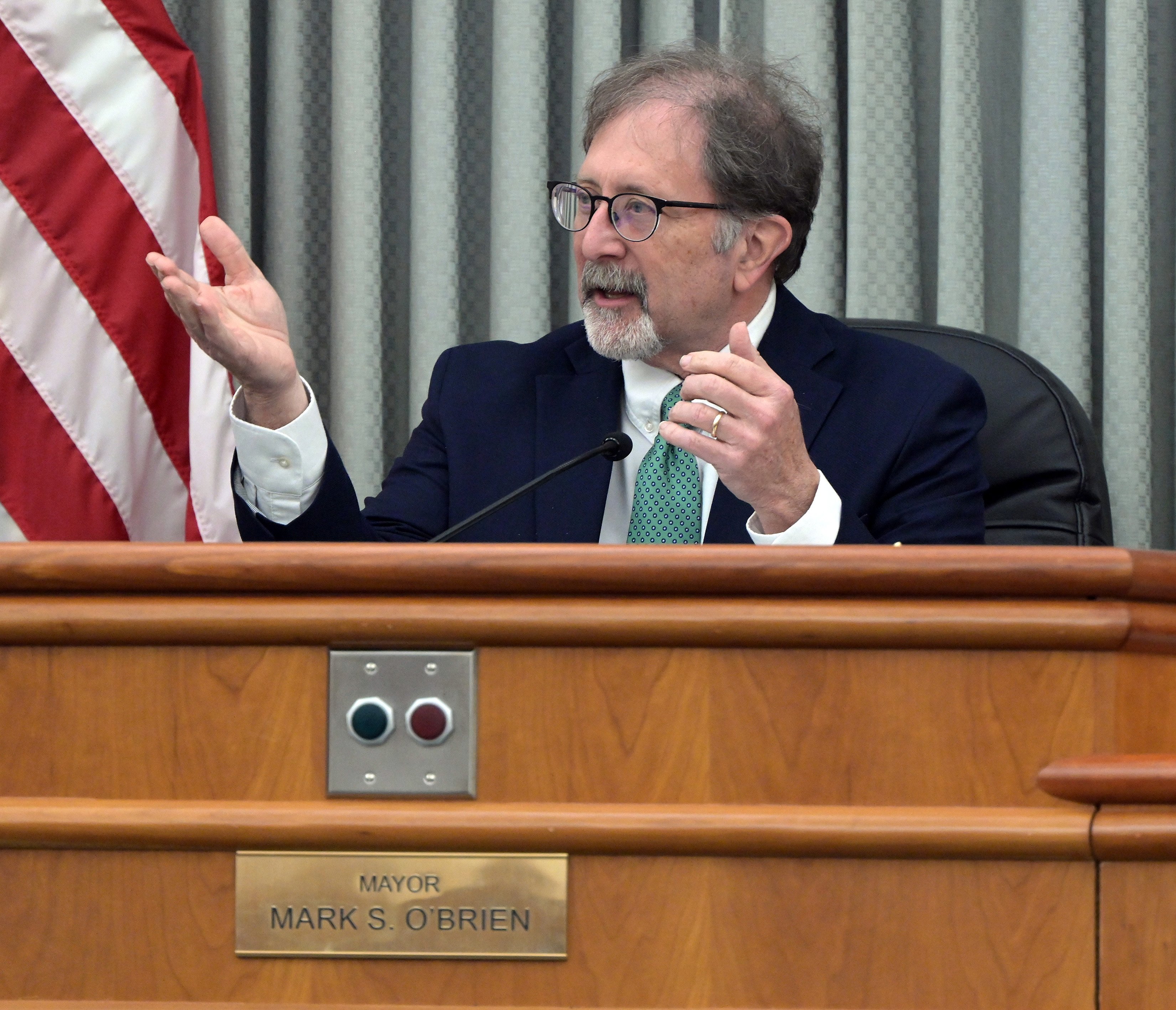
The subcommittee has met weekly since mid-January, after the City Council unanimously enacted a 90-day pause on new shelter proposals.
At-large Councilor Courtney Gary-Allen argued that shelters should bypass major planning board review in some areas, given the board’s prohibitive action on two shelters in the past several years. Councilor Kevin Judkins argued for substantial buffer space between shelters and nearby buildings for neighbors’ peace of mind.
Shelters are currently allowed in some Augusta zones as a conditional use, meaning it needs to conform to site-specific standards and obtain approval from the planning board.
Consensus was reached on a half-dozen newly allowed zones after about two hours.
As the group began to wrap up and prepare for the City Council meeting that followed, O’Brien brought up concerns from several advocacy organizations that had written to the subcommittee about a draft version of the group’s ordinance.
Chief among them was that the ordinance, based on Lewiston’s 2022 rules, addressed only low-barrier shelters, not other types — like those for veterans or with a higher bar for entry. Operators would be more likely to propose a high-barrier shelter if they could skirt the licensing requirement, Victoria Abbot, the executive director of Augusta-based homelessness services organization Bread of Life, said at the later meeting.
If the goal was to recruit low-barrier shelters, Abbot said, the first ordinance draft would not accomplish that goal.
Council members expressed their appreciation for the work done by the subcommittee, but agreed more work needed to be done to clarify definitions and ease the process for shelters to prove financial capacity, as well as address more kinds of shelters.
After all, the point of the pause on new shelters was to put up appropriate guardrails, not to create “too high a barrier for a low-barrier” shelter, O’Brien said.
Judkins championed the 90-day pause after the United Community Living Center proposed a low-barrier shelter on Chestnut Street, in his ward. Without specific guardrails, he argued, shelters would pose “a threat to the health, safety, and property” of Augusta residents. The planning board dead-ended the United Community Living Center shelter proposal in December.
Judkins said the moratorium was unfortunately timed. He said he realized too late that shelters needed clear security and safety requirements and that the council “should have recognized” the need for those guardrails “a long time ago.”
“When I became aware, what should I do? Should I still sit there and keep my mouth shut and let it continue to be wrong?” Judkins said. “It was not comfortable or anything good about me having to say, ‘Wait, we need to pause to get this right.'”
A SENSE OF URGENCY
To finalize those changes and additions — which the subcommittee made during its March 5 and 12 meetings — the City Council extended the moratorium that has been in place since Dec. 18 for an additional 90 days. No new homeless shelters may be considered during this period.
The city will then send out a request for shelter proposals, seeking a partner to run a low-barrier, year-round shelter. Opioid settlement funds and even city-owned land could be offered to a developer, O’Brien said.
Mayor O’Brien said the city may not need the full 90 days and may cut the moratorium short if work is completed early. He said he knows some stakeholders are frustrated by the long timeline for developing these rules.
“Government, sometimes, is not as nimble as the private sector is,” he said. “Sometimes, when there’s an obvious need, the pace can be frustrating for some, but we’re doing the best we can.”
The extension of the moratorium sends Augusta beyond the one-year anniversary of the city’s Task Force on Homelessness making recommendations for creating “a community where everyone has a place to call home.”
The task force recommended year-round, low-barrier shelter as a short-term need, “achievable within one year or less.”
“It feels like the city is just being defiant,” Keri Howell said March 14 at the weekly Unitarian Universalist Community Church breakfast for homeless community members. “They see us how they see us. They need to see us as who we really are.”
For Fritz, who now leads an ad hoc homelessness advisory group appointed by the City Council, this has all taken too long.
“I think when a group of community leaders, as well as people with lived experience spent seven months developing the recommendations — I think when, after a year later, little discernible progress has been made, it’s disappointing,” said Fritz, who led the Augusta Task Force on Homelessness. “Is homelessness, and dealing with homelessness, a priority for our city or not? I think that’s a real question.”
The urgency isn’t lost on Judkins, either.
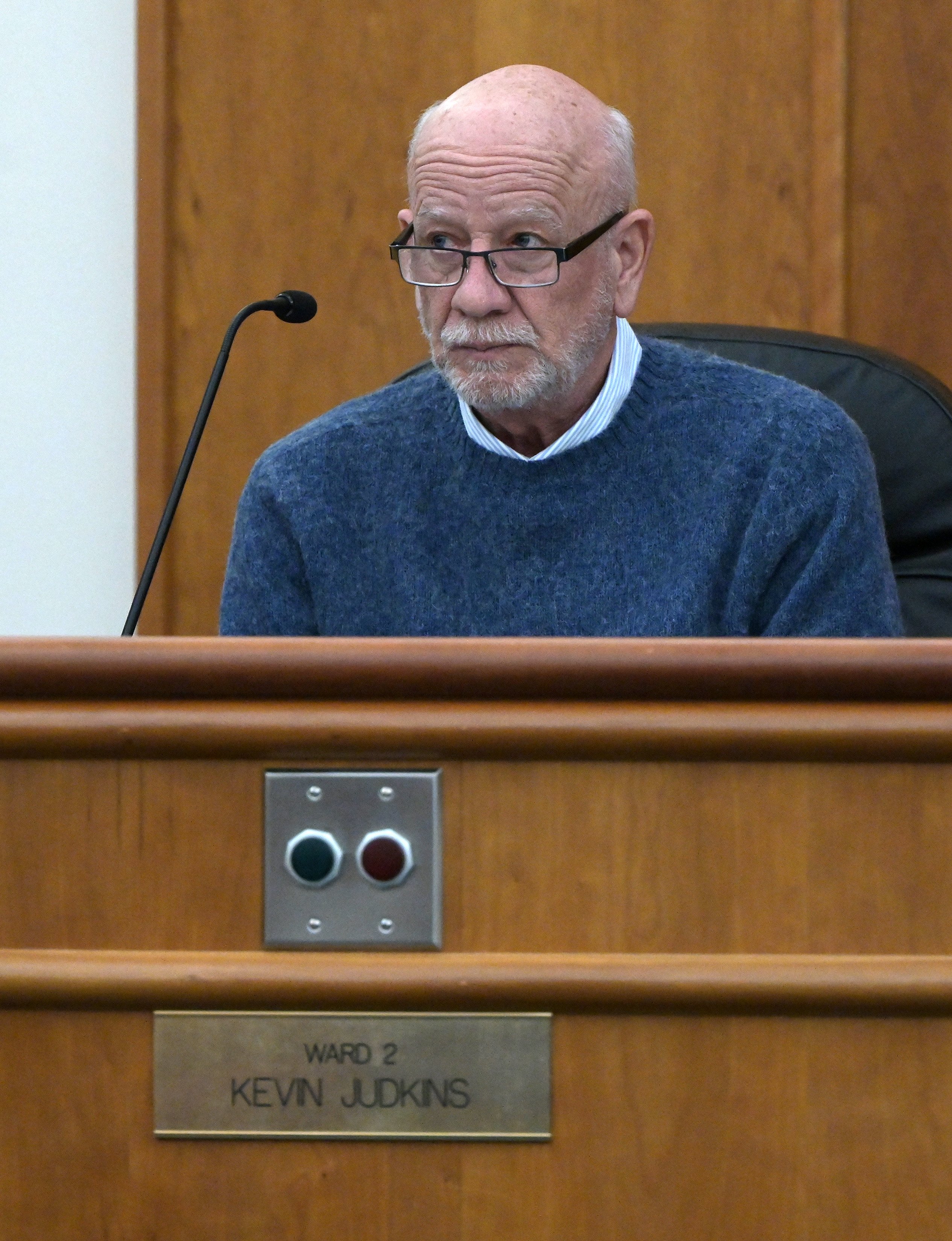
The ordinance writing, the moratorium, the shelter search, the discourse — it’s all gone on “way longer” than it should have, he said.
Each passing day means another arrest, or three. Another trespass order. Another case or two in the court backlog. Another bed occupied at the Overnight Emergency Warming Center.
It closes for the season in mid-May.
Howell will camp on the outskirts of the city and walk in every morning, sweaty as she can be.
Visson has his car.
Greenlaw doesn’t quite know what she’ll do. She hasn’t ever lived a summer on the streets.

We invite you to add your comments. We encourage a thoughtful exchange of ideas and information on this website. By joining the conversation, you are agreeing to our commenting policy and terms of use. More information is found on our FAQs. You can update your screen name on the member's center.
Comments are managed by our staff during regular business hours Monday through Friday as well as limited hours on Saturday and Sunday. Comments held for moderation outside of those hours may take longer to approve.
Join the Conversation
Please sign into your CentralMaine.com account to participate in conversations below. If you do not have an account, you can register or subscribe. Questions? Please see our FAQs.