

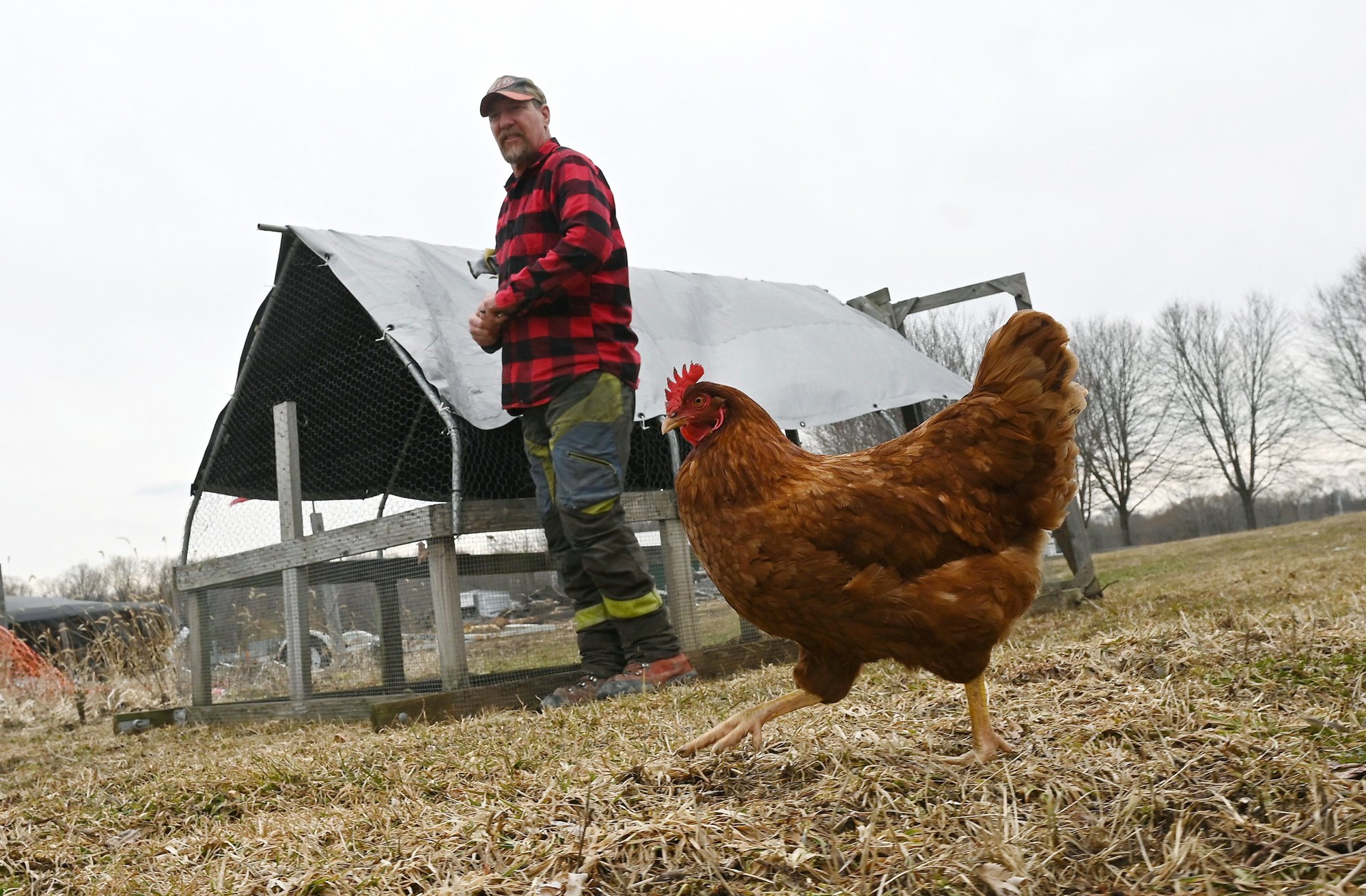
WATERVILLE — Leo St. Peter says the city’s rules for keeping chickens are too restrictive and voters should be able to decide whether to loosen them.
He’s trying to collect enough petition signatures from residents to put the matter to a referendum.
“I’m bringing 20 dozen eggs with me every time I go out,” he said. “Everybody who signs the petition will get a free egg.”
St. Peter, 57, acknowledged he was speaking tongue-in-cheek about giving away eggs while collecting signatures (he knows doing so could be illegal), but he is trying to make a point.
The City Council took an initial vote Tuesday to maintain the city’s required lot size for keeping six chickens at 8,000 square feet, which is a little less than a fifth of an acre. St. Peter had asked it to be reduced to 5,000 square feet, or a little more than a tenth of an acre. Councilors must take a second vote to finalize the matter.
St. Peter approached the city in January to ask that several restrictions be loosened related to keeping chickens. The two major zoning ordinance restrictions he opposed were the required area size and the number of chickens people may keep. The city has set a six-chicken limit.
St. Peter lives on about 50 acres on rural Webb Road, where he and his wife and children have 12 chickens and two tiny pigs. He is adamant that producing one’s own eggs, vegetables and other nourishment and spending time with animals is important.
“We keep moving and moving, as a society, away from the things that are good for us to the things that aren’t good for us,” he said.
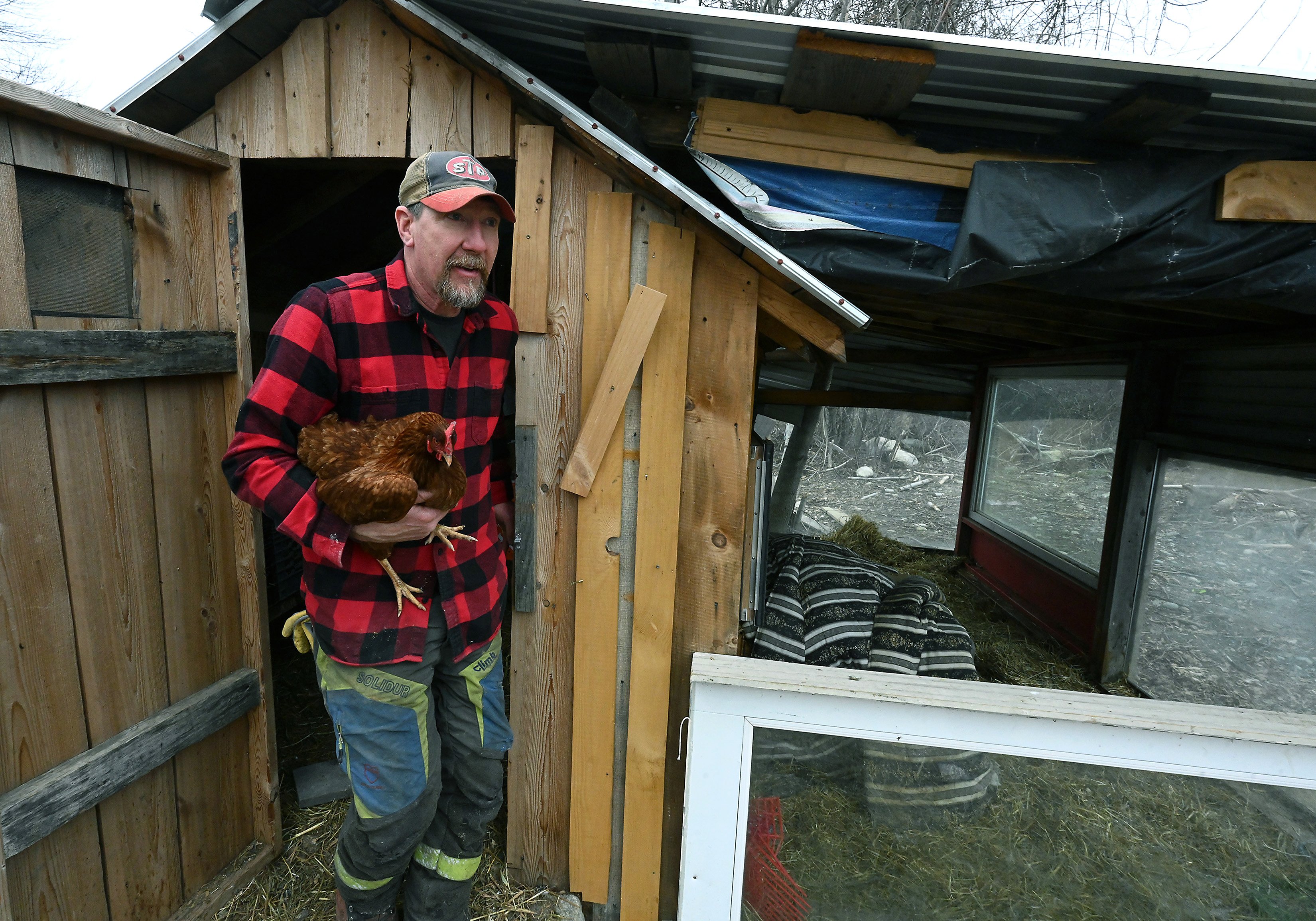
An arborist, St. Peter cites other benefits for keeping chickens. A local business, for instance, gives him 40 pounds of food scraps every week that he feeds to his chickens and pigs. “It reduces our landfills,” he said. “It’s such a benefit.”
Furthermore, St. Peter contends, people’s right to grow their own food is economical, and educational for children.
Maine voters in 2021 approved adding a “right to food” in the Maine Constitution. It’s the first such constitutional amendment in the United States, stating that “all individuals have a natural, inherent and unalienable right to food,” although opponents have argued the language is too vague.
At a planning board meeting Feb. 24, no residents other than St. Peter spoke for or against the minimum lot size required to keep chickens.
The board voted 5-0 in favor of recommending that the City Council not decrease the minimum required lot size for keeping chickens, with Tom Nale Sr., abstaining. Last Tuesday, the council considered the board’s recommendation before voting.
According to the American Pet Products Association, 11 million U.S. households have backyard chickens, reflecting a 28% increase from 2023. The association, formed in 1958, is considered the leading trade association for the pet industry.
The chicken issue is not new, as it arose in 2020 when a Pleasantdale Avenue resident complained a neighbor had chickens that were too close to her home. In December that year, the council voted to decrease the required minimum lot size for keeping chickens from 10,000 to 8,000 square feet.
The city’s chicken ordinance allows residents to keep pet chickens for fresh eggs without infringing on neighbors’ rights. For instance, it permits only laying hens—not those bred for meat — and requires they be kept in enclosed areas, among other rules.

We invite you to add your comments. We encourage a thoughtful exchange of ideas and information on this website. By joining the conversation, you are agreeing to our commenting policy and terms of use. More information is found on our FAQs. You can update your screen name on the member's center.
Comments are managed by our staff during regular business hours Monday through Friday as well as limited hours on Saturday and Sunday. Comments held for moderation outside of those hours may take longer to approve.
Join the Conversation
Please sign into your CentralMaine.com account to participate in conversations below. If you do not have an account, you can register or subscribe. Questions? Please see our FAQs.