


WATERVILLE — When the Purnell-Wrigley baseball field opened a decade ago, it was a wonder. A $1.4 million replica of Chicago’s Wrigley Field replaced a neighborhood sandlot with a turf field, a public address building, dugouts, lights and bathrooms.
Many say the baseball field brings business to Waterville and gets kids off screens — even during soggy spring months — and out to play baseball for little or no money.
But for others, the field’s location in a densely populated residential neighborhood off Cool Street is a source of contention, as some neighbors complain about the noise, bright lights and traffic that come from the field.
Now, as officials review the city’s agreement with the Alfond Youth and Community Center to operate the field, they say moving the field is a possibility.
A BASEBALL LEGACY
The field is named after Fran Purnell, who is remembered for making baseball in Waterville accessible. When the AYCC was raising money to convert the field, about $600,000 came from in-kind donations, which Purnell helped gather.
“The best way to honor Fran’s legacy is to get as many kids on that ball field as possible. That was always his goal,” Patrick Guerette, chief operations officer at the AYCC, said. Since the AYCC converted the field to turf, Guerette said it has seen increases in both youth program participation and economic activity generated for the city.
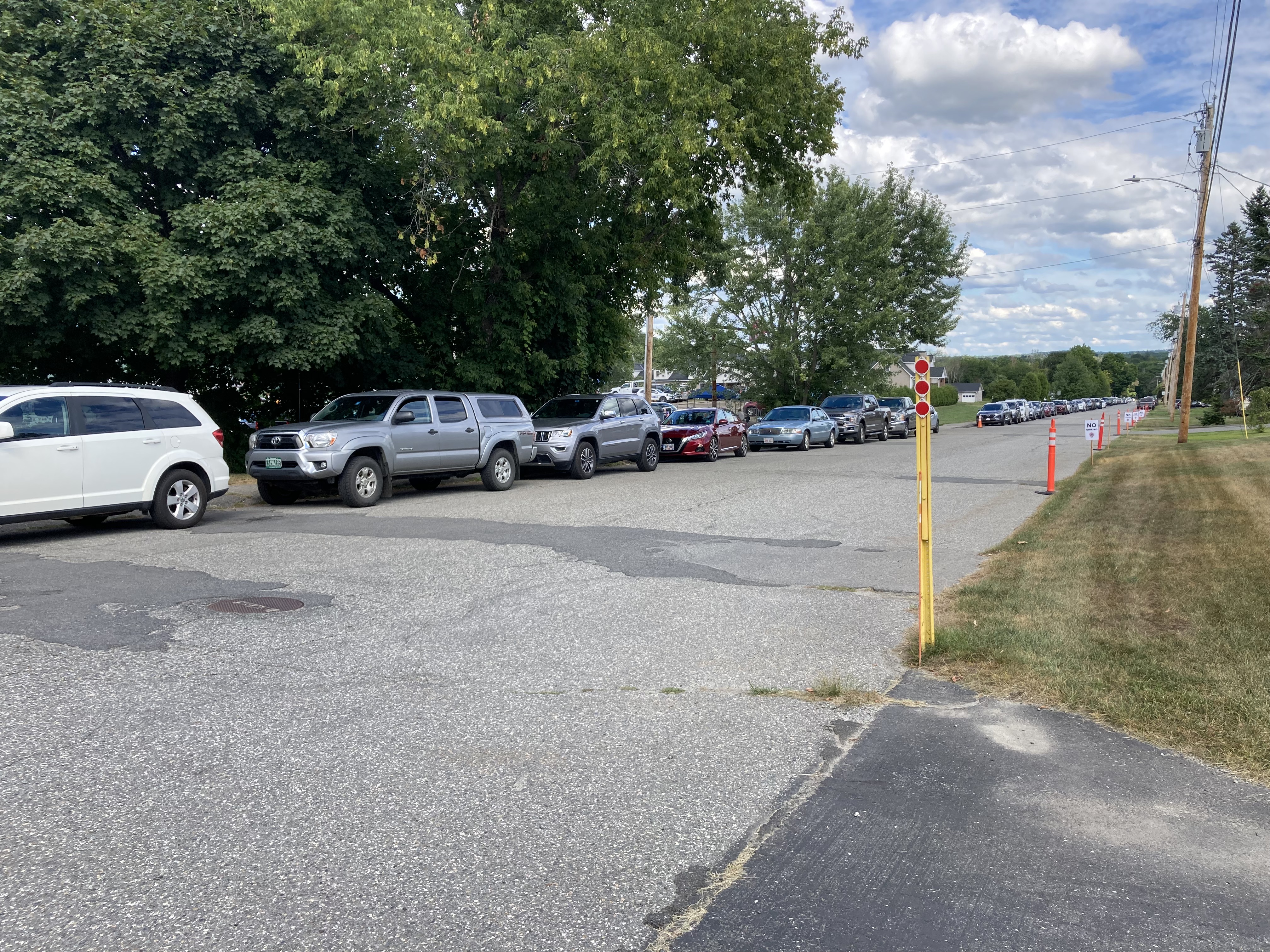
In 2022, the AYCC hosted the Cal Ripken World Series, bringing an influx of youth players from around the country. The massive volume of visitors caused parking issues and inconveniences for Mathews Avenue-area residents.
Neighbors, supporters of the field, city and AYCC employees agreed the world series was poorly managed, and broke trust with neighbors.
After the world series, the AYCC moved some programming away from Purnell-Wrigley and made new efforts toward parking enforcement.
The city’s new agreement also limits hours of programming to be from 8 a.m. until 9 p.m., establishes one rest day per week from July 1 to Nov. 1, requires the city to negotiate with neighbors in good faith and shortens the length of the agreement from 10 years to two years. Much of this, like the limited hours of programming, was already in practice.
The agreement also states that “the city will attempt to provide parking enforcement for larger programming events with the understanding that police support may not always be available due to higher priority situations.”
Even with these changes, the field’s location in a densely-populated residential neighborhood is a source of contention, as some neighbors complain about the noise, bright lights and traffic that come from the field. At a city council meeting on March 17, councilors said they could consider moving the field.
A BOON OR A BURDEN?
Four years later, the world series’ shadow looms large, particularly for neighbors.
“There was a lot of soured relationships or views towards the field from that,” Mayor Michael Morris said. “I know that there’s altercations between residents and users of the field, and it just causes more animosity and anxiety … nobody wants somebody yelling at their kid who’s just there to play a baseball game.”
Talk of moving the field comes after the AYCC has made further concessions to manage neighbors’ concerns. The field’s lights go off at 9 p.m. every night — earlier than the city requires — and the AYCC has limited use of its PA system and avoids playing music over speakers during programming.
Christopher Hanson, who has lived on Mathews Avenue for eight years, said he grew up playing at the ballpark before it was a turf field. Hanson and two other neighbors said their weekends and evenings have been disrupted by bright lights and loud cheering at the field. Hanson said the field does not have enough parking for the amount of traffic it gets.
A city ordinance requires adequate off-street parking be provided for the anticipated maximum attendance at any event. In addition to Purnell-Wrigley’s parking lot, parking spaces are available in front of the field area.
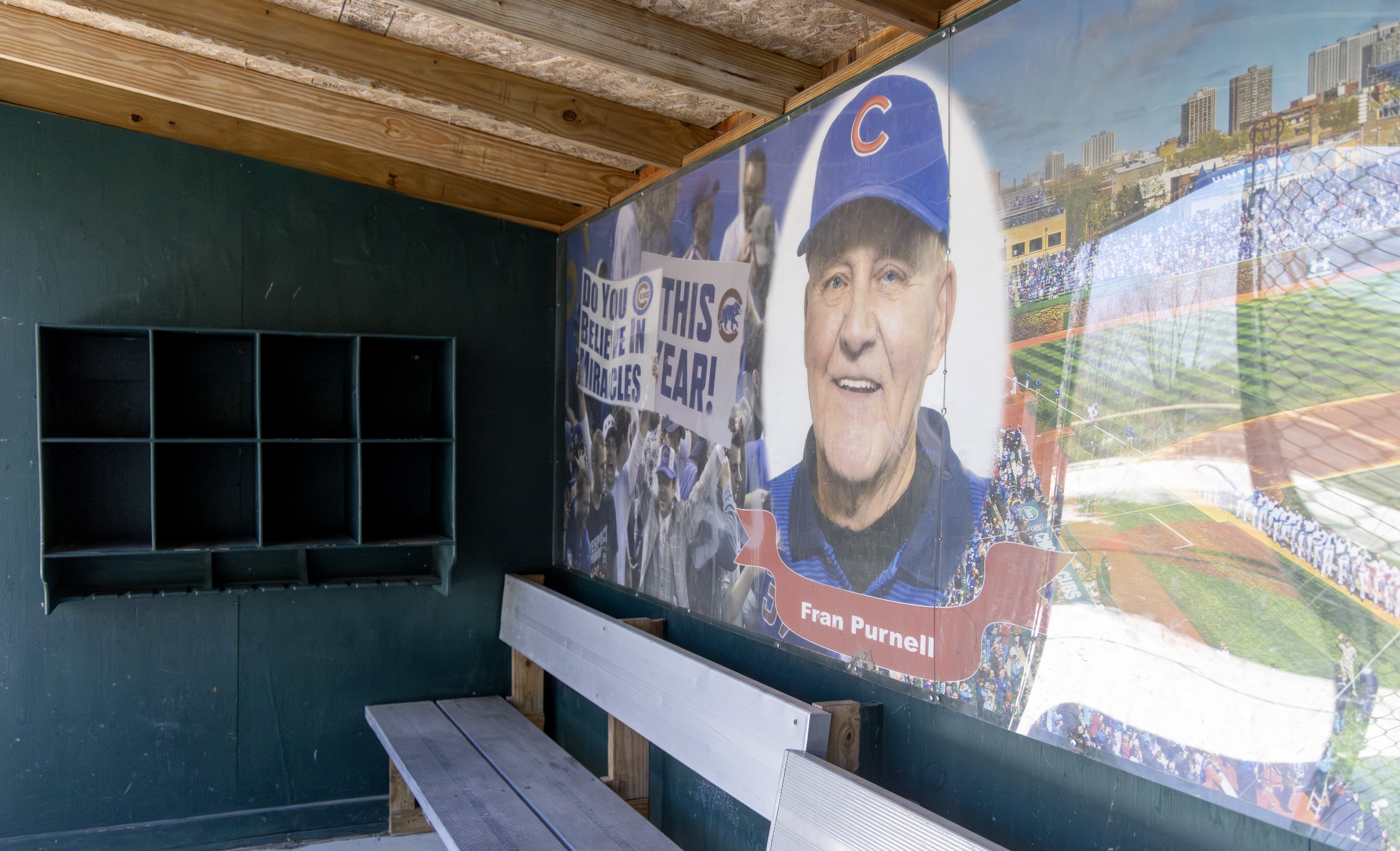
Hanson said he thinks the field sees too much programming, particularly drawing people from out of state, and worries that it actually restricts how often local kids can use the public park.
“I know kids need a place to play,” Hanson said. “They could before.”
He worries that when the AYCC rents the field out, it profits while local kids suffer.
Hanson also worries about the forever chemicals the turf releases into the soil.
That concern apparently has no foundation. The city recently received a report on the soil, done by a private individual, and said the levels of PFAS detected were “well below” any threshold for risk to health.
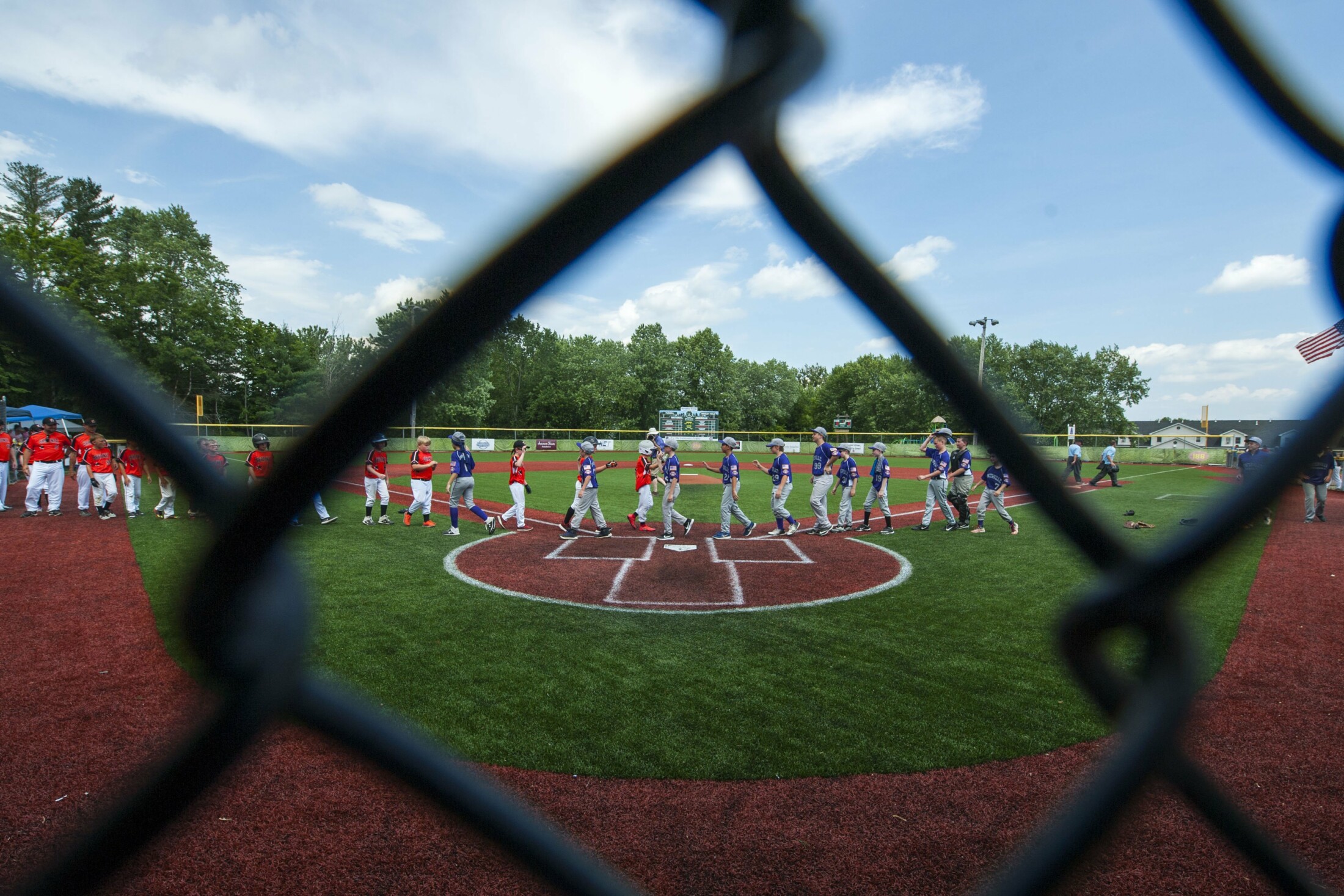
Last year, the AYCC used approximately 632 hours of programming, out of a potential 2,821 operating hours, across 31 weeks, according to Guerette. This means the AYCC’s field usage rate was approximately 22.4%. Out of state teams made up 60 hours of programming last year, and Guerette said those teams were most likely playing local teams, as that’s the athletic director’s scheduling preference.
The cost to replace the field’s turf — approximately $500,000 every 10 years or so — comes from the AYCC. Guerette said renting the field out and hosting tournaments helps offset the turf replacement cost and keeps the sports accessible to families. The AYCC allows families to pay what they can for recreational sports, and 60% of Waterville youth participate for under $20 per sport, including 48% who pay $0.
Hanson said that when he and his neighbors – several interviewed declined to speak on the record – speak out about the field, people assume they hate kids.
“It’s not about the kids,” he said. “The city has made us pariahs of the community.”
Other neighbors and residents said they love the ball park, calling it a draw to the street. Neighbors on both sides of the issue were hesitant to speak on the record about the ball field, as the topic has grown more contentious over the years.
CJ McKenna, a resident of Mathews Avenue and father of three boys, ages 13, 11, and 8, said programmed events haven’t been an issue for his children, who use the field and adjacent playground regularly.
McKenna said he’d be sorry to see the field go, knowing how much his children have benefitted from being able to play on turf while other fields in town are still too muddy.
“I think the neighborhood’s few grievances — for me, I find that very sad,” McKenna said. “We’re living in this generation, we’ve got to get kids off the couch and off their screens, and now we’re talking about ‘it’s a lot of noise and it’s too busy?’ I’m not really sure where the happy medium is if that’s the case.”
Many residents at the March 17 city council meeting said they’d like to see the field moved for the benefit of both the children and the neighbors.
“Looking for another location is something that we very well might do,” Councilor Spencer Krigbaum, D-Ward 5, said. “We hear the community’s desire to find an alternative field … I think that would solve a lot of these problems. A small step in that direction is what we’re doing today.”
The city’s new Parks and Recreation Advisory Committee would consider this and other changes going forward, including upgrading other local parks to split programming with Purnell Wrigley, according to Councilor Rebecca Greene, D-Ward 4.
Editor’s note: This story has been updated to share details of the city’s new agreement.

We invite you to add your comments. We encourage a thoughtful exchange of ideas and information on this website. By joining the conversation, you are agreeing to our commenting policy and terms of use. More information is found on our FAQs. You can update your screen name on the member's center.
Comments are managed by our staff during regular business hours Monday through Friday as well as limited hours on Saturday and Sunday. Comments held for moderation outside of those hours may take longer to approve.
Join the Conversation
Please sign into your CentralMaine.com account to participate in conversations below. If you do not have an account, you can subscribe here. Questions? Please see our FAQs.