

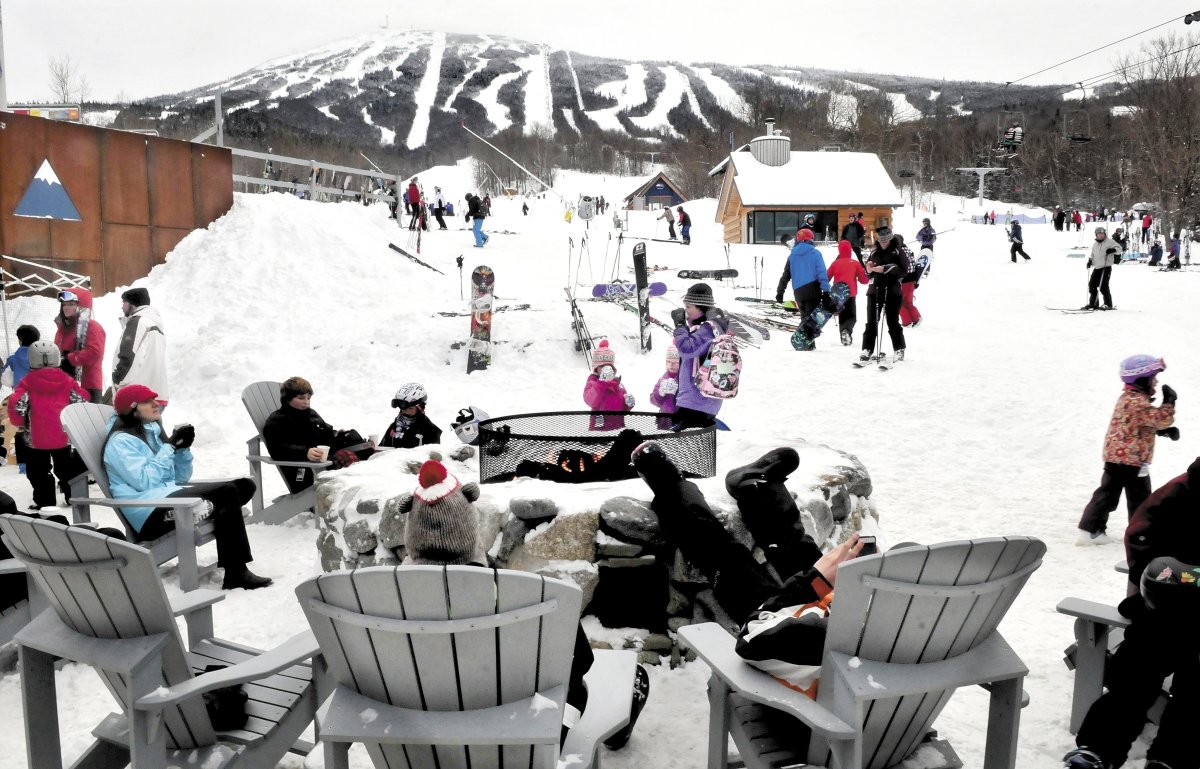
This weekend, hordes of skiers dressed in neon snowsuits and polarized sunglasses will crowd onto what’s known as The Beach at Sugarloaf, a patio outside the base lodge, where they’ll down hazy IPAs and pump their open palms in the air as one reggae band after another takes the stage.
Reggae Fest, in its 38th year, typically draws some 10,000 people to the Carrabassett Valley resort for the weekend-long celebration, marketed as “the biggest party on the East Coast.”
Why is an event themed around an Afro-Caribbean music genre, infused with messages about resisting racial oppression, a rite of spring for participants in one of the whitest sports in the nation’s whitest state?
Should it be?
A video posted 16 years ago on YouTube explains the origins of the festival as a way to “celebrate the great weather, the return of spring and the whole spring skiing culture,” showing partiers wearing silly costumes, raising beer cans and passing beach balls, all to the tune of bouncy Jamaican beats.
The implication seems to be that this is Sugarloaf’s version of tropical weather, which calls for a beach party set to island music. Why not line the slopes with ukulele players strumming the sounds of Hawaii? Considering the resort’s other big festival, Fire on the Mountain, centers around the music of the Grateful Dead, I think it’s safe to assume there’s a correlation between skiing culture and smoking weed, a frequent reference in reggae songs that might add to the festival’s appeal for some.
Reducing the genre to these stereotypes is how an event like Reggae Fest could start “to flirt up against problematics,” said Dr. Neal Lester, founding director of Project Humanities at Arizona State University, an initiative that fosters conversations among diverse communities.
If there is an educational component and broader appreciation of the culture beyond people thinking “it’s cool and it’s a vibe,” a reggae festival could have a place in any state, for any audience, Lester said.
“I’m not saying … that it can’t be done or that it shouldn’t be done. I’m saying it needs to be done very carefully and very conscientiously,” he said. “Are we celebrating humanity, or are we celebrating something because it’s cool?”
His initial concern was that people might be dressing up as stereotypical Rastafarians with wigs, which I told him wasn’t happening from what I’d seen, but soon learned that wasn’t always the case.
Mai Kheet, the manager and drummer for Maine reggae band Catcha Vibe, recalled a time, maybe 15 years ago, when then-sponsor Bud Light would pass out inflatable wigs with fake locs among the largely white audience, which “felt kind of strange,” he said. (Apparently, the beer brand wasn’t always so woke.)
Most members of Catcha Vibe are white, though they frequently collaborate with Jamaican artists like Fitzie Niceness, who will perform with them as this year’s Friday night headliner.
“For us, it’s not about trying to be something we’re not — it’s about honoring the music and the spirit behind it,” Kheet said in an email. “The universal themes of reggae — unity, resilience, love, and social awareness — are what draw us to the genre.”
Mighty Mystic, the Jamaican-born, Boston-based artist headlining the festival Saturday, said he thinks Sugarloaf does a good job creating a diverse, well-balanced lineup of bands, especially compared to other reggae festivals that primarily feature white musicians.
He has no problem performing for a mostly white audience and said that, if he did, it would conflict with the message of acceptance that reggae is all about.
“It’s actually a beautiful thing; it’s creating awareness,” said Mystic, who moved to the U.S. when he was 9 years old but still has family in Jamaica and visits frequently. “The ‘one love’ thing that we have in our culture is a real thing.”
He sees how white college kids who attend the festival could relate to lyrics about struggling and soul-searching, if they’re dealing with depression or anxiety, and why reggae, “an outdoor music,” fits the scene at Sugarloaf.
“You hang with your friends, you ski, you might puff a little bit, and you vibe,” he said.
The line between appreciation and appropriation can be fuzzy, and Reggae Fest seems to have elements of both. To push it more firmly toward the former, Sugarloaf could, as Lester suggested, do more to emphasize the origin and cultural significance of the music.
Whether the resort would consider that is unclear; it didn’t respond to a request for an interview.
The attitude of its attendees, however, still might be an obstacle. If it’s going to remain primarily about partying into the ski season’s warmer home stretch, go ahead and book some reggae bands, sure, but call it what it is.

We invite you to add your comments. We encourage a thoughtful exchange of ideas and information on this website. By joining the conversation, you are agreeing to our commenting policy and terms of use. More information is found on our FAQs. You can update your screen name on the member's center.
Comments are managed by our staff during regular business hours Monday through Friday as well as limited hours on Saturday and Sunday. Comments held for moderation outside of those hours may take longer to approve.
Join the Conversation
Please sign into your CentralMaine.com account to participate in conversations below. If you do not have an account, you can subscribe here. Questions? Please see our FAQs.