


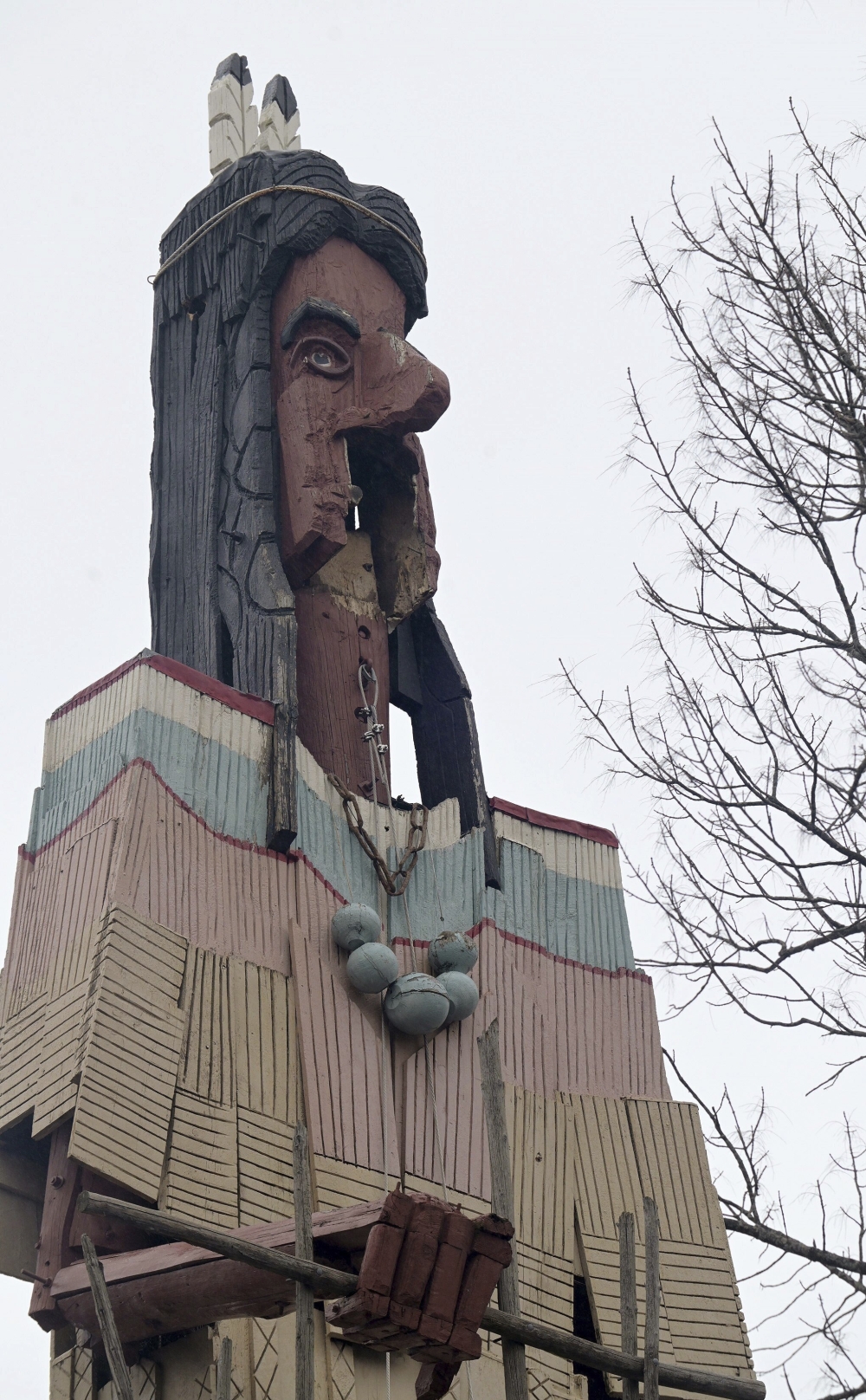
SKOWHEGAN — The Skowhegan Indian has a new owner.
For more than two years the Skowhegan Regional Chamber of Commerce has been looking for a new steward of the historic wooden sculpture of a Native American fisherman crafted by Bernard Langlais. The organization announced Friday afternoon it agreed to transfer the Indian to a new nonprofit called Watching Point.
The organization, founded and led by local businessman Joe Almand, will “guide the next chapter of this important local landmark and help ensure it remains accessible for future generations,” the chamber said in a news release.
“This transition places the sculpture in the care of an organization with deep community roots and a clear commitment to its restoration, preservation, and long-term stewardship,” the chamber said.
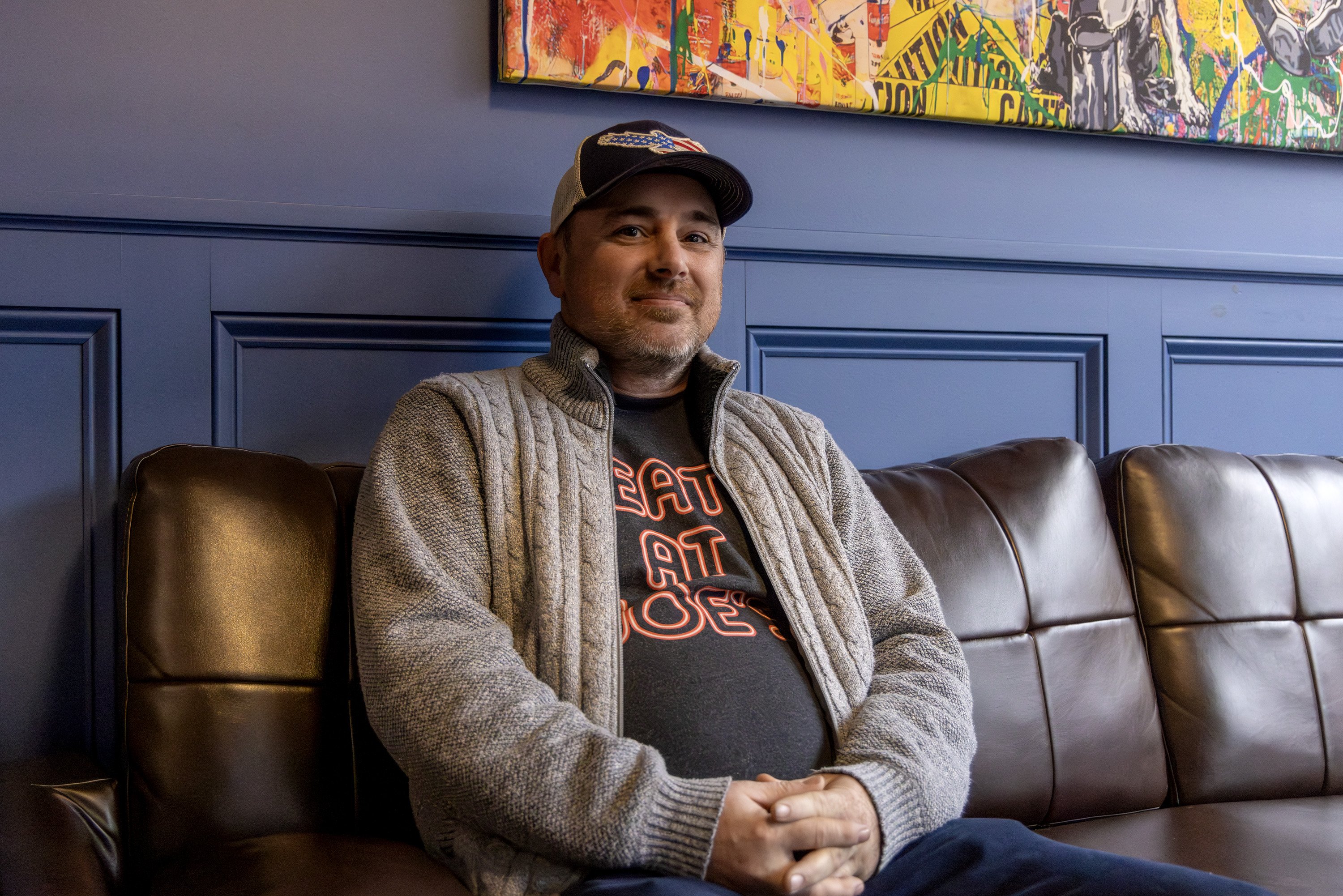
Almand said in an interview Monday his organization is paying $1 for the sculpture. An agreement with the landowner, a company associated with the Hight family behind the well-known local auto dealerships, still needs to be finalized, Almand said.
After months of discussions with the chamber, Almand said he registered Watching Point with the state a week ago and is still working through the process to get federal nonprofit tax status. That may take months.
In the coming weeks, Almand plans to make a social media page and an online fundraising campaign.
This summer, Almand plans to start to address the more urgent issues and has already has volunteers and donations of equipment in place. People should not immediately expect to see work being done, he said.
“The main thing is getting it back to where nothing else is going to fall off, and things are going to be in good shape and look a little better,” said Almand, who first came forward with his interest in acquiring the sculpture last summer. “Then, we’re going to start fundraising for doing the whole entire thing like we did in 2014.”
The chamber said it funded and completed a structural analysis of the sculpture ahead of the transaction.
“That evaluation provides an important foundation for future restoration efforts,” the chamber said.
Almand, who opened Joe’s Flat Iron Café on Water Street in 2023 after injuries sustained in a fall in the Kennebec River gorge ended his career as a Skowhegan firefighter, is an experienced carpenter who assisted in the last major restoration of the Indian in 2014. Local builder Stephen Dionne led that $65,000 effort.
Both Dionne and Almand have said previously that they left the chamber a detailed maintenance plan, but were never contacted to implement it. As far as they knew, none of the suggested work was ever done.
Since the last overhaul, Langlais’ aging work deteriorated again due to the year-round exposure to Maine’s harsh climate.
When more visible damage to the statue in early 2024 led the town to block off the area with yellow caution tape and traffic cones, chamber leaders said they were going to come up with a plan of how to proceed with addressing the damage again.
The chamber offered the Indian to the town of Skowhegan in March 2024. Town officials, considering whether to ask voters at town meeting if they wanted to accept the statute, ultimately rejected the chamber’s offer, citing expected high costs of restoration and maintenance.
The chamber said then it would open the offer to the public for 90 days before proceeding with taking it down.
The Indian never came down, and in May 2025, the chamber issued a request for proposals, offering to hand over the Indian to an individual or organization for $1.
The chamber sought a qualified party to preserve the Indian, requiring bidders to submit a maintenance plan, budget, project timeline and references.
Almand, in November, said his initial conversations with the chamber were slow-moving and frustrating. The chamber, at the time, largely declined to comment on the bid process and any discussions with Almand or other involved parties.
The Skowhegan Tourist Hospitality Association commissioned the 62-foot statue in 1966, and Langlais completed it in 1969, according to a history that used to be published on the chamber’s website.
Langlais was a student and teacher at the Skowhegan School of Painting & Sculpture. In 2013, his estate gave more than 20 of his other sculptures, many of which also are wooden, to the economic revitalization nonprofit Main Street Skowhegan. His works are on display throughout Maine, and are mapped by the Langlais Art Trail.
The Skowhegan Indian, behind the Cumberland Farms and municipal parking lot off Madison Avenue and High Street, depicts a Wabanaki fisherman holding a spear in his left hand and a weir, or fish trap, in his right hand.
Almand said the Indian will stay put for the time being, as his organization gets to work and evaluates several factors at play.
But, he said: “Moving it is not off the table.”

We invite you to add your comments. We encourage a thoughtful exchange of ideas and information on this website. By joining the conversation, you are agreeing to our commenting policy and terms of use. More information is found on our FAQs. You can update your screen name on the member's center.
Comments are managed by our staff during regular business hours Monday through Friday as well as limited hours on Saturday and Sunday. Comments held for moderation outside of those hours may take longer to approve.
Join the Conversation
Please sign into your CentralMaine.com account to participate in conversations below. If you do not have an account, you can register or subscribe. Questions? Please see our FAQs.