


AUGUSTA — Maine lawmakers on Thursday gave final approval to a $519 million two-year budget proposal that includes a new tax on high-income earners, $300 “affordability checks” for hundreds of thousands of residents and a new statewide ban on cellphones in schools.
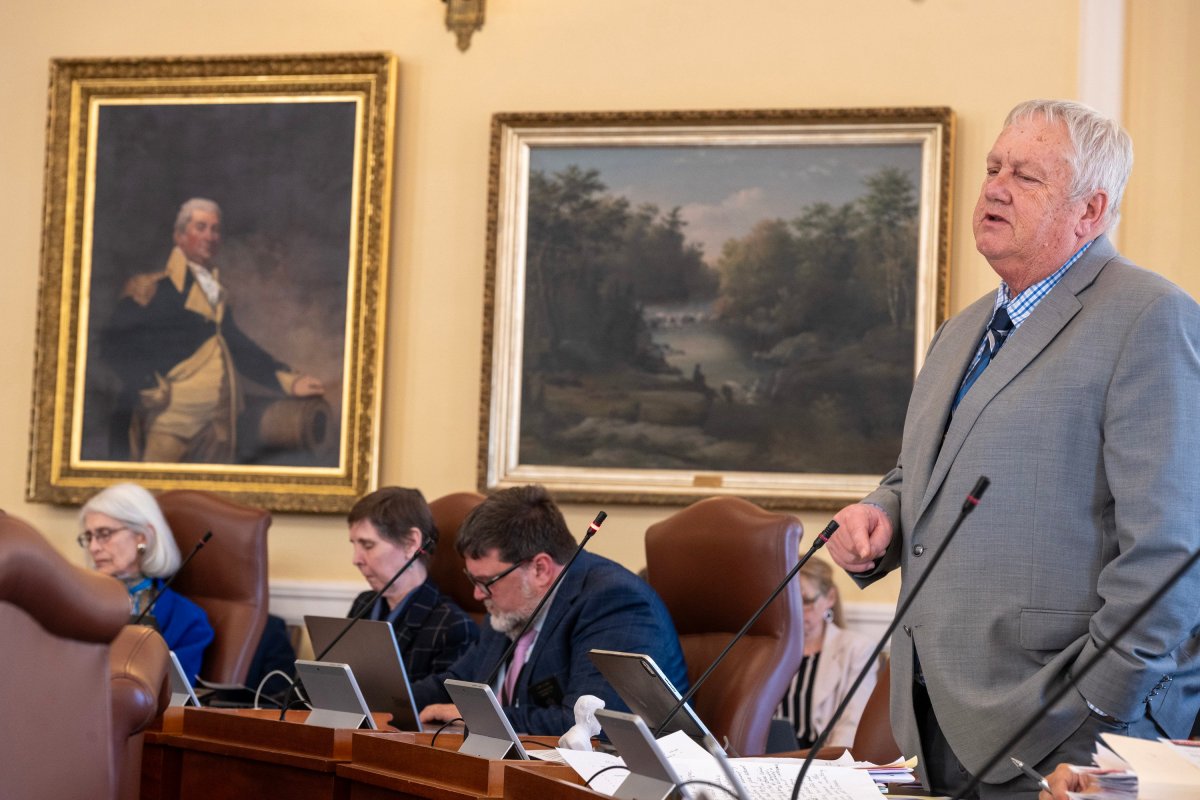
The Maine Senate approved the budget 18-16 Thursday afternoon, concluding two days of marathon debate and voting sessions. Early Thursday morning, the House took its final roll call on the sprawling bill, passing it 76-71.
Democrats narrowly control both legislative chambers in Augusta and the votes fell largely along party lines, with most Democrats in support and Republicans opposed.
The budget now goes to Gov. Janet Mills, who said she plans to sign it.
“This budget will deliver significant relief to Maine people facing rising prices because of the shortsighted actions of the Trump Administration,” Mills said in a written statement.
The $300 checks —a signature proposal from Mills when she unveiled her budget ideas earlier this year — were a sticking point for some lawmakers. Sen. Nicole Grohoski, D-Ellsworth, proposed an amendment to remove them from the budget, though Democrats in the Senate shot it down in a close vote.
“I am very opposed to using a fund that is built to ensure our state’s long-term fiscal stability and health to provide a short-term gain,” Grohoski said on the Senate floor Thursday.
Most Democrats spoke in support of the budget during debate Thursday, however, while Republicans criticized the package as irresponsible spending.
The checks are expected to be sent to more than 500,000 Mainers, based on income eligibility, and would be paid for with $155.2 million in spending from the state’s “rainy day” fund, a reserve account typically set aside for budget shortfalls and emergencies.
Individual earners making less than $50,000 will be eligible for the checks, along with heads of household earning under $75,000 and married couples filing taxes jointly and earning less than $100,000.
The supplemental budget is an addition to the roughly $11.65 billion two-year state budget that lawmakers passed last year. It will tack on $227 million to bring the two-year budget to nearly $11.9 billion while also pulling $292 million in one-time spending from the rainy day fund, which had been maxed out around $1 billion.
In her last spending plan as governor, Mills got most of what she wanted, though lawmakers reduced the number of people who will be eligible for the affordability checks in exchange for her support for the millionaire’s tax she had previously opposed.
The tax adds an income tax surcharge of 2% onto the portion of a resident’s taxable income beyond $1 million for single filers, $1.5 million for heads of households and $1.5 million for joint filers.
Several Democrats defended the new tax amid Republican criticism that it will push wealthier people and business leaders to not live in the state. Democrats also boasted of investments the budget includes for housing, child care and property tax relief.
The package includes $11.4 million to increase a property tax credit program, continues and makes permanent the state’s free community college program, which previously was operating on one-time funding, and raises the minimum salary for public school teachers from $40,000 to $50,000 by 2029.
The budget also includes funding for eviction prevention and age-in-place programs and energy and heating assistance. A key policy proposed by Mills is also included — a statewide ban on cellphones in schools.
“This a budget that meets the needs of Maine families without compromising the strong fiscal footing of the state moving forward,” said Sen. Peggy Rotundo, D-Lewiston, chair of the Legislature’s Appropriations Committee.
Republicans were critical of drawing down the rainy day fund for the $300 checks. They had advocated for tax conformity with federal efforts for deductions on tips and overtime and for reforms to the MaineCare program.
“This is not a fiscally responsible document,” said Senate Minority Leader Trey Stewart, R-Presque Isle. “It is not prudent or wise.”
The budget, once signed by Mills, is expected to take effect 90 days after the Legislature adjourns, which is scheduled for April 15.


We invite you to add your comments. We encourage a thoughtful exchange of ideas and information on this website. By joining the conversation, you are agreeing to our commenting policy and terms of use. More information is found on our FAQs. You can update your screen name on the member's center.
Comments are managed by our staff during regular business hours Monday through Friday as well as limited hours on Saturday and Sunday. Comments held for moderation outside of those hours may take longer to approve.
Join the Conversation
Please sign into your CentralMaine.com account to participate in conversations below. If you do not have an account, you can subscribe here. Questions? Please see our FAQs.