

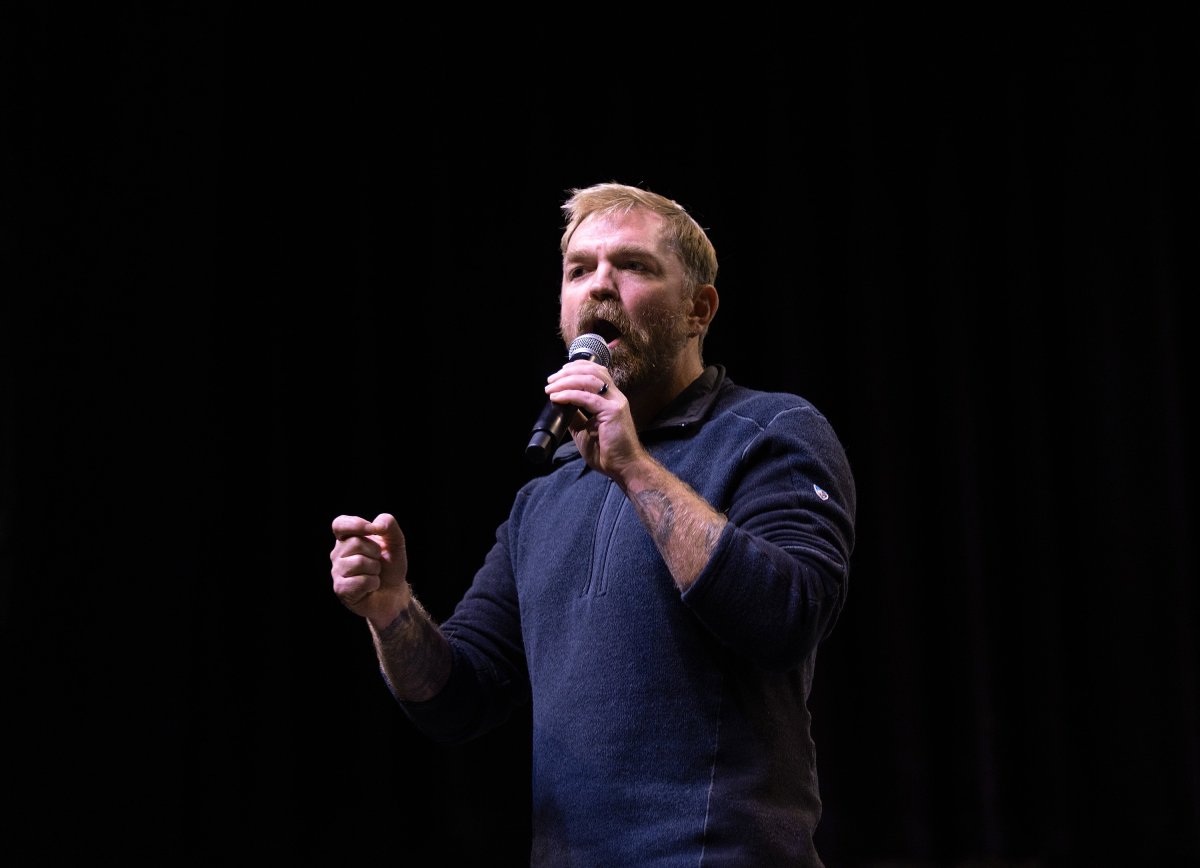
Advocates for a statewide disability rights group on Tuesday condemned U.S. Senate candidate Graham Platner’s use of a slur for people with disabilities.
Platner is quoted using the word “retarded” in a story published by the Maine Monitor, a nonprofit online news organization, on Saturday.
Platner was describing his surprise when he heard rumors that he had a White Supremacist tattoo — a reference to a skull-and-cross bones tattoo, widely identified as a Nazi Totenkopf, he got with fellow Marines in 2007 while on leave in Croatia. (He had the tattoo covered in October.)
“I was like, ‘Well, that’s the [expletive] most retarded shit I’ve ever heard in my life,” Platner told the Monitor in January. “‘No, I don’t have a white supremacist tattoo,’ and I never thought about it again. And then it came up later on, and I was like, ‘God [expletive] damn it.”
Disability Rights Maine CEO Kim Moody called the word “an ableist term rooted in discrimination and exclusion.”
“This language is not harmless,” said Moody, who has a disability. “It reinforces stigma, diminishes dignity, and undermines the value and contributions of disabled individuals in our communities. We urge everyone, especially those in positions of power, to reject language that perpetuates harmful stereotypes of people with disabilities.”
Platner is seeking the Democratic nomination for U.S. Senate against Gov. Janet Mills and Brunswick Democrat David Costello. The winner will take on Republican Sen. Susan Collins in November.
Platner had used the word repeatedly in online forums before running for Senate, including in multiple posts in 2021. He apologized for using that kind of offensive language and for other controversial posts, saying they don’t reflect who he is today.
Speaking to the press in Portland on Wednesday after rolling out a proposal to enact a minimum tax on billionaires and provide tax relief to the working class, Platner apologized for using the word and said his politics “is one of inclusivity.”
“I’m sorry that I said it,” Platner said. “I am endeavoring to improve every single day. I am not a perfect person, and I continue to try to be better.”
Jozie Easler, a self-advocate with multiple disabilities, said the word is “hurtful” and “offensive.”
“His repeated use of the R word makes me frustrated and embarrassed for the democratic party,” Easler said in an email. “His behavior has been unprofessional and I am disappointed in him. I feel he should apologize and drop out of the race for senate.”
Roseanna Belanger, a Disability Rights Maine board member who has disabilities, said Platner is “out of line” for using the word, which she called “discriminating and disrespectful.”
“I personally am offended with him using this language. I am appalled to hear someone use the R word in any case and anyway possible,” Belanger said. “Being someone with disabilities I feel discriminated against when someone uses the R word whether it is directed towards someone with disabilities or not.”
Belanger said people with disabilities have been fighting to rid the word from the public lexicon for years.
“I thought we had done so,” Belanger said. “But apparently we have not educated the public enough to understand that it is disrespectful and disgraceful to be saying the R word in public in any type of statement that someone or anyone would make.”

Comments are not available on this story. Read more about why we allow commenting on some stories and not on others.
We believe it's important to offer commenting on certain stories as a benefit to our readers. At its best, our comments sections can be a productive platform for readers to engage with our journalism, offer thoughts on coverage and issues, and drive conversation in a respectful, solutions-based way. It's a form of open discourse that can be useful to our community, public officials, journalists and others.
We do not enable comments on everything — exceptions include most crime stories, and coverage involving personal tragedy or sensitive issues that invite personal attacks instead of thoughtful discussion.
You can read more here about our commenting policy and terms of use. More information is also found on our FAQs.
Show less