

WATERVILLE — The city council is considering new rules to prohibit all municipal employees, including law enforcement, from cooperating in immigration enforcement operations unless legally required.
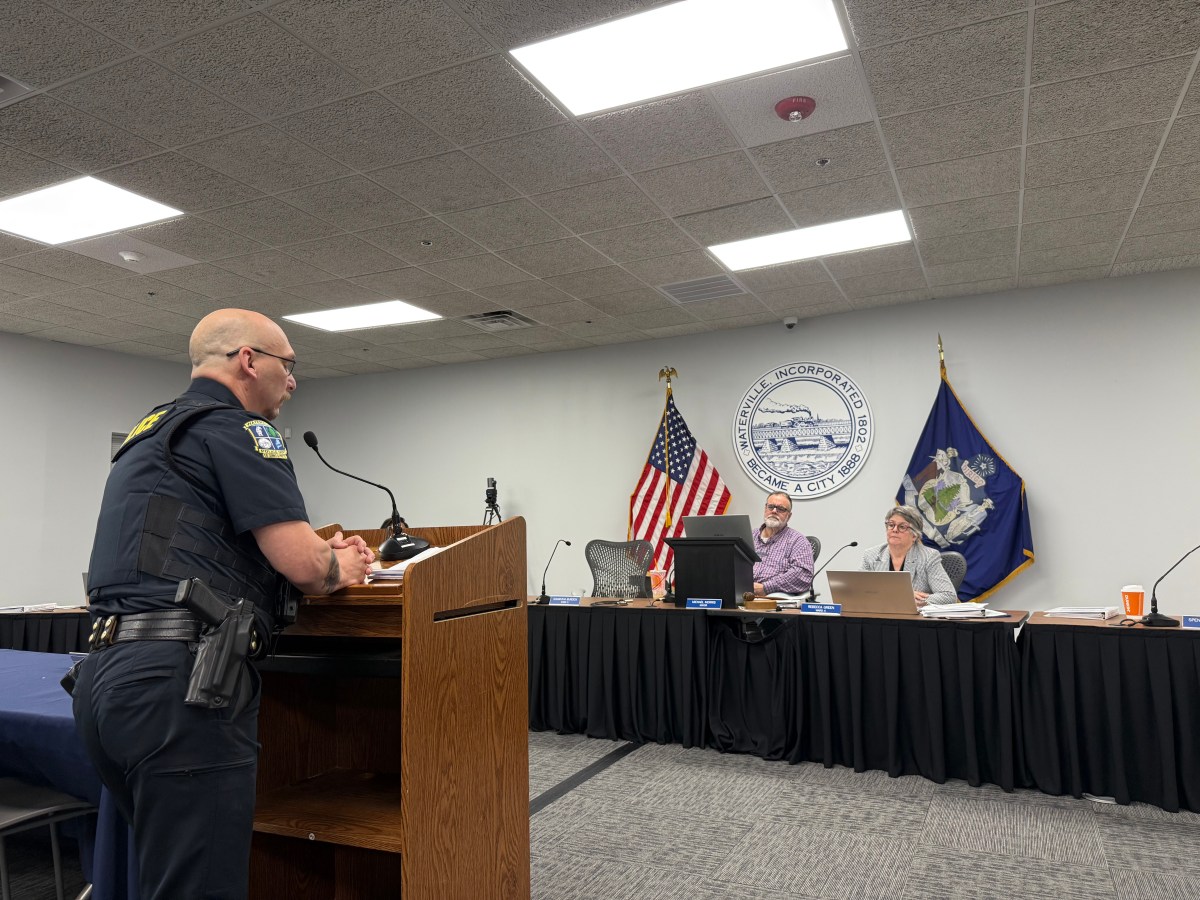
At a city council meeting Tuesday, Police Chief Bill Bonney said he would not support such an ordinance, while five out of seven city councilors — one of whom was absent — expressed support for considering such an immigration ordinance.
Councilor Scott Beale, D-Ward 6, said the city’s proposed ordinance would be modeled after language Portland is creating, which comes after both Rockland and Lewiston passed similar rules. Portland is in the process of amending its ordinance to better align with a state law prohibiting state and local law enforcement from engaging in federal civil immigration enforcement.
“We’re trying to expand that concept to all of the city government,” Beale said in an interview. “There’s a lot of information available within the city government that can be used to adversely impact immigrants. … We just do not want to spend city resources supporting federal immigration policies.”
In January, U.S. Immigration and Customs Enforcement agents descended upon southern and central Maine during a high-profile enforcement surge that the federal government dubbed “Operation Catch of the Day,” arresting some 200 people.
The new state law, LD 1971, will take effect July 14, 90 days after the state Legislature adjourns. Local ordinances would extend these limits to all city staff, so police regulations would be largely the same as they will be under LD 1971. State police have already started enforcing the law, but Bonney said he is not yet enforcing the law or training officers on it, so an ordinance might take effect first.
Beale introduced the topic for discussion Tuesday, and has had discussions with lawyers from the American Civil Liberties Union and Immigrant Legal Advocacy Project, as well as the city solicitor and city manager, about how to tailor an ordinance to Waterville.
City Manager Nick Cloutier urged caution to the council in ensuring a city ordinance would not conflict with state or federal law. Cloutier and Beale said City Solicitor Bill Lee would be involved in crafting the ordinance.
Lee said he had concerns with Rockland’s ordinance, which was passed before LD 1971. Portland’s ordinance amendments were written to harmonize with the state law, and Lee said in an email that he will be reviewing the Portland ordinance, and perhaps others.
ORDINANCE CONCERNS
Bonney said he was concerned that an ordinance would limit the police department’s ability to keep Waterville safe, cooperate with all federal agencies and receive federal funding.
Bonney was specifically concerned about a section of Rockland’s ordinance, which states that no city employee or department shall support or assist immigration operations, or otherwise be present to assist or support such an operation. Bonney said he’s concerned a similar section could prohibit the police department from being present for any reason, including public safety.
“I think it would be a disaster,” Bonney said. “I hope you do not institute this or any ordinance beyond LD 1971, which I believe accomplishes the same goal.”
Both LD 1971 and Portland’s proposed ordinance include exceptions: officials are not prohibited from assisting immigration enforcement if they are legally required to do so by state or federal law, or by court order. This exemption covers judicial warrants and investigations into serious crimes.
Despite dissent from Bonney and City Council Chairman Brandon Gilley, D-Ward 1, who said he would not support an ordinance under any circumstances, Beale said he intends to see this through.
When the city voted on goals for 2026, one of its priorities was growing the tax base and making the city attractive to families. Beale said some of the city’s recent growth is a result of immigrants moving to Waterville, “so we want to try to protect the immigrants within our community.”
In an interview, Beale also expressed concern for Waterville’s Syrian immigrants, whose Temporary Protected Status is under threat by the Trump administration. The Supreme Court is scheduled to hear arguments on the attempted halt to Temporary Protected Status on April 29, and will likely make a decision by early July.
At Tuesday’s meeting, Lisa Parisio, policy director at the Immigrant Legal Advocacy Project, said more than 50 people in Maine have been handed over to Immigration and Customs Enforcement and Border Patrol during minor, unrelated traffic stops, after car accidents and after calling 911 since last spring.
Parisio said ICE detention centers are on track to have their deadliest year yet, and that local ordinances are important to public safety and public trust, as many immigrants report being afraid to report crimes and abuse, assist as witnesses, seek protective orders, and send their children to school.
Parisio said similar anti-ICE ordinances would consider are within the constitutional bounds of the 10th Amendment, which protects states from being forced to turn over their resources. She also said she has not seen shifts in federal funding related specifically to immigration ordinances.
“Notwithstanding the 10th amendment,” Bonney wrote in an email, “I remain concerned that creating an ordinance beyond state law will open us up to action from the federal government, to include the loss of several funding streams.”
ROCKLAND, PORTLAND RULES
Rockland’s ordinance prohibits city employees from assisting or cooperating with federal immigration enforcement agencies. It blocks the use of city funds and resources for federal immigration operations, and bars city employees from allowing anyone detained by the local police department to be transferred into federal immigration custody without a judicial warrant or investigation of a serious crime.
Lewiston passed a similar ordinance in March, and Portland began considering one in early April. Portland’s ordinance will be similar to Rockland’s, but will incorporate language from LD 1971 and amendments negotiated with the city’s legal team and the American Civil Liberties Union of Maine.
Portland’s proposed ordinance states that “no person acting in their capacity as a city employee shall assist or cooperate with, or allow any municipal monies or resources to be used to assist, cooperate with, or facilitate any federal agency in any immigration enforcement operation, except where legally required to do so by state or federal law or court order.”
Waterville’s next city council meeting is set for Tuesday, May 5, in the City Hall Annex.

Comments are not available on this story. Read more about why we allow commenting on some stories and not on others.
We believe it's important to offer commenting on certain stories as a benefit to our readers. At its best, our comments sections can be a productive platform for readers to engage with our journalism, offer thoughts on coverage and issues, and drive conversation in a respectful, solutions-based way. It's a form of open discourse that can be useful to our community, public officials, journalists and others.
We do not enable comments on everything — exceptions include most crime stories, and coverage involving personal tragedy or sensitive issues that invite personal attacks instead of thoughtful discussion.
You can read more here about our commenting policy and terms of use. More information is also found on our FAQs.
Show less