


How can you capture an entire state — its people, its history, its values — in 60 cubic inches? What can sit for 250 years without rotting away? And when future generations look back, will they even recognize what they see?
These are some of the questions Maine’s Semiquincentennial Commission has attempted to answer in selecting seven items to be included in America’s Time Capsule, which will be buried this year and opened on the USA’s 500th birthday.
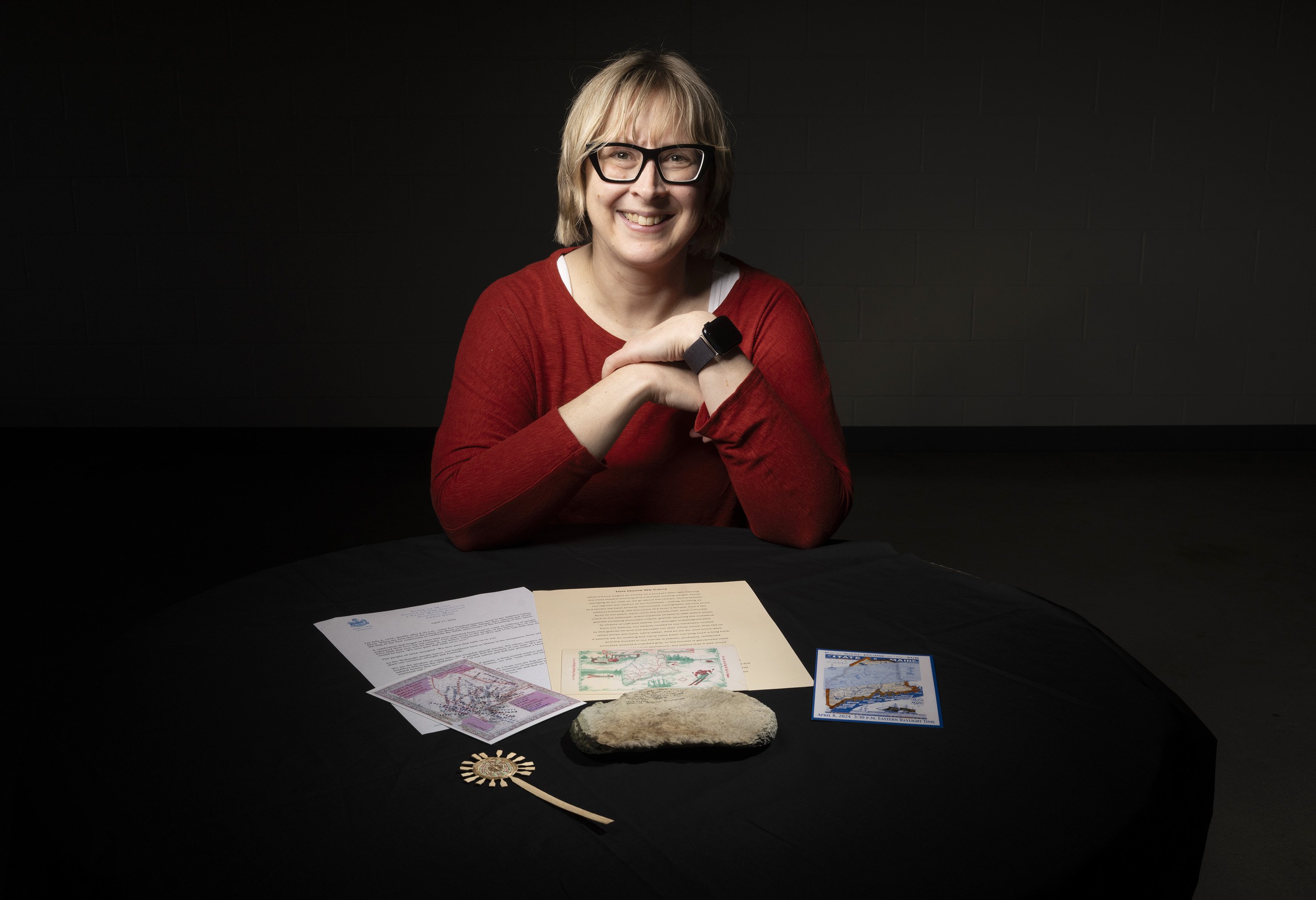
“It’s hard to figure out what tangible objects capture Maine that you can fit inside a 6-inch-by-5-inch-by-2-inch box,” said the commission’s director, Sarah Hansen. “It’s not like you could include a buoy, or a lobster trap or a logging instrument.”
The capsule, which will be buried in Philadelphia on July 4, will include contributions from every state and U.S. territory. Each place has been given the chance to fill one tiny box with memorabilia, and they’ve been given a little extra room for paper documents.
For months, Hansen and the body weighed their options, drawing on suggestions from commission members and the broader public. Earlier this year, they settled on Maine’s artifacts.
Last week, Hansen brought them all together for the first time.
“It’s a little bit of a compromise,” Hansen said in an interview on her way to drop the parcel off at the Post Office late last week. “But I think we ended up with a really interesting mix.”
The package now heads to the National Institute of Standards and Technology, where the capsule is being built and filled, project lead Tom Medema said. It will be sealed shut in early June, and reopened on July 4, 2276.
Here’s what’s inside:
POSTCARDS WITH MAPS OF MAINE
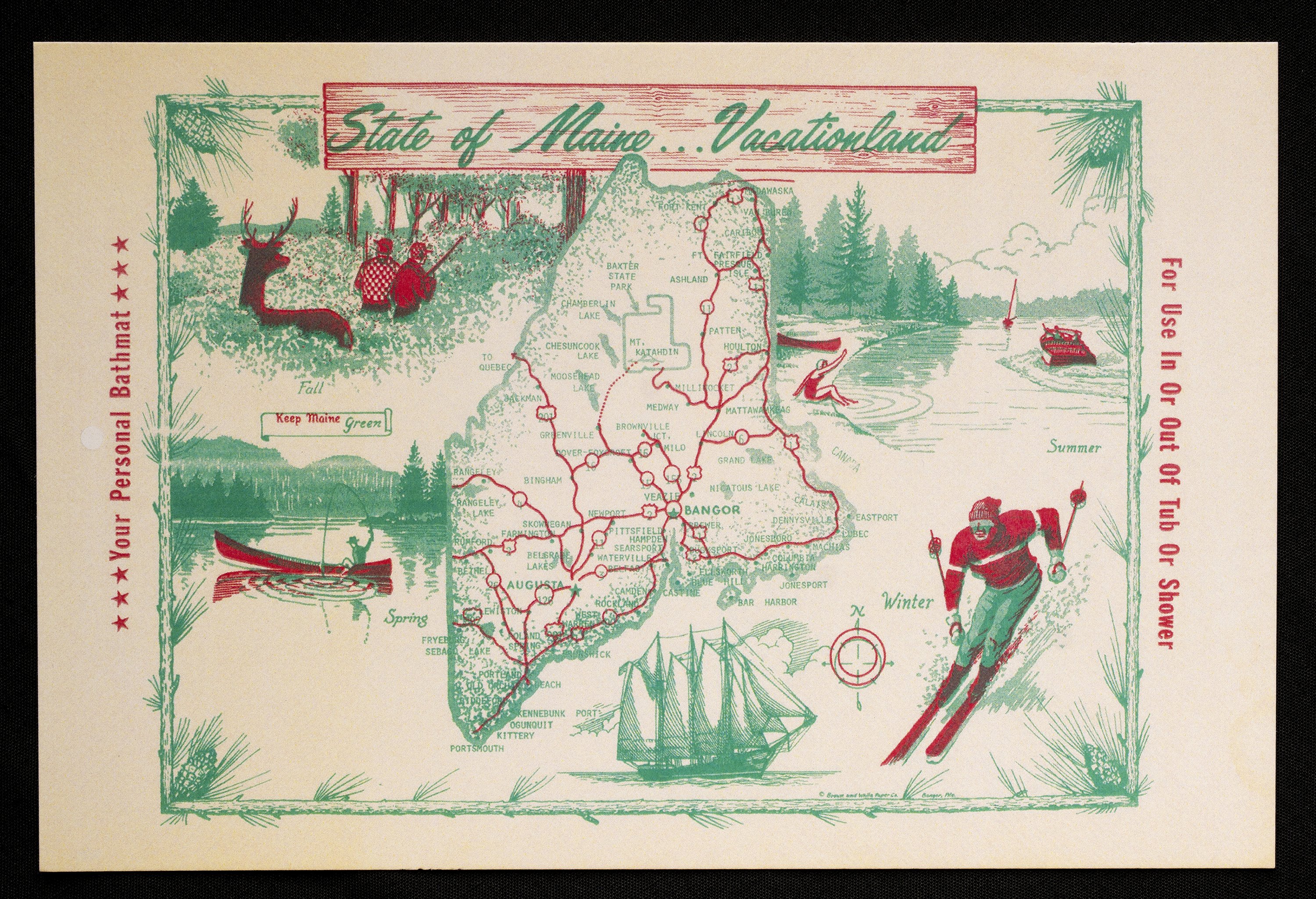
Three postcards, sourced from the University of Southern Maine’s Osher Map Library, show Maine’s boundaries as they currently exist — while illustrating the state’s cultural and recreational significance.
Libby Bischof, the map library’s executive director, said she suggested postcards largely for their size, but there’s another less-obvious reason for their inclusion.
“There was a time in Maine’s history where we were really a center of postcard production in the United States,” Bischof said. “It seemed a natural intersection to be able to give a physical reminder.”
Including Maine’s 2026 shape also calls into question whether the state’s border will change over the next quarter-millennium, as sea levels and land boundaries may be reformed by time. She noted that Maine’s borders have already changed over the last 250 years.
One card, a red and green print emblazoned with the word “Vacationland,” includes depictions of fishing, hunting and skiing along with a map of the state’s key arteries. Hansen said that design had originally been printed on motel bathmats decades ago.
“It’s kind of a fun, kitschy thing, as a nod to tourism,” Hansen said, adding that the card is among her favorite inclusions.
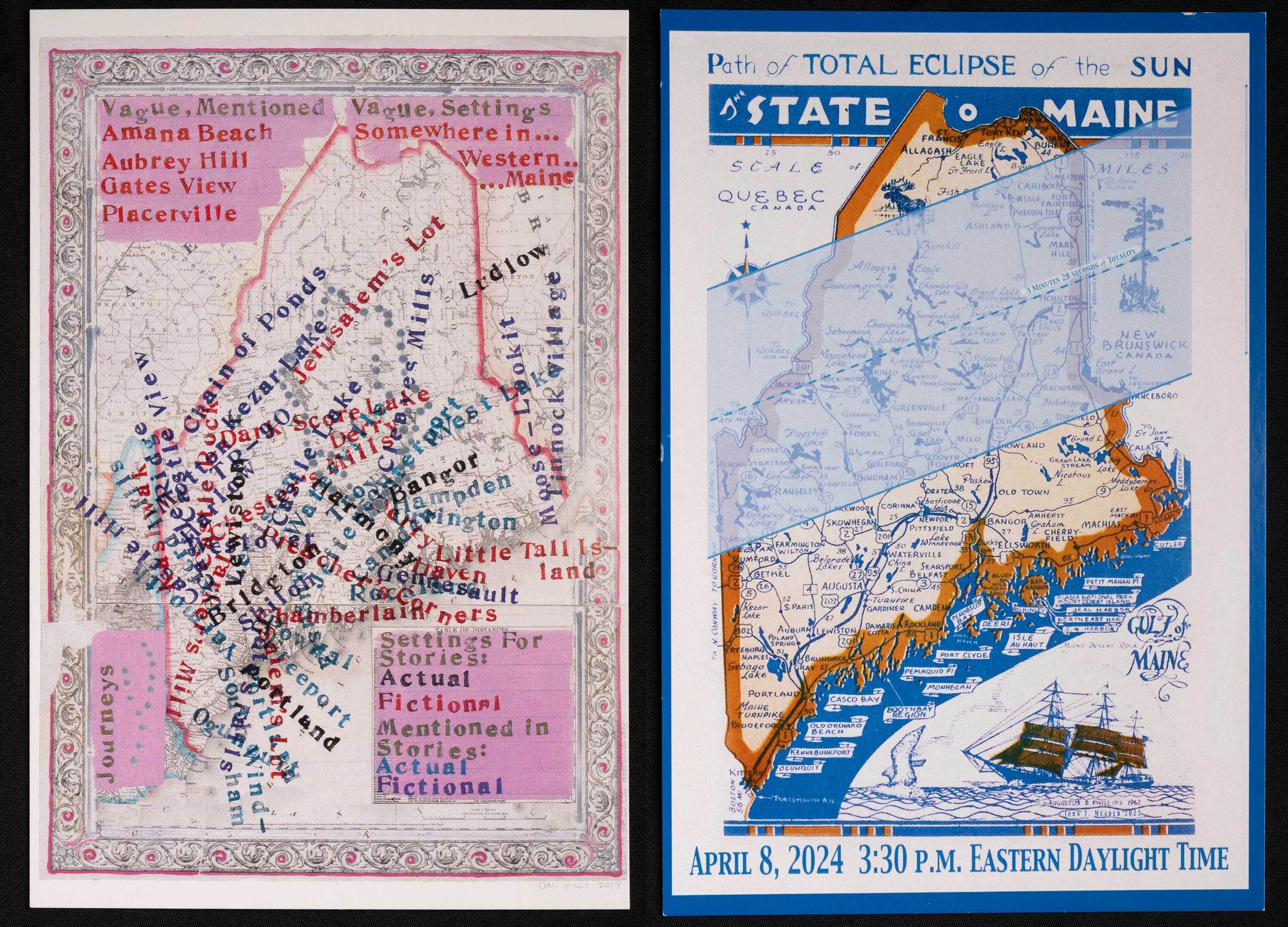
Another postcard showcases dozens of towns — real, fictional and vaguely alluded to — that appear in novels by the iconic author Stephen King. The postcard is a reproduction of a work by Maine artist Dan Mills.
The third postcard charts the path of totality over Maine during the 2024 solar eclipse.
The phenomenon drew thousands of visitors, including Mainers and those from away, to the northern half of the state. The event triggered a significant bump in tourism and spending, as tens of thousands descended on typically quiet corners of the Pine Tree State.
Bischof said the cosmic coincidence helped unify people in a way she had never seen in over two decades living in Maine.
“People from all walks of life, all political persuasions, left their house, drove up into the path of totality, and experienced this generational event together,” Bischof said. “I’ve never seen so many people in such a good mood.”
WABANAKI SWEETGRASS AND ASH BOOKMARK
Made by a once-known artisan sometime in the last decade, this piece comes from the personal collection of Julia Gray, executive director of the Wilson Museum in Castine. Gray said the flower-shaped weaving presented a chance to show Native Americans’ deep roots in the land in a tiny package. With its inclusion, future generations can have a tangible piece of authentic Wabanaki basket weaving.
“We couldn’t put a basket in there,” she said. “But this was a way to represent that this place that is now Maine, that is being documented in this time capsule, is a Wabanaki place.”
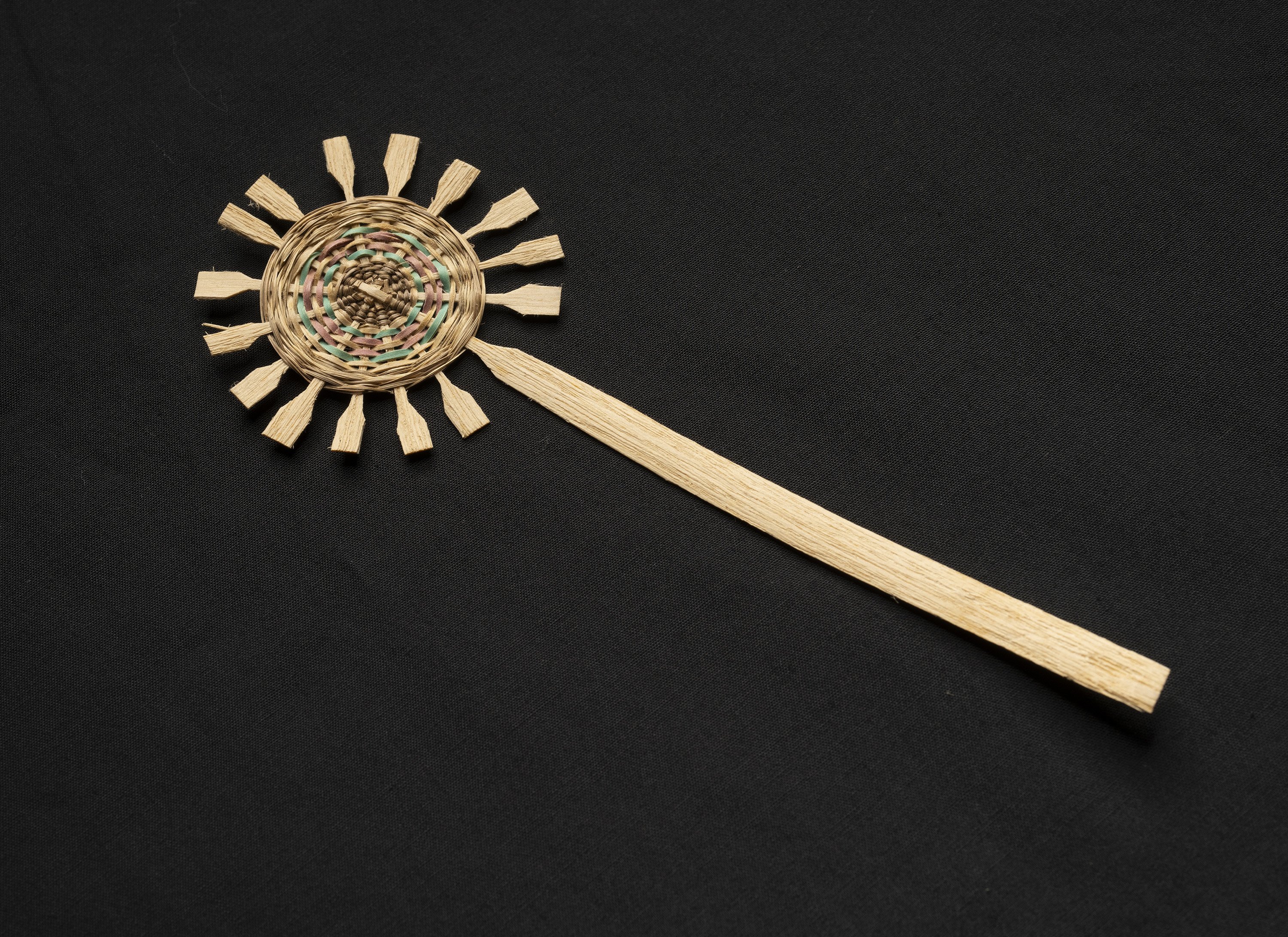
Made of sweetgrass and brown ash, it also evokes Maine’s changing landscape of foliage, Gray said.
Wabanaki peoples have long woven baskets from sweetgrass’ long strips, but restrictions on private property and regulations in places like Acadia National Park have challenged their access to the plant in recent years. Rising sea levels also challenge the plant’s ability to thrive in its typical coastal homes, Gray said.
The ash tree is also facing threats from the emerald ash borer, among Maine’s most damaging invasive species, according to the Maine Department of Agriculture, Conservation and Forestry. The beetles were recently spotted in Aroostook County, far from where they usually live in Maine.
Richard Silliboy, a renowned Mi’kmaq basket maker, said weavers — especially those learning the craft anew — often make bookmarks to practice and refine their technique. They’re not as difficult to make as baskets. But the craft is still important.
“It’s just to continue the art, that’s the big deal — pass that down to the younger people,” Silliboy said on a Monday phone call.
The bookmark had initially been rejected out of fears that it would disintegrate before the capsule is reopened, Hansen said. But earlier this month, the Maine commission learned that the national team had reversed course.
Medema, the project lead for America’s Time Capsule, said anything made of natural fibers needed to be carefully considered. Beyond crumbling, if something were to decay, it would release gasses that could change the chemical atmosphere inside the capsule and potentially damage other artifacts, he said.
“We’ve had to say no to a number of things,” Medema said on a Friday phone call.
But within the last few weeks, he said the Library of Congress approved a stable packaging material in which “low-risk” artifacts like the bookmark can be stored. That allowed a last-minute turnaround.
Silliboy expressed little doubt in the bookmark’s longevity, “as long as it’s taken care of.”
“Sweetgrass don’t rot away, neither does brown ash, not unless the temperature changes,” Silliboy said. “Two-hundred-fifty years? That’ll last for that long.”
NORTH ATLANTIC RIGHT WHALE VERTEBRAE
In 2016, a whale washed up near Boothbay. Now, it’s going to be a part of Maine history.
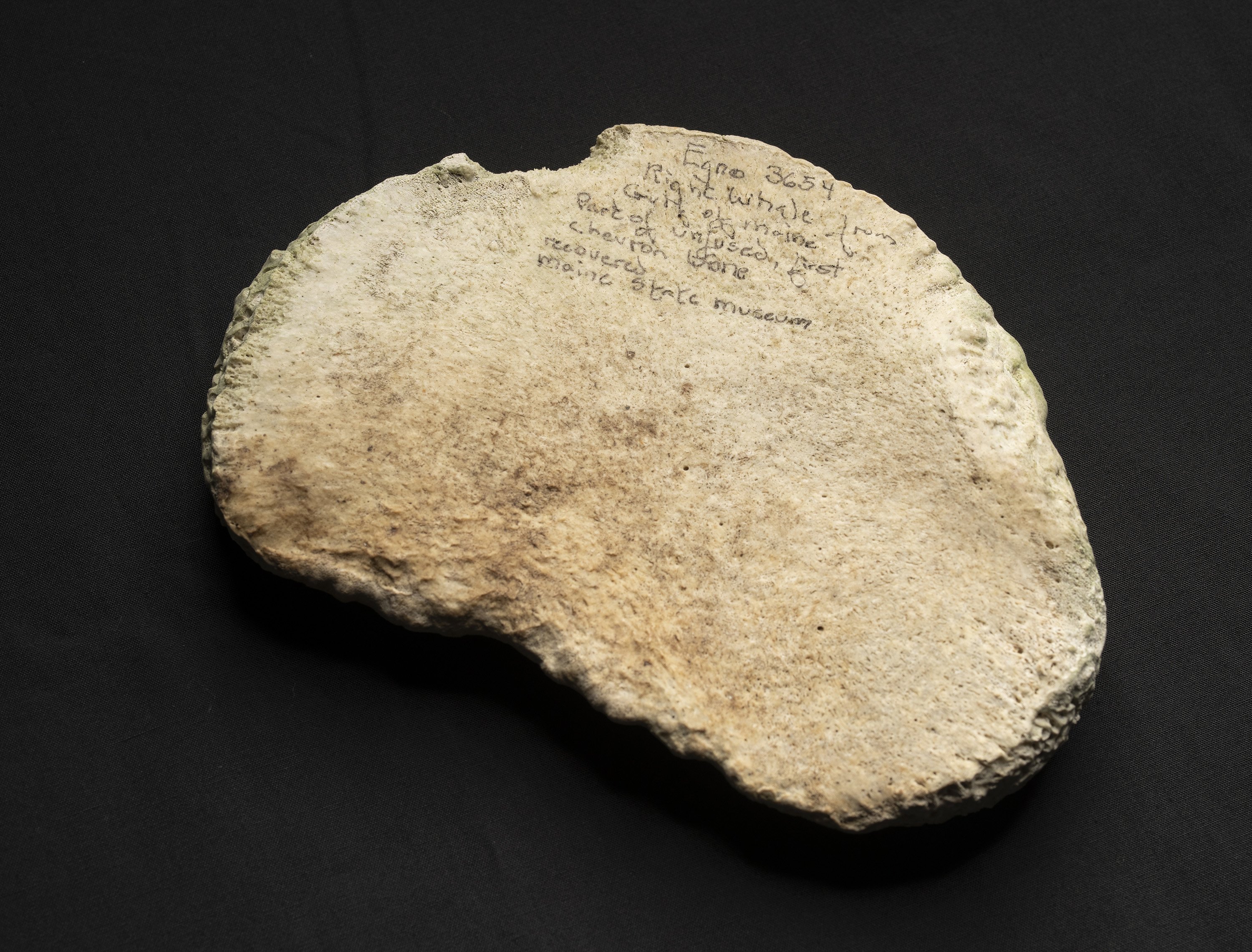
Officials are including one of the specimen’s vertebrae, which, according to Bernard Fishman, director of the Maine State Museum, comes from the area around what we would consider the pelvis.
Researchers named the whale EgNo 3654, and her jaw and flipper bones will be on display when the state museum reopens later this year, Fishman said. He added that she likely drowned after becoming entangled in fishing line.
North Atlantic right whales are among the world’s most endangered species, with roughly 380 living today, according to the National Oceanic and Atmospheric Administration. Their leading causes of death are human-made hazards: fishing gear and large vessels.
The whales had more offspring last year than in other recent seasons, but birthrates remain lower than what scientists say is necessary for the species to recover. Meanwhile, federal regulations designed to protect the whales have been walked back.
Fishman said time capsules are often more fun than serious, but he saw the bone as a chance to “move beyond the lobster bib” and pose important questions to future generations. And to our contemporary selves.
“If this really is going to be opened up in 250 years, (let’s) ask that question of the future: did we save them?” Fishman said. “Did we — did you — save the right whales?”
A PIECE BY MAINE’S POET LAUREATE
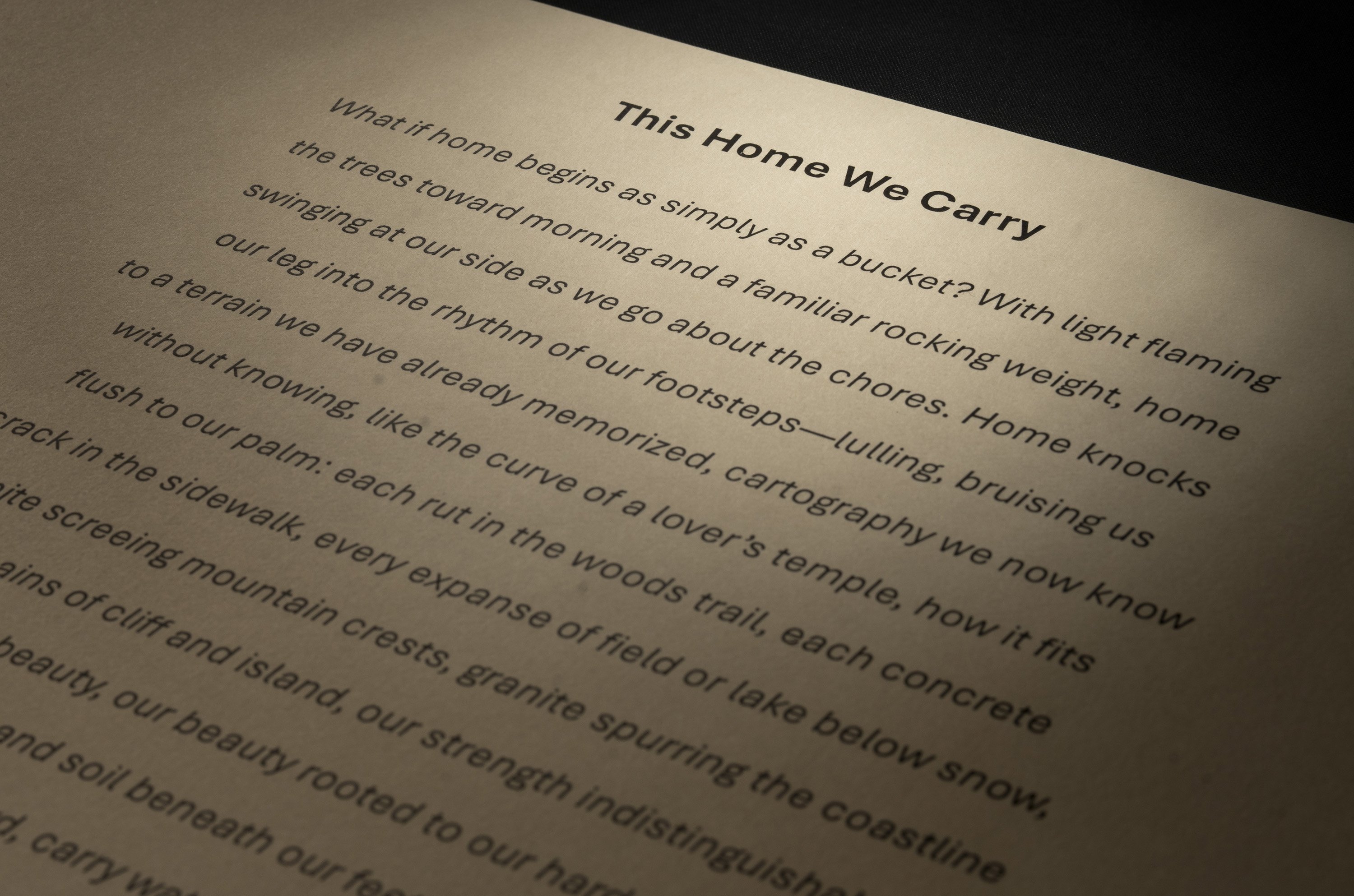
Beyond the artifacts that will be placed in Maine’s box, the state was allowed to submit two pieces of paper that will be housed in a separate part of the capsule. Among them: a double-sided print of Julia Bouwsma’s “This Home We Carry.”
The poem was initially debuted at Gov. Janet Mills’ second inauguration in 2023. Through the metaphor of a bucket, it describes the way we carry memories, ancestry and the scars of history through life. (In a twist of fate, one of Bouwsma’s first assignments as Maine’s poet laureate was a different poem that was included in Maine’s bicentennial time capsule.)
Bouwsma said she appreciates the time capsule’s physicality and that her work can be included within that “little archive.”
She said poetry “wants to extend beyond its moment,” and being included in the capsule allows her poem to fulfill that desire. Future readers will imbue the piece with their own interpretations, reading from a context that today is impossible to predict.
“I often say that I think the poem is created in the space between the writer and the reader,” Bouwsma said. “I don’t necessarily need my reader to know exactly what I meant. What I want is it to mean something to them.”
A LETTER FROM THE GOVERNOR
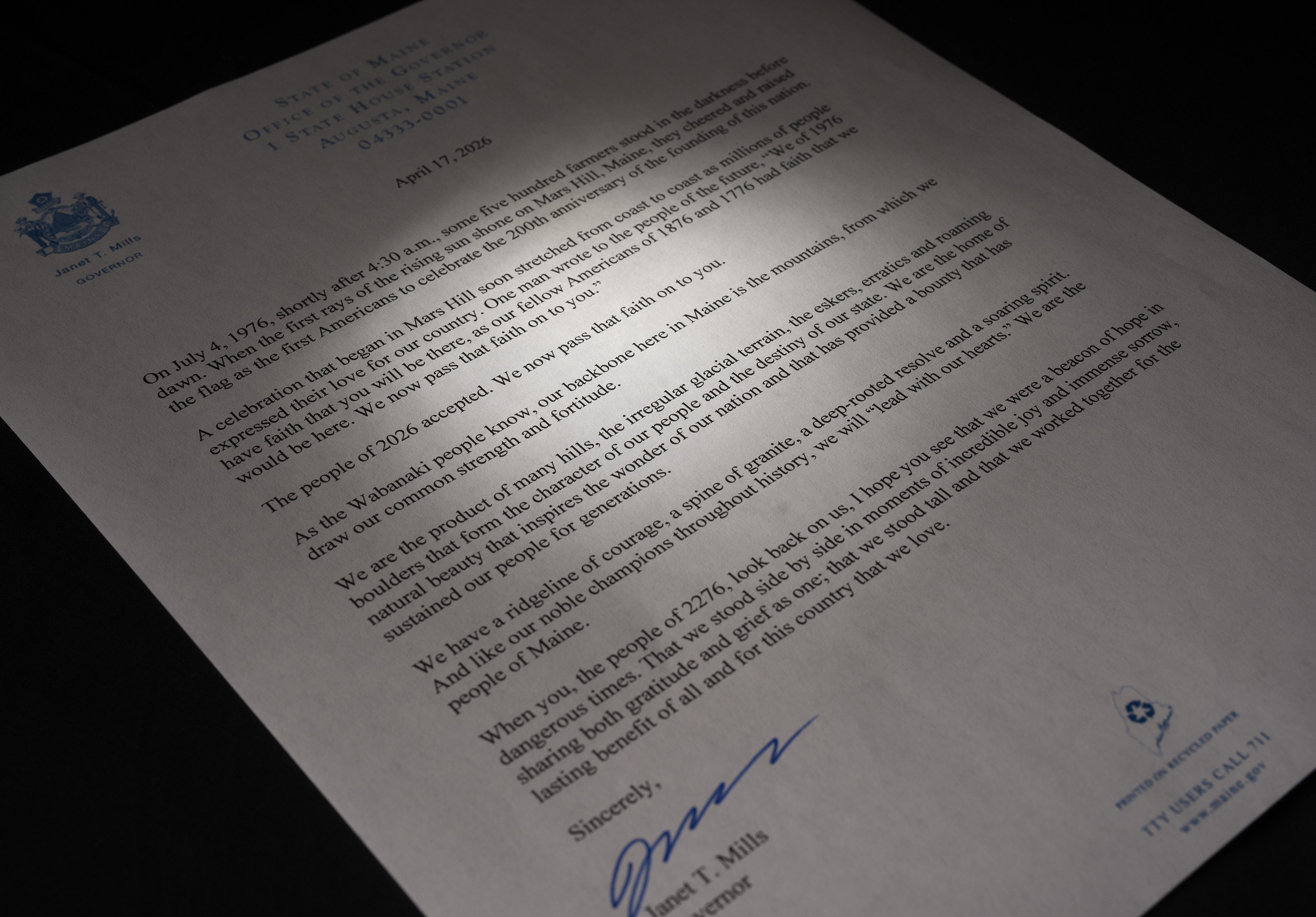
In her letter, Mills says that Maine’s natural beauty has inspired the country for generations and “provided a bounty” capable of sustaining its people for centuries. She notes that the people of Mars Hill saw the first sunrise as the United States celebrated its 200th anniversary in 1976, launching a day of celebration.
Writing to the people of 2276, Mills — a Democrat who has publicly quarreled with President Donald Trump as the state challenges federal policies in court — said she hopes future generations see her state as “a beacon of hope in dangerous times.”
She describes Mainers as a people who have shared “immense joy and sorrow,” and who have stood strongly for their values and the betterment of the entire country.
“We have a ridgeline of courage, a spine of granite, a deep-rooted resolve and a soaring spirit,” Mills wrote. “And like our noble champions throughout history, we will ‘lead with our hearts.'”
That last phrase is a reference to the Portland Hearts of Pine’s motto. The soccer team launched last year, and Mills attended their first game at Fitzpatrick Stadium.

We invite you to add your comments. We encourage a thoughtful exchange of ideas and information on this website. By joining the conversation, you are agreeing to our commenting policy and terms of use. More information is found on our FAQs. You can update your screen name on the member's center.
Comments are managed by our staff during regular business hours Monday through Friday as well as limited hours on Saturday and Sunday. Comments held for moderation outside of those hours may take longer to approve.
Join the Conversation
Please sign into your CentralMaine.com account to participate in conversations below. If you do not have an account, you can subscribe here. Questions? Please see our FAQs.