


MaineHealth will begin enrolling patients next week into the second year of a clinical research trial that is studying why some people who have had Lyme disease continue to have symptoms months or years after contracting the bacterial infection.
Dr. Robert Smith — a scientist at the MaineHealth Institute for Research in Scarborough leading the Maine component of the five-year, $20.7 million study — said the goal is to learn what treatments will be effective in alleviating the condition, which is often called chronic Lyme or post-treatment Lyme disease syndrome.
The study is ramping up, with MaineHealth doubling the number of new patients it’s enrolling, from 30 in 2025 — the first year patients were tracked — to 60 this year.
Patients cannot sign up for the study on their own. They must be referred to the research trial by their primary care provider to study centers in Biddeford, Portland, Brunswick, Rockport and Belfast.
In most patients, symptoms will dissipate after taking a course of antibiotics, but scientists have estimated that 5% to 20% of people who contract Lyme disease will develop chronic symptoms. Those can include fatigue, cognitive difficulties, joint pain and muscle aches, according to the U.S. Centers for Disease Control and Prevention.
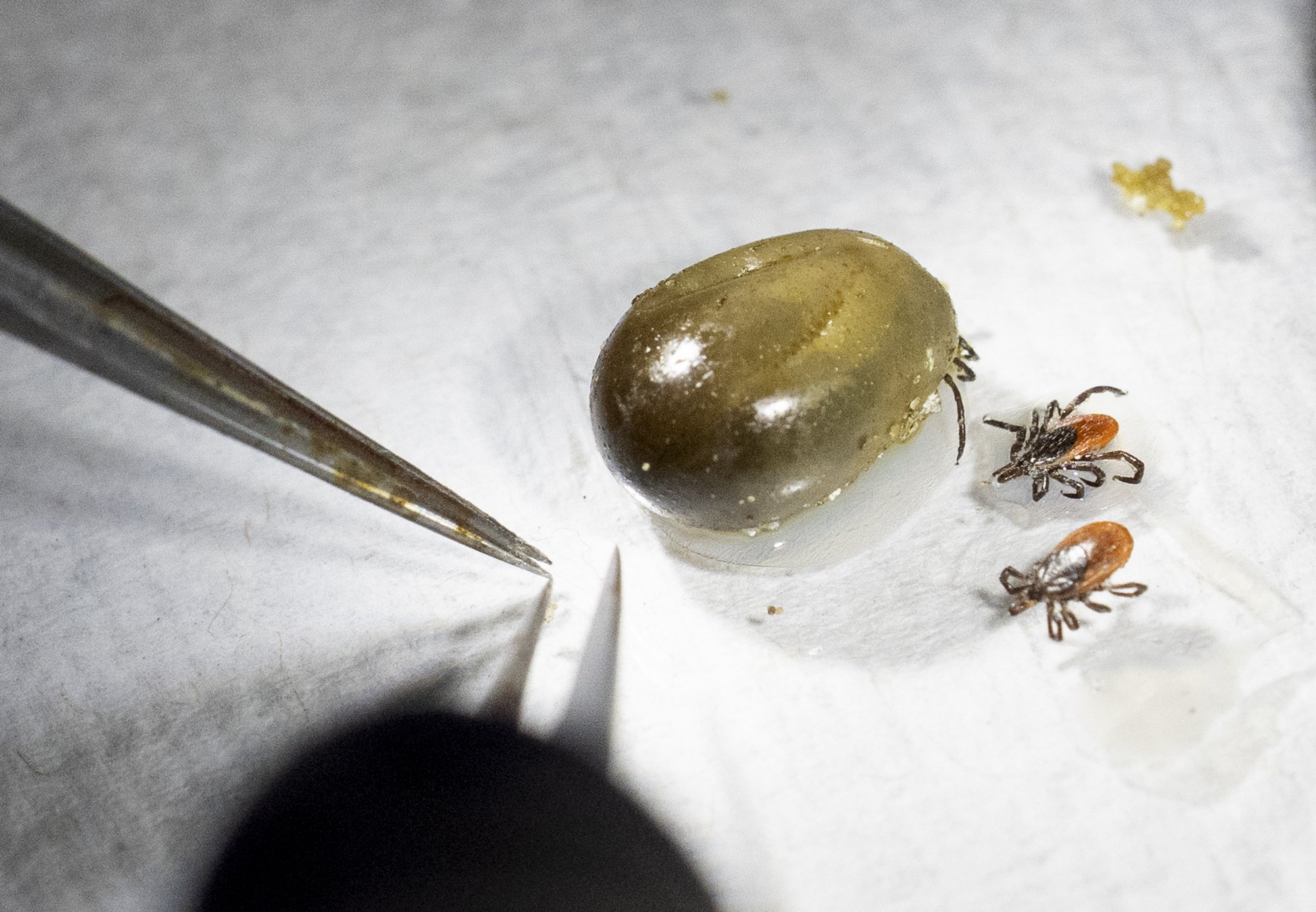
Caused by the bite of a deer tick, thousands of Maine residents contract Lyme disease each year, with a record 4,257 cases reported to the Maine Center for Disease Control and Prevention in 2025. The agency had logged 526 Lyme cases so far this year, through April 28.
Smith said the research, which is a partnership between MaineHealth and Tufts University in Boston, should help scientists learn more about why symptoms persist in some patients long after the infection has cleared.
“This study is so critical for us to collect solid evidence so that we can develop an effective approach to the treatment,” Smith, director of the institute’s Vector-borne Disease Lab, said in an interview Wednesday.
Those treatments, Smith said, could be antibody therapy or it “might be something we don’t know about yet.”
Dr. Linden Hu, an immunology professor at Tufts University, said scientists have not made much progress on chronic Lyme in at least 30 years, but this study could lead to breakthroughs.
In previous research, scientists wouldn’t know for sure that patients saying they suffered from long-term Lyme symptoms had contracted Lyme, as the symptoms can mimic other chronic conditions, such as fibromyalgia, Hu said.
“In this study we are absolutely sure these patients had Lyme. The goal is to understand what is driving chronic Lyme, because nobody knows for sure what’s causing it,” Hu said. “This research might allow us to pinpoint the causes.”
One area they are studying, Smith said, is determining if certain strains of the bacteria — there are 15 — are more likely to cause long-term symptoms. They are also examining the role of a patient’s immune response to the infection, and whether genetics are a factor, he said.
The research is also looking at whether chronic Lyme has biomarkers, which are like signposts in the body that can indicate whether a patient will be susceptible to long-term symptoms, Smith said.
The study, which will eventually track over 1,000 patients in Massachusetts and Maine, is funded through the National Institutes of Health.
Smith said this year, patients who test positive for Lyme disease and either have not yet started taking antibiotics or are within 48 hours of taking the medicine will be tracked for at least one year. Enrollees will have skin biopsies taken, receive blood and urine tests, and report whether their Lyme symptoms are continuing, Smith said.
MaineHealth is also participating in testing for a potential new Lyme vaccine.

We invite you to add your comments. We encourage a thoughtful exchange of ideas and information on this website. By joining the conversation, you are agreeing to our commenting policy and terms of use. More information is found on our FAQs. You can update your screen name on the member's center.
Comments are managed by our staff during regular business hours Monday through Friday as well as limited hours on Saturday and Sunday. Comments held for moderation outside of those hours may take longer to approve.
Join the Conversation
Please sign into your CentralMaine.com account to participate in conversations below. If you do not have an account, you can subscribe here. Questions? Please see our FAQs.