

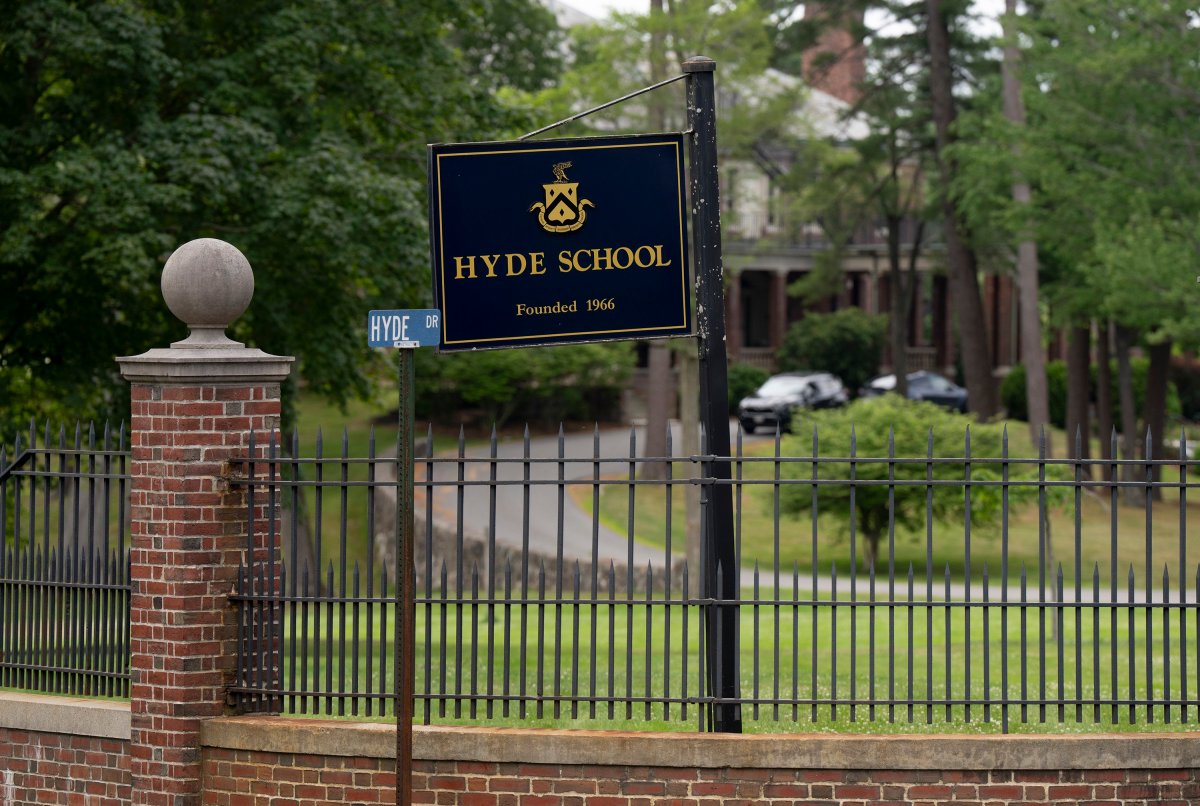
The lawyer for a former student at a Bath boarding school who is suing the institution for abuse and neglect was sanctioned this week for using artificial intelligence in a court filing, which resulted in inaccurate and fabricated legal citations.
U.S. District Judge Stacey Neumann on Tuesday ordered attorney Kelly Guagenty to take a legal education course about AI in the legal field and create procedures at her law firm to prevent such errors from happening again. She will not be fined for the errors, and will remain involved in the case going forward.
The court order reflects a persistent issue in court systems around the world, as lawyers use the technology more, and introduce more fictitious citations.
Hyde School’s attorneys filed a motion last October to dismiss the class action lawsuit, which alleges the character education boarding school violated human trafficking, forced labor and negligence laws.
In her response to that motion arguing against dismissal, Guagenty improperly cited two federal cases to support her claims, and inaccurately quoted Maine’s law for human trafficking lawsuits, among other errors.
Guagenty addressed the issues in December and called the mistakes “clerical errors” that should not “affect the merits” of her client’s case. But Maine-based attorney John Steed — who had been co-counsel on the case and had provided Massachusetts-based Guagenty the ability to practice in Maine — promptly pulled out.
The court gave Guagenty 60 days to find a new Maine-based lawyer, which she did, but in a new filing on April 28, she admitted that the errors in that document were actually the result of writing done by either ChatGPT or Claude, two large language model chatbots. She accepted responsibility for the errors, and said she had failed to properly review the work done by another member of her team before filing the response.
In her order Tuesday, Neumann said the use of AI in legal drafting isn’t inherently an issue, but said Guagenty had a responsibility to independently confirm that all of the citations in her filing were accurate.
“Although AI can be a useful aid in research and drafting, its use does not diminish an attorney’s nondelegable duties of diligence, candor, and reasonable inquiry,” she wrote. But Neumann also noted that Guagenty had accepted responsibility, expressed remorse and had no history of disciplinary violations.
AI-generated legal citation errors have been a growing problem across court systems in the last year, NPR reported last month. Paris-based legal researcher Damien Charlotin keeps a global record of what have been termed AI “hallucinations,” fabricated citations or AI generated arguments in legal filings. His database has more than 1,000 entries, including five already from this month.
Charlotin said the pace of new AI-related case errors had recently plateaued after more than a year of exponential growth. That could be because lawyers are becoming more aware of the issue, he said, or because courts are becoming fatigued.
Charlotin observed that the AI hallucination phenomenon is highlighting something that has long been true in the legal field: that people signing documents aren’t necessarily reading them carefully.
Guagenty will now have to file an amended response to the motion to dismiss from October, which the judge has not yet weighed in on.
Attorneys for Hyde declined to comment on the order.
Guagenty said in a statement that the court’s decision is “fair and appropriate under the specific circumstances” and that she will follow its orders.
“I appreciate that the court recognized my spotless disciplinary record, and I’m embracing the opportunity to correct this error and to move forward on behalf of my client,” she said.

We invite you to add your comments. We encourage a thoughtful exchange of ideas and information on this website. By joining the conversation, you are agreeing to our commenting policy and terms of use. More information is found on our FAQs. You can update your screen name on the member's center.
Comments are managed by our staff during regular business hours Monday through Friday as well as limited hours on Saturday and Sunday. Comments held for moderation outside of those hours may take longer to approve.
Join the Conversation
Please sign into your CentralMaine.com account to participate in conversations below. If you do not have an account, you can subscribe here. Questions? Please see our FAQs.