

Maine is in the midst of tick season, as residents are becoming more active outdoors.
Tick-borne diseases have become an increasing public health hazard in the state and across the country. Lyme disease cases in Maine have risen every year for the past five years, with a record 4,257 cases logged in 2025, according to data from the Maine Center for Disease Control and Prevention.
Coastal Maine, especially areas like Hancock, Knox, Lincoln and Waldo counties, have been hot spots for deer tick activity, but the range of the deer tick has extended inland and farther north.
TICK-BORNE DISEASE DATA
Deer ticks can transmit Lyme disease, a bacterial infection, and other illnesses to humans. The Maine CDC has reported that this year, as of May 26, here had been:
- 775 cases of Lyme disease
- 156 cases of anaplasmosis
- 15 cases of babesiosis
If detected, Lyme disease can be treated with antibiotics. Symptoms can include a bull’s-eye rash, fever, headache, fatigue, joint and neck pain and swollen lymph nodes. Anaplasmosis, a bacterial infection, and babesiosis, a parasitic infection, have similar symptoms.
EXPOSURE TIPS
Ticks can be active at most times of the year, but they are typically dormant in winter, surviving under leaf litter. Prime times for tick activity are in the spring, early summer and fall.
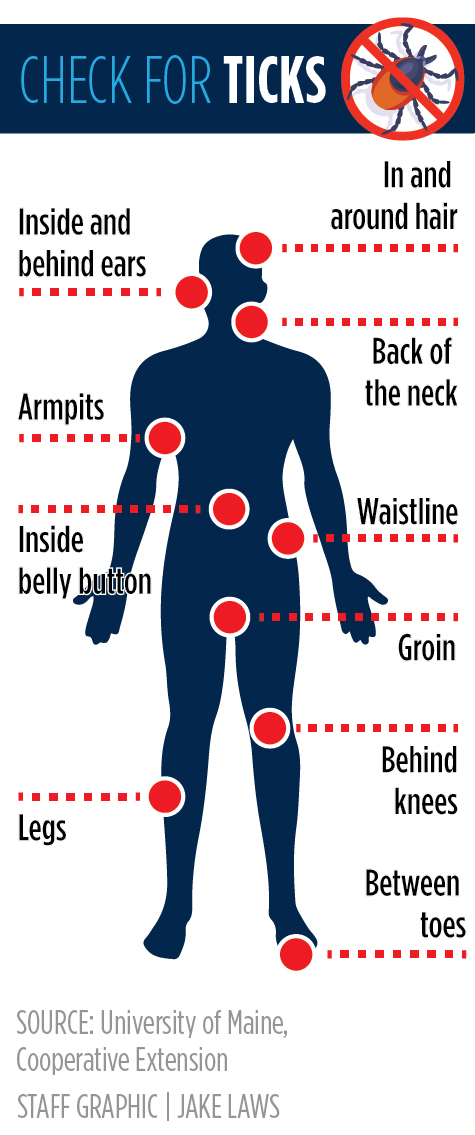
Before going outdoors, apply tick repellant, wear long-sleeved clothing when hiking and tuck pants into socks, according to the Maine CDC. Once inside, check clothing for ticks and put clothes immediately into the dryer on high heat when returning. Experts also recommend watching for ticks when moving firewood or raking leaves, and doing tick checks, including on pets.
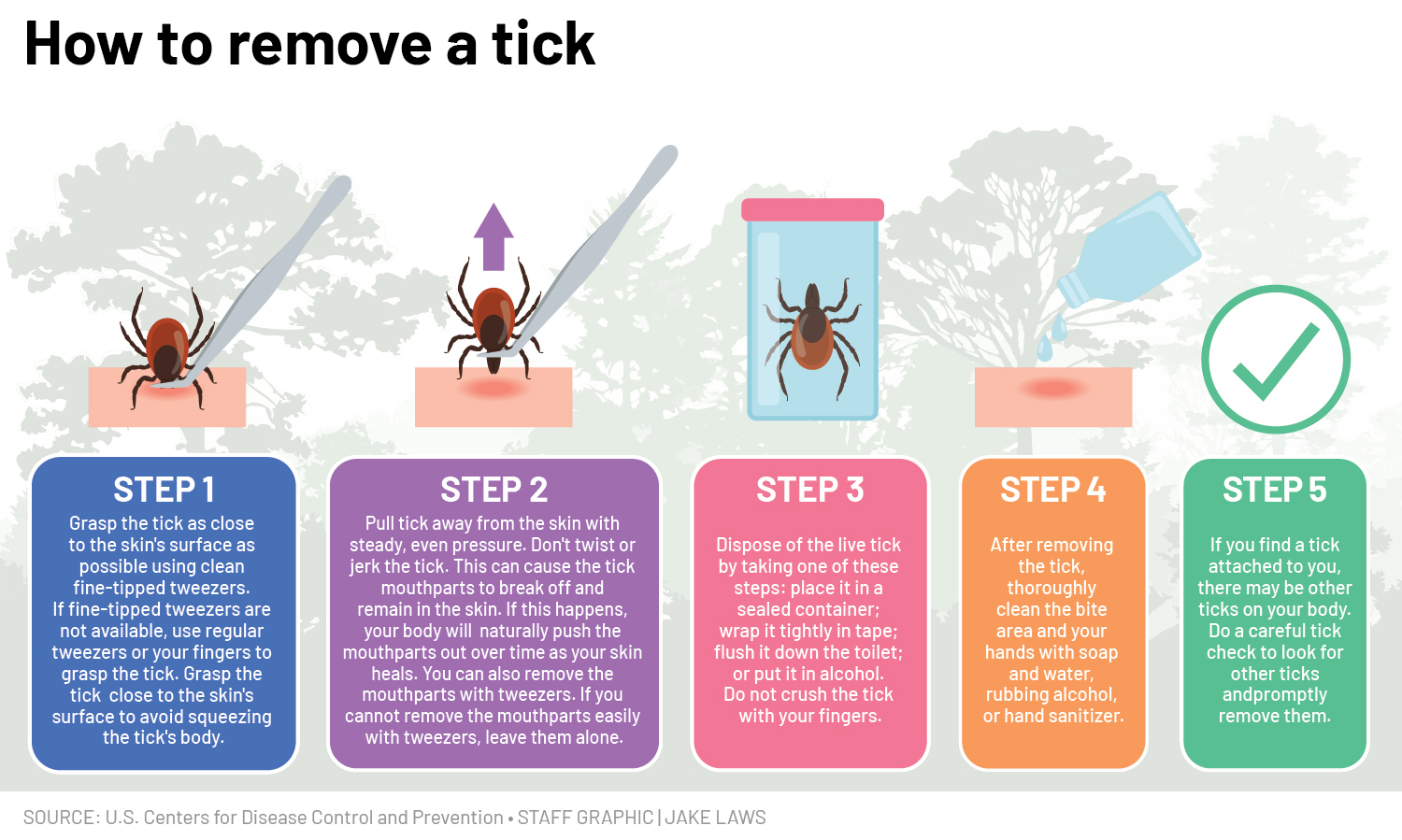
To remove a tick, use tweezers to grasp the tick as close to the skin as possible. Pull up using steady movements, to remove the tick before disposing.
RESOURCES
To submit a tick to the University of Maine Extension’s Tick Lab, fill out a tick submission form on the website, put the tick into a bag that can be closed or other sealed container. Ship the sample to the UMaine Extension Diagnostic & Research Lab, Attn: Tick Lab, 17 Godfrey Drive, Orono, ME, 04473-3692.
Deer ticks, which are responsible for Maine’s known tick-borne diseases, have a red-orange body, with a large black area near the head, and black legs.
Dog ticks have a reddish-brown body and legs, with grayish-white marks on their back. Dog ticks can transmit Rocky Mountain spotted fever, but there have not been any confirmed cases of that disease being transmitted from ticks to humans in Maine, according to the University of Maine Cooperative Extension.
For more information, go to the websites for the Maine CDC or the Centers for Disease Control and Prevention.

We invite you to add your comments. We encourage a thoughtful exchange of ideas and information on this website. By joining the conversation, you are agreeing to our commenting policy and terms of use. More information is found on our FAQs. You can update your screen name on the member's center.
Comments are managed by our staff during regular business hours Monday through Friday as well as limited hours on Saturday and Sunday. Comments held for moderation outside of those hours may take longer to approve.
Join the Conversation
Please sign into your CentralMaine.com account to participate in conversations below. If you do not have an account, you can subscribe here. Questions? Please see our FAQs.