


Gerald Talbot, a civil rights leader who rose to become Maine’s most prominent Black politician, died Saturday. He was 94.
His death was confirmed by Regina Phillips, one of his four daughters and a Portland city councilor.
Talbot was an activist during the Civil Rights Movement, championed landmark laws to fight housing and racial discrimination, and in 1972 became the state’s first Black legislator.
“Jerry was a powerful figure in the state of Maine,” said Bob Greene, an expert on Black history in Maine. “He was the first one to look at politics as a way of helping everyone.”
Talbot, an eighth-generation Mainer, was born in Bangor in 1931. After serving in the Army in the 1950s, he and his wife, Anita Cummings Talbot, settled in Portland, where they faced housing and job discrimination that informed his activism.
In 1963, Talbot was one of several notable Mainers to participate in the March on Washington, witnessing Martin Luther King Jr.’s famous “I Have a Dream” speech on the steps of the Lincoln Memorial. As civil rights activism swelled in the South, Talbot helped spread the movement in Maine, and the next year, he revived Portland’s chapter of the NAACP from a five-year hiatus and served as its president.
“It was something we felt had to happen,” Talbot told the Portland Press Herald in 2005. “As Blacks, we had nobody to go to and no voice.”
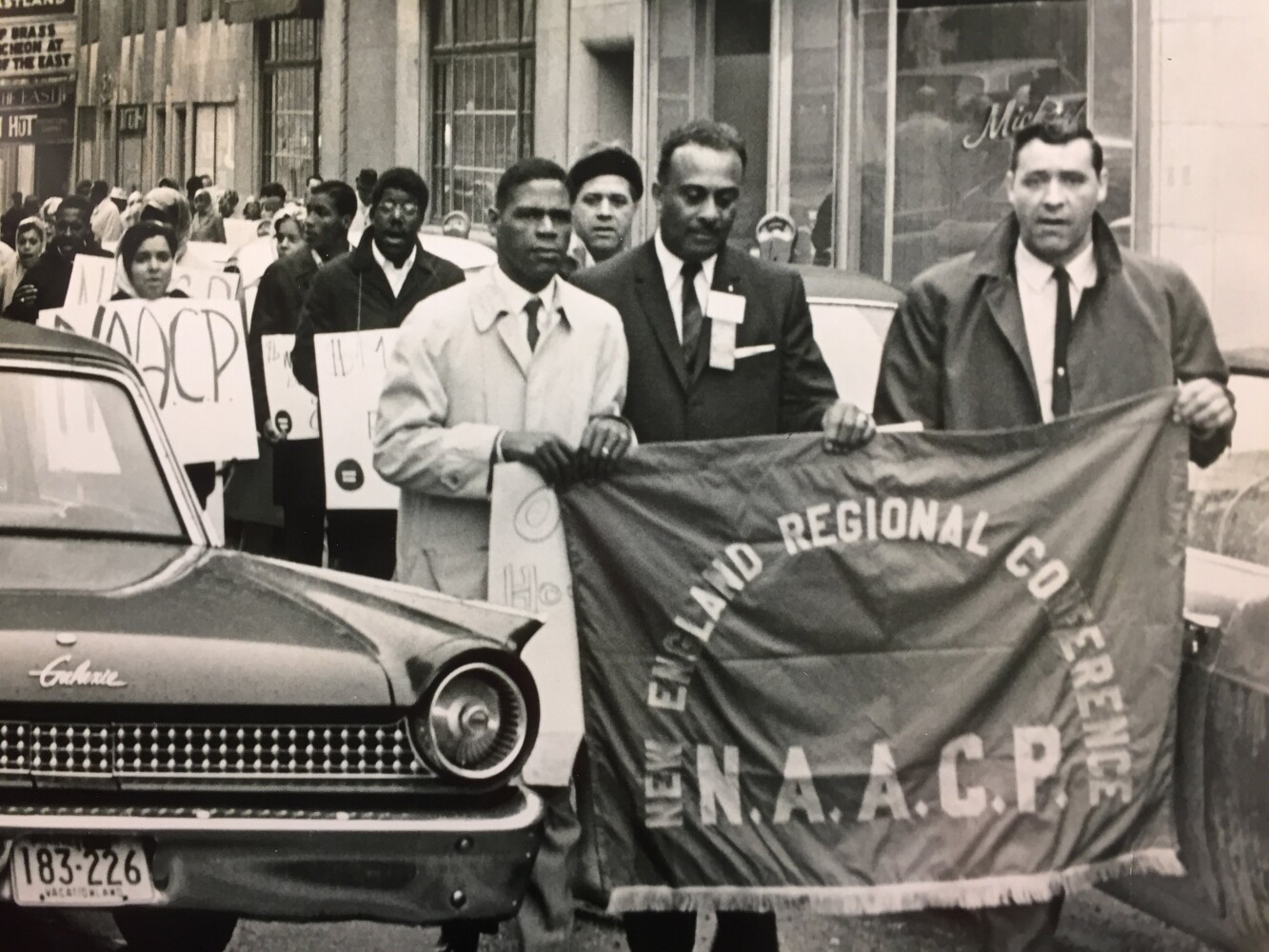
Gov. Janet Mills issued a statement Sunday describing Talbot as a history maker and “great Mainer” who will be remembered for his humility, civility and joyous smile.
Talbot “is not only a figure of history but its protector as well, as his tireless work to preserve and teach Black history in Maine will be valued and cherished for generations to come,” Mills said in the statement.
U.S. Rep. Chellie Pingree, D-1st District, said in a statement Sunday that Talbot was a trailblazer who “opened doors that had been closed for far too long.” She honored his efforts to fight discrimination based on race and sexual orientation.
“That courage, rooted in his own lifelong fight against racism and injustice, is part of the extraordinary legacy he leaves behind,” Pingree said in the statement.
DEDICATED TO ADVOCACY
Talbot was a major force behind the passage of a landmark Maine bill that outlawed discrimination in rental housing in 1965 — three years before the federal Fair Housing Act was passed.
Appointed in 1968 to the governor’s human rights task force, Talbot also was instrumental in the creation of the Maine Human Rights Commission and in passing the Maine Human Rights Act.
In 1972, he made history when he was elected as a Democrat to the Maine House, where he represented Portland for three terms. Prior to his 1978 departure from the Legislature, he sponsored notable bills that included the state’s first attempts at gay rights legislation and an act to eradicate racial slurs from all maps and location names in Maine.
Talbot was gregarious in nature with a booming voice and a habit of looking people right in the eye when captivated in conversation.
The Rev. Kenneth Lewis, pastor of the Green Memorial AME Zion Church in Portland, remembered Talbot as larger than life with a natural grace that put others at ease and empowered some to take the stage as well.
“He never stopped wanting better for other people,” Lewis said. “Even at his advanced age, he was always engaged, always present, always available.”
One of Talbot’s four daughters, Rachel Talbot Ross, followed in her father’s footsteps and was elected to the Maine House in 2016. In 2022, she became Maine’s first Black House speaker. She is now a state senator.
PASSION FOR HISTORY
Talbot also was passionate about preserving and highlighting Black history in Maine, gathering a vast collection of artifacts, photos, posters and documents throughout his life. In 1995, he donated the Gerald E. Talbot Collection to the University of Southern Maine’s archives.
“I decided that all of this fabulous Black history should be shared with others on a larger educational scale, rather than staying in my home or in an exhibit every now and then,” Talbot wrote in “Maine’s Visible Black History: The First Chronicle of Its People,” a 429-page anthology published in 2006 that he compiled with his friend, historian H.H. Price of Portland.
“It’s a unique and valuable collection,” Price said. “It’s a reflection of Black history in Maine that wouldn’t have been saved without Jerry’s efforts.”
Many photos in his collection were gathered during the 25 years he worked in production at the Guy Gannett Publishing Co. — a previous owner of the Press Herald — before retiring in 1991.
While at the Press Herald, Talbot fed his interest in history and civic affairs, taking lunch breaks in the newspaper’s library, where he scoured books and clip files for information, Price said.
Also in 1995, USM named an auditorium after him and honored him with an honorary doctorate. The university created a fellowship examining race in Maine in Talbot’s honor in 2019.
Talbot served on the Maine State Board of Education from 1980-84 and was its chair in 1984. To honor his contributions to education, the city and the state, Portland in 2020 renamed Riverton Elementary School as the Gerald E. Talbot Community School.
“Whether you’re Black or white or green or red, we’re all people and we all need the same thing: equality,” Talbot, then 89, said at the naming ceremony.

Talbot was steadfast in his beliefs across his long life, championing justice both in Augusta and across the state, said Greene, the historian, who also knew Talbot personally.
“Jerry has always been Jerry,” Greene said. “You knew where he stood, and it was always for what was right.”


Comments are not available on this story. Read more about why we allow commenting on some stories and not on others.
We believe it's important to offer commenting on certain stories as a benefit to our readers. At its best, our comments sections can be a productive platform for readers to engage with our journalism, offer thoughts on coverage and issues, and drive conversation in a respectful, solutions-based way. It's a form of open discourse that can be useful to our community, public officials, journalists and others.
We do not enable comments on everything — exceptions include most crime stories, and coverage involving personal tragedy or sensitive issues that invite personal attacks instead of thoughtful discussion.
You can read more here about our commenting policy and terms of use. More information is also found on our FAQs.
Show less