
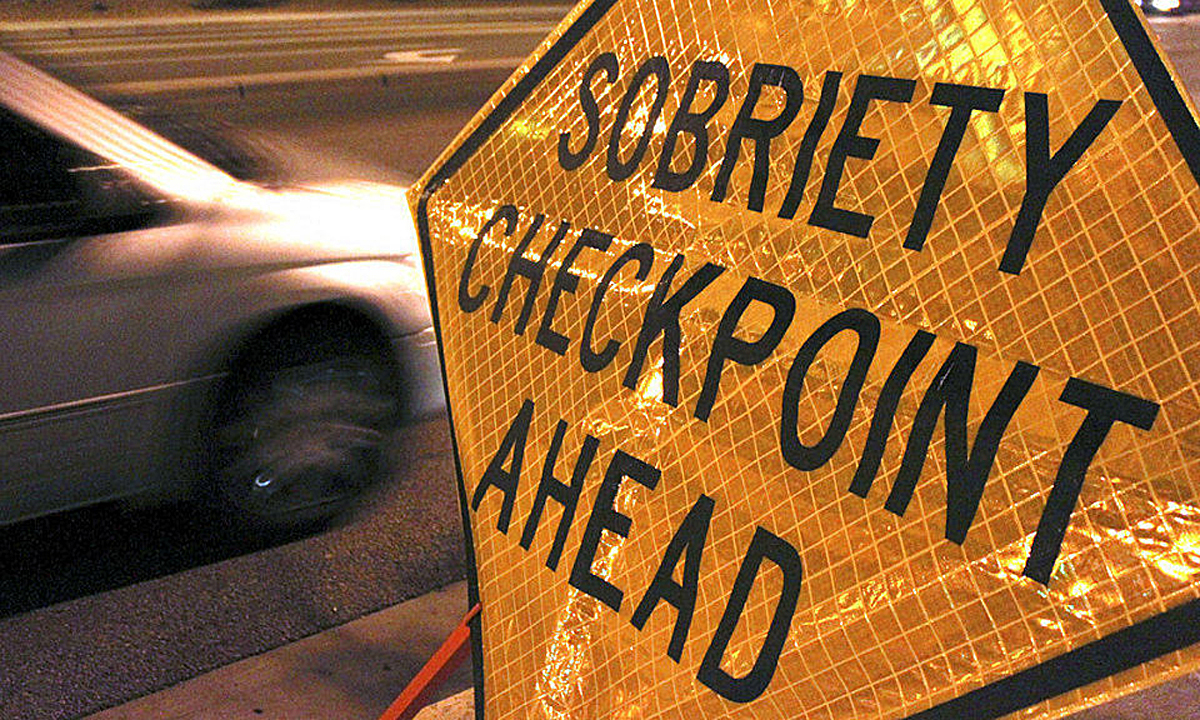
No.

OUI checkpoints are not categorically unconstitutional, but there are restrictions.
The U.S. Supreme Court ruled in Michigan Department of State Police v. Sitz (1990) that sobriety checkpoints — if conducted properly — do not violate the Fourth Amendment’s protection against unreasonable searches.
The Maine Supreme Judicial Court had reached a similar conclusion in State v. Leighton (1988). The court said OUI roadblocks can be constitutional if police follow clear rules, keep the stops brief and have a strong public safety reason for conducting them.
That doesn’t mean every checkpoint is lawful. Maine courts consider whether they are carefully planned, safely run, publicly announced and brief for drivers, and whether the rules for stopping vehicles are applied consistently.
In State v. Kent (2011), Maine’s highest court threw out evidence from an OUI roadblock because the state failed to show that the checkpoint was planned or carried out consistently with the Fourth Amendment.
This fact brief is responsive to conversations such as this one.
The Maine Trust for Local News partners with Gigafact to produce fact briefs — bite-sized fact checks of trending claims. Read our methodology to learn how we check claims.
We invite you to add your comments. We encourage a thoughtful exchange of ideas and information on this website. By joining the conversation, you are agreeing to our commenting policy and terms of use. More information is found on our FAQs. You can update your screen name on the member's center.
Comments are managed by our staff during regular business hours Monday through Friday as well as limited hours on Saturday and Sunday. Comments held for moderation outside of those hours may take longer to approve.
Join the Conversation
Please sign into your CentralMaine.com account to participate in conversations below. If you do not have an account, you can subscribe here. Questions? Please see our FAQs.