

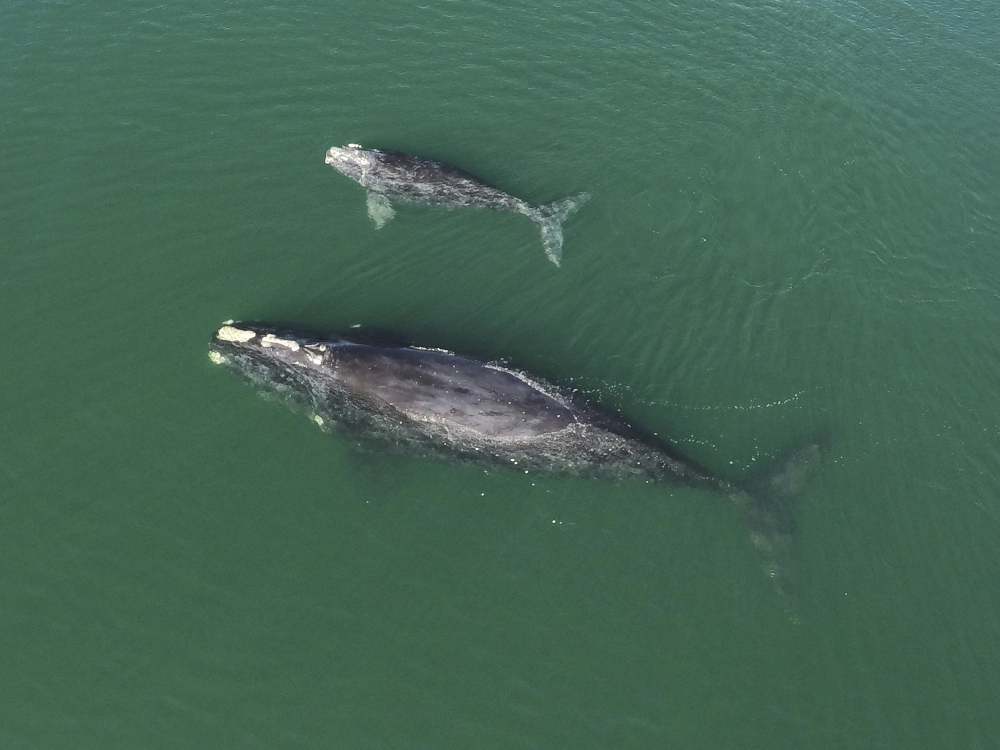
The North Atlantic right whale has spent much of the last decade teetering on the edge of extinction, having to travel farther for food while dodging ships and fishing gear, but a baby boom is offering the species — and lobstermen trying to avoid them — a glimmer of hope.
The species has experienced its most successful calving season since 2009. Twenty-three calves were born over the winter, according to the National Oceanic and Atmospheric Administration. That is enough to stabilize a population that numbers roughly 384 individuals.
For Maine’s lobstermen, who are currently facing a 2028 deadline to meet new risk-reduction rules, the successful calving season is a potential regulatory reprieve. This week, federal officials acknowledged the population’s uptick could allow for more “flexibility” in how those rules are written.
BIOLOGICAL TURNAROUND
The surge in births is being driven by a positive shift in whale health. For years, the gap between births for calving females had increased to a decade as potential mothers struggled with the chronic stress of fishing gear entanglements, which even if not fatal can leave them injured and exhausted, and having to travel farther to find food that is moving due to climate change.
This year, however, the gap between how often the average female gave birth fell to 5.5 years, according to federal data. That’s almost back to normal, said Kara Shervanick, a right whale coordinator for NOAA’s fisheries division.
Before the massive die-off began in 2017, the typical calving interval was three to five years.
“It’s a glimmer of hope,” said Shervanick said.
Of the 23 mothers spotted this winter, 18 had given birth within the last six years, she said.
“Many of this year’s moms have had shorter intervals,” said Amy Warren, a scientific program officer at the New England Aquarium. “It gives us hope that they may be healthier and can help grow the population faster.”
The new generation appears to be resilient. While five calves died during the previous season, 18 of this year’s 23 calves have already been spotted off Massachusetts at least a thousand miles from the southeastern waters where they were born.
A THAW IN RELATIONS?
The timing of the uptick is critical. Federal regulators are in the middle of a 31-month process of rewriting rules about how and where lobstermen can set their gear. The last set of rules was struck down by a federal court for failing to provide enough protection.
But the tone from federal officials has changed. During a meeting of regulators, scientists and fishermen this week, Jennifer Goebel, a NOAA fisheries manager, said the measures put in place in 2021, combined with similar efforts in Canada, are beginning to show results.
“We are cautiously optimistic that the take reduction team will have much more flexibility than it did in 2022,” Goebel said.
For an industry that feels unfairly blamed for the whale’s decline, that flexibility is the first sign of a potential cooling in the regulatory climate. Maine lobstermen have long pointed to NOAA’s own data to argue their gear rarely harms right whales.
The industry has been plagued by a lack of clarity. According to NOAA data, entanglements account for 63% of documented right whale injuries and deaths, but the origin of that fishing gear is frequently listed as “unknown.”
Between 2023 and 2026, only one of the 18 reported right whale entanglements was definitively traced to U.S. gear, while nine were linked to Canada’s lobster and crab industry. The other eight deaths were caused by unmarked or missing gear.
Maine lobster gear is identified by purple markings on the rope that connects the floating buoys with the traps on the sea bed, but because whales often shed gear or carry only fragments of rope, it is difficult for scientists to definitively clear or blame the Maine fishery.
THE ROAD AHEAD
Despite the celebratory tone of the calving season, scientists were quick to warn that the species is far from safe. Twenty-three to 25 births a year will stave off extinction, but it will take several years of at least 50 births a year for the species to actually recover, scientists say.
“Recovery is not a good calving year,” said Rachel Rilee, an ocean policy specialist at the Center for Biological Diversity. “It is a population that can withstand threats without being pushed back toward extinction. The North Atlantic right whale is not even close to that threshold.”
Human-caused injuries — vessel strikes and gear entanglements — still account for 79% of all documented right whale deaths and serious injuries since 2017, according to the latest NOAA data. Forty-three whales have died since the die-off led regulators to declare a whale emergency.
This season’s 23 new calves are a reason to keep improving protections, Rilee said.
“Unless we keep and strengthen the protections that give them a fighting chance, today’s conservation wins will become tomorrow’s devastating losses, and too many of these calves may never live long enough to become parents themselves,” Rilee said.
The next major milestone for both the whales and the lobster industry will come this November, when federal regulators are expected to release new risk-reduction targets that will guide NOAA’s future regulatory approach to right whale recovery.
“These have been challenging times for the Maine lobster industry,” said Patrice McCarron, the executive director of the Maine Lobstermen’s Association. “If there’s something out there that offers lobstermen a glimmer of hope, it’s only natural for them to latch on to it.”
The industry is going to argue that the rules already in place are working because births are up and mortalities are down, she said. All the key metrics are looking good. “But we never know how the federal government is going to put all the pieces together,” McCarron said.

We invite you to add your comments. We encourage a thoughtful exchange of ideas and information on this website. By joining the conversation, you are agreeing to our commenting policy and terms of use. More information is found on our FAQs. You can update your screen name on the member's center.
Comments are managed by our staff during regular business hours Monday through Friday as well as limited hours on Saturday and Sunday. Comments held for moderation outside of those hours may take longer to approve.
Join the Conversation
Please sign into your CentralMaine.com account to participate in conversations below. If you do not have an account, you can subscribe here. Questions? Please see our FAQs.