


Fires and explosions have long been threats to Maine’s lumber and paper mills.
In April 2020, a pulp digester exploded at the Androscoggin Mill in Jay, sending smoke and debris more than 100 feet into the air. Some people were treated for respiratory issues, but no casualties were reported. The paper mill closed permanently in 2023.
At Irving Forest Products in Dixfield, an explosion and fire in May 2021 damaged a machine used to move wood chips, and a fire last November caused serious damage to the sawmill building. No injuries were reported in either incident.
“The fuel load at a lumber mill is exceedingly high,” said James Graves, director of the Maine Fire Service Institute, which provides and certifies firefighter training programs. “There are so many variables, they happen regularly all over the state and beyond.”
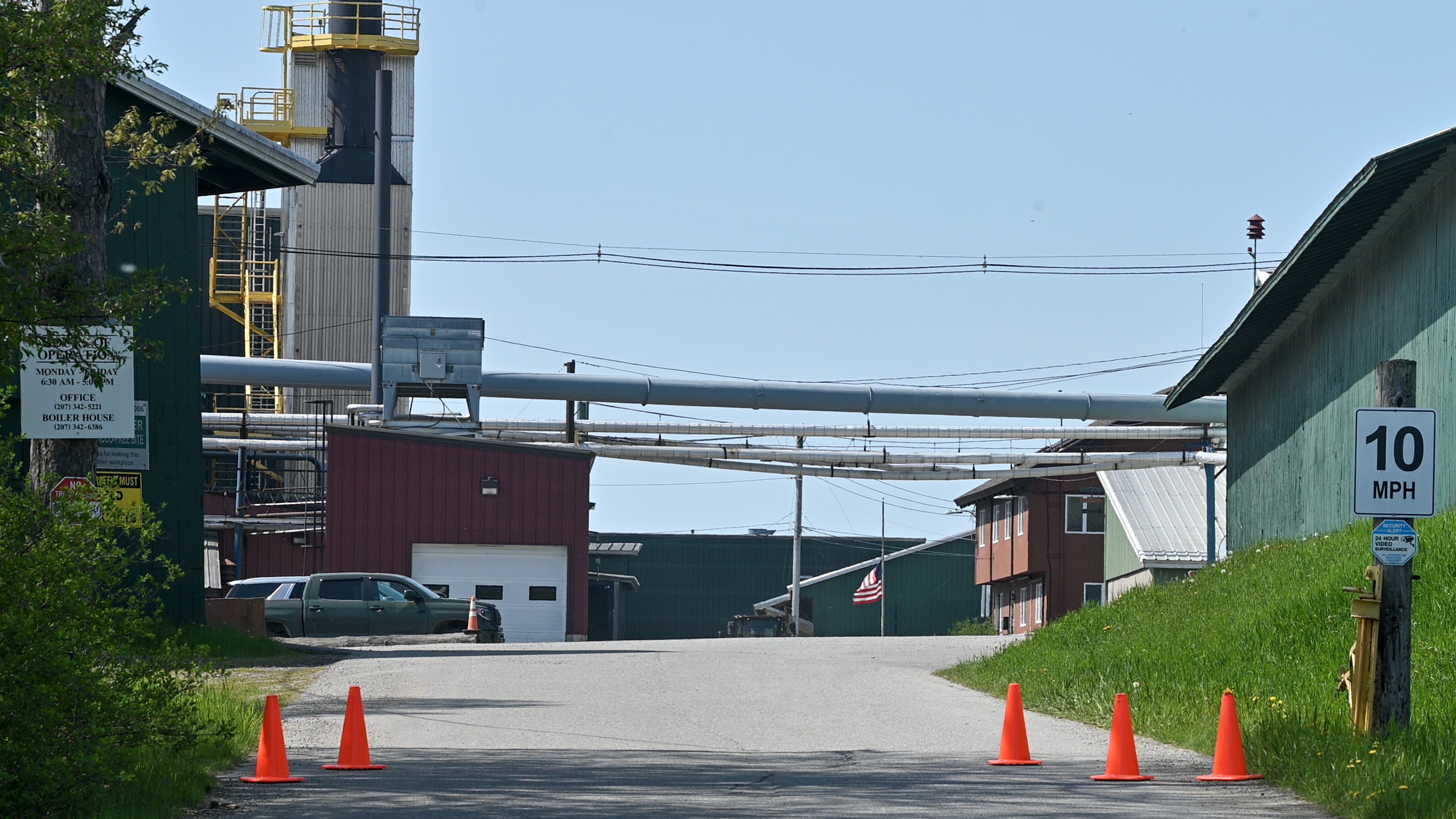
But Graves said relatively few are as tragic as the fiery explosion at Robbins Lumber Inc. in Searsmont that injured 12 people and killed Andrew Cross, 27, a member of the Morrill Volunteer Fire Department. Eight were still hospitalized Tuesday.
The explosion is under investigation by multiple federal agencies and the Office of the State Fire Marshal. Officials said Tuesday that the investigation at the scene has focused on documentation, evidence preservation, aerial mapping and witness interviews.
Aaron Turcotte, spokesperson for the Maine Department of Public Safety, said investigators also have been looking at similar mill infrastructure and electrical systems to better understand the layout and operations at the Robbins Lumber mill.
The federal Occupational Safety and Health Administration has investigated just one workplace safety incident at the mill in the past decade. The company was fined $5,427 for failing to conduct a regular inspection in its planer facility.
TRAINING FOR ‘TARGET HAZARDS’
Unfortunately, Graves said, deadly fires and explosions like the one at Robbins Lumber aren’t rare enough.
An incident in January 2012 at the Babine Forest Products sawmill in Burns Lake, British Columbia, Canada, killed two people and injured 20 others. An investigation found that the dust-collection system was inadequate, so sawdust built up and was ignited by rotating belts and wheels in a conveyor system, CBC News reported.
In September 2020, a maintenance worker died and another employee was injured in an explosion while working on a large air compressor at the Sierra Pacific Industries lumber mill in Lincoln, California, according to The Sacramento Bee.
Graves said industrial sites such as lumber mills are considered “target hazards” that often prompt fire departments to hold annual site-specific training to familiarize firefighters with facilities before they are called to an incident.
In addition to sawdust, sawmills can contain flammable chemicals, fuels, heavy machinery and electrical systems that can spark and throw off heat, according to Superior Industrial Fire Services, an Illinois-based company that provides fire suppression services to industrial sites.
FIRES DESTROY MAINE MILLS
In May 2010, fire destroyed the sawmill at Stillwater Lumber in Old Town, leaving cut spruce, pine and hemlock untouched in the yard. No one was injured in the blaze, which started near a generator, but the mill building was a total loss and was never rebuilt. It’s now one of 33 Hammond Lumber Co. locations across Maine.
Fire struck twice in early 2009 at the Hancock Lumber sawmill off Route 100 in Pittsfield. That February, sparks from a furnace filter ignited a sawdust silo. Then in March, fire ignited sawdust that remained in a silo that had contained wood shavings used for animal bedding.
”It was a stubborn fire,” Pittsfield Fire Chief Bernard Williams said at the time of the February blaze. ”It blew up through the top of the silo and set the top of the containment building on fire.”
Williams said he suspected it was a continuation of a similar fire in the silo from a few days before. Dozens of firefighters responded from surrounding towns. Damage was minimal and no one was injured in either fire.
Hancock Lumber didn’t respond to an interview request.
WORKERS IMPACTED BY LOSS
In April 2006, a fast-moving fire destroyed the Cold Stream Lumber Co. sawmill in Enfield, which is now owned by the Pleasant River Lumber Co. In September 2001, fire leveled the mill at Morgan Lumber Inc. in Bingham, putting more than 40 people out of work. It is now closed. No injuries were reported in either blaze.
Modern fire containment systems help prevent sawmill fires from causing more serious damage. In April 2015, fire destroyed some machinery and equipment in the mill at LMJ Enterprises in Lincoln, but a sprinkler system kept the fire from destroying the building, according to the Bangor Daily News.
Some lumber mills do recover from severe losses.
N.C. Hunt Lumber in Jefferson rebuilt and reopened one year after fire destroyed the sawmill in March 2019. No injuries were reported.
Many employees helped to construct the new steel building, president and co-owner Rob Hunt told the Lincoln County News in April 2020.
“It took us two to three months longer than I thought to get it up and running, but right now, we are making some great products,” Hunt said. “What we really want to do is run the new mill very well. It’s been a year, but it has felt like five years.”

Comments are not available on this story. Read more about why we allow commenting on some stories and not on others.
We believe it's important to offer commenting on certain stories as a benefit to our readers. At its best, our comments sections can be a productive platform for readers to engage with our journalism, offer thoughts on coverage and issues, and drive conversation in a respectful, solutions-based way. It's a form of open discourse that can be useful to our community, public officials, journalists and others.
We do not enable comments on everything — exceptions include most crime stories, and coverage involving personal tragedy or sensitive issues that invite personal attacks instead of thoughtful discussion.
You can read more here about our commenting policy and terms of use. More information is also found on our FAQs.
Show less