

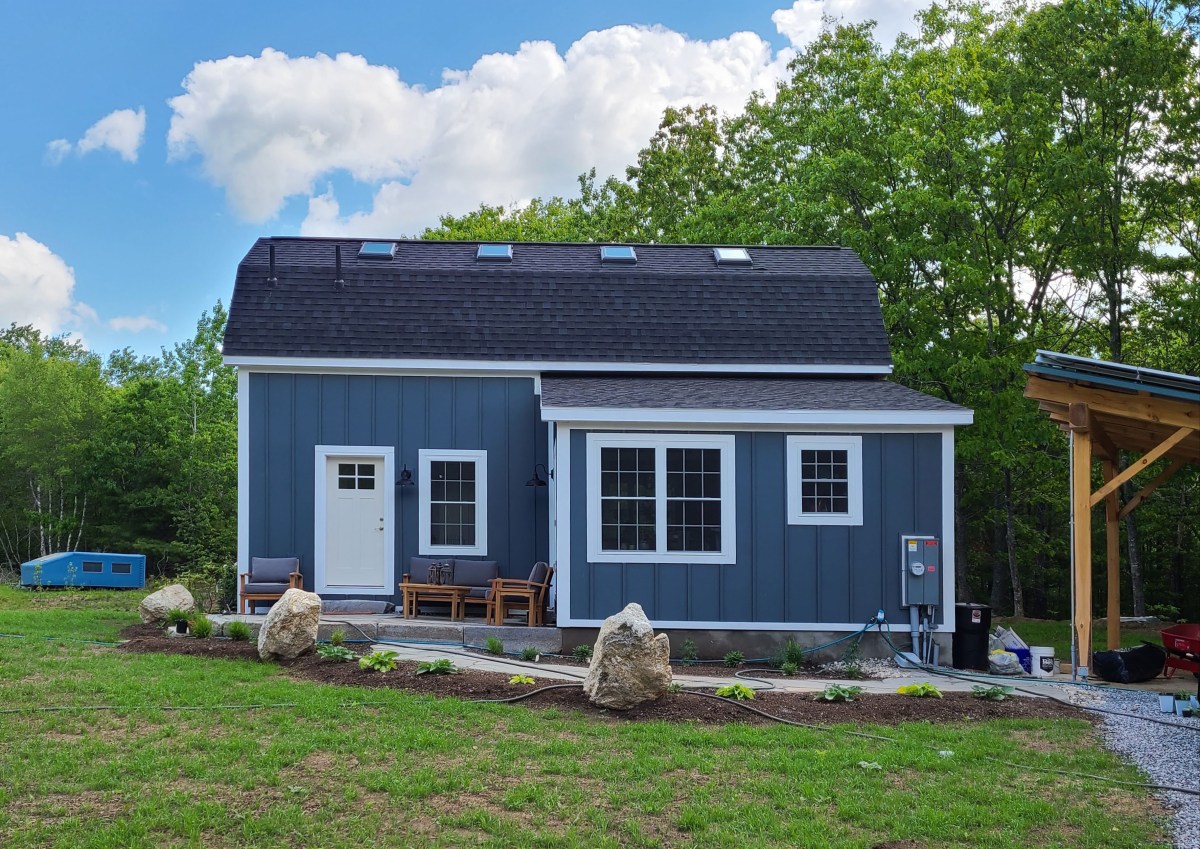
Maine policymakers have been bullish on accessory dwelling units as a way to ease the state’s housing shortage, but the general consensus has been that despite their potential, there’s still a long way to go before the small units capture a big share of the market.
New statewide data suggests that road may be shorter than expected.
ADUs accounted for about 9% of the residential building permits issued last year, according to preliminary data released by the Greater Portland Council of Governments.
Of the approximately 5,500 building permits issued across 183 of the state’s largest municipalities, 500 were ADUs – small dwelling units that share a lot with an existing home.
“Before we saw this data, I thought ADUs would be a very small piece of the solution,” said Kristina Egan, executive director of GPCOG.
MORE HOUSING DATA
The units were spread across the state, with the lion’s share clustered in southern Maine. Windham issued 16 ADU permits in 2025, more than any other reporting municipality. In Portland, there were 14.
But there were a few surprising heavy hitters. New Gloucester, for example, also issued 14, despite having a population of under 6,000, compared to almost 70,000 in Portland.
In Lubec, the eight accessory dwelling units that received permits accounted for almost half of the 18 buildings permitted in the Washington County town.
The data is just one piece of a whole host of housing information that municipalities with more than 4,000 residents are newly required to submit to the state following a recent law to better track Maine’s progress in meeting its ambitious housing goals.
The full dataset is expected in the coming weeks, though the preliminary numbers from GPCOG, which is assisting in the data collection, suggest the state fell short of its 2025 target of adding 6,900 homes.
This is the first year the data is being collected (and the state has said it’s a bit of a trial run) so there’s no way to track how much overall housing production, or ADU construction more specifically, has changed in recent years. But experts say it provides a baseline.
EASING REGULATIONS
Lawmakers have passed a handful of bills designed to reduce the red tape and costs around ADU construction.
A landmark law implemented in 2022 legalized ADUs on all residential lots statewide, effectively eliminating single-family zoning. Two subsequent bills to further loosen land use regulations won’t go into effect until 2027.
But after hearing from many developers and prospective builders that inflated construction costs and regulatory barriers have kept ADUs from really taking off, housing experts tempered their expectations.
In a recent podcast episode hosted by GPCOG, Austin Gregory, chief of operations and engineering for Backyard ADUs in Brunswick, estimated that the small units could account for less than 1% of annual permits.
According to Egan, the 9% figure proves the more navigable regulations are having the intended impact.
She’s optimistic that Maine could eventually mirror states like California, where ADUs accounted for 20% of the building permits issued in 2023.
“It’s an approach that nestles housing into existing neighborhoods without disrupting them,” she said. “Maybe this is a form of housing that Mainers will really embrace.”

We invite you to add your comments. We encourage a thoughtful exchange of ideas and information on this website. By joining the conversation, you are agreeing to our commenting policy and terms of use. More information is found on our FAQs. You can update your screen name on the member's center.
Comments are managed by our staff during regular business hours Monday through Friday as well as limited hours on Saturday and Sunday. Comments held for moderation outside of those hours may take longer to approve.
Join the Conversation
Please sign into your CentralMaine.com account to participate in conversations below. If you do not have an account, you can subscribe here. Questions? Please see our FAQs.