


GARDINER — As water roared over a Cobbossee Stream dam a few feet behind him, Teddy Doleski carefully but quickly worked a pocket knife up under the scales of one of the shimmering alewives that his classmates had scooped up by the netful just on the other side of the dam.
The Gardiner Area High School freshman got a little quicker and more precise with every fish, scraping off scales and sliding them into an envelope his science teacher Elissa Carter held so the scales collected from each fish could become part of a 10-year set of data on alewife migration on the river that flows from Cobbossee Lake through Pleasant Pond and into the Kennebec River.
The fish, a species of river herring, migrate by the millions from salt water to fresh water every spring along the East Coast including Maine to spawn.
The scales are used to determine the age of the fish.
Doleski volunteered for the job after Steve Brooke, president of Upstream, a local organization dedicated to restoring native sea-run fish to the Cobbosseecontee watershed, asked the group of students who had experience using a knife.
Though the last time Doleski used a knife on a fish was on one he had caught to eat.
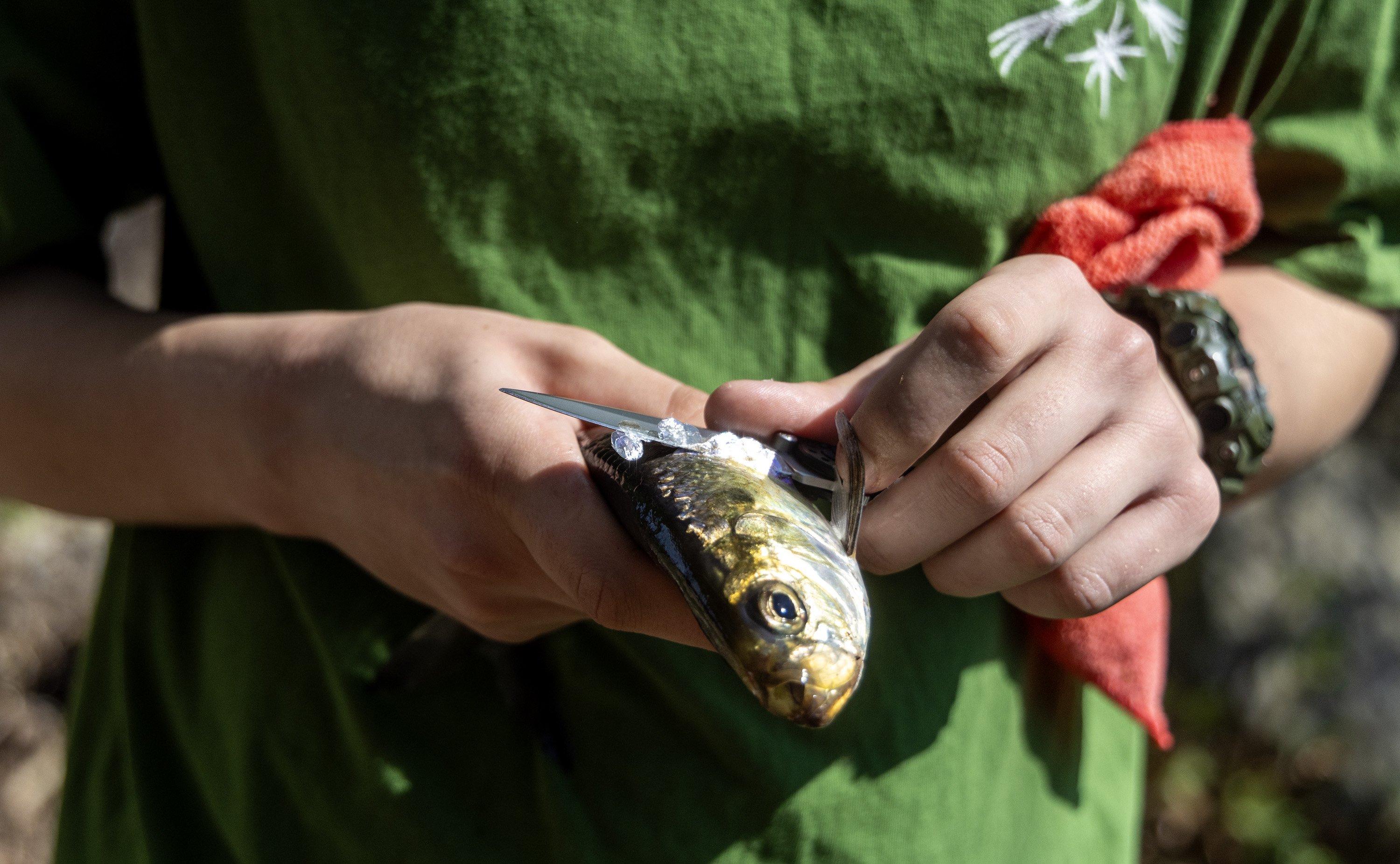
“I’ve filleted a fish, but that’s not the same,” Doleski said in between scraping scales off every fifth fish his classmates caught and delivered to an aerated holding tank of water for analysis. “Because I’m trying to keep these alive.”
That was a recurring theme as students worked on the steps of collecting and analyzing alewives on a recent sunny Tuesday morning.
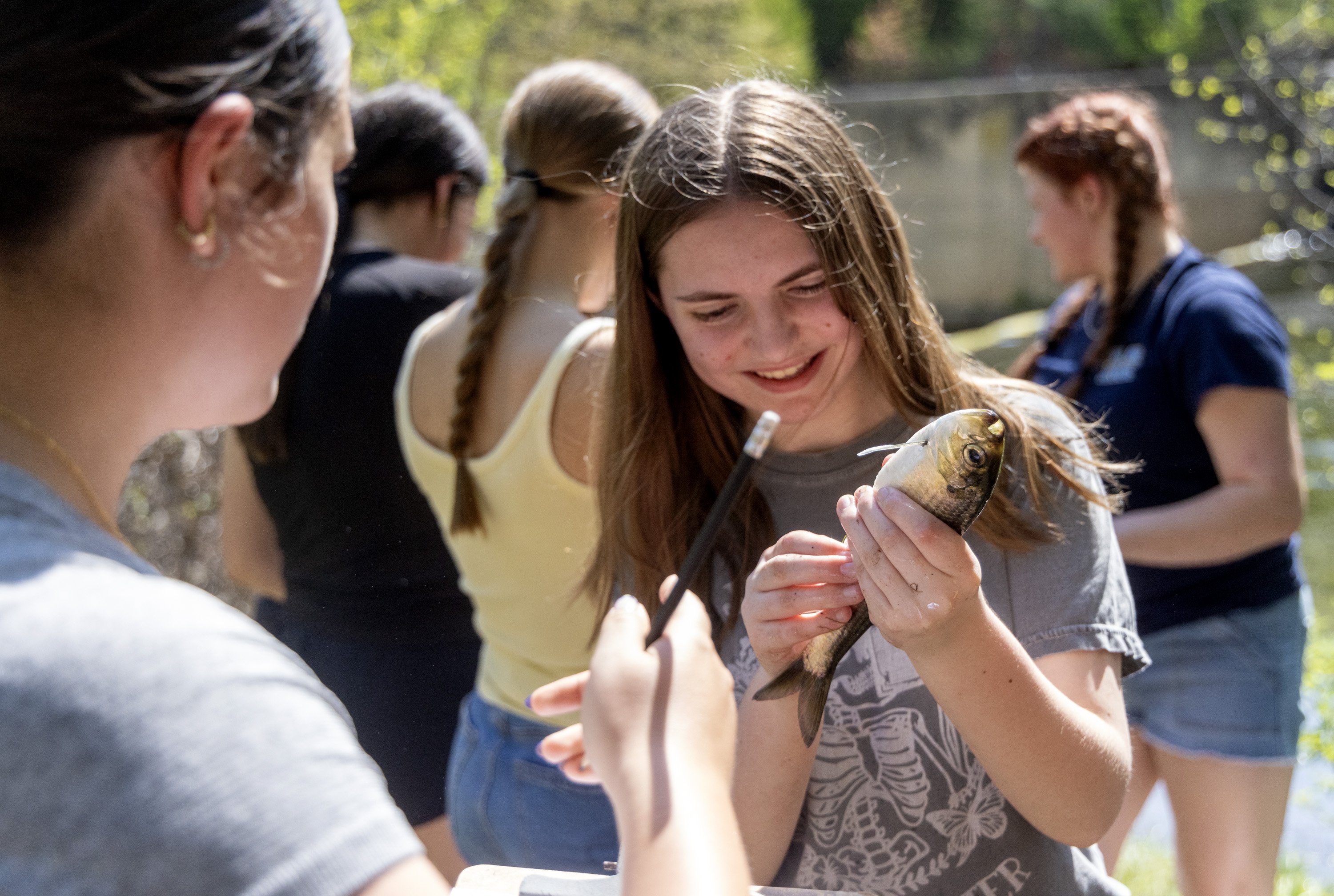
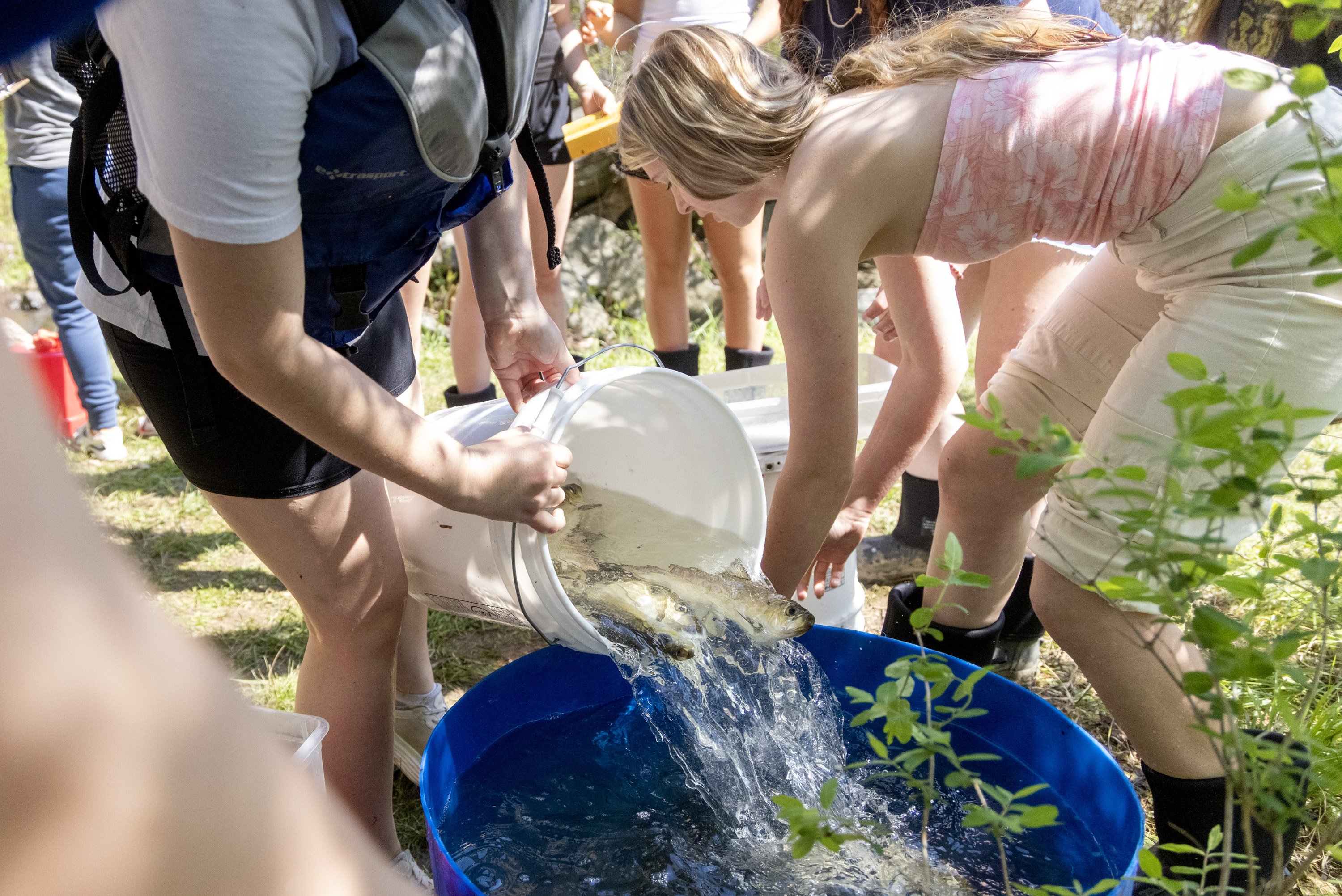
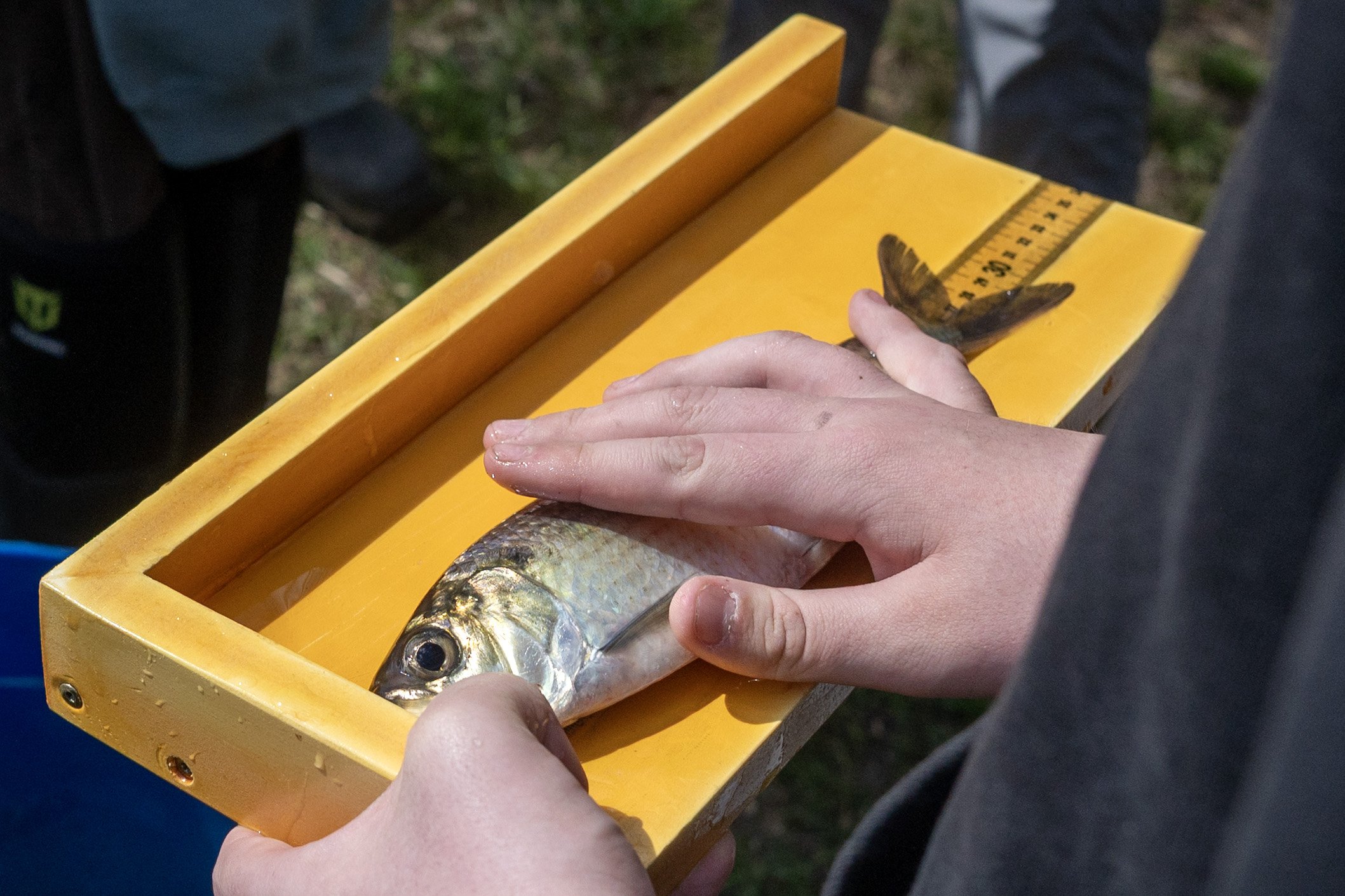
Keeping the fish alive as they were netted, taken by water-filled buckets to be dumped into the holding tank, then removed, weighed, measured, scaled and examined to determine the sex of each of them.
Below the former Gardiner Paperboard Dam, Upstream volunteer Mike Wilson helped students, including Phoenix Brackett, scoop up alewives amassed at the base of the dam.
Wilson watched from downstream as Brackett reached into the water thundering down from the dam with a pole-mounted net to capture about a half-dozen flopping fish to be analyzed.
Once the fish were examined and the data recorded, students threw the fish back into Cobbossee Stream as soon as possible so they wouldn’t be harmed by their time out of the water. They put them above the dam the fish had been trying to get over.
But they weren’t helping the fish get far enough upstream to reach their spawning ground in the lakes and ponds that feed into the river. That’s because a short distance upstream there’s a hydroelectric dam, which doesn’t have upstream passage for the alewives. Above that sits the New Mills Dam, owned collectively by the municipalities of Gardiner, Richmond and Litchfield, which controls water levels in Pleasant Pond.
So instead of the fish being able to continue upstream to spawn in lakes and ponds, that’s as far as they’ll be able to go, before they likely die. But even then, they still play a critical role as a keystone species that is eaten by numerous other animals and harvested commercially in Maine mostly to be used as lobster bait.
Brooke, a key advocate for the historic removal of Edwards Dam from the Kennebec River in 1999, doesn’t sugarcoat that history for students, whom he says are serving as citizen scientists in the project.
“I’m really upfront about it,” Brooke said.
Brooke and John Graham, also with Upstream, said their organization continues to work to try to get the former Gardiner Paperboard Dam, which they said currently serves no economic purpose, removed, but the current owner has resisted.
Brooke said if that dam is removed or has upstream fish passage added to it, under federal rules, within two years the next dam above that would have to add fish passage for alewives. Then, he said, they could work on getting fish passage added to the New Mills Dam, freeing up the extensive spawning grounds above it.
Wilson, who said there were so many alewives amassed below the dam sometimes he stepped on them as he waded, said the fish being able to get past the dams would be huge for the whole watershed’s ecosystem.
Thousands of alewives are stocked in the watershed each year by the state Department of Marine Resources, Brooke and Graham said, before making their way out to sea. When they return after several years, driven by their determination to spawn, they are stymied by the dams.
The data collected as part of the ongoing yearly project in Gardiner could help build the case that there are enough alewives to justify requiring fish passage on Cobbossee Stream, Brooke and Graham said.
Student Zoey Hawley’s assigned task was determining what sex the fish are before they are returned to the river. That’s done, she explained, by gently squeezing the fish’s belly, and looking to see what comes out of it, either a white liquid milt for males, or eggs for females.
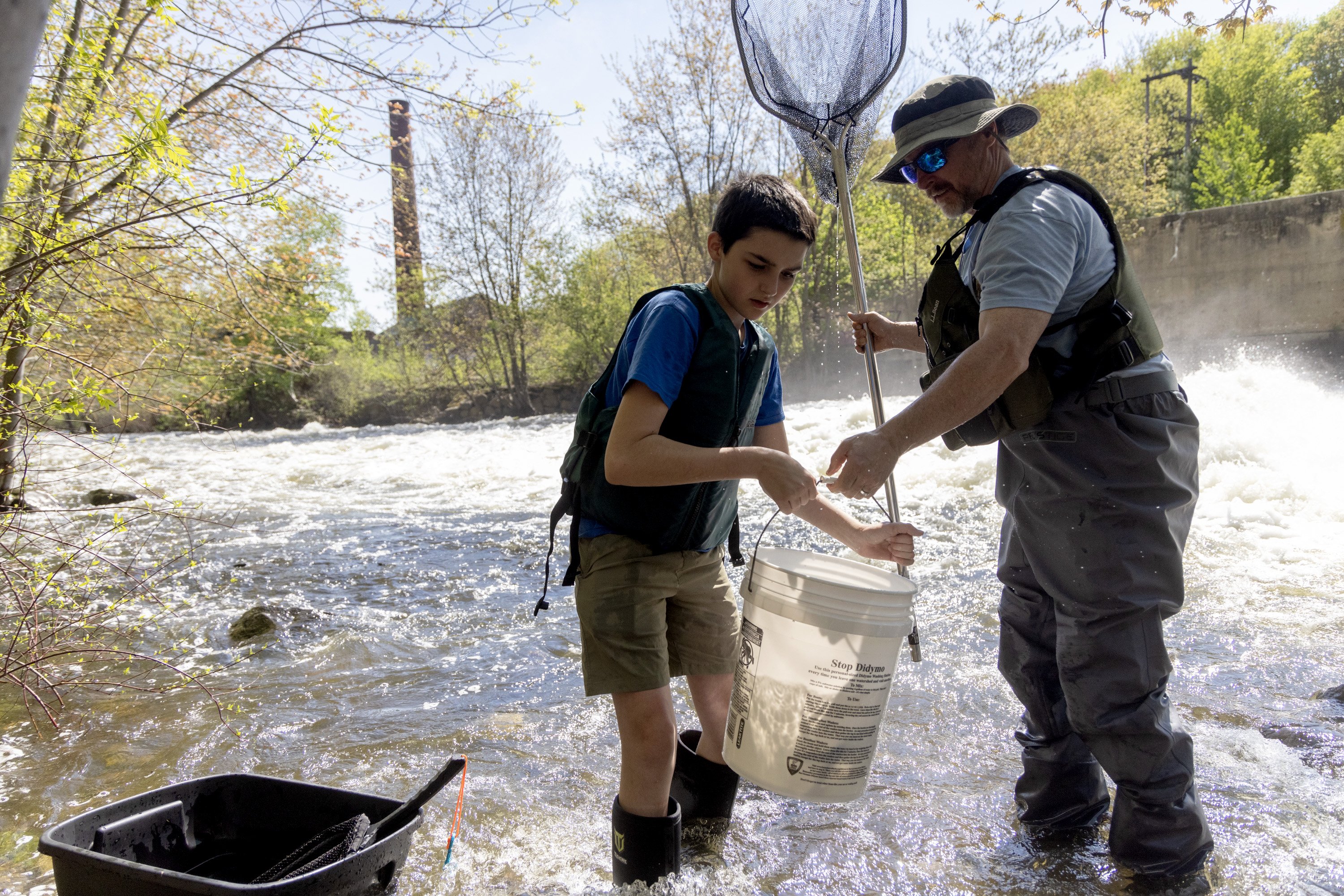
Student Leila Neilson’s job for most of the process was wrangling fish from the holding tank and into a plastic container so they could be weighed. It required two hands to capture the fast-moving slippery fish that, as Brooke noted, really didn’t want to leave the water.
Neilson let out a scream when she first grabbed a fish from the tank only for it to wiggle out of her grip, but she soon mastered the two-hand technique.
Neilson said she hadn’t handled fish before, nor was she aware the otherwise fairly nondescript Cobbossee Stream that runs through downtown Gardiner was, at least for a few weeks every year, teaming with thousands of alewives trying to make their way upstream to spawn.
“I’m glad I did,” she said of taking part in the process, somewhat slimy fish and all. “I had an amazing experience I’ll remember for the rest of my life.”

We invite you to add your comments. We encourage a thoughtful exchange of ideas and information on this website. By joining the conversation, you are agreeing to our commenting policy and terms of use. More information is found on our FAQs. You can update your screen name on the member's center.
Comments are managed by our staff during regular business hours Monday through Friday as well as limited hours on Saturday and Sunday. Comments held for moderation outside of those hours may take longer to approve.
Join the Conversation
Please sign into your CentralMaine.com account to participate in conversations below. If you do not have an account, you can subscribe here. Questions? Please see our FAQs.