


An Auburn man is suing Central Maine Medical Center, a radiology company and two doctors, accusing the doctors of failing to diagnosis a life-threatening infection and cancer.
The resulting delays in diagnosis caused Jeffrey Robinson lower life expectancy and a permanent spinal injury, according to a lawsuit filed by Robinson and his wife, Winona, earlier this year in Androscoggin County Superior Court.
In a legal response to the lawsuit, Central Maine Healthcare, which owns the Lewiston hospital, denied the allegation that Robinson was “negligently discharged” without a diagnosis.
Representatives from the company did not respond to a request for further comment.
Robinson came to the emergency room at CMMC on March 25, 2023, with complaints of abdominal pain, back pain, decreased urination and other symptoms. The lawsuit alleges these were signs of a spinal epidural abscess, an infection that presses on the spinal cord. A CT scan of his abdomen also revealed an incidental finding: a mass between his esophagus and stomach, which the lawsuit said “was suspicious of gastro-esophageal cancer.”

He was discharged early the next morning without diagnoses for either condition, the lawsuit said.
Robinson is accusing the emergency room doctor and the doctor who interpreted his CT scan — who works for the hospital and radiology company X-Ray Professional Association — of negligence.
“A prudent ER doctor would not have sent him home,” said Elizabeth Kayatta, attorney for the Robinsons. She said the doctor should have ordered an MRI to rule out a spinal epidural abscess, which can cause permanent damage if not treated quickly. According to the lawsuit, the doctor instead recommended he undergo urinary catheterization and then be discharged.
“Even as they were discharging him, it was already becoming more difficult for him to walk, which is a neurologic sign of when there’s a problem with the signal for your spinal cord,” Kayatta said.
Robinson was diagnosed by another hospital the next day with a spinal epidural abscess that had caused cord deformity and critical narrowing within the spinal canal. The lawsuit alleges that the “significant delay in diagnosis” resulted in permanent spinal injury, lower extremity weakness, motor dysfunction, pain, numbness and sexual dysfunction.
“I couldn’t move,” he said about the days after. “It was scary.”
More than a year after the CT scan, in May 2024, Jeffrey Robinson was diagnosed with gastro-esophageal cancer. He had developed cancer symptoms like anemia and trouble swallowing. The plaintiffs, who consulted with an outside medical expert, allege the delay in diagnosis caused his cancer to progress from an earlier stage to stage 3, which has a lower life expectancy.
Today, he can walk for short stints on his own, but he can’t work, exercise or do home maintenance like he used to. He spends most of the day in his armchair.
“If I get up and do stuff, my legs go numb,” said Robinson, 62. “It feels like it’s going up my back.”
“The things he can’t do any longer, I have to,” Winona Robinson said. “So we’re selling our home. I can do it, but I don’t want to work that hard, not at my age.”
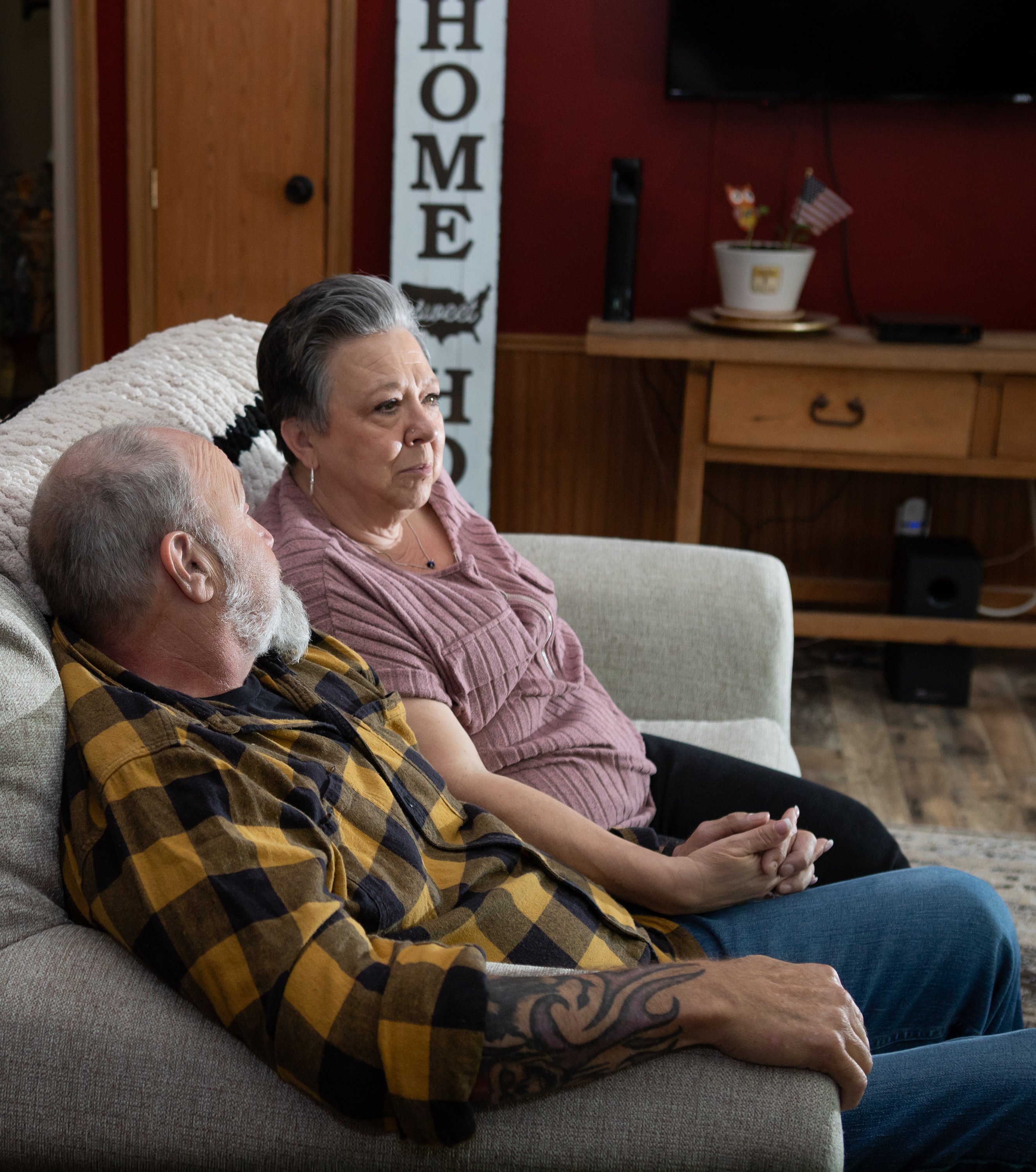
They allege that both cases of medical malpractice cost them “extraordinary medical and life care expenses,” as well as Jeffrey Robinson’s ability to earn money. Winona Robinson, 61, works full-time to afford regular expenses and the payment plan for her husband’s medical bills.
The lawsuit has been part of a long process. The Maine Health Security Act requires medical malpractice cases to undergo a closed screening process before they can be filed as public lawsuits in state superior courts. Kayatta said the screening process usually takes 12 to 18 months before the case can be presented to a jury, making medical malpractice cases more time-consuming and expensive to pursue than other lawsuits.
For the vast majority of patients, “it would cost more money to go through with their lawsuit than they could get back for their pain and suffering and medical bills and lost income,” she said. “And so only cases involving truly catastrophic injuries tend to move forward, because decades of this system have led to those being the ones that stand to compensate patients.”
An attorney for the defendants responded this month to each allegation in the complaint, denying most on the grounds that they are issues of fact that should be decided at trial. However, they also argued that “the injuries and damages allegedly sustained were caused by a medical condition or emergency that could not be prevented” by the defendants.
Winona Robinson said it was their job to find out what was wrong with her husband.
“I mean, at the end of the day, don’t you depend on professionals — no matter who they are — to tell you?” she said. “We have no medical knowledge in those departments, so that’s what we were relying on.”
Both sides are going through the discovery phase of the lawsuit, where they have the opportunity to take testimony from witnesses, parties and medical experts.
Facing a number of unknowns, Robinson said winning the lawsuit would give him and his wife more security.
“It would get us in a better position, where if I had to hire somebody to do something, I could,” he said. “I don’t know how long I’m going to be here. I want her to be able to live comfortably for the rest of her life, in case I’m not here.”

Comments are not available on this story. Read more about why we allow commenting on some stories and not on others.
We believe it's important to offer commenting on certain stories as a benefit to our readers. At its best, our comments sections can be a productive platform for readers to engage with our journalism, offer thoughts on coverage and issues, and drive conversation in a respectful, solutions-based way. It's a form of open discourse that can be useful to our community, public officials, journalists and others.
We do not enable comments on everything — exceptions include most crime stories, and coverage involving personal tragedy or sensitive issues that invite personal attacks instead of thoughtful discussion.
You can read more here about our commenting policy and terms of use. More information is also found on our FAQs.
Show less