
For years, I’ve had a magnet on my refrigerator printed with an image of Andrew Wyeth’s beautifully spooky “The Witching Hour,” a 1977 painting of the dining room at the Wyeths’ Benner Island home near Port Clyde. I love how Wyeth injected a sense of unease into the scene— the eerie moonlit sky outside the windows, the phantom breeze indicated by the chandelier’s candle flames all blowing to the left in unison, the black Hitchcock chairs, plank table and general starkness of the scene implying Shaker-like simplicity but with an edge, as if some coven convening were imminent.
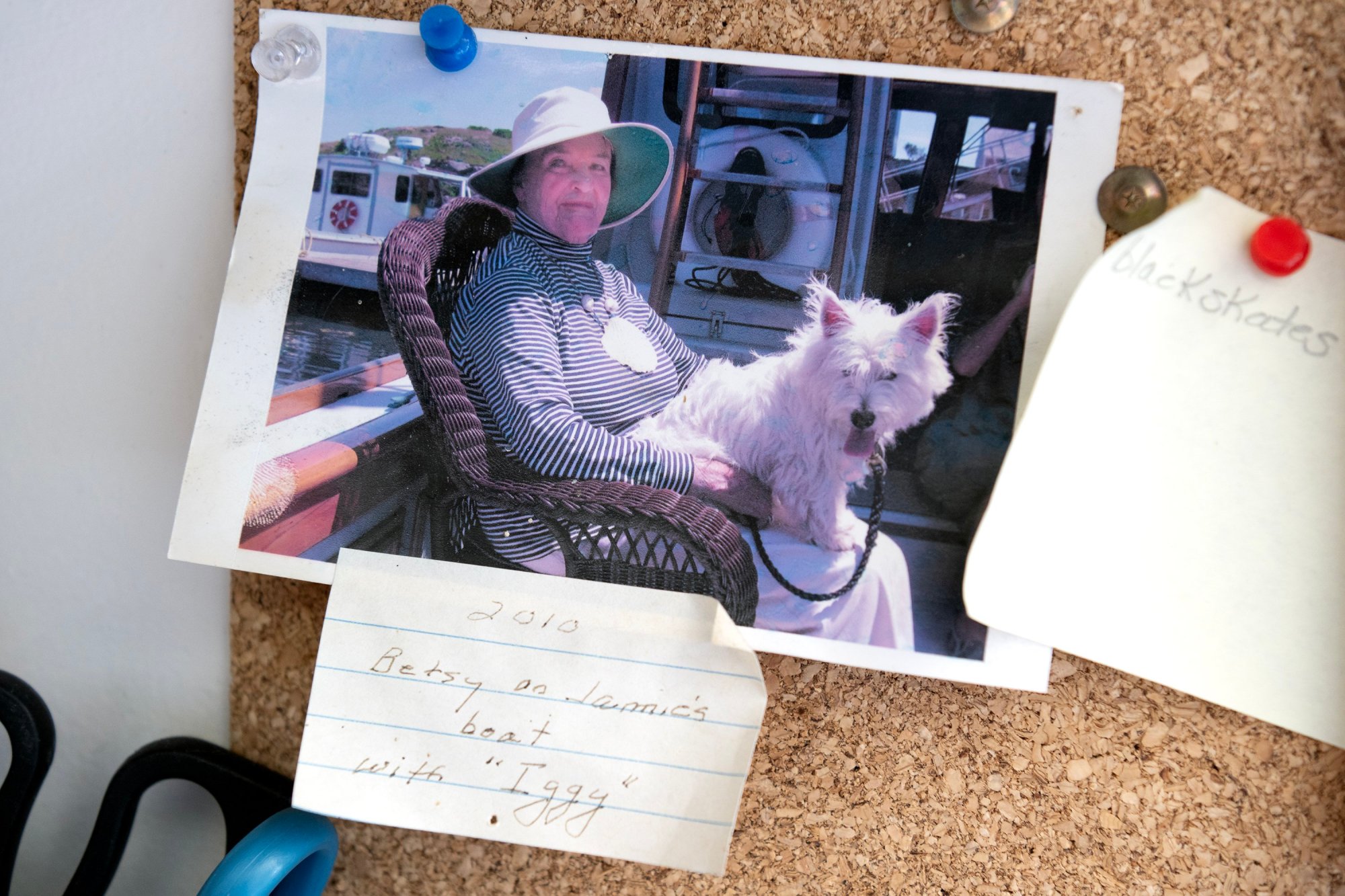
It is quintessential Wyeth. But what I didn’t know until very recently was much about the person who created this environment in the first place, without whom this work of art would never have come into the world: Andrew’s wife, Betsy James Wyeth. This summer, three museums — two of them in Maine — will shed long-neglected light on this extraordinary woman. Betsy was much more than the steward and archivist of her husband’s legacy (in itself an accomplishment of Sisyphean proportions). She was an artist whose palette of materials was not oil, charcoal or pastel, but rather, keen architectural and landscape sensibilities, preservationist zeal and a flair for complex immersive environments.
“By Design: The Worlds of Betsy James Wyeth” celebrates her genius. It has already kicked off with a small exhibition at the Farnsworth Art Museum that opened May 2 and runs through Oct. 18. On June 19, the exhibit expands exponentially into the Wyeth Study Center Galleries down the street (through Dec. 31). Colby College will present its take on Betsy’s legacy through the work of four contemporary artists who spent residencies on two Wyeth properties — Benner and Allen islands — which will take up residence at the Paul J. Schupf Art Center in downtown Waterville (June 12-Nov. 2). And the Brandywine Museum of Art in Chadds Ford, Pennsylvania, runs its own “By Design” exhibition from June 27 through Jan. 3, 2027.
Each installation concentrates on a different property or properties that Betsy had a hand in aesthetically and practically shaping and influencing. These include Broad Cove Farm and the Olson House in Cushing (the latter the location of one of Andrew’s most famous paintings, “Christina’s World”), Southern Island a mile off Tenant’s Harbor (where their son Jamie Wyeth now lives), Benner and Allen islands (owned and stewarded by Colby College), and Brinton’s Mill in Chadds Ford.
To help convey the depth of her imprint on these places, Colby and the Farnsworth hosted a group of journalists and photographers on a trip to Allen and Benner islands. We left the dock at Port Clyde on a sunny but windy day, the slight chop sending sprays of seawater into our wake. The day would turn mercurial, which felt totally aligned with Andrew’s penchant for moody atmospherics and melancholia. With us were curators from both museums, a docent for the properties, and two artists who had participated in the Benner and Allen residencies.
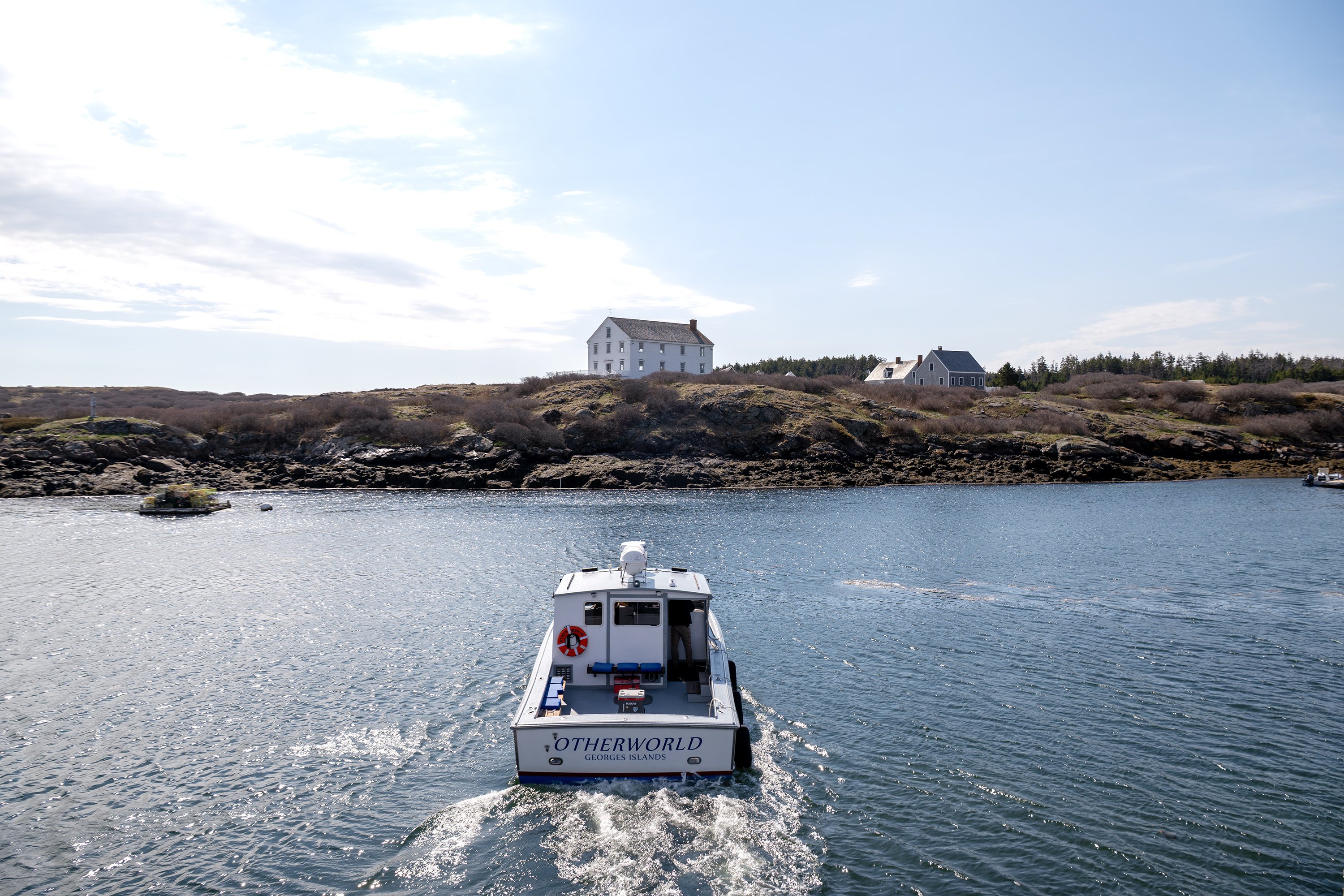
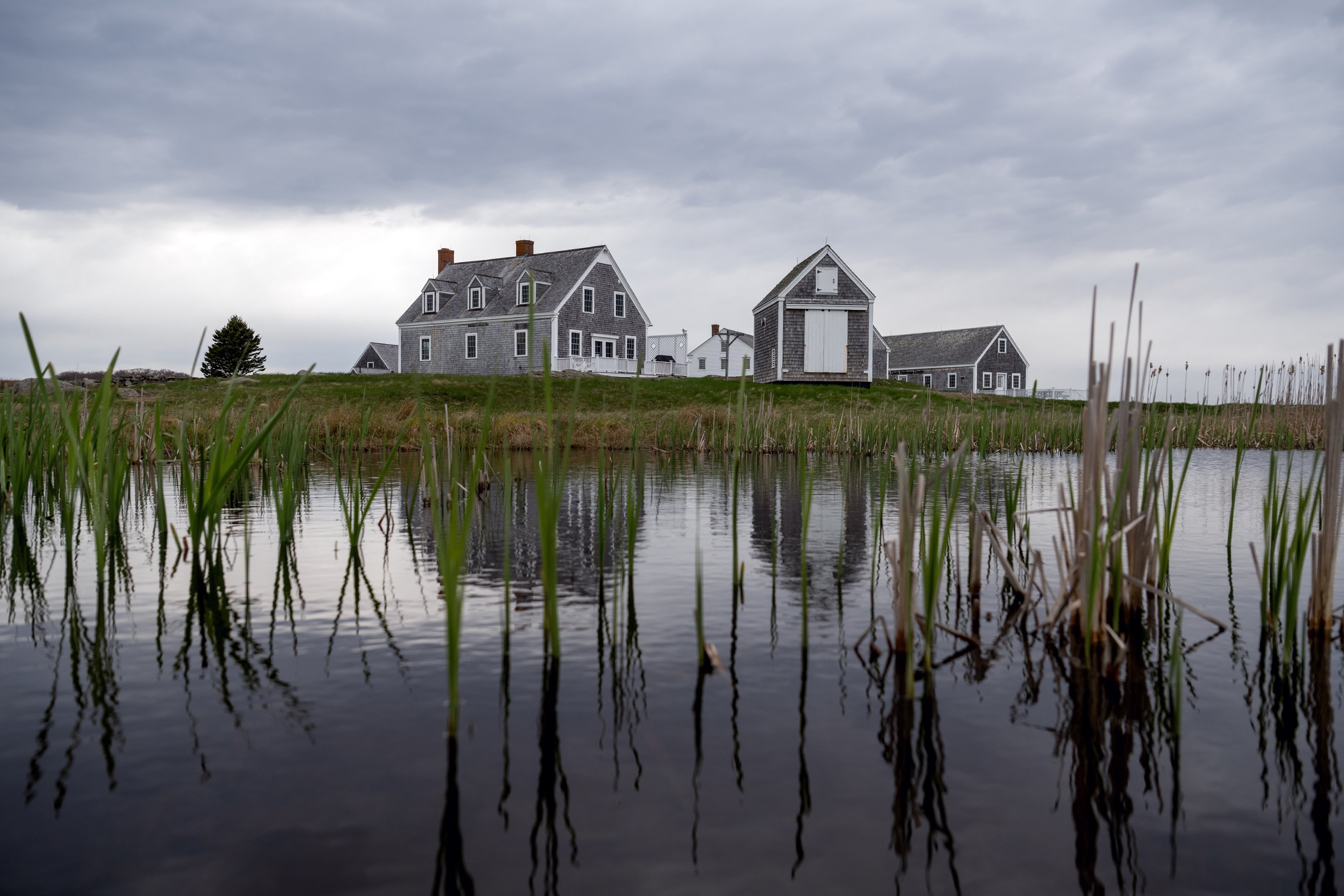
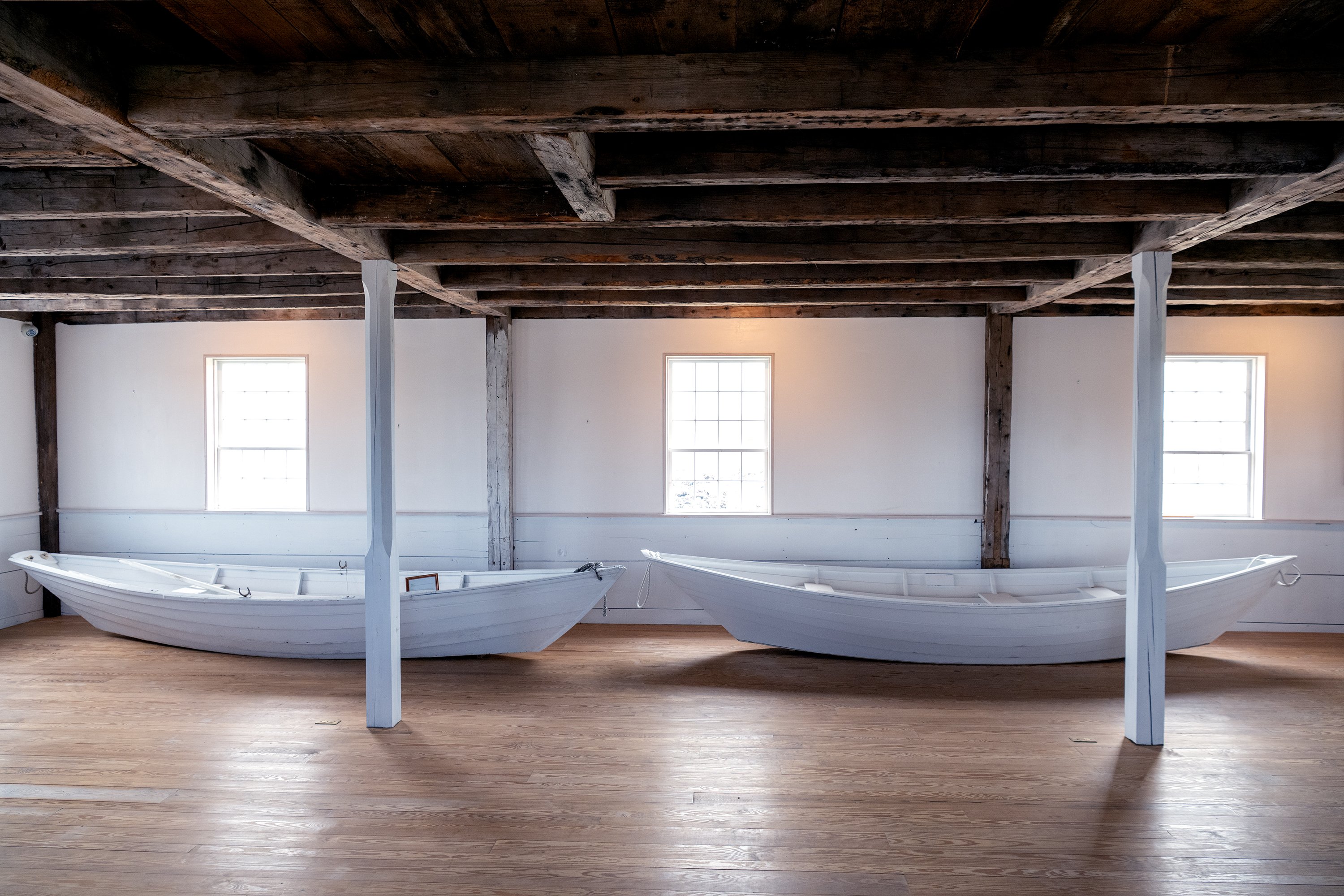
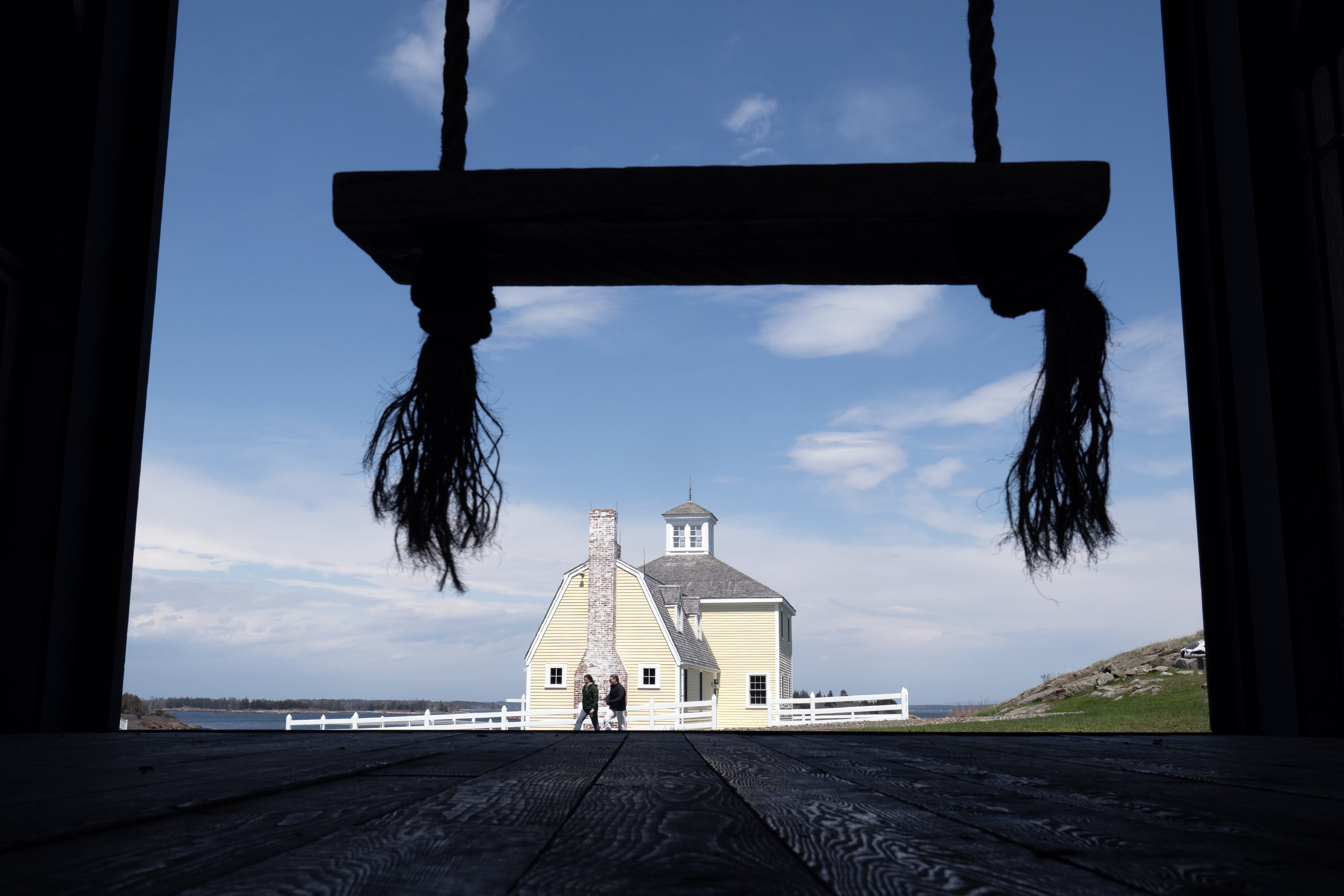
As we pulled up to the 11-acre Benner, the smaller of the two islands (which Betsy purchased in 1990), her holistic approach to composition and design came instantly into focus. Several of the buildings were historic structures moved from areas around Port Clyde or Cushing — to which, respectively, the families of Andrew and Betsy had deep connections — and repurposed for other uses. A Cushing general store became a library. A fish house served as a kind of museum chronicling the maritime history of the islands. And that dining room in “The Witching Hour,” I discovered, was a one-room schoolhouse that had been attached to the family home Betsy had built, itself a reproduction of a 18th-century cape.
One of the things I first noticed was the light in each of these structures. Betsy had sited the buildings in such a way that they captured the changing light in dramatically pictorial ways. Though she was not likely creating these spaces expressly as subjects for Andrew to paint, it was abundantly apparent that she was innately aware of the sort of placement that would result in a captivating picture.
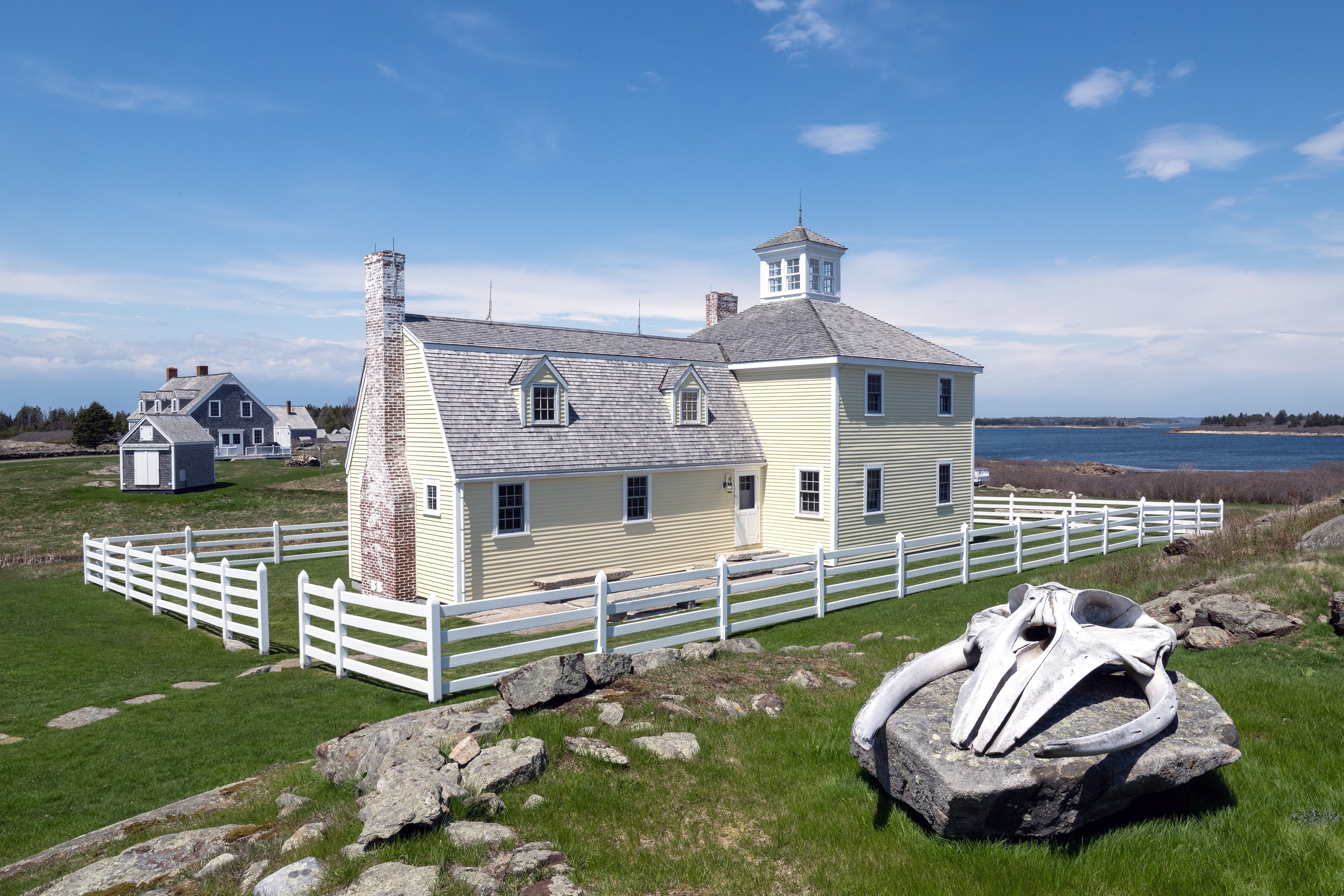
“She put it all together like an artist would put together a painting,” observed Colby curator Kendall DeBoer. And indeed, this cluster of structures did not carry the slightest whiff of sanitized early American village fantasies like Colonial Williamsburg or Strawbery Banke. “There’s a very specific history to these sites,” added Farnsworth curator Francesca Soriano. “She picked them because of their histories.”
That is precisely what lends a sense of authenticity to her architectural and environmental compositions, which can be viewed almost like large-scale installations. They were also vehicles for creative self-expression. “She wanted to break free of the Wyeth places and create her own world,” DeBoer said.
Also on Benner, which became Betsy’s primary residence, is an octagonal structure. Its whitewashed interior, brick floors (into which a paver from Mount Vernon is embedded) and various busts of American presidents feel Federal in style. This is where Betsy did her archival work, labeling and cataloging shards of pottery found on the island along with other artifacts.
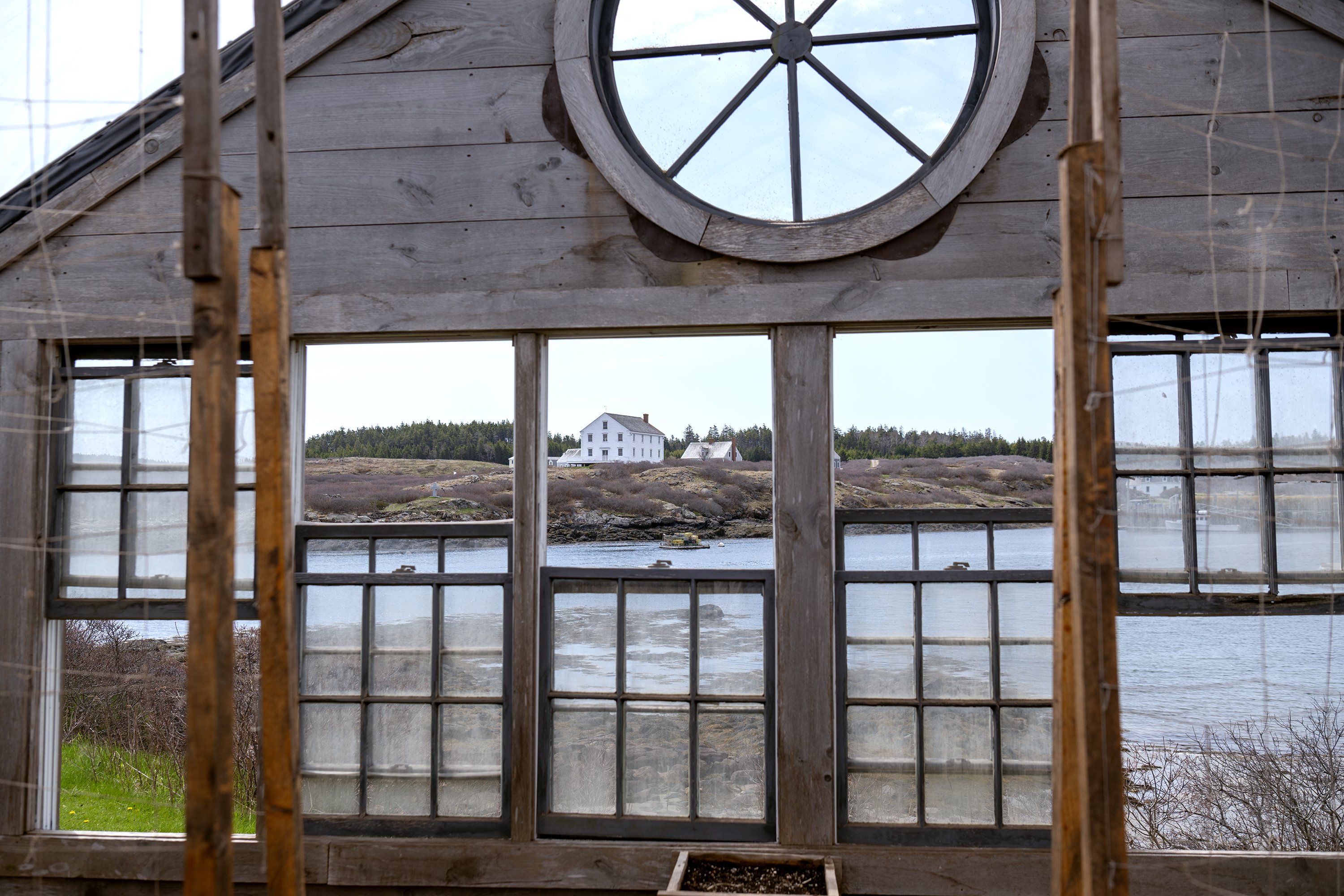
As we walked through the rooms of the main residence, it began to dawn on me that the bulk of Andrew’s art had had everything to do with the places Betsy designed, which included the land she shaped from sheep paths and the ponds she dug on these islands. It is a theme throughout his art and encompasses all the Wyeth properties.
The Olson House interiors, of course, are well documented throughout more than 40 years of the painter’s works. It was a place that tied back to Andrew’s and Betsy’s first meeting. Betsy’s father, Merle James, had been a designer at Roycroft, the reformist arts and crafts community in East Aurora, New York (and a very competent Sunday painter himself). An admirer of Andrew’s father, N.C. Wyeth, James called upon the older artist one day and, in the course of their conversation, mentioned he had three daughters. Forthwith, Andrew and the 17-year-old Betsy James were introduced to each other. That same day Betsy spirited Andrew off to meet Christina Olson and her brother Alvaro.
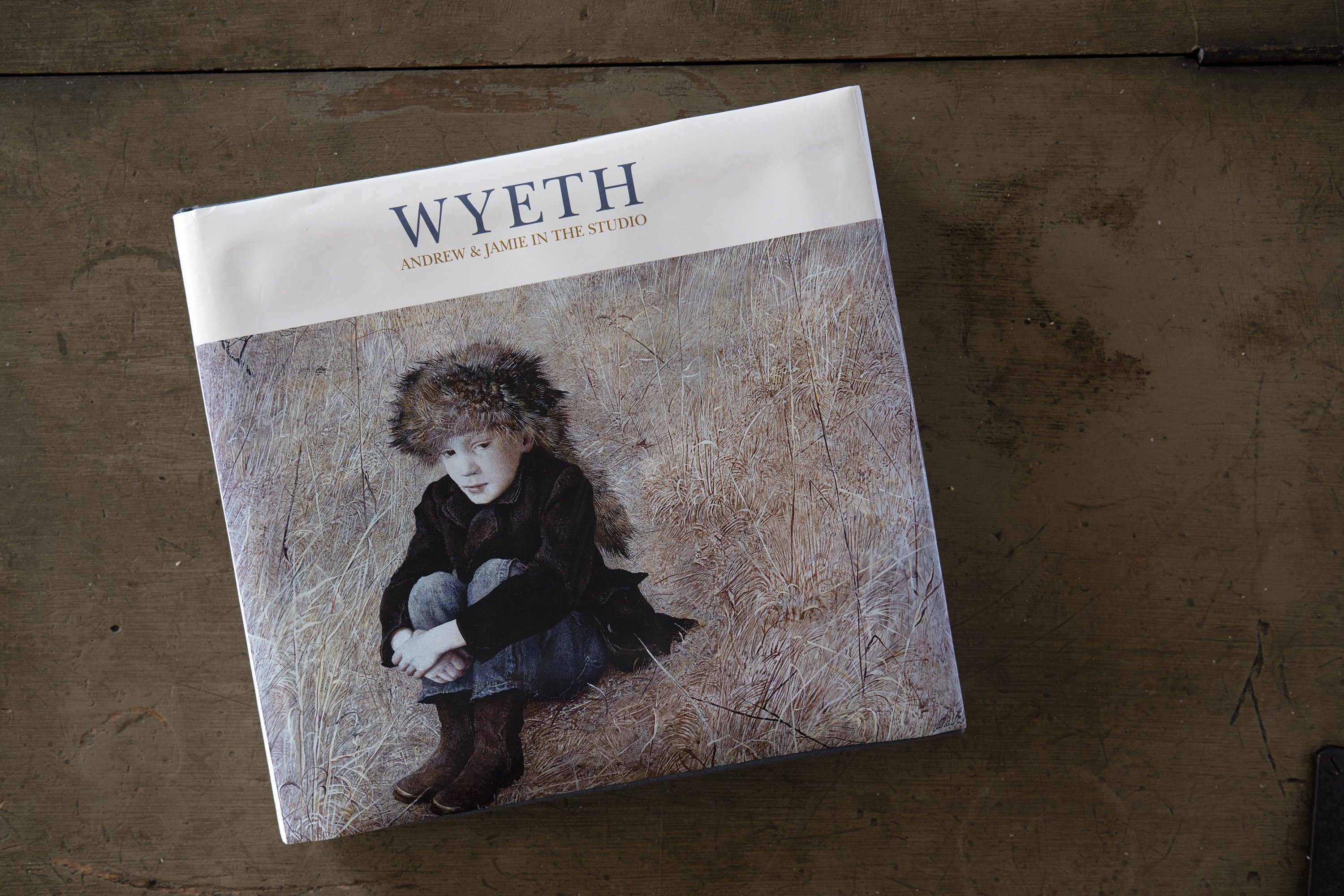
Aside from “The Witching Hour,” Andrew’s painting “Airborne” features the 18th-century cape reproduction that became the primary Benner Island home. “Pentecost” (1989) is a tempera depiction of fishing nets hung out to dry on the adjacent 450-acre Allen Island (acquired in 1979), where a young woman had been swept out to sea and drowned. Andrew thought of the nets as shrouds of her spirit. Andrew’s skeletal self-portrait “Dr. Syn” is set in a lighthouse on Southern Island that Betsy designed to resemble a ship captain’s cabin.
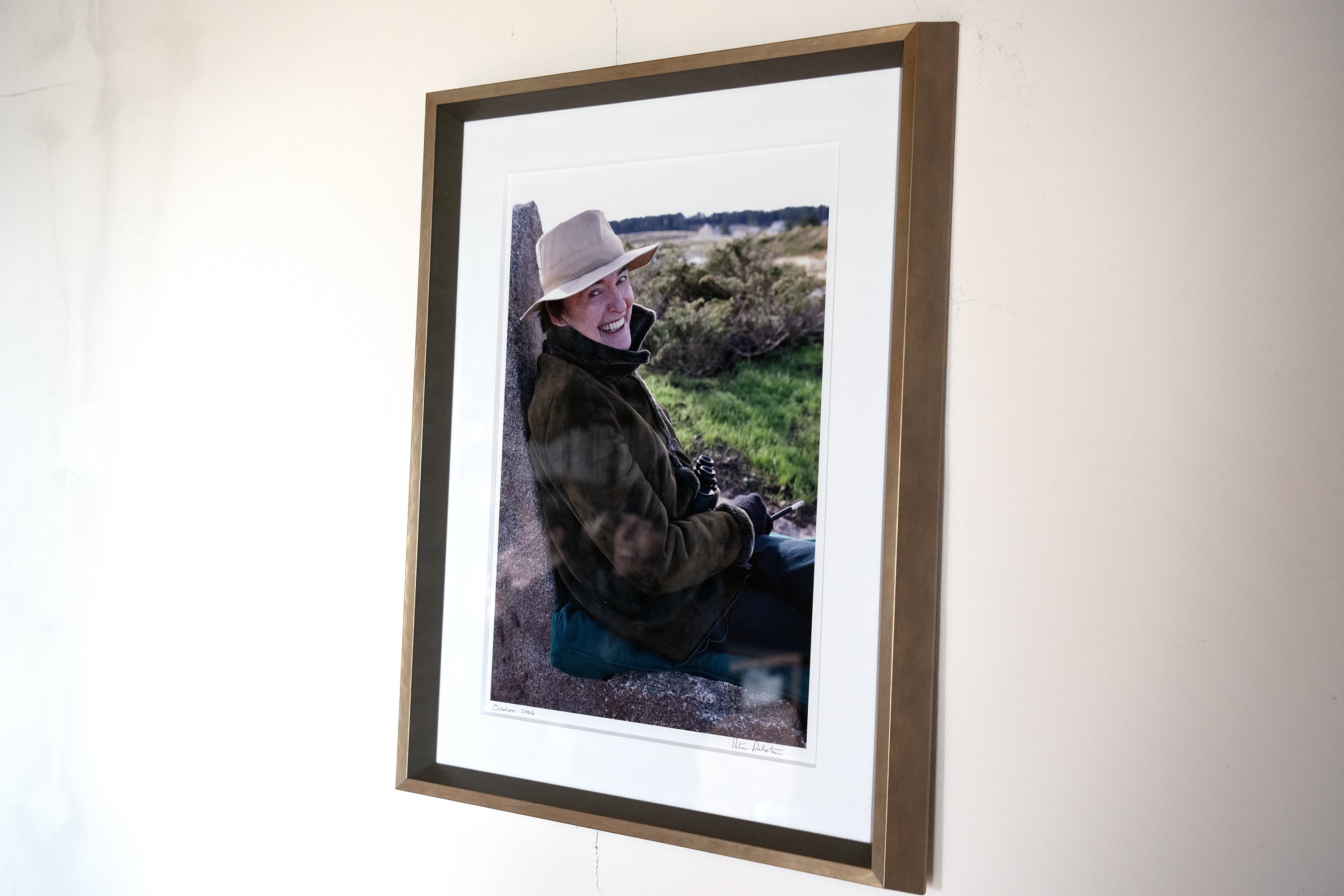
In a video on the Farnsworth website, the photographer Peter Ralston, a close Wyeth family friend, said of Betsy, “She had a vision every bit as unique, powerful and original as Andy’s.” Betsy would often critique her husband’s paintings and suggest changes, and it was she who titled many of them. In the same video, their son Jamie mused, “She should have also signed his paintings. I mean she was that integrally a part of it and she was as responsible for it as he is.”
For photographer Mandy Lamb, one of the artists on our trip, the residency was like a homecoming. “The whole place is very familiar to the house I grew up in, which was in a Shaker town,” she says of Benner. “The Wyeths were the same generation and speaking the same language. My dad and uncle built colonial furniture reproductions, and Wyeth was one of the first artists I was aware of as a child.”
Lamb noticed a specific blue that punctuated many of Andrew’s watercolors and added the hue to her pictures. Most times it was intentional, such as lightly brushing wild grasses with blue paint and photographing them. Other times, the blue appeared like a ghostly apparition, such as the cobalt glow in a picture she took in a Benner Island attic. It was not present when she clicked the shutter release, and only manifested as she developed her film. There is probably a scientific explanation for this phenomenon (a light leak in the camera, for example). But for Lamb it felt like Andrew’s spirit still inhabiting the space.
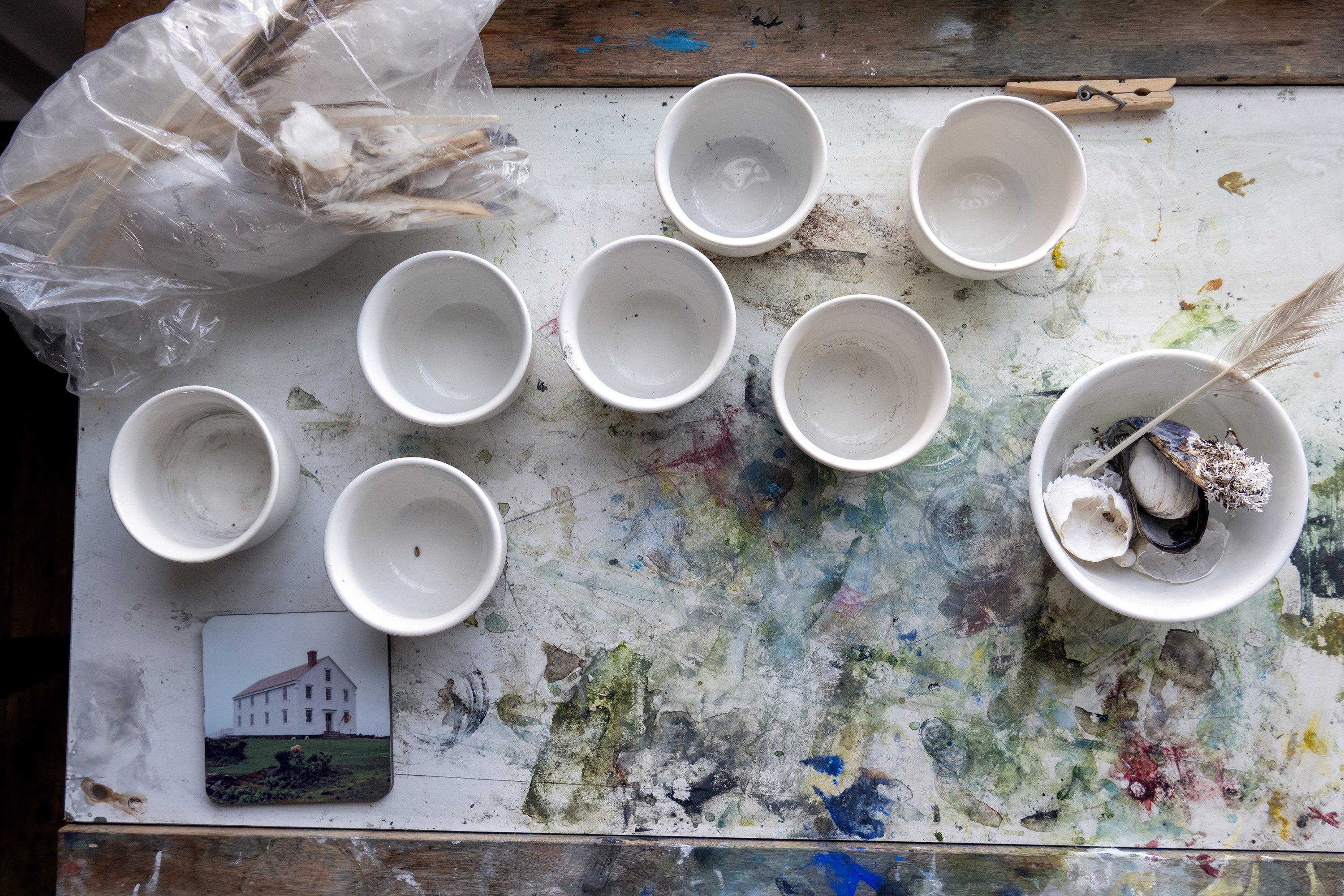
Elaine Ng’s research-based work has to do with place and the forces that form and change it, from weather patterns to natural processes to human interaction. “During the residency,” she recalls, “we kept coming across Betsy’s Post-it notes. I particularly enjoyed those that referenced a specific species of lichen found on a particular rocky shore, and those where she’d noted her favorite sheep or labeled similarly shaped beach stones with her own descriptors. It was a kind of personal cataloguing and research I was doing as well to familiarize myself with the islands, and it felt like I’d found a kindred spirit. She was eager to have a deeper understanding of the unique characteristics of Allen and Benner Islands, and my process in creating work for this exhibition reflects a parallel instinct.”
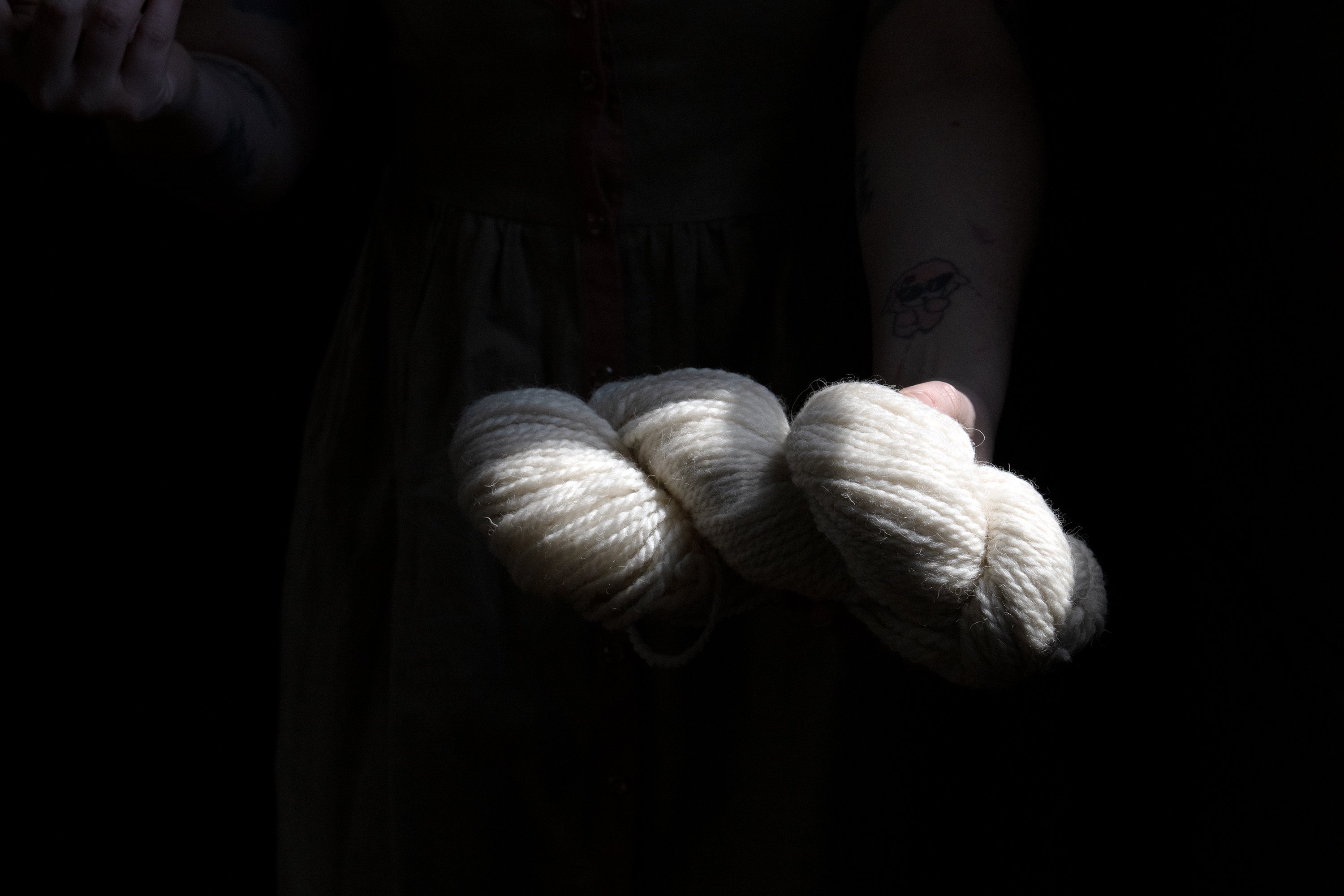
Ng has revisited the islands many times, collecting plant material for dyes, photographing features of the islands and what she calls “mapping out records of place — embodiments of repeated wanderings and instinctual responses to the land.” Working with yarns spun by Betsy from her sheep’s wool, Ng will present a large fiber piece at Colby that will carry a literal connection (in the yarn, the dyes and so on) to Allen and Benner islands.
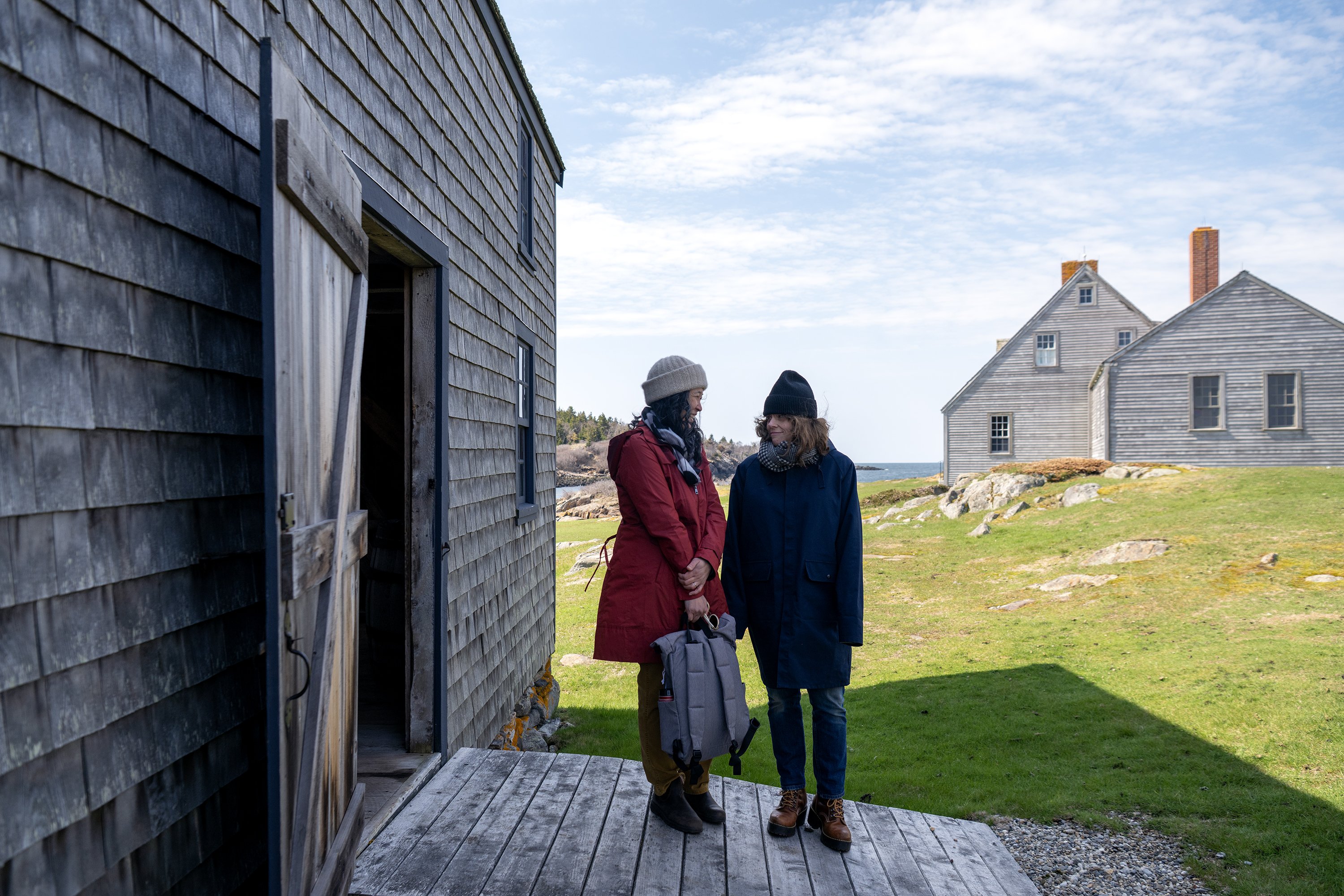
Colby became the steward of Allen and Benner islands in 2022. No plans have been devised to make them accessible to the general public during the run of these exhibitions. But Andrew’s paintings themselves bring viewers into these environments, and the work of the four contemporary artists (the other two are Linda Nguyen Lopez and Claire Pentecost) will convey both the material qualities of their island landscapes and the spirits of Betsy and Andrew that seem still to roam them.
Jorge S. Arango has written about art, design and architecture for over 35 years. He lives in Portland and can be reached at [email protected]. This column is free to access through support by The Dorothea and Leo Rabkin Foundation.
Editor’s note: This story was updated May 27 to correct the dates that exhibit is running and the names of the islands in photo captions.
We invite you to add your comments. We encourage a thoughtful exchange of ideas and information on this website. By joining the conversation, you are agreeing to our commenting policy and terms of use. More information is found on our FAQs. You can update your screen name on the member's center.
Comments are managed by our staff during regular business hours Monday through Friday as well as limited hours on Saturday and Sunday. Comments held for moderation outside of those hours may take longer to approve.
Join the Conversation
Please sign into your CentralMaine.com account to participate in conversations below. If you do not have an account, you can subscribe here. Questions? Please see our FAQs.