


SCARBOROUGH — Paula Reichel is still settling into the yellow farmhouse that her neighbors call “the chicken house.”
Less than a month has passed since Reichel, her husband, daughter and dog swapped life in the Washington, D.C. area for the coastal Portland suburb of Scarborough. There are still boxes to unpack, but 4-and-a-half year old Violet has already befriended all the neighbors.
“She literally says hi to everybody,” said Reichel, 41. “Everybody stops and talks to her. That almost never happened in my (old) neighborhood.”
That friendly feel is a major part of what drew the family to Scarborough after 18 years in a major metropolitan area.
It’s just rural enough to have “a little bit of Maine serenity,” she said, but they can still walk to the ice cream shop or the beach and Portland is a short drive away.
That “exurban” shift — from hearing “nothing but sirens and traffic outside of my window, (to) now hearing little 6-year-olds in motorized cars” — has become increasingly popular across the state and country, U.S. Census Bureau data shows, as people eschew major urban areas.
The trend is reshaping Maine towns and cities, particularly in Cumberland County, as officials and residents in Portland’s bedroom communities grapple with seemingly exponential population growth.
Scarborough, Windham, Gorham and Westbrook are growing rapidly — Portland isn’t.
SUBURBAN GROWTH
Over the last five years, the four Greater Portland communities have seen their populations grow between 5% to 11%. Portland grew just over 2% in that time and is expected to lose people by 2032, according to data from the Maine State Economist’s Office.
Scarborough added 2,431 new residents between 2020 and 2025, while Portland added 1,505. Windham, a town less than one-third of Portland’s population, added almost as many new people in that span, growing 8%.
Gorham saw the state’s greatest population jump last year, adding 656 new residents. Portland added 159.
Since 2020, city centers of many of the country’s major metro areas have had sluggish population gains, with some places like New York City even declining, according to a May report from the bureau.
“Where growth did occur, it was mostly on the outer edges of these metro areas,” the report said.
This is holding true for Maine’s smaller cities as well.
In York County, Eliot and Kittery, on the New Hampshire border and roughly equidistant from Boston and Portland, have each seen double-digit percent growth, while Boston saw a slight decrease. In Androscoggin County, Auburn is growing faster than Lewiston.
And in Penobscot County, Orono, Old Town and Veazie all welcomed new residents last year, while Bangor lost a few.
IF YOU BUILD IT…
Housing — its affordability and availability — is a major factor limiting metropolitan population growth, according to the state economist’s office.
In Greater Portland, where the need for more and more affordable housing is particularly acute, “this has pushed population growth into the outlying towns,” the office said in an emailed statement.
Portland’s housing pipeline has hit a clog, with record-high approvals but near record-low completions. Developers have consistently blamed the city’s inclusionary zoning policy, which they say has made affordable housing too expensive to build.
This, coupled with high building costs and what many have called an arduous permitting process, has caused some developers to look beyond the city limits to neighboring communities where land is plentiful, cheaper and in some cases, easier to build on.
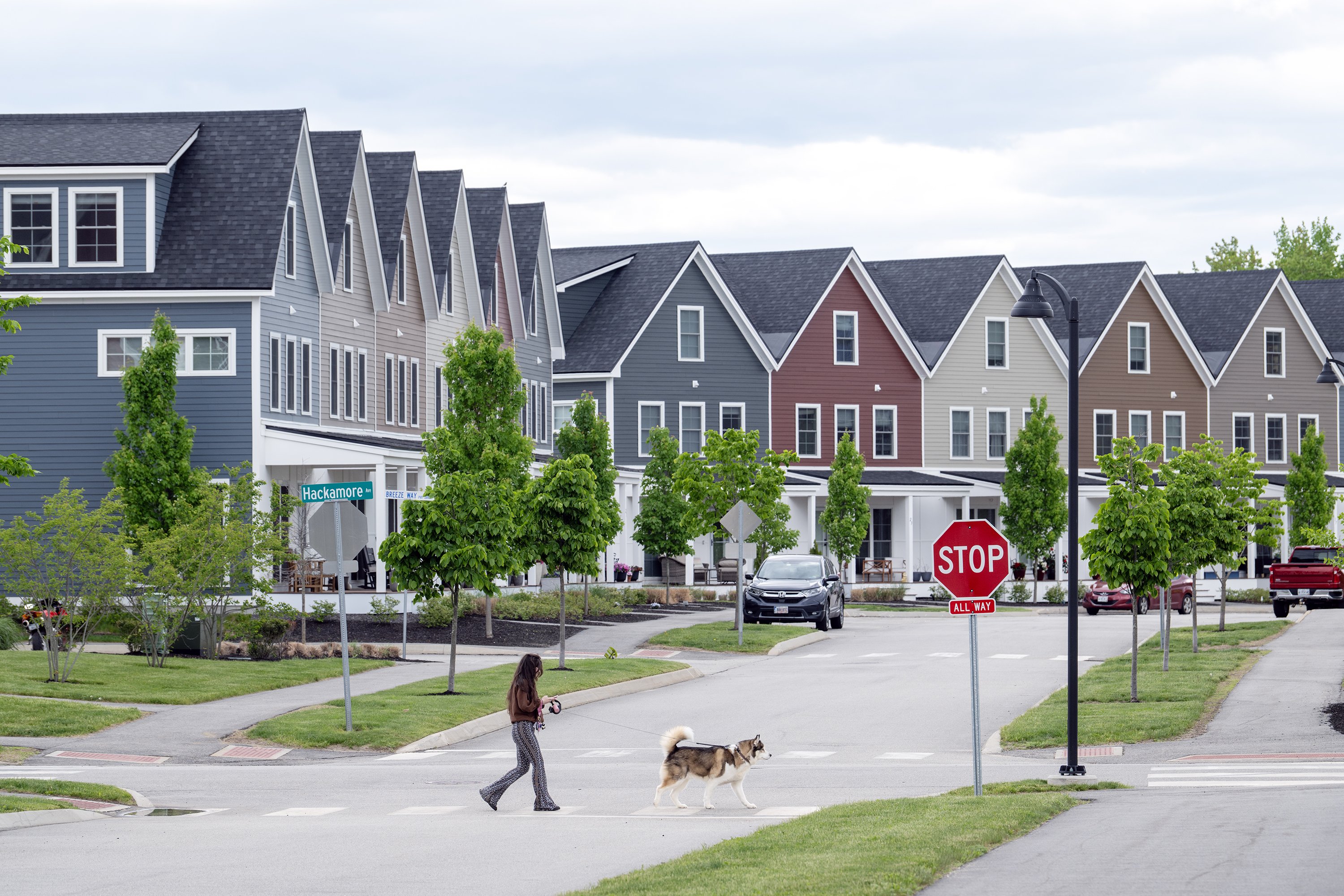
Many have turned to Scarborough, which has issued more annual building permits than Portland in the majority of each of the last 25 years.
Karen Martin, executive director of the Scarborough Economic Development Corporation, said the town was responsible for roughly 20% of the housing permitted in Cumberland County in 2024, despite only having about 7% of the population.
“We really have been doing our fair share, if not more,” she said.
It’s now the fastest-growing community in Greater Portland.
Scarborough’s population has been growing steadily for decades but in the last five to 10 years, the pace has increased as developers invested heavily in multi-family housing, drawing hundreds of new residents and shifting the town’s makeup away from what Town Manager Tom Hall said was historically “a series of one-acre lots on a cul-de-sac.”
Between 2010 and 2014, of the 320 units that Scarborough added to its housing stock, 312 were single-family homes. But just a decade later, between 2020 and 2024, the town permitted 384 single-family homes and 862 units across 49 large multi-family projects.
Much of the town’s growth can be attributed to the redevelopment of Scarborough Downs. The reimagining of the former racetrack has so far added 622 new units, with more than 1,000 more in the works, Martin said.
The property accounts for about 38% of the town’s building permits since 2019.
But the break-neck pace may be slowing down. Scarborough is in a “lull,” Hall said, while the Downs developers focus away from residential projects and other developers have to work harder to find space.
“All the easy tracts have already been built,” Hall said. “Large-scale single family traditional suburban subdivisions are going to be fewer and far between.”
AFFORDABILITY A DRIVER
While Scarborough can directly tie its increase in population to the increase in housing, that hasn’t been the case for its neighbor.
Westbrook’s population has increased 5.7% since 2020, adding 1,158 residents, according to state data. In that same period, the city has issued about 790 building permits, though many from 2024 and 2025 haven’t opened yet.
“If you look at the data, it can’t be explained by the building of new units alone,” said David Morse, Westbrook’s mayor. “If that were the case, then you’d see the population increases being proportional and in the same places where units are being created. (But) if you line those things up, it doesn’t shake out that way.”
Morse said the lack of affordability in Portland has likely driven people to Westbrook, which in April had a median home sale price of $500,000 — the lowest in the region.
In Portland, according to MaineListings, the median sale was $580,000. In Gorham, it was $627,500 and in Scarborough it was $790,248.
“(The cost) started to make surrounding areas more attractive,” he said.
As housing has gotten more expensive, Morse has also noticed people using it differently, which he said could explain some of the disconnect between new units and population growth. For example, more people in two-bedroom apartments are taking on roommates. And new inventory has allowed older adults to downsize, freeing up room for a larger family to move in.
“There was a time when people made a lot of conscious choices about what municipality they wanted to live in, but that nowadays is really driven by, ‘Where can I find an affordable place to live?'” he said.
Increasingly, Westbrook is seen as a viable option.
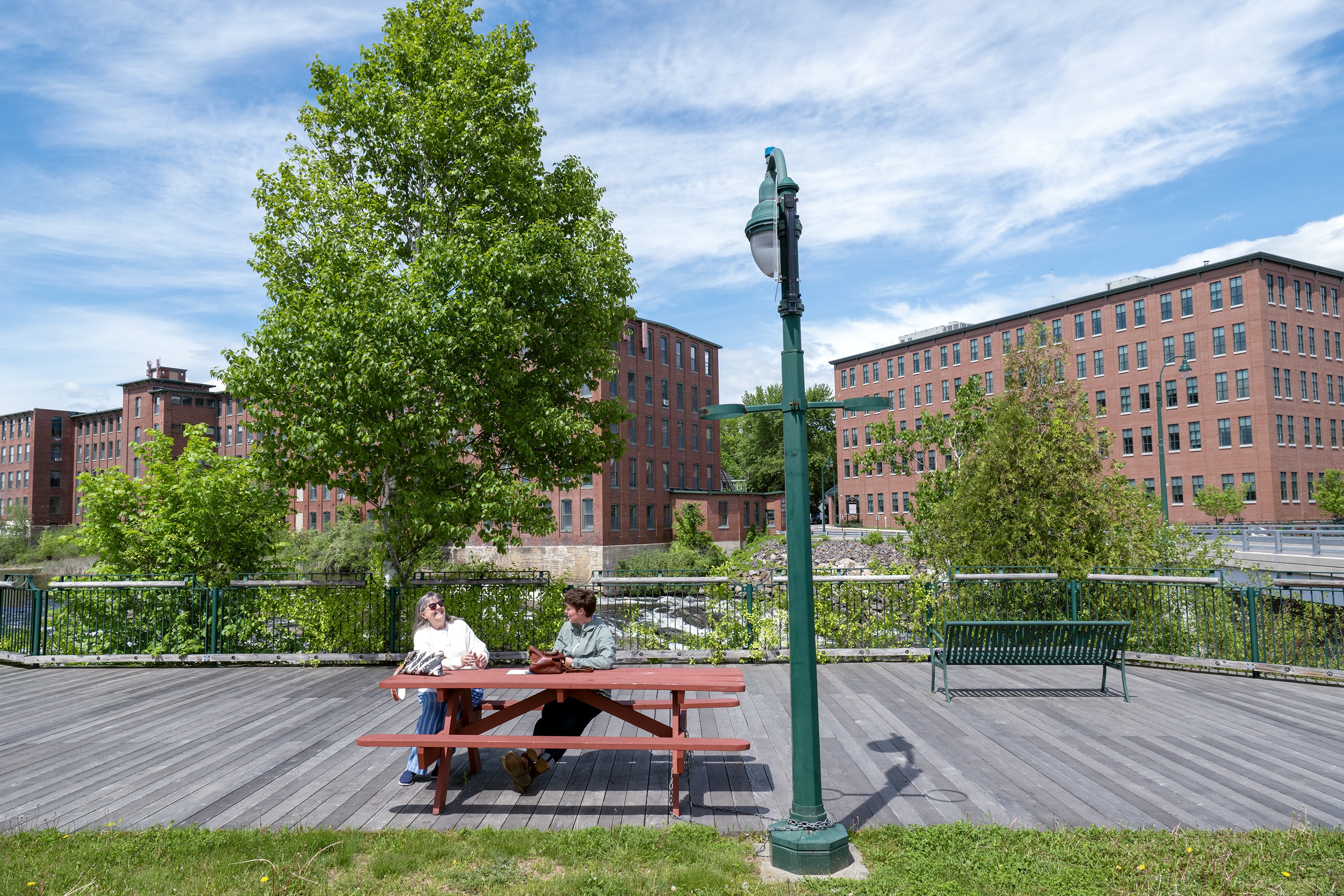
The downtown has “come alive” in the last 20 years and the ongoing Rock Row development has brought both jobs and visitors to the community. The river and surrounding trails have also been a boon.
“Westbrook wasn’t thought of in that way in the 90s and earlier, when we still had a mill town environment. We’re not a mill town anymore,” he said.
Developers have taken notice and the city is gearing up for an avalanche of housing activity — from May through June, the planning board reviewed or will review plans for eight projects that together would add about 1,125 units.
CHANGING COMMUNITIES
Maine’s pandemic-driven population boom has been well-documented. After years of population decreases, the state grew by almost 4% to just over 1.4 million between 2020 and 2025 as people fled densely packed cities for more rural areas.
Between 2020 and 2023, Maine was the fastest-growing state in New England. It has since fallen to second, behind New Hampshire.
While that flood has slowed to more of a trickle, people are still moving to Maine, and the state is feverishly trying to build the tens of thousands of units officials say are needed by 2030.
For the state’s fastest growing communities, this has created some friction between municipal government and existing residents who worry about the impacts of all these new people.
Will this make traffic worse? Does the sewer have capacity? What about the schools (Scarborough and Westbrook have seen enrollment either plateau or decline amidst their population booms)? Will taxes go up? What about the character of the town?
Large-scale housing developments are being challenged by neighbors who argue the changes are too much, too fast.
The tension has only been exacerbated by a new state law that bypasses Maine’s history of local control and loosens various land use restrictions in an effort to boost housing production statewide. It goes into effect next summer.
More than ever, community planning is going to be crucial, said Joe Oliva, outreach and communications director for GrowSmart Maine, a nonprofit that helps communities grow in sustainable ways.
Concentrating growth around town centers and existing infrastructure, investing in downtowns and mixed-use development and focusing on multi-modal transportation to reduce traffic congestion and car-reliance will all help communities weather future changes, he said.
“The more you can plan for growth, you’re in a better place when growth comes,” he said.

We invite you to add your comments. We encourage a thoughtful exchange of ideas and information on this website. By joining the conversation, you are agreeing to our commenting policy and terms of use. More information is found on our FAQs. You can update your screen name on the member's center.
Comments are managed by our staff during regular business hours Monday through Friday as well as limited hours on Saturday and Sunday. Comments held for moderation outside of those hours may take longer to approve.
Join the Conversation
Please sign into your CentralMaine.com account to participate in conversations below. If you do not have an account, you can subscribe here. Questions? Please see our FAQs.