

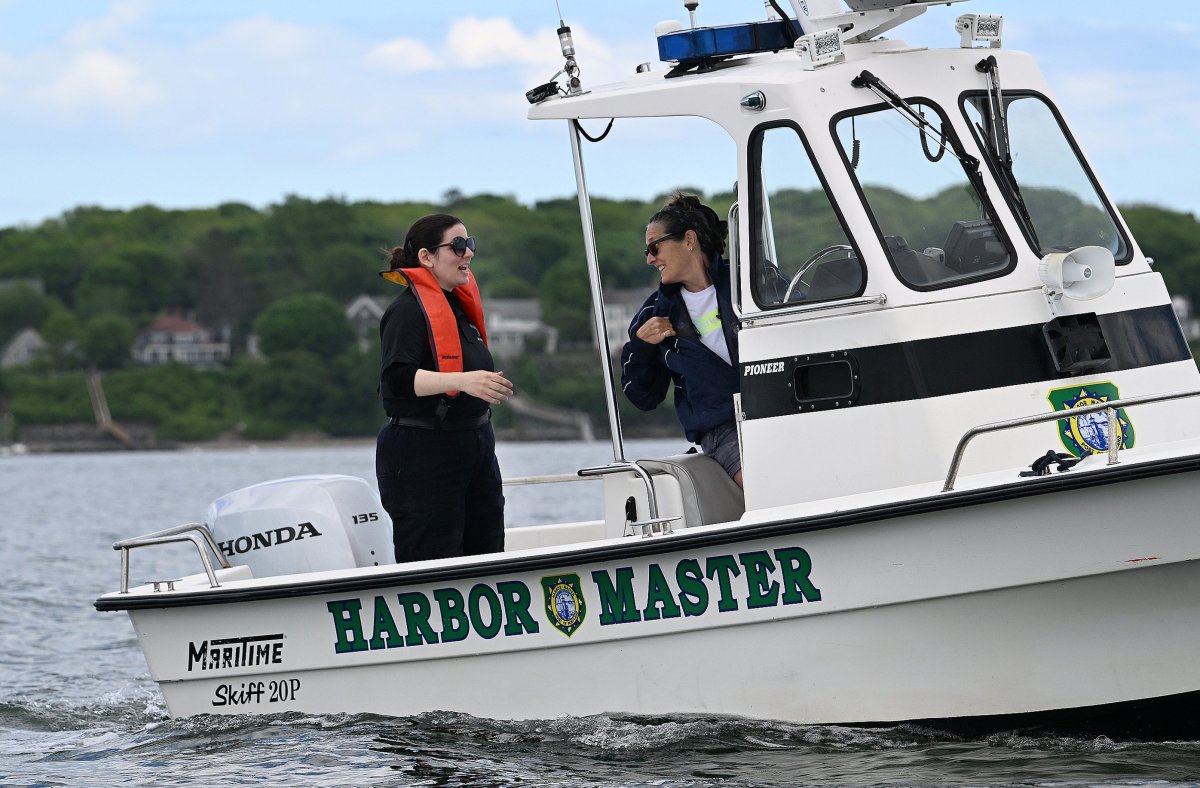
Harbormasters are the municipal protectors of Maine’s 5,300-mile coastline, where a single day might include tasks as diverse as saving a sinking skiff, sorting a same-day mooring request and seizing undersized quahogs.
The job has existed for more than a century, but a buzzworthy political campaign and a heated lobster turf war have elevated this obscure government position to a new level of visibility in the public discourse, even if few people know what they really do.
“No day is the same,” says Daryen Granata, harbormaster and shellfish warden for Scarborough and Cape Elizabeth. “Ride in my truck or my boat for a week, and I can practically guarantee you that we wouldn’t do the same thing twice.”
Graham Platner used his $3,000-a-year gig as Sullivan’s former harbormaster to help frame his run for U.S. Senate. Meanwhile, South Thomaston hopes that hiring a harbormaster can resolve a dispute over dock access that some lobstermen say threatens their livelihoods.
Beyond the headlines, however, the duties of Maine’s 250 or so harbormasters vary from town to town. Some are highly paid police officers with arrest powers; others are seasonal mooring managers, like Platner was before he resigned in October, according to the town manager.
“Most people doing this job aren’t doing it for the money,” says Granata, who is vice president of the Maine Harbor Masters Association. “They’re doing it to be a steward, to be an ambassador of the harbor.”
Platner, who operates an oyster harvesting business, said he took the post to make sure the person hired to “run the show” had local waterfront experience. He said he was “bummed” that he had to give up the role due to his campaign schedule.
“There is something to be said about working-class folks coming together over the water despite their differences, all with the same goal in mind — to protect and preserve their way of life,” he said.
South Thomaston was one of Maine’s rare shoreline communities that had resisted hiring a harbormaster. Residents preferred to solve their own problems to keep their mooring prices artificially low. But that changed when a lobster turf war broke out.
The town is now advertising for a per-diem harbormaster to resolve the dispute.
A typical day for Granata might start by answering office emails at 7 a.m. and end with a 5 p.m. radio call about a boat sinking off Prouts Neck. In between, he juggles calls for illegal fishing, a shark sighting and a boat diesel spill, all while juggling walk-ins.
One of the most time-consuming parts of a harbormaster’s job, regardless of whether they are a police officer or a seasonal volunteer, is managing the vessel placements, or moorings, in their local harbor, Granata said.
Maine has more than 30,000 moorings. Small harbors may have a couple dozen, but larger ones can have up to 1,300. The harbormaster ensures each one is in the proper location with enough depth for a boat’s draft and enough anchor to hold it in place.
Unlike their counterparts in warmer climates, Maine harbormasters face a seasonal scramble. Because of winter ice, most of the state’s moorings must be pulled ashore in the fall and reset each spring to avoid being dragged around by moving ice.
The role is also one of public safety. Harbormasters coordinate with the U.S. Coast Guard and Maine Marine Patrol on search-and-rescue operations, monitor for navigational hazards, and inspect critical marine infrastructure like piers, docks and cranes.
In Portland, harbormaster Paul Plummer and his six seasonal deputies spend a lot of time keeping Portland Harbor safe — from marine debris that could cause accidents, from environmental threats, and from commercial-recreational boating conflicts.
His office escorts big commercial vessels through the busy harbor to protect the people in kayaks and sailboats that fill it up during the summer, many of whom are not familiar with Maine landmarks and water rules, Plummer said.
“We are out in the harbor and visit the islands every day,” Plummer said. “It’s not just to protect boats, but also the fragile working waterfront infrastructure. We have a lot of old piers and wharves that require a lot of care but are critical to our economy.”
Despite these differences, state law requires all harbormasters to get certification through the Maine Harbor Masters Association within a year of taking the job. The four-day certification must be renewed every three years.
Success in the role requires more than a technical knowledge of shackles and swivels, Granata said. Harbormasters must be able to shift from “swearing like a pirate” with a lobsterman to politely guiding a Vineyard Vines-clad tourist to a local luncheon spot.
“You can’t be down here being a stiff shirt,” Granata says. “This job is crazy, but it’s a privilege. Drinking straight from the hose, every day. You never get a break, not really, but you never get bored, either.”
Editor’s note: This story was updated on June 2 to correct the month Platner stepped down as harbormaster.

We invite you to add your comments. We encourage a thoughtful exchange of ideas and information on this website. By joining the conversation, you are agreeing to our commenting policy and terms of use. More information is found on our FAQs. You can update your screen name on the member's center.
Comments are managed by our staff during regular business hours Monday through Friday as well as limited hours on Saturday and Sunday. Comments held for moderation outside of those hours may take longer to approve.
Join the Conversation
Please sign into your CentralMaine.com account to participate in conversations below. If you do not have an account, you can subscribe here. Questions? Please see our FAQs.