


Watch out for little cotton balls on Maine’s beaches this summer.
The puff of fluff may be a piping plover chick, and the coming weeks are the most difficult period in the young lives of these endangered shorebirds.
As of May 29, Maine Audubon reported that 27 chicks had already hatched on the state’s coastal beaches and that there were 140 active nests. There were seven chicks each at Ogunquit Beach and Fortunes Rocks Beach in Biddeford. Others were spotted on beaches in Wells and Scarborough. More are expected.
In 2025, the nonprofit said 251 chicks fledged, or grew big enough to fly.
Maine Audubon has counted 198 pairs so far this year, which already exceeds last year’s record of 174 nesting pairs during the season, although that number can change as birds move.
Laura Minich Zitske, director of the Coastal Birds Project at Maine Audubon, said the state will do a census next week that will further firm up the data and could even exceed 200 pairs for the first time. Partners up and down the Atlantic Coast are working to support the plovers’ recovery and doing the same counts, she said, and the population in New England is particularly strong.
“When we’re faring well, there’s a lot more responsibility to do what we can with what we have,” she said. “Because other states are not faring well.”
Kevin Mullan, the coastal birds seasonal outreach coordinator, wrote in a blog post that the first chicks hatched in Biddeford over Memorial Day weekend.
“We will need your help to get them to their fledge dates,” he wrote.

Maine listed piping plovers as an endangered species in 1986; they are also federally threatened. Their population declined in the 1800s as people harvested them for subsistence and to use their feathers in ladies’ hat decorations, according to the Maine Department of Inland Fisheries and Wildlife. While their numbers rebounded in the 1940s, they suffered again as beaches were developed for summer homes. By 1981, only seven pairs could be found in Maine.
Maine Audubon, state and federal agencies, and local municipalities and volunteers work together to protect plovers. In recent years, the population has gotten stronger but needs intensive management, they said. Threats include extreme storms, natural predators, coastal development and beach traffic.
The first month of a plover’s life is critical, and volunteers plan to check many nests daily.
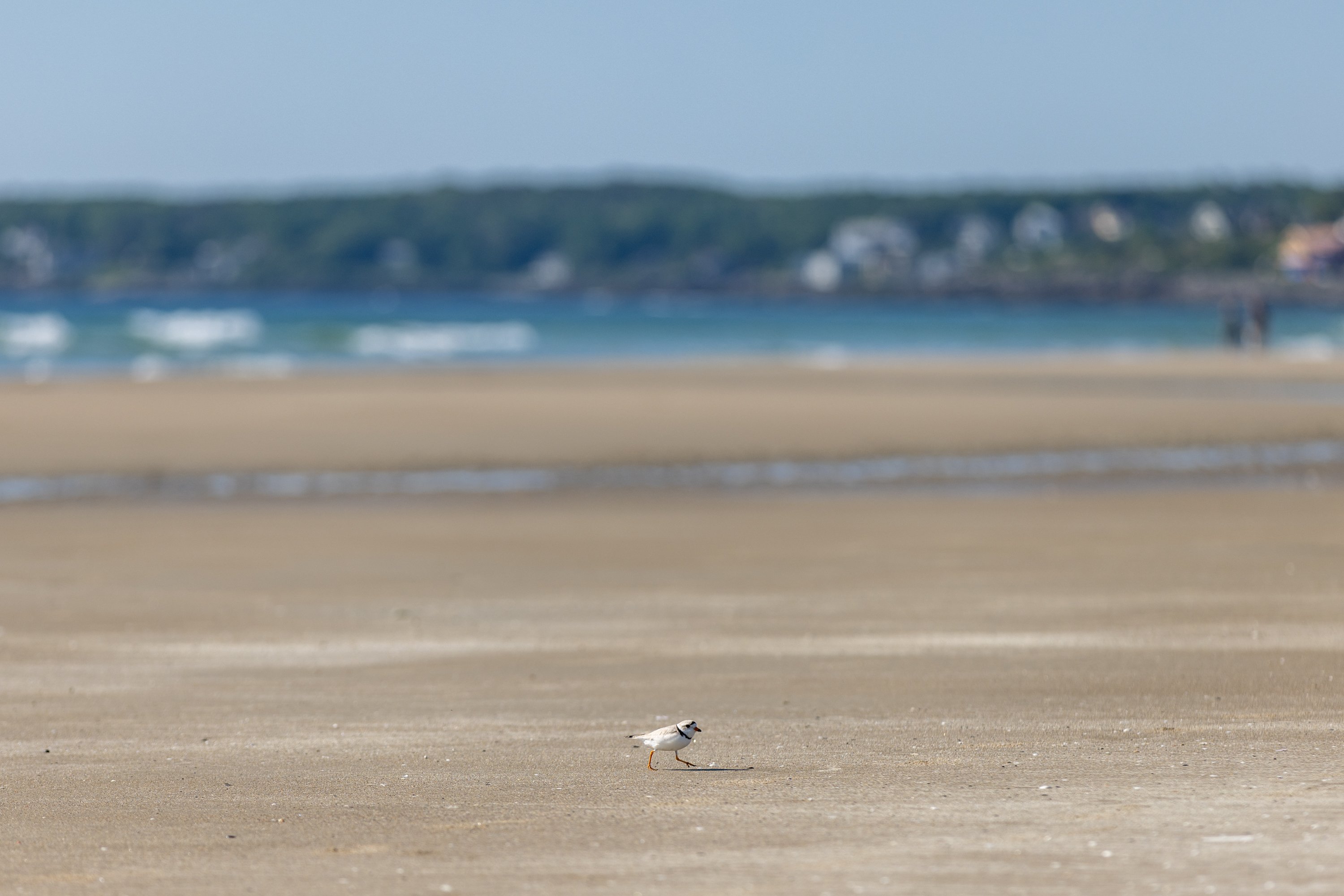
The chicks start moving around the beach within hours of hatching, Mullan said, and might forage more than a mile from their nests. Even though they’re on the move, plovers are unable to fly for at least 25 days.
“During this time, their best defense is to stay hidden by freezing in place,” he wrote. “Their down feathers allow them to blend in with the sand and wrack, helping them evade predators like crows, gulls, and foxes. Against people? It can work almost too well. Even experienced monitors miss them at first glance.”
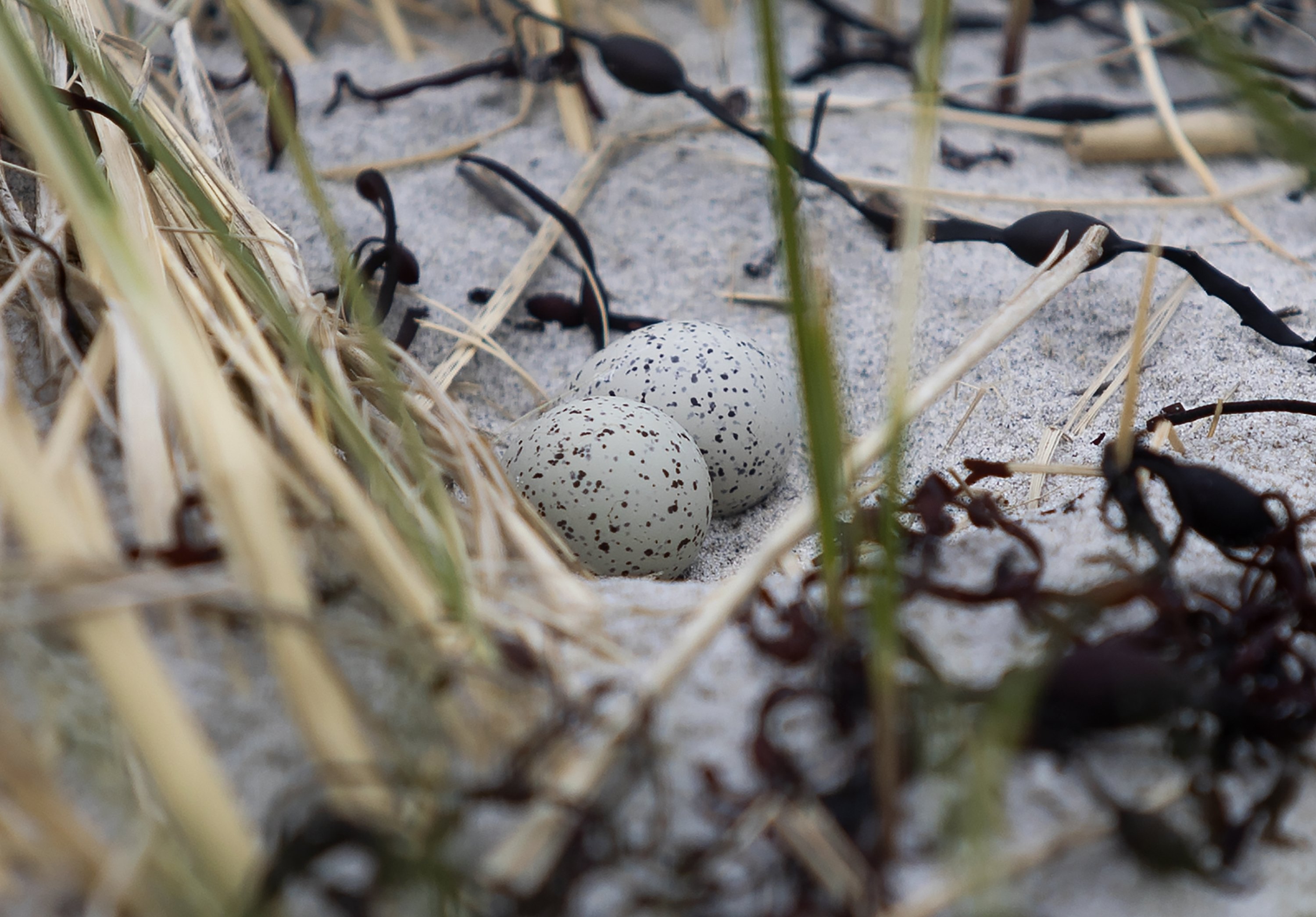
Here are recommendations from Maine Audubon to protect piping plovers while recreating on coastal beaches this season:
- Nests will usually be clearly marked. Pay attention to posted signs and respect fenced-off areas.
- Plovers still use the whole beach. If you are setting up camp, digging a hole or playing a game near a protected area, consider moving to a different spot to give them more space.
- Do not leave a deep hole unattended, and fill any holes before leaving the beach. “Without the ability to fly yet, chicks can stumble into them and get stuck,” Mullan wrote.
- Keep an eye out for defensive behavior from adult plovers, which may signal that chicks are near. They watch for danger while the chicks forage and will peep loudly if people get too close. “It’s not the most intimidating thing,” Minich Zitske said. “It’s not like an eagle that will come screeching in and terrify you, but it’s an alarm call. It’s a series of peeps that are conspicuous if you’re paying attention.”
- The adults might also do what’s called the “broken-wing display,” dragging one wing along the sand and pretending to be injured to lure the intruder away from the chicks. “Once you are far enough away, the bird suddenly recovers and flies off like nothing ever happened,” Mullan said. “A tad dramatic, but nonetheless clever and effective.”
- Bring binoculars or a camera with a zoom lens to observe the birds without getting too close and disrupting their feeding.
- Keep pets on leash when visiting dog-friendly beaches.

We invite you to add your comments. We encourage a thoughtful exchange of ideas and information on this website. By joining the conversation, you are agreeing to our commenting policy and terms of use. More information is found on our FAQs. You can update your screen name on the member's center.
Comments are managed by our staff during regular business hours Monday through Friday as well as limited hours on Saturday and Sunday. Comments held for moderation outside of those hours may take longer to approve.
Join the Conversation
Please sign into your CentralMaine.com account to participate in conversations below. If you do not have an account, you can subscribe here. Questions? Please see our FAQs.