

Standing on the balcony of the Seguin Island Light Station, Sara Thomas looked out at the ocean below.
“This is my favorite place on Earth,” she said.
The 30-year-old Nashville resident and her neighbor, Savannah Coursey, 31, are serving as the lighthouse keepers this season. They balance the practical work of maintaining the Midcoast island with the quieter pleasures of living there, from reading beneath the tower to searching for wildflowers.
“Being on Seguin — just looking at the water or up at the lighthouse — it’ll prioritize your life in the right way,” Thomas said. “It reminds you what matters.”
Maine’s 60-plus lighthouses are postcard fixtures. They have served as muses for painters and poets, as north stars for homebound sea travelers and as backdrops for teary-eyed family reunions for generations, according to the Maine Historic Preservation Commission.
Automation of light and fog signaling did away with traditional light keeping duties, but the role of the keeper is far from obsolete, preservationists say.
The daily, unglamorous, weather-beaten work of caring for these stations still takes a keen eye and human hands to keep them running properly, said Bob Trapani, executive director of the American Lighthouse Foundation.
“They are part of your life, a part of your sense of place, a part of the state of Maine,” Trapani said.
Over the past month, the Portland Press Herald/Maine Sunday Telegram visited three of Maine’s light stations — Seguin Island, Goat Island and Nubble Light — to find out more about the lives of their modern-day caretakers. Stories about their experiences will be published throughout the summer.
A SEASON OF STEWARDSHIP
Seguin Island Light Station sits at the mouth of the Kennebec River, 2.5 miles out to sea near Fort Popham.
The tower’s crowning light is a first-order Fresnel lens, shining 186-feet above sea level. Installed in 1857 and still operational, it is one of a handful of its kind remaining in New England. The lens is 9 feet tall, a beehive of precisely cut glass prisms that cast a beam of light visible more than 20 miles away.

The island feels like the edge of the world, one of last season’s keepers, Peter Flanagan, said.
The Friends of Seguin Island Light Station has long relied on community support and volunteers to maintain the island, board member Gordon Reed said.
The nonprofit gained ownership in 1998 through the Maine Lights Program, a congressional transfer of lighthouse ownership from the U.S. Coast Guard to local towns and organizations. Instead of one long-term keeper, the organization recruits volunteer duos to live on the island from May 31 through Labor Day.
Thomas said she first discovered the lighthouse during a solo trip to Maine last July. Eager to explore, she joined Seguin’s volunteer work crew, the Wednesday Warriors, on one of their weekly excursions to the island.
There, she said, she formed an instant connection with then-keepers Flanagan and his sister, extending her day trip to an overnight stay. She said she returned later that year to help winterize the island.
“The second I got on the island, I felt like I’d been there forever,” Thomas said.
When Thomas went back to Nashville, she convinced Coursey to apply for the keeper role. They landed the gig. Thomas left her full-time job and Coursey brought her work with her, continuing her role as an executive assistant, remotely from the keepers’ quarters.
Sitting side-by-side on their living room sofa one June afternoon, Coursey and Thomas described their daily routine.
Thanks to their curtain-less bedrooms, they wake naturally with the sun, raise the flag to signal the island is staffed and make breakfast.
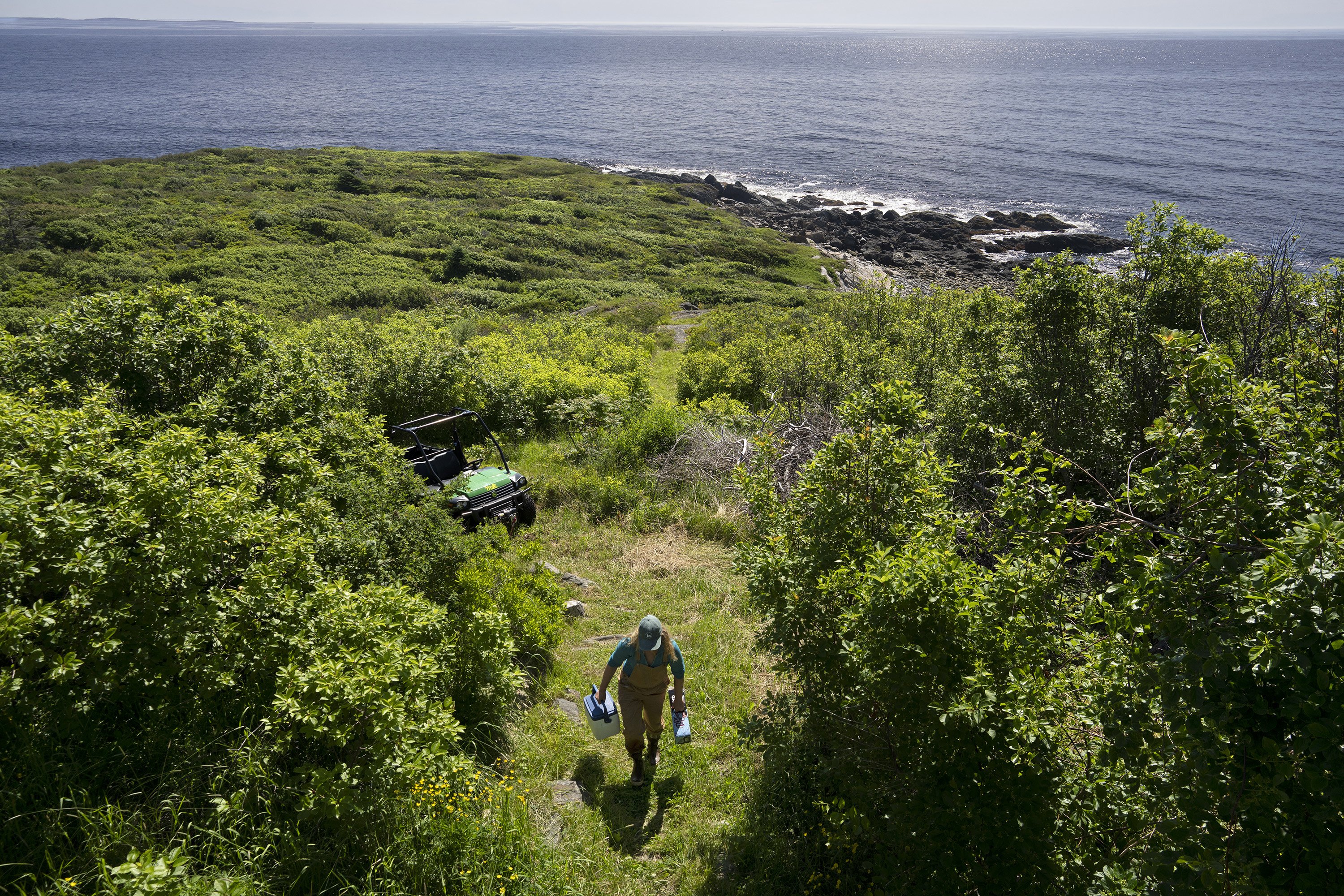
Thomas said their days revolve around the ongoing work of caring for the 64-acre, solar-powered island: monitoring water levels, mowing fields, weed whacking, raking and clearing trails.

They also greet people who make the nearly quarter-mile hike up the face of the island, she said, noting how visitors crest the final steps with bright, curious expressions.
“Here, your day is interruptible, and we’re always so thrilled to share this with people,” she said, recalling one of her first guests of the season — a born-and-raised Mainer who had never seen Seguin. “He had the biggest grin on his face.”
They welcomed 137 visitors last month, according to the keepers’ blog.
In early June, Prock Marine Company began construction of a new dock intended to improve access to Seguin’s exposed western shore. Reed said the project, expected to be complete by late-July, will make it easier and safer for boats to bring visitors, volunteers and supplies to the island.

LIFE ON ISLAND TIME
Thomas said one principle governs life on Seguin: two people must remain on the island at all times.
Reed and Flanagan are among the Wednesday Warriors who assist with island maintenance while the keepers make their weekly trip ashore to stock up on provisions and explore the mainland.

There are long-term projects and daily to-do lists, Coursey said, but without a burdensome productivity metric.
“When you’re hungry, you stop. When you’re tired, you take a break,” she said.
Thomas said she appreciates the work-play balance they’ve struck.
“We work hard during the day, but we’re also taking care of each other and taking care of ourselves,” she said.

They remember applauding a sunset from the lighthouse tower on their first evening, reading Sally Rooney’s “Beautiful World, Where Are You” by the base of the tower and making burrata and peach sandwiches in the kitchen, which they’ve affectionately nicknamed “The Rusty Bell Saloon.”
Coursey recalled one afternoon spent wandering through the island, searching for wildflowers.
“It was raining softly and I was picking flowers and I just felt so happy — like a kid again,” she said.
The caretaking season is just nearing its halfway point, and both women already speak about Seguin Island as a place they will carry with them long after they leave.
“A strong sense of self can’t be bought. To give myself this much time to find it has been huge,” Thomas said. “Here, I feel at home in myself, and I don’t feel that way a lot of the time.”
Far from the city noise, the island has given Thomas and Coursey, both writers, uninterrupted time to think and create, they said.
“When I got here, I felt like everything loosened up in my chest, and I could breathe easier,” Coursey said. “It was like my brain was untangling.”

Thomas said watching others experience Seguin’s wonder makes her feel connected to the generations of keepers who came before.
Coursey said she feels that same connection. Every time she is in the island’s museum, she said, she learns something new and thinks: “I’m walking the same ground this person walked.”
The island’s history, Coursey said, is never far away.


We invite you to add your comments. We encourage a thoughtful exchange of ideas and information on this website. By joining the conversation, you are agreeing to our commenting policy and terms of use. More information is found on our FAQs. You can update your screen name on the member's center.
Comments are managed by our staff during regular business hours Monday through Friday as well as limited hours on Saturday and Sunday. Comments held for moderation outside of those hours may take longer to approve.
Join the Conversation
Please sign into your CentralMaine.com account to participate in conversations below. If you do not have an account, you can subscribe here. Questions? Please see our FAQs.