


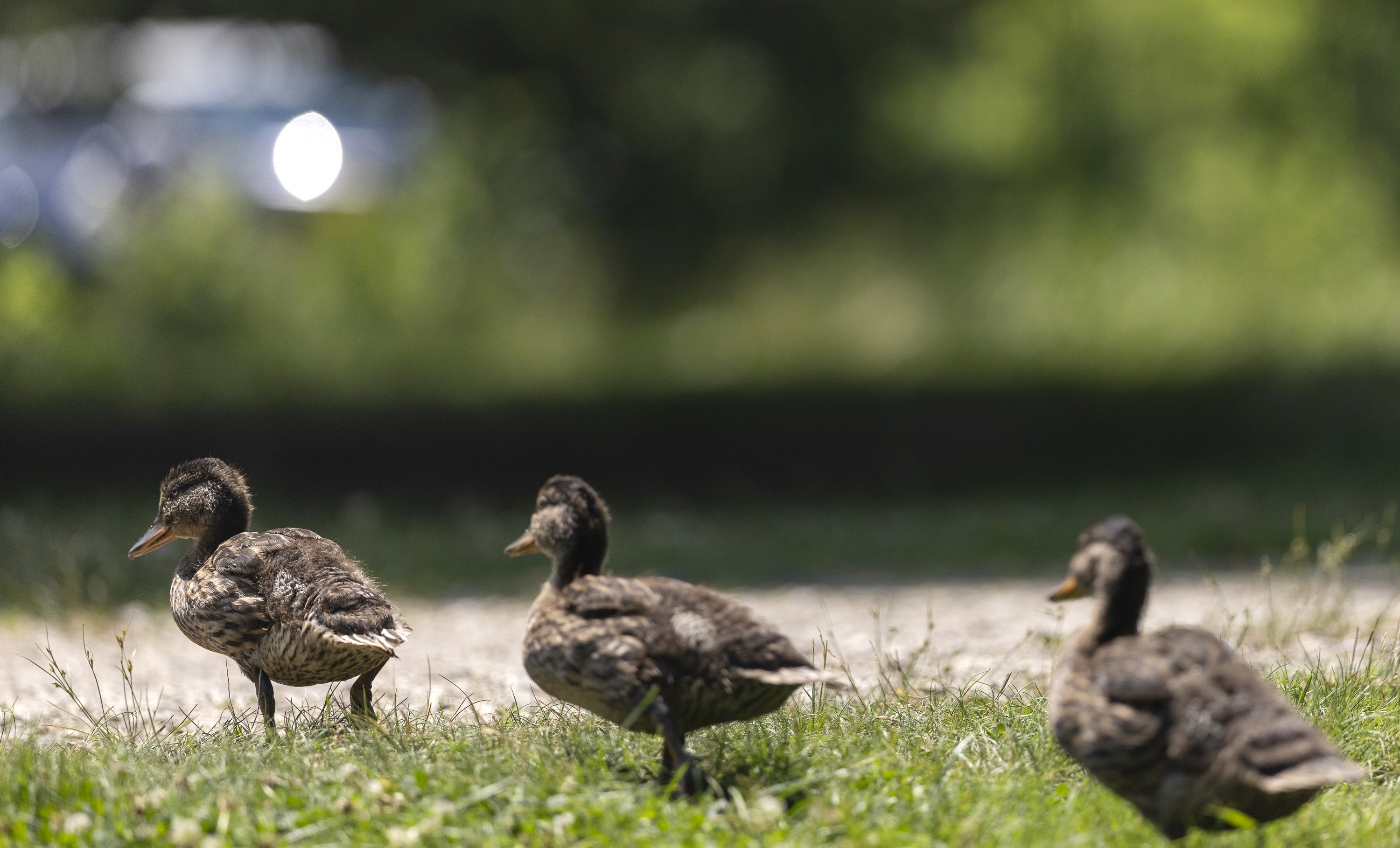
PORTLAND — Bird Warde stopped midstride to pick up a tiny white feather from the grass.
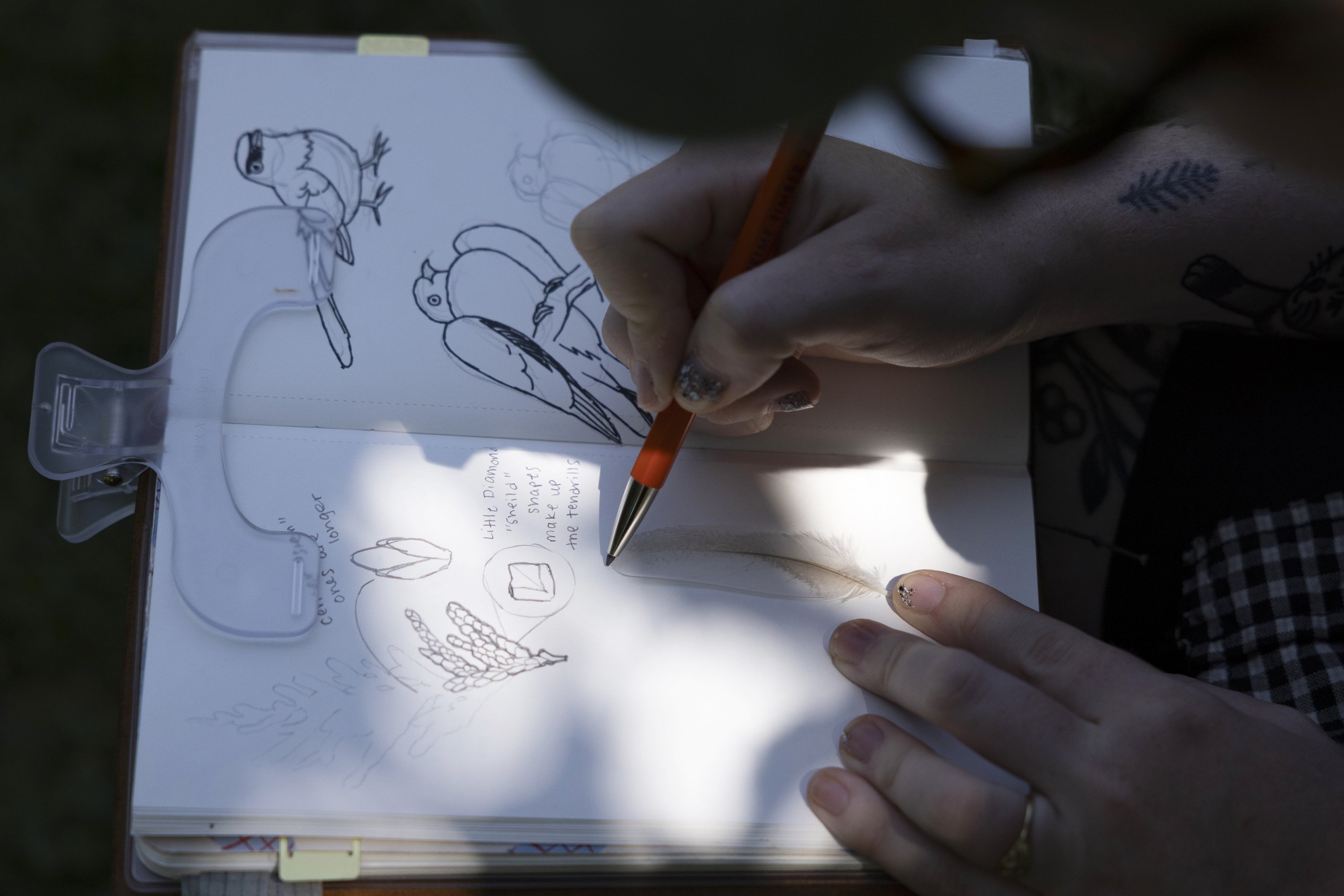
They settled a stool in the shade near the pond in Evergreen Cemetery, gently set the feather on the page of an open leather notebook and began to outline it with a pen.
“There’s no rule against tracing,” said Warde, an artist who lives in Portland.
Next month, Warde will teach a workshop on nature journaling for birders at Scarborough Marsh through Maine Audubon. Libraries, nonprofits and land trusts regularly offer courses on the practice, which a study by researchers in the Penn State Department of Recreation, Park, and Tourism Management suggests has grown in popularity since the COVID-19 pandemic. Their surveys found that adults gained social connection during nature journaling sessions and kids valued up-close experiences with the natural world.
“When people think of nature journaling, they think of, like, Lewis and Clark,” Warde said. “Just because things can be digital, we shouldn’t stop doing the analog.”
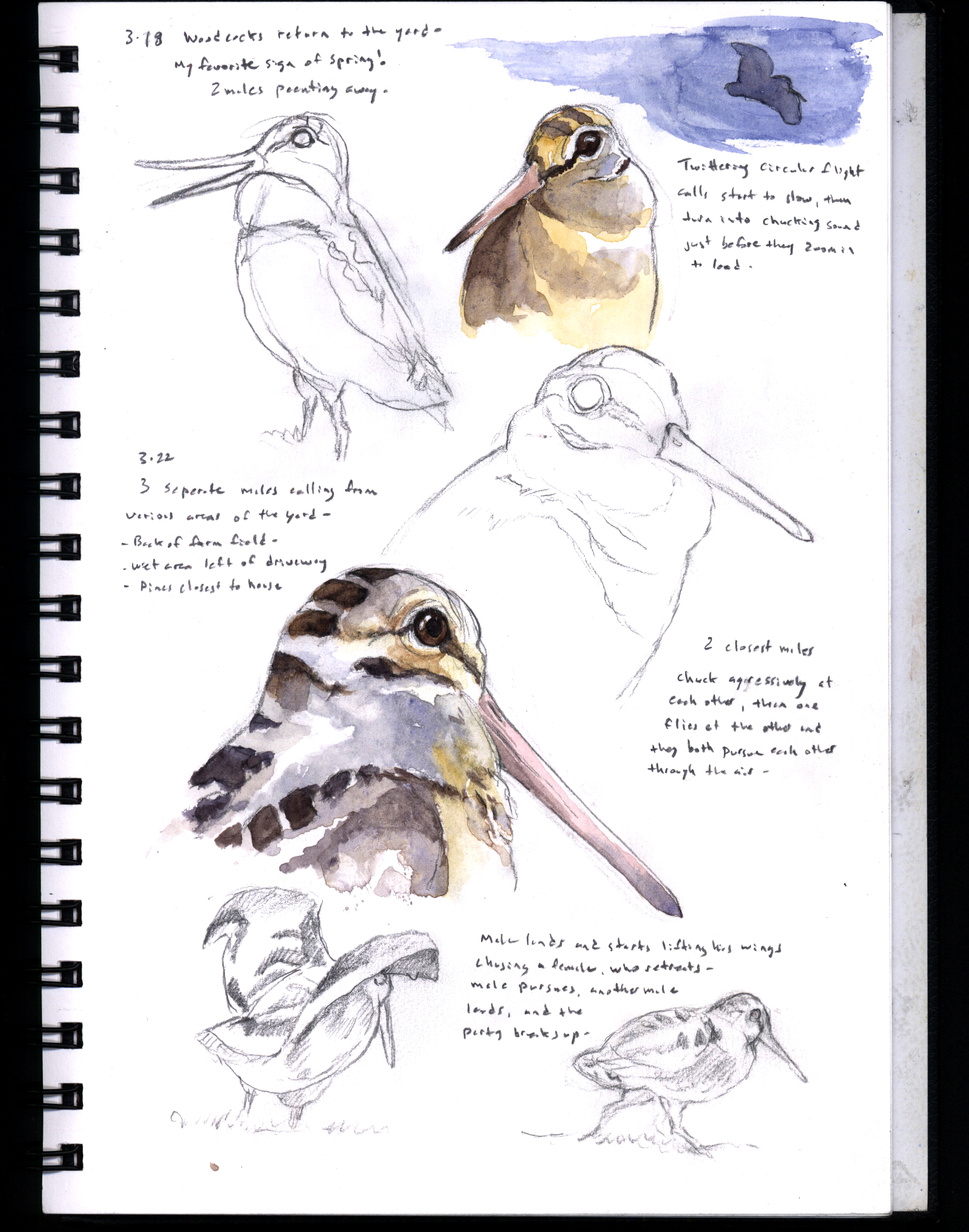
Nature journaling isn’t about being an artist, a scientist or a naturalist. Practitioners said it’s just about recording observations about the outdoors.
Molly Woodring, associate director of education at Maine Audubon, said the nonprofit incorporates nature journaling for all ages and abilities, from programs for young children to a three-day retreat with Monson Arts at Borestone Mountain in Elliotsville.
“As a person who can be scared off by a blank page and a fresh notebook, try to lose that instinct and just get started,” Woodring said.
WHAT IS NATURE JOURNALING?
Sukie Curtis, of Cumberland, and Cordelia Hill, of Portland, teach courses on nature journaling, often together. Their Maine Master Naturalist certification introduced them to the practice, they said. The homework in the 10-month course included documenting different types of ferns and regularly visiting a single location to record ecological changes over time.
Every student’s journal was different, they said. Some did more writing or made charts. Others liked sketching or painting. Curtis recalled one person who made up stories about the animal tracks he saw in the snow. One page in her own journal is a sound map that notes everything she could hear in that moment.
“It doesn’t have to be fancy,” Curtis said. “You really don’t have to know anything. It’s more about what you see and how does it make you feel to sit down and notice.”
Some artists who are inspired by the outdoors find nature journaling to be useful to their practice. Warde, for example, runs an online shop with their designs and does freelance illustration for nature organizations.
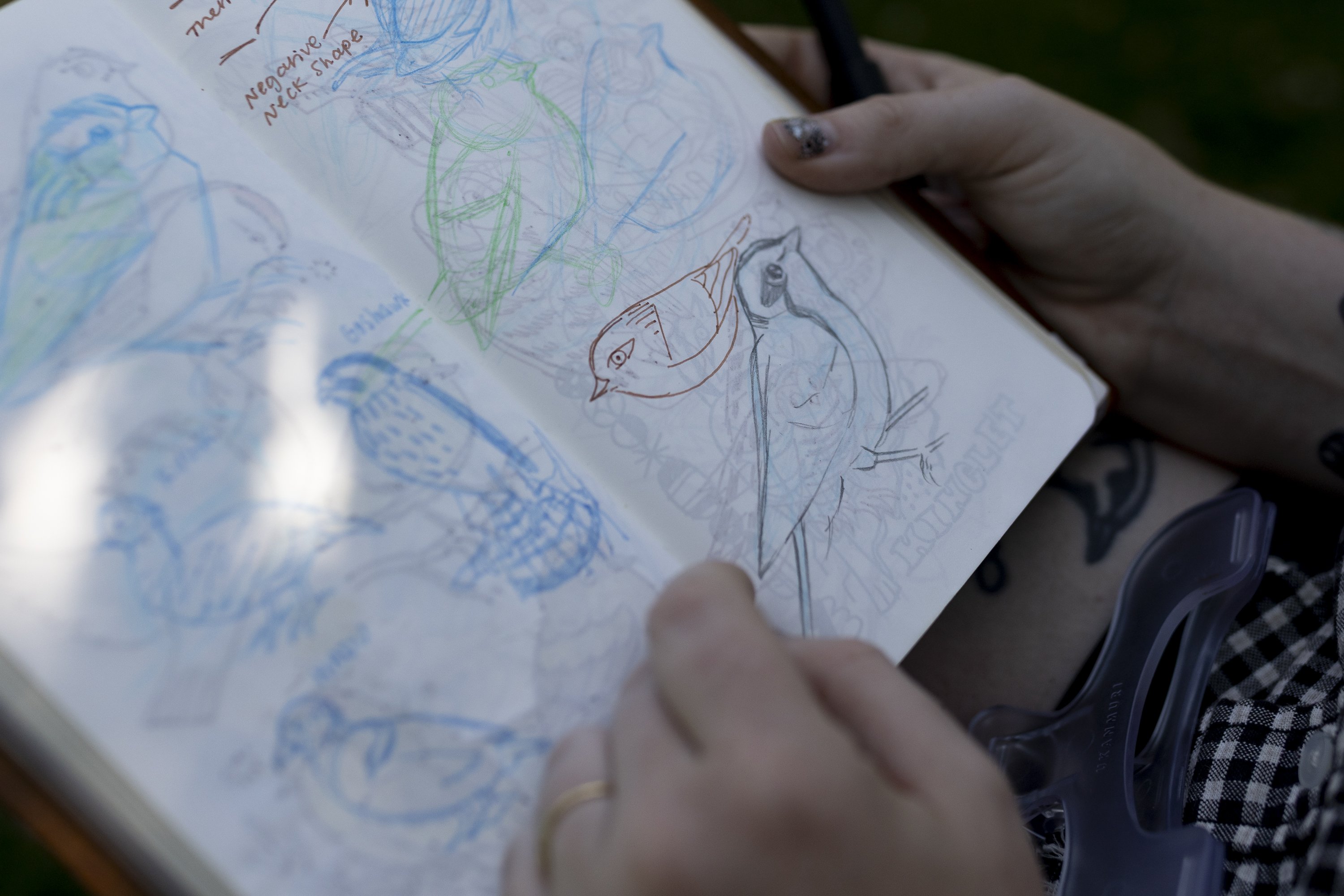
They flipped through a sketchbook past drawings of birds they saw during a recent residency on Hog Island and the blue bonnets they noticed on a trip to Texas. At 7:30 a.m. on April 9, Warde made notes and sketches of cedar waxwings in their backyard. Warde also drew the berries the birds were eating and added a question about their wrinkly texture: “Does this make them tastier?”
“Growing my outdoor knowledge from being outside and noticing things and drawing things just makes me a better artist,” Warde said.
Even professionals aren’t worried about making the page look perfect.
“It’s like singing in the shower,” said Michael Boardman, a watercolor artist and Maine Master Naturalist in North Yarmouth. “You may not be very good at it, but it’s fun.”
HOW TO GET STARTED
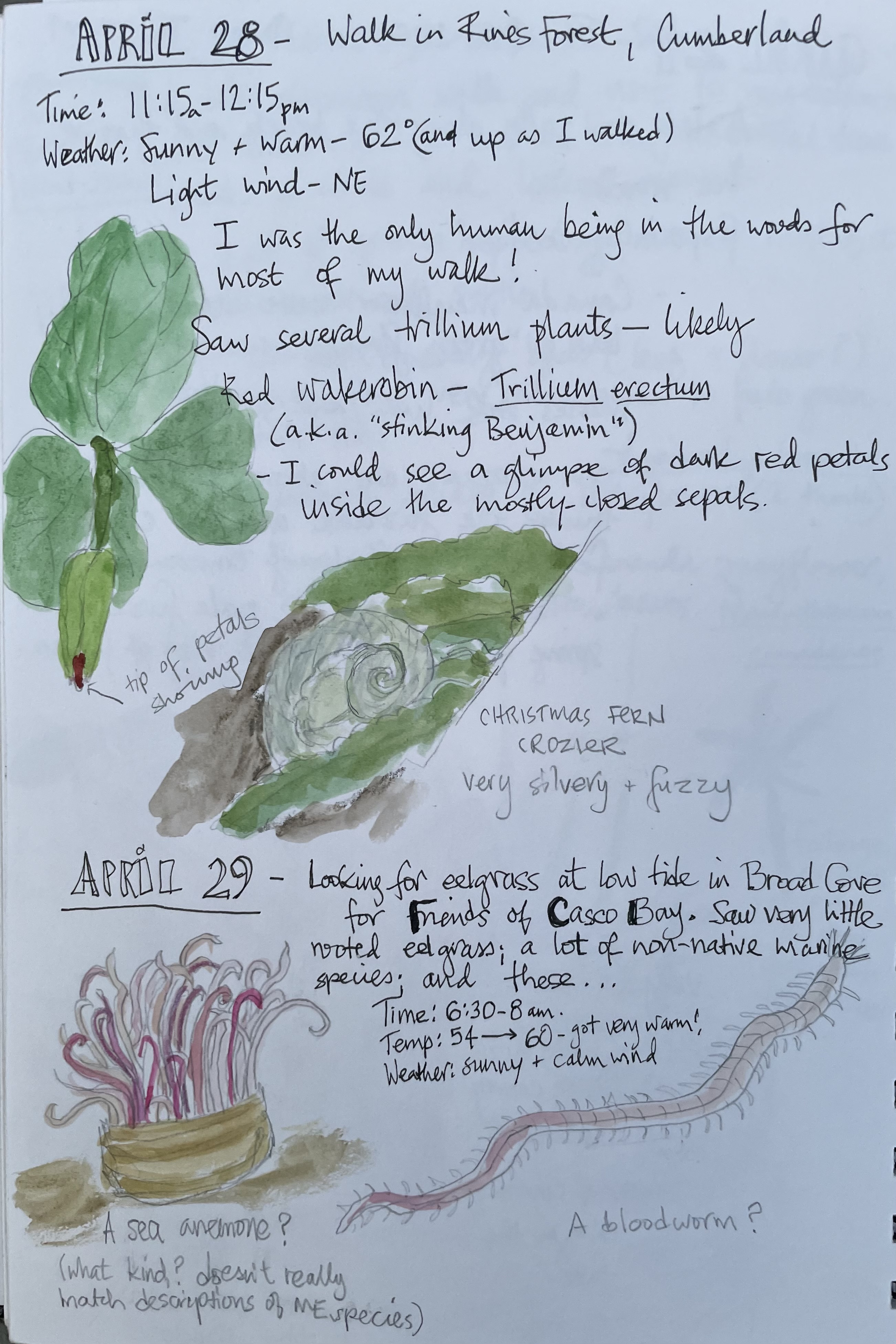
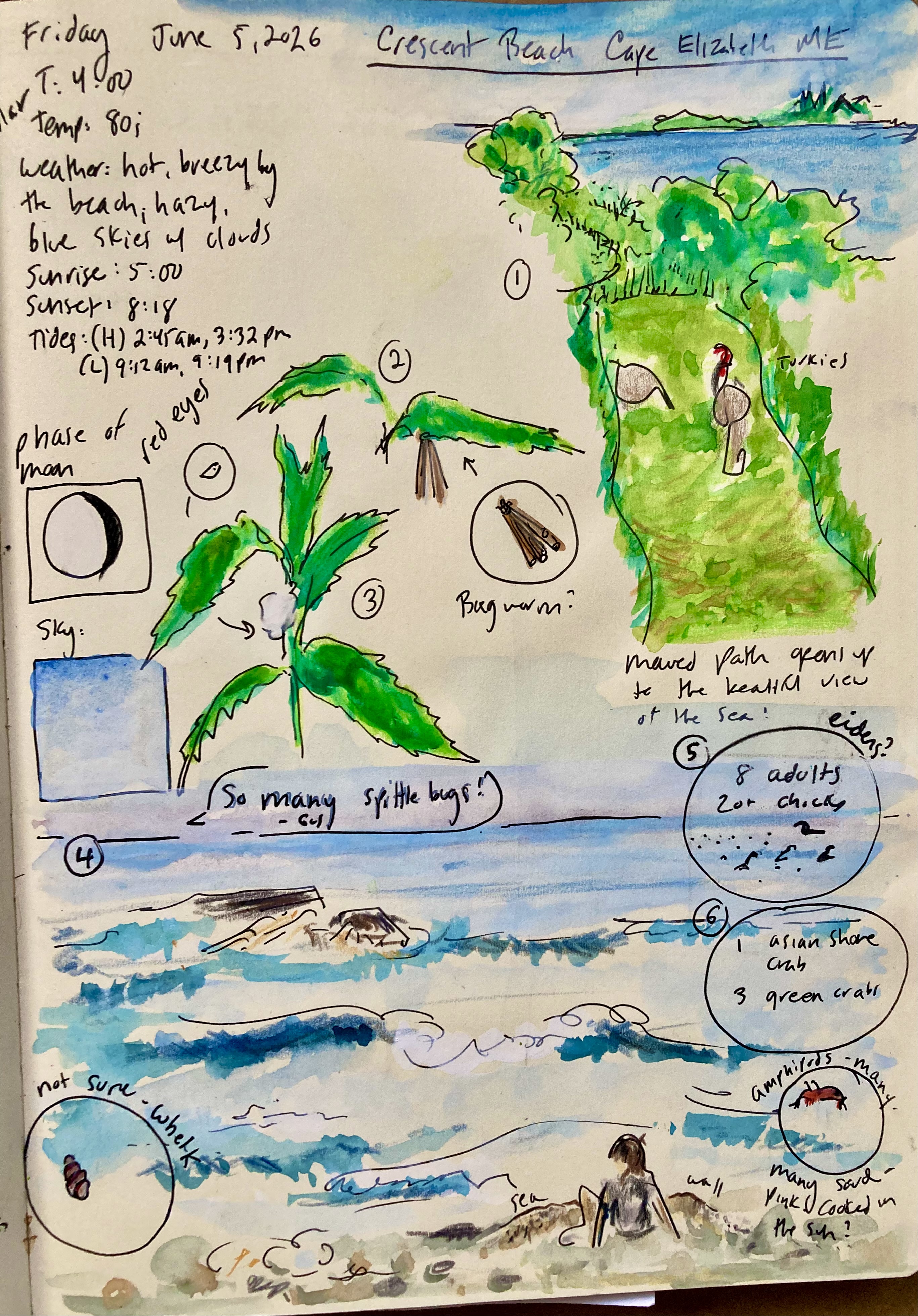
People who practice and teach nature journaling emphasized the ability to use whatever tools and materials you already have.
“You can start with a pencil and a lined notebook and just goof around,” Boardman said.
You could journal on a beach or trail, outside in your own backyard or even inside from your favorite chair. Warde suggested starting with subjects that won’t fly away — a tree instead of a sparrow, for example — and even tracing objects directly on the page. They also advised not to try to identify a species in the moment or get distracted by entering data into an app; focus instead on soaking up as many details as possible.
Some found that setting aside a regular time to nature journal helps with consistency. Woodring, from the Maine Audubon, keeps a five-year journal for brief daily observations; Boardman likes to practice journaling and field sketching on Fridays.
“I found that sometimes, even when I’d be picking up my son from school, I’d have 10 or 15 minutes just doing that and looking,” Hill said. “It can be just a short period of time. It doesn’t have to be walking up Cadillac Mountain.”
Practitioners in Maine recommended seeking out books or online resources from nature journaling proponents, such as John Muir Laws or Clare Walker Leslie. Woodring suggested starting journal entries with dates, temperatures and weather. Hill and Curtis do exercises with students in their workshops such as blind contour drawing.
“Anyone can do it,” Curtis said.
UPCOMING EVENTS
Here is a sample of upcoming opportunities to try nature journaling:
- Sukie Curtis and Cordelia Hill will teach “An Introduction to Nature Journaling” on July 17 from 10-11:30 a.m. at Knight’s Pond Preserve in Cumberland. The event is offered as a partnership between the Prince Memorial Library and the Chebeague and Cumberland Land Trust. It is open to adults and high-school-aged teens, and no experience is necessary. Paper and pencils will be provided, or feel free to bring a journal or other tools. The event is free but registration is required at princememorial.librarycalendar.com.
- Hill will also teach nature journaling on July 31 from 10-11:30 a.m. at the Burbank Branch of the Portland Public Library. Materials are included, and beginners are welcome. The event is free but registration is required at portlandme.librarycalendar.com.
- Maine Audubon is hosting Brush With Nature Day at the Scarborough Marsh on Aug. 8. Local artists will lead sessions throughout the day in various mediums, including “Nature Sketching by Canoe” with Rebekah Lowell, and “Nature Journaling for Birders” with Bird Warde. Sign up and find more details and fees for each session at maineaudubon.org.

We invite you to add your comments. We encourage a thoughtful exchange of ideas and information on this website. By joining the conversation, you are agreeing to our commenting policy and terms of use. More information is found on our FAQs. You can update your screen name on the member's center.
Comments are managed by our staff during regular business hours Monday through Friday as well as limited hours on Saturday and Sunday. Comments held for moderation outside of those hours may take longer to approve.
Join the Conversation
Please sign into your CentralMaine.com account to participate in conversations below. If you do not have an account, you can subscribe here. Questions? Please see our FAQs.