


Eight candidates vying to replace Graham Platner as the Democratic nominee in Maine’s U.S. Senate race took to the debate stage for the first time Thursday night, each trying to make the case that they are the best person to take on Sen. Susan Collins in November.
Platner, the winner of the June primary, withdrew from the race this month following a former girlfriend’s allegation of sexual assault. Platner has denied the allegation — the latest in a string of controversies he faced — but said it had irreparably damaged his campaign nonetheless.
His successor will be chosen at a nominating convention hosted by the Maine Democratic Party on July 25, when 601 delegates will vote on a replacement candidate.

Platner loomed large over the debate stage Thursday. In one of the first questions of the evening, News Center Maine moderators Rob Caldwell and Phil Hirschkorn asked the candidates to name a policy of Platner’s that they would carry into their own campaigns.
The debate was broken into two one-hour segments featuring four candidates each. The two groups got some of the same questions, including the one about Platner’s policies.
Troy Jackson, a former Maine Senate president, said he agrees with Platner’s push for Medicare for All. “That’s the thing that I think that Graham did the best, was talked about fighting against the healthcare industry and the prescription drug industry to make sure that people in this state and in this country have affordable, quality healthcare,” he said.

Nirav Shah, former director of the Maine Center for Disease Control and Prevention, pointed to the need to abolish U.S. Immigration and Customs Enforcement, noting it’s especially urgent after this week’s killing of Johan Sebastián Durán Guerrero in Biddeford by an ICE agent.
Shenna Bellows, Maine’s secretary of state, talked about both Medicare for All and getting ICE out of Maine, while Jordan Wood, a former congressional staffer, said he learned from Platner that Maine’s next senator needs to “go all the way” in putting conditions on future aid for Israel.
Lizzie Dickerson, a former state lawmaker, said she wants to carry forward the enthusiasm Platner had generated, while Dan Kleban, co-founder of the Maine Beer Co., said Platner is right that “the system is rigged against hardworking Mainers” and said members of Congress should not be able to trade individual stocks.
Ashley Webb, a musician and author, likes that Platner “talked about going after corruption,” while David Costello, a former government official in Maine and Maryland, said campaign finance reform and “taking money out of politics” is key.
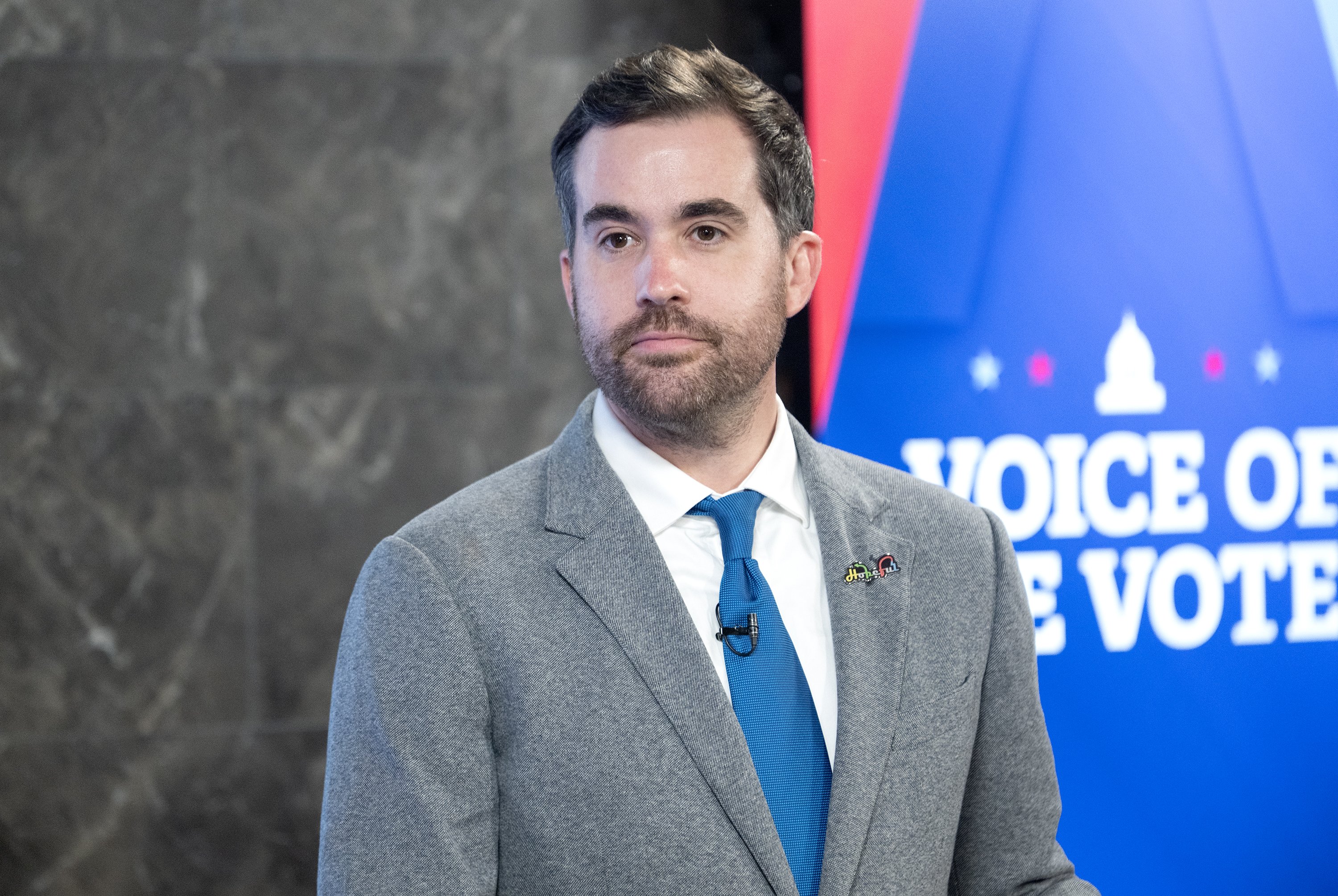
The candidates largely avoided criticizing Platner, who faced controversies that included a tattoo resembling a Nazi symbol, though Wood noted that he had called for Platner to drop out of the race last year. “I could see he was not being truthful about his past and there’s too much at stake for us in this election to take that risk,” Wood said.
The candidates were also asked how they would mount a successful challenge to Collins, a five-term incumbent who chairs the Senate’s powerful Appropriations Committee and who is known for her work to bring funding into the state.
Shah, who said he is most electable due to his status as the runner-up in the recent primary for governor, argued that Maine also loses money because of Collins because she has enabled Trump administration efforts such as the war in Iran that have resulted in rising fuel costs.
Bellows, who ran against Collins in 2014 and lost with 31% of the vote, said she is a stronger candidate now. “She’s changed too, and the country has, with Trump and the end of Roe v. Wade and so much more,” Bellows said. “So I’m ready to win.”

Collins has been seen as more vulnerable in recent election cycles, especially after her controversial vote in 2018 to confirm Brett Kavanaugh to the U.S. Supreme Court. Kavanaugh was later among the justices who supported the overturning of Roe v. Wade and the federal right to an abortion.
Bellows said she supports expanding the Supreme Court, and Jackson also said he would “definitely be willing to add more people to the court,” while Wood proposed creating a circuit that would have judges rotate in and out of the Supreme Court.
The candidates were also asked about their plans to reform ICE following this week’s shooting.
Wood said the country needs a new agency to enforce immigration laws because trust in ICE is broken. In the meantime, he said, reforms could be included in budgets and there “has to be real accountability and prosecution of those who break the law.”
Jackson called for ICE to be dismantled “because they give us nothing in this country but heartache and racism.” Shah agreed, while also saying there are reforms that can happen more quickly, including banning masks on federal agents, requiring the wearing of body cameras and eliminating immunity that protects officers from being held accountable.

We invite you to add your comments. We encourage a thoughtful exchange of ideas and information on this website. By joining the conversation, you are agreeing to our commenting policy and terms of use. More information is found on our FAQs. You can update your screen name on the member's center.
Comments are managed by our staff during regular business hours Monday through Friday as well as limited hours on Saturday and Sunday. Comments held for moderation outside of those hours may take longer to approve.
Join the Conversation
Please sign into your CentralMaine.com account to participate in conversations below. If you do not have an account, you can subscribe here. Questions? Please see our FAQs.