


Ryan Fecteau looked out at his city from Mechanics Park as night fell.
He and hundreds of others gathered for a vigil remembering Johan Sebastián Durán Guerrero, a 25-year-old Colombian immigrant. Just hours earlier, Guerroro had been lying dead on the street, shot and killed by an Immigration and Customs Enforcement agent down the block from his home.
The small Biddeford park at the corner of Main and Water streets faces the city’s historic textile mills and is just steps from the bridge to neighboring Saco — two spots that Fecteau, Maine’s House speaker and a Biddeford native, said are poignant reminders of the city’s longstanding status as a town built by and for immigrants.
Staring at the mills, he was struck by the symbolism of the bricks.
Built (and later run) by Irish, Greek, Albanian and French Canadian immigrants nearly 200 years ago, the mills, he said, “are more than just buildings. They represent our ancestry, our genealogy and why we call this place home.”
To his right, at the bridge connecting the two former mill towns, he reflected on a time just over 100 years ago, when those same groups blocked a force of Ku Klux Klansmen marching from Saco to try to intimidate Biddeford’s immigrant and Catholic populations.
The parallels between these monumental events rang clear for Fecteau.
“In response to the violence against one of our neighbors, we are standing shoulder to shoulder and saying, get out of Maine. Leave our state. We want to turn you around, we want to send you back,” he said. “That’s what they did in 1924 — that’s what we’re doing today.”
Biddeford has a long history of people coming to the city to establish a better life, working toward the American dream, said Emma Bouthillette, author of A Brief History of Biddeford.
Today, immigrants make up less than 5% of the city’s population, according to census data, but they’ve been vital to the city’s success for more than 150 years, from the textile mills’ heyday in the late 19th and early 20th centuries to the city’s recent rebirth as a foodie heaven and must-see destination.
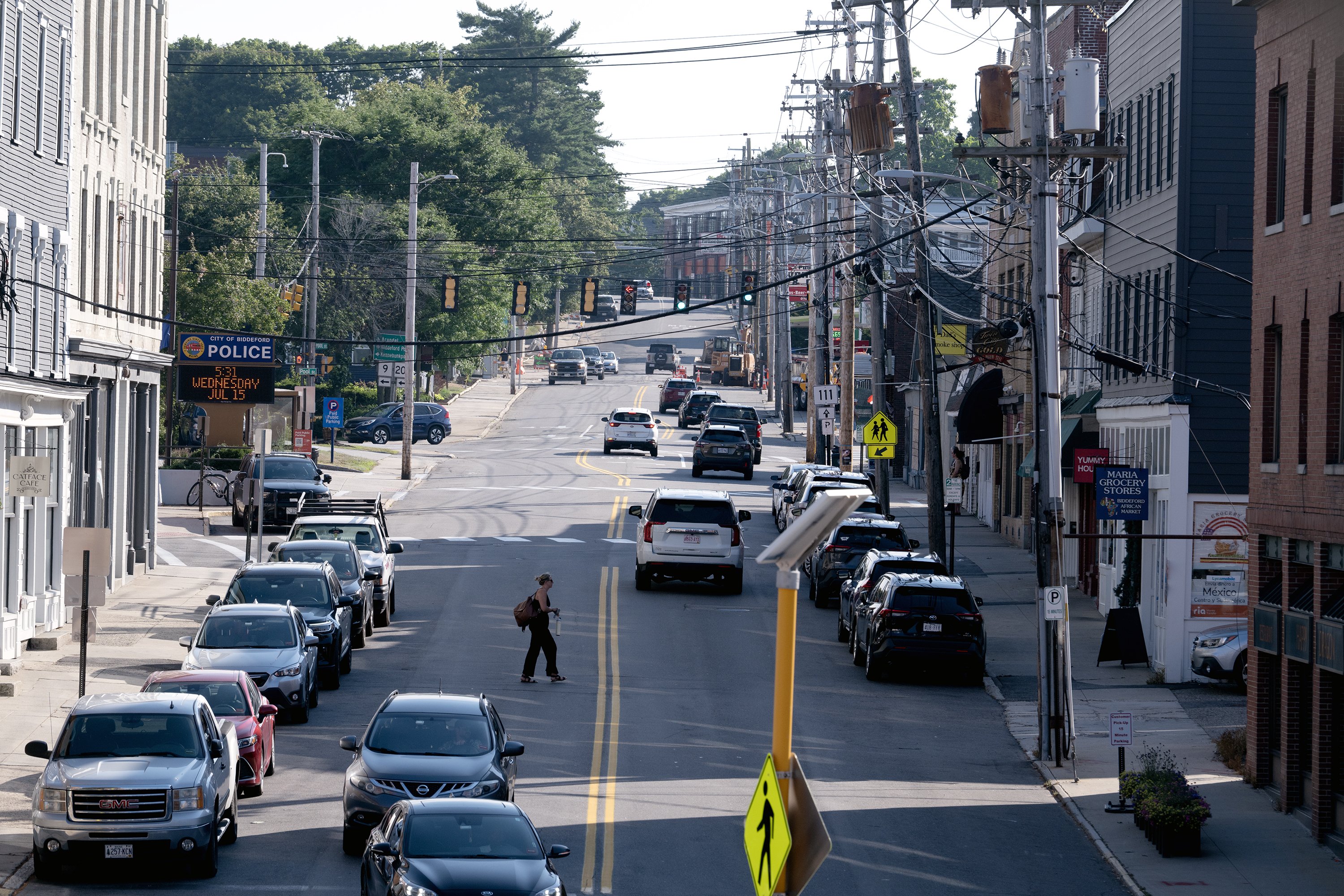
That’s part of why Guerrero’s death has been so jarring for the city of 22,000 residents. As a young father working multiple jobs, he represented everything that Biddeford has for so long welcomed and needed.
It’s how immigrants often get their start in the U.S., making deliveries, working as cleaners or in restaurants, said Fernanda Vergara McLaughlin, a Colombian immigrant and activist for Maine’s Latino community.
“We start with the American dream from zero and we just work it up, but we’re always thinking about moving forward,” she said. “I feel like he’s definitely a good representation of that.”
BUILT BY AND FOR IMMIGRANTS
In the mid-to-late 1800s, Biddeford’s mills were the economic heart of the city, and in order to sustain them, the city needed thousands of workers.
Immigration rose rapidly, first from Irish families escaping the potato famine and then later, an influx of French Canadians.
The city quickly “became magnets for people that wanted to have a better life,” said Alan Casavant, former mayor and social studies teacher.
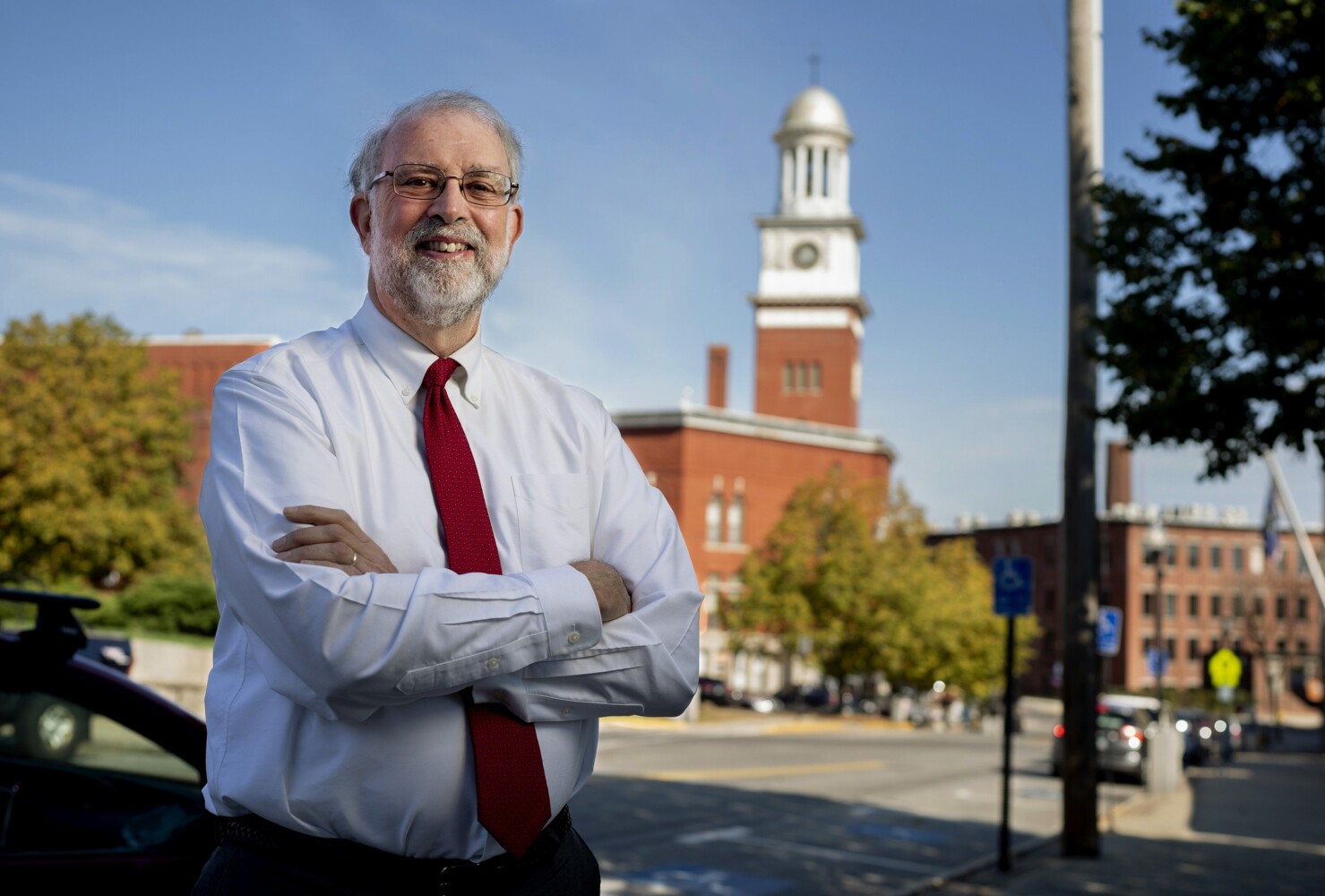
Between 1845 — when Israel Shevenell, the first known French Canadian to settle in Biddeford, arrived (on foot) from Quebec — and 1900, the city’s population grew from about 2,600 to 16,000, according to Bouthillette’s book.
By that time, three out of every five residents were French Canadian and the group was responsible for 80% of the city’s new births.
Animosity between the Irish and French Canadians shaped the city. They all worked in the mills but settled in different neighborhoods and formed separate (but still Catholic) churches.
The two groups were the largest immigrant populations in Biddeford, but they weren’t the only ones.
People from Greece, Turkey, Italy, England, Poland and beyond all came to call the town home. Shops, restaurants and services sprouted to serve the workforce.
Fabric workers from Albania were recruited as textile designers and dyers in the 1880s. Biddeford is believed to be one of, if not the first, cities in the United States to have a mosque, though it was more-so a room in the mill’s counting house used for worship.
The Albanians didn’t assimilate as well as the Irish and French Canadians, Casavant said, and many returned to their home country after it gained independence in 1912. The Spanish Flu wiped out much of the remaining population. Today, there’s a cluster of Albanian graves at Woodlawn Cemetery, the tombstones all facing Mecca.
IMMIGRATION AGAIN RISING
Immigration slowed after the initial boom in the late 19th and early 20th centuries, particularly in the 1950s, when the textile mills began to struggle.
But it never stopped completely.
According to Casavant, there was a wave of Vietnamese, Cambodian and Korean families in the 1980s, following the end of the Vietnam War. Then, around 2008, Iraqi and Iranian families started to settle in Biddeford.
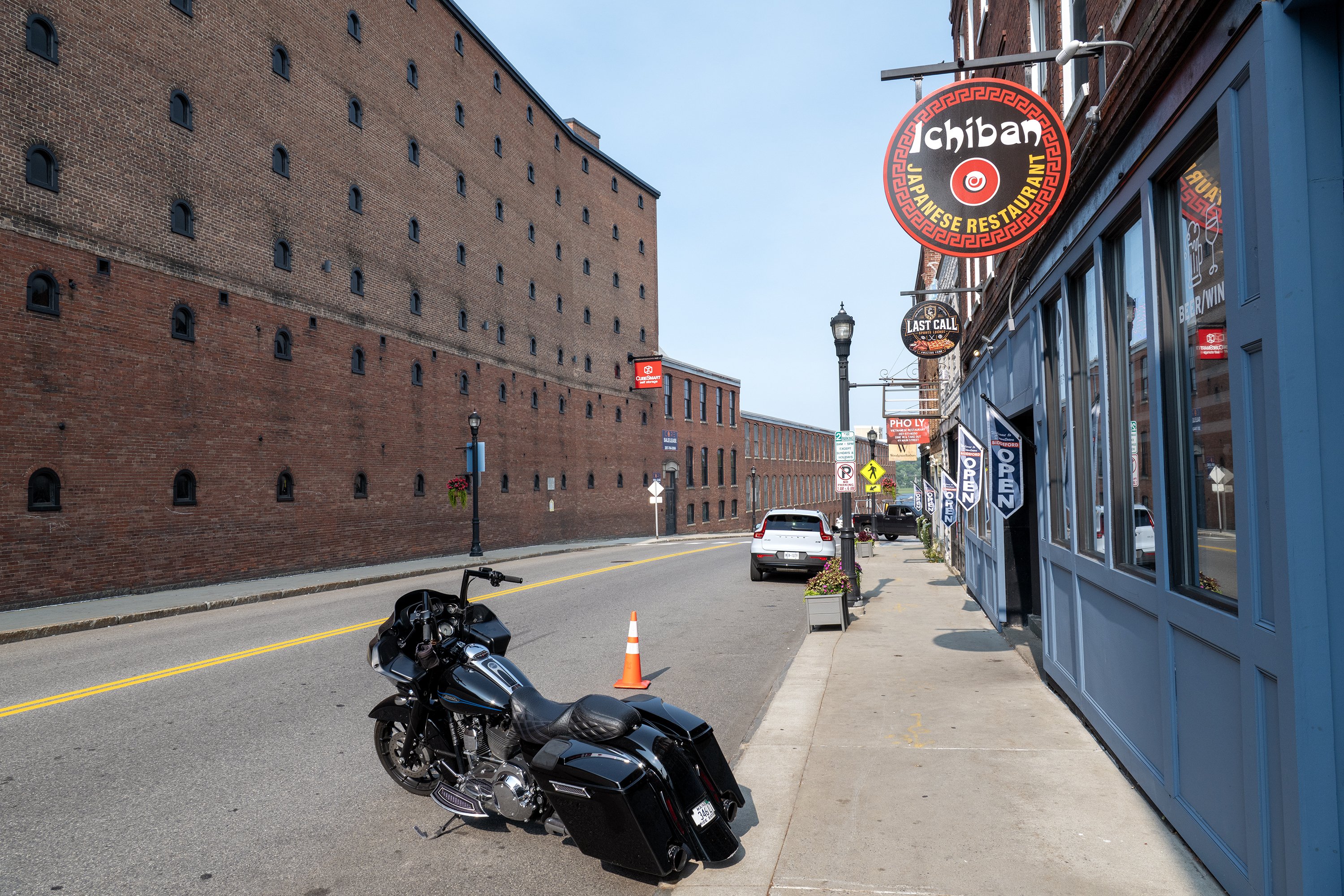
For the next decade, they were probably the largest immigrant group in the city, said Sam Smithwick, a community advocate and the language coordinator for Biddeford Adult Education.
Starting around 2019, the city welcomed many asylum seekers from Angola, a Portuguese-speaking country in Africa. The Angolans are the largest population of students that Smithwick sees at Biddeford Adult Education.
A smaller Colombian-born community has also been growing “year after year,” he said.
Guerrero was part of that most recent wave, arriving from Colombia in 2023, seeking asylum. He had a wife and young daughter, Dulce, whom he doted on.
He had a Social Security card and was legally authorized to work in the U.S. as he sought permanent immigration status. He worked two jobs, delivering food and groceries and cleaning at a veterinary office.
Speaking for the first time publicly Thursday about Guerrero’s death, his wife, Martha Karolina Rojas Alvarez, said he loved to work and “couldn’t stand sitting still.”
“He had so many dreams left to fulfill,” she said.
A ‘GLIMMER OF HOPE’ FOR DIVERSITY
Biddeford residents have rallied around Alvarez’s and Guerrero’s loved ones. There have been vigils and protests condemning ICE’s presence in the city. Local businesses have pledged to donate a portion of proceeds to Guerrero’s family or to other immigrant aid organizations. A GoFundMe for the family had raised over $560,000 Friday afternoon.
Bouthillette, the author, said the community prides itself on being welcoming, and like Fecteau, said this week’s response has been reminiscent of the 1924 stand against the KKK.
“I think that there was a sense of community that if you mess with one part of our population, you’re gonna mess with all of us,” she said.
About 3.5% of the city’s population is foreign-born, according to the Census Bureau’s 2025 American Community Survey. Statewide, it’s 4.1%.
Of those, nearly half (46%) are Asian, a quarter are European and 12% are from Latin America. Only 1% are from Africa.
School enrollment data shows a dramatic increase in the number of English Language Learners in the last few years, pointing to a rise in immigration that may not yet reflect in a national, periodic survey like the Census.
“As someone who has lived in Biddeford my entire life, I’ve seen an influx of people of color in the community like I’ve never seen before,” Bouthillette said.
Between 2017 and 2023, there were around 200 students who were foreign-language speakers in the Biddeford School Department each year. During the 2023-24 school year, that increased to 316. This year, it’s 446 — a 123% increase in less than a decade.
Around that time, “there was a little bit of a glimmer of hope that, from a diversity standpoint, things were kind of changing,” said Florence “Flo” Leighton, chair of the city’s Diversity Equity and Inclusion Committee and former community adviser for the Biddeford High School Black Student Union.
Leighton said the reason for the increase in Biddeford is multifaceted.
It’s the biggest city in York County, so there’s a concentration of social services and amenities.
While the longstanding affordability of Biddeford has decreased in recent years, it’s still more affordable than cities like Portland and Westbrook, so people who get priced out of those areas but still need walkability and access to public transportation have instead looked to Biddeford.
Plus, rising diversity in an area is likely to lead to more.
“People tend to migrate where they can find other people that look and speak like them,” Leighton said.
THE CITY’S SECOND WIND
Biddeford’s first major wave of immigrants helped launch the city into an era of economic prosperity, and “we’re seeing the same thing happening today,” said Diane Cyr, president of the Biddeford Cultural and Heritage Center.
Biddeford toiled for years to revive the city’s vitality after mill closures and an ill-fated trash incinerator emptied its streets and eroded its once positive reputation.
Finally, the work paid off. Main Street is once again packed with storefronts, restaurants and pedestrians. Guerrero, as a food delivery driver, was a familiar face in many of those restaurants.
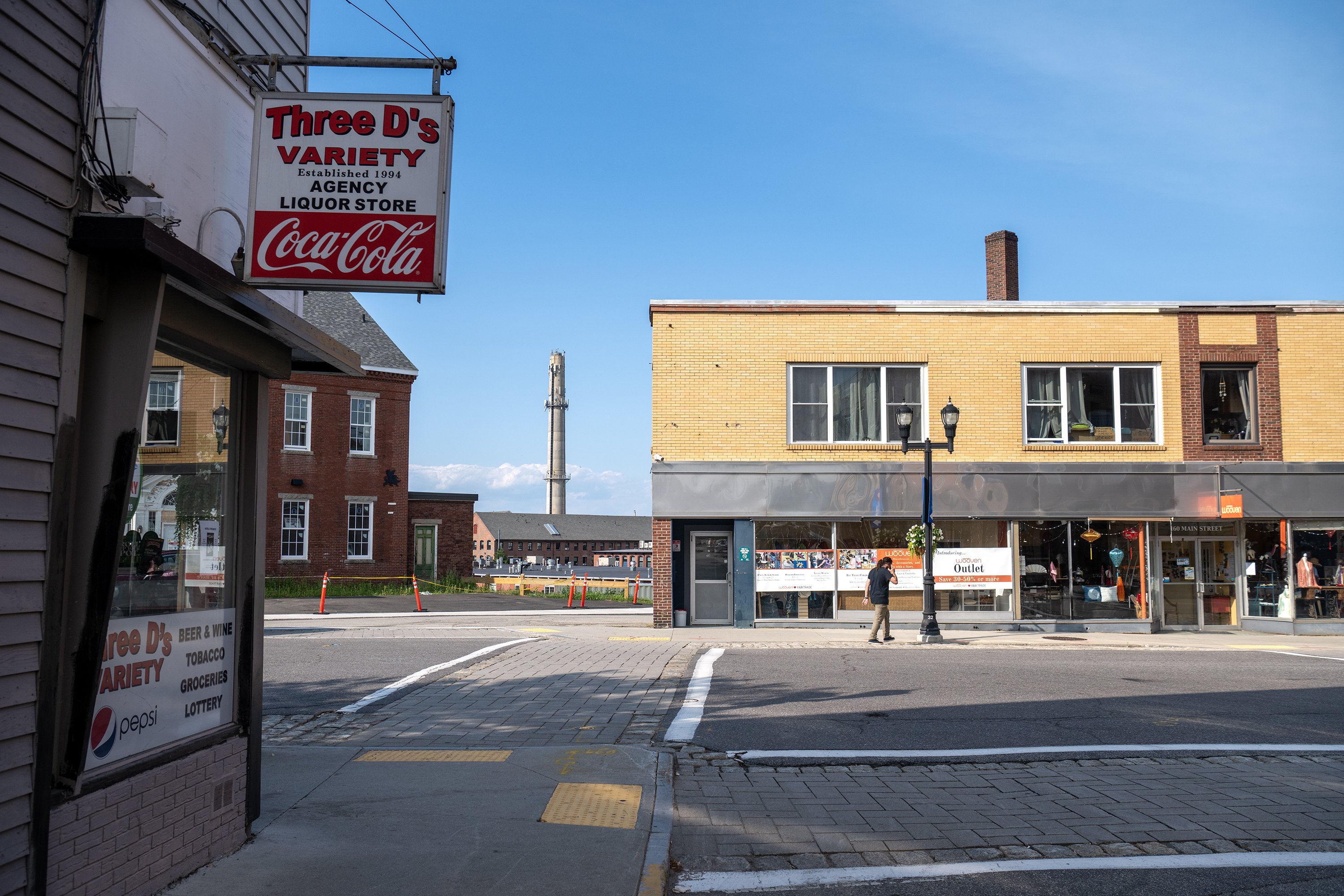
The median age dropped to 35, taking it from what Casavant once called a city of “mémères and the pépères” to the youngest in the state.
In 2022, Food & Wine magazine named Biddeford as one of four American “small cities with big food scenes.” The following year, Yankee Magazine dubbed it a “baby Brooklyn.”
In 2024, Good Housekeeping named Biddeford one of the best places in Maine to visit in December.
The accolades have kept coming.
And immigrants have been a part of all of it.
“I think the history of the city just informs our disposition towards being a place where families are welcomed,” Fecteau said. “We have benefited so much from being able to establish our roots in this city and to make a life for ourselves that has been passed on from generation to generation.”
The often larger families or families with young children (like Guerrero, 25, Alvarez, 23, and their 3-year-old daughter) helped bring down the median age. They’ve filled critical gaps in the workforce, keeping the hospitality, construction, tourism and trades industries afloat.
“Especially with the aging population that we have in Maine, I think the immigrant community is filling the gaps for jobs,” said McLaughlin, the Colombian immigrant and activist.
Many of the city’s restaurants, from institutions like Jewel of India to newcomers like Mama Donia Kitchen and BiddoBanh, are immigrant-owned.
Smithwick, at Biddeford adult education, said he expects there will be another surge of restaurants, markets and clothing shops in the next five years as the newest immigrant families get settled.
“Biddeford is a better place because of our ethnic groups today,” Casavant said, adding that they have made the city more “colorful.”
But following the ICE surge in January, and now compounded by Guerrero’s death, some of that color is harder to see.
McLaughlin said that before the ICE surge in January, she and her fellow Colombians were bold in their celebrations of their culture, “just being so proud of where we came from and what we can bring to the table.”
But in the last few months, “we don’t feel free to be ourselves.”
Cyr, at the Cultural and Heritage Center, said that’s a shame. She’s proud of her rich French Canadian heritage and knows many others in the city are as well.
Immigrants should be, too.
“They should be allowed to talk about it and be proud of it without having to hide and fear for their lives,” she said.

We invite you to add your comments. We encourage a thoughtful exchange of ideas and information on this website. By joining the conversation, you are agreeing to our commenting policy and terms of use. More information is found on our FAQs. You can update your screen name on the member's center.
Comments are managed by our staff during regular business hours Monday through Friday as well as limited hours on Saturday and Sunday. Comments held for moderation outside of those hours may take longer to approve.
Join the Conversation
Please sign into your CentralMaine.com account to participate in conversations below. If you do not have an account, you can subscribe here. Questions? Please see our FAQs.