

A Wednesday drop in wholesale oil prices could help lower the cost of gasoline in Maine in the coming days, but it’s not clear whether any potential decreases will stick.
After the United States, Israel and Iran announced a tentative ceasefire following more than a month of conflict, petroleum analysts predicted that gas prices could dip around the weekend. But the long-term price of gas hangs on the tenuous agreement.
Gas and heating oil prices have steadily risen since the end of February, when the U.S. and Israel first struck Iran. In response to the attacks, Iran closed the Strait of Hormuz, a vital shipping channel through which about a fifth of the world’s oil and natural gas typically flows.
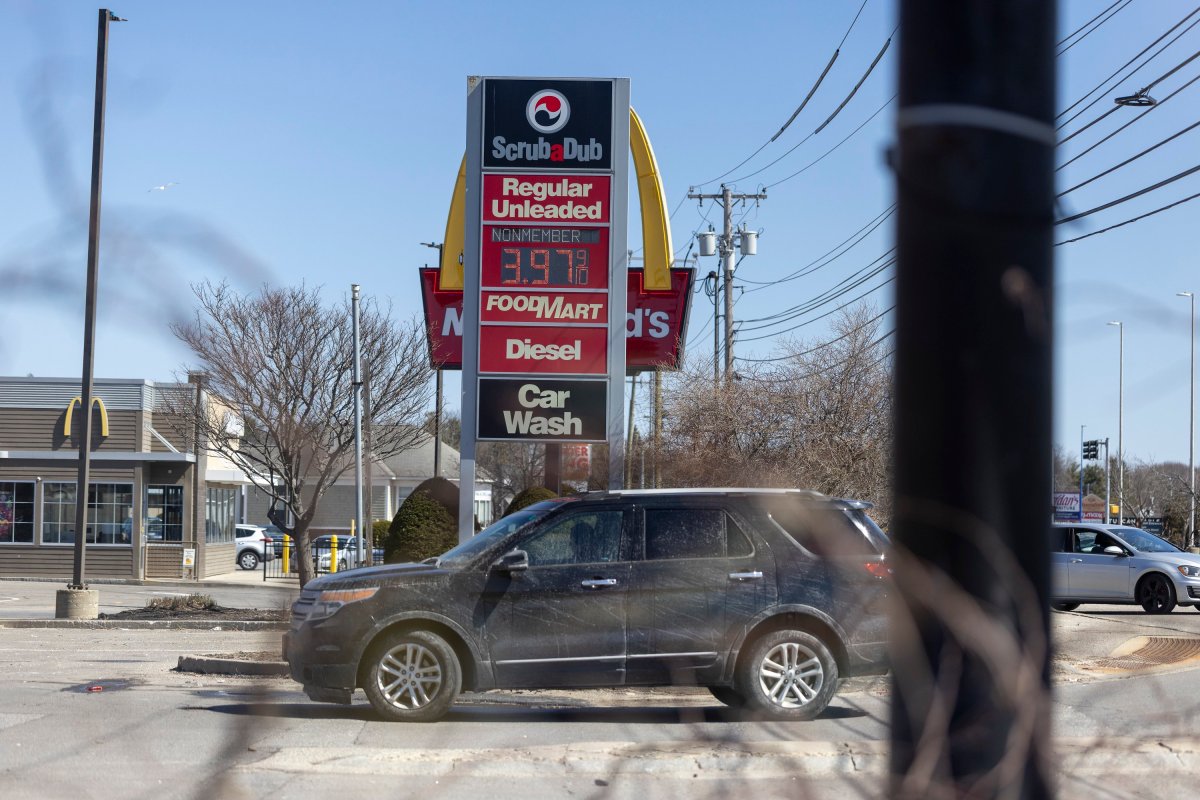
Gas prices continued to tick up Wednesday, with a gallon of regular averaging $4.08 and diesel up to $5.92 in Maine, according to data aggregated by motor club AAA. On Feb. 28, when the first strikes hit Iran, a gallon of regular averaged $2.91 and diesel was $4.32.
While gas prices rose Wednesday, global crude prices fell sharply, dropping from about $110 to about $95 per barrel. Prices are still significantly higher than they were before the conflict broke out.
WHAT COMES NEXT?
Jim Krane, an energy research fellow at Rice University’s Baker Institute, said Wednesday’s drop was likely a reflection of investors’ changing sense of risk, rather than an indication that more oil was actually reaching the market.
Even if Hormuz is reopened, it will likely take weeks or longer for oil to begin flowing through the strait at the rate it did before the conflict. The closure has removed an estimated 9 million to 10 million barrels of crude from the market each day.
“To get that 10 million barrels a day back out to market,” Krane said, “is going to take a lot longer than it did to take it off the market.”
Abhi Rajendran, another fellow at the Baker Institute, said it will take a few months for oil production and shipping to normalize after the strait reopens, even if the ceasefire holds. He noted that producers in the area have pared down or halted activity, and it will take time for them to ramp back up.
Still, Rajendran said prices could fall by a few cents in the coming days, and they could continue to drop if the price of crude stays below $100.
GAS PRICES COULD FALL, UNCLEAR HOW MUCH
Roger McKnight, the chief petroleum analyst at the Canadian firm En-Pro, said Wednesday’s drop in crude prices could drive gas prices down by as much as 45 cents east of the Mississippi River by Friday. The exact amount will depend on how much of a retail margin oil companies pursue, he said.
“I think they’re going to be under a lot of political pressure to pass on this decrease in the cost of crude to the consumer,” McKnight said, pointing to the upcoming midterms. “(Prices) should come down. How fast? I don’t know.”
McKnight and others noted that retail gas prices tend to rise quickly in response to wholesale oil price increases, but they generally fall at a slower pace.
Patrick De Haan, the head of petroleum analysis for GasBuddy, said in a Tuesday night post on X that gas prices could begin to fall nationally “by a few cents every day” heading into the weekend.
Wednesday morning, De Haan added that some stations might still raise prices as they sell oil purchased at high wholesale costs, but he suggested that “most increases should fade” by Thursday.
Still, the terms of the ceasefire — and whether it holds — will be essential to predicting future price changes, he said.
FATE OF THE STRAIT
The status of the strait was unclear Wednesday morning, as all sides offered different versions of the ceasefire’s terms. Iran has said the deal will allow it to charge ships that pass through the strait, but it was not not immediately clear whether any other countries had agreed to that condition.
It was also unclear whether transporters would be comfortable attempting to navigate the strait.
The shipping firm Maersk said in a post on its website that the “ceasefire may create transit opportunities, but it does not yet provide full maritime certainty,” adding that the firm was not yet making any changes to its approach.
“Many shipowners will remain extremely cautious, fearing a sudden resumption of hostilities,” Alex Kuptsikevich, chief market analyst at FxPro, said in a Wednesday note.
He stressed that future escalation cannot be ruled out, “given the significant differences in the parties’ positions.”
On Wednesday afternoon, Iran announced it was again closing the strait in response to ongoing Israeli attacks in Lebanon. It also accused the U.S. of violating three of Iran’s 10 conditions for an end to the fighting.
President Donald Trump and Israeli Prime Minister Benjamin Netanyahu’s office have both contended that Lebanon was not included in the ceasefire deal.
Windward, a maritime intelligence firm that tracks international shipping, said only 11 vessels traversed the strait on Wednesday — roughly the same number from prior days.
This story contains reporting from The Associated Press.

We invite you to add your comments. We encourage a thoughtful exchange of ideas and information on this website. By joining the conversation, you are agreeing to our commenting policy and terms of use. More information is found on our FAQs. You can update your screen name on the member's center.
Comments are managed by our staff during regular business hours Monday through Friday as well as limited hours on Saturday and Sunday. Comments held for moderation outside of those hours may take longer to approve.
Join the Conversation
Please sign into your CentralMaine.com account to participate in conversations below. If you do not have an account, you can subscribe here. Questions? Please see our FAQs.