

A young woman got a grocery store phalaenopsis from her boyfriend. Depressed after they broke up, she nearly killed it. As the orchid languished, she reminded herself, “This plant does not deserve to go through my depression with me.” She guiltily began reading up on its care. “And then I got the orchid bug.”
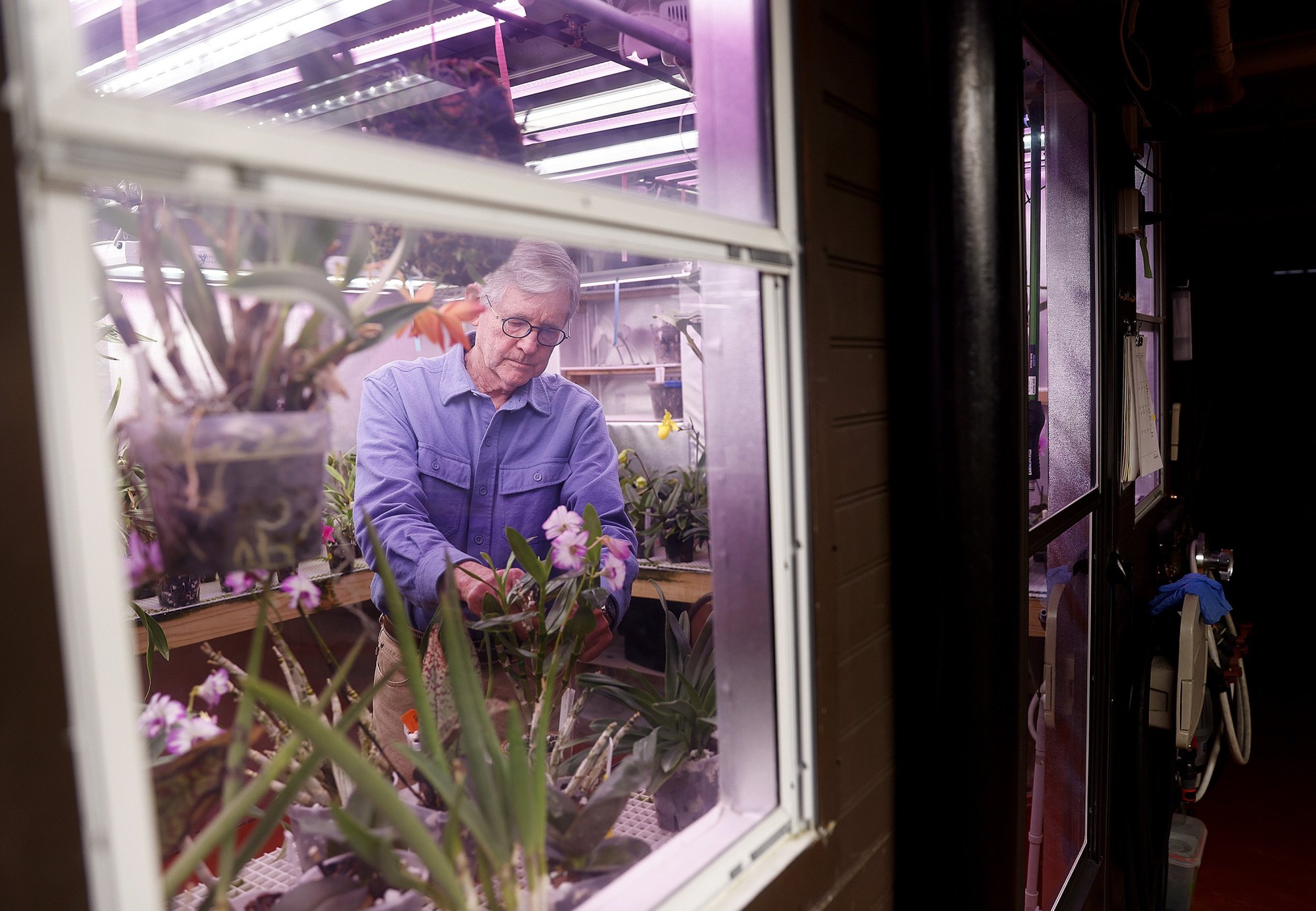
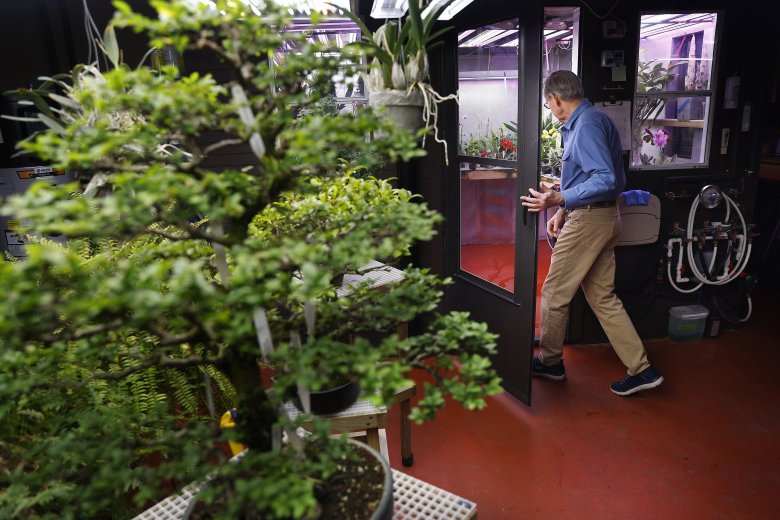
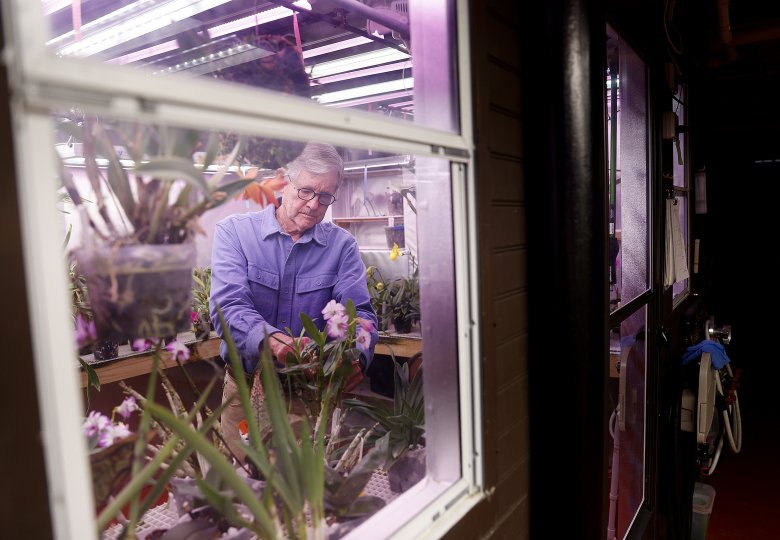
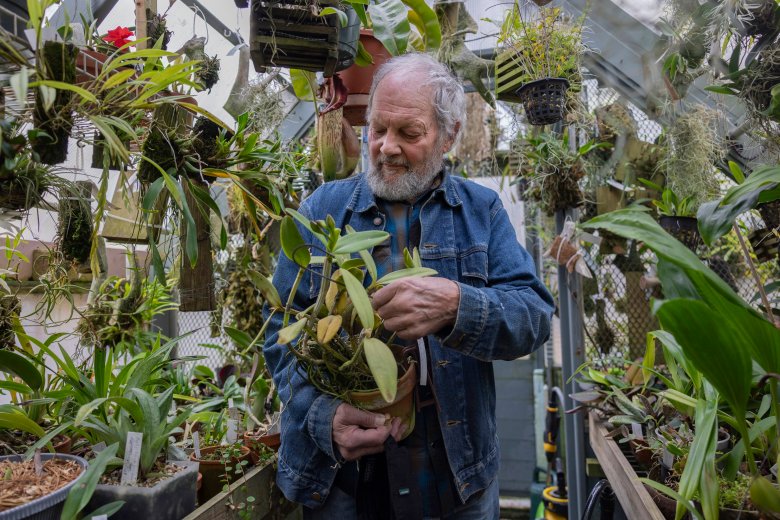
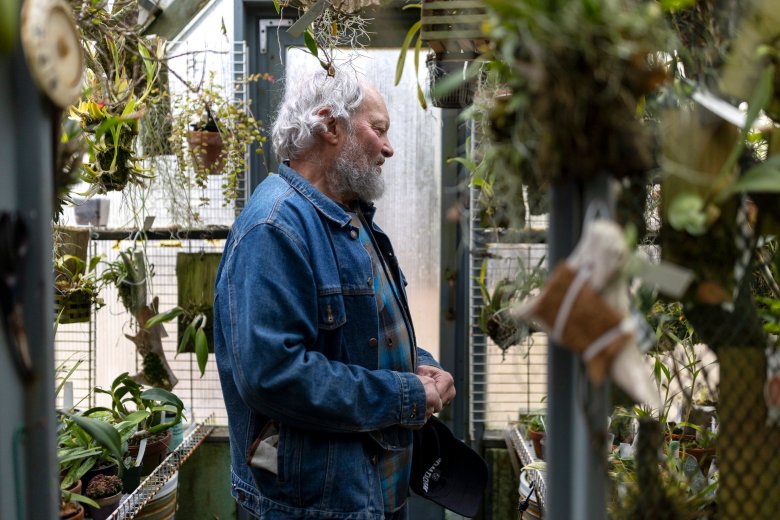
A busy Portland lawyer got a dendrobium from his wife for his birthday. “My first reaction was, “Good Lord. I don’t want this thing.” Today, more than 40 years later, he’s a prize-winning grower with a fistful of prestigious ribbons. His collection of 80 or so orchids live in a gleaming, climate-controlled greenhouse that he built himself in the old coal bin in the basement of his West End home.
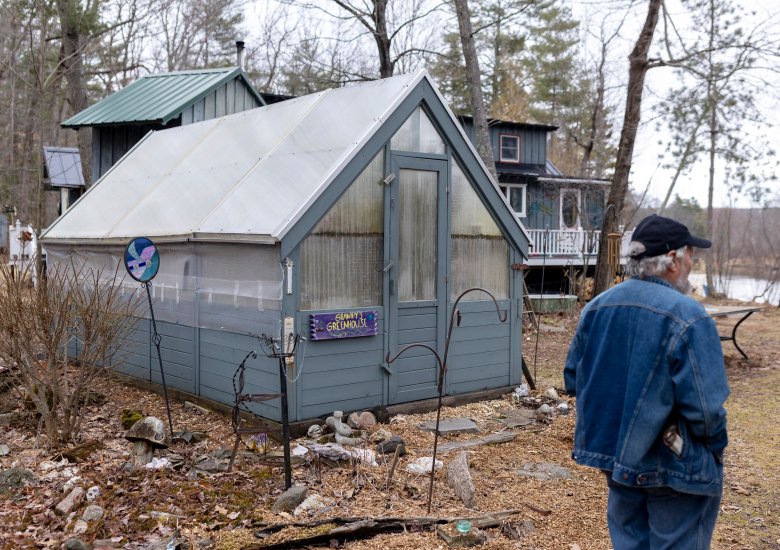
A recently retired remodeling contractor in York was enthralled with the greenhouses full of orchids he’d seen at the historic homes he and his wife had toured in New England. I’m going to build a greenhouse in our yard and grow orchids, he told her.
“She looked at me like I had six heads. ‘What are you talking about? You’ve never grown a plant in your life.'” Today, he’s the president of the Maine Orchid Society with a collection of more than 100 plants.
These are just some of the stories of the serious — perhaps obsessive — orchid collectors who live in Maine. Although the state has native orchids, most famously the lovely pink lady’s-slipper orchids that hikers may spot in the woods in late spring (do not pick them!), Maine is hardly an orchid hot spot.
The majority of orchids — the largest family of flowering plants in the world, as I was told multiple times — live in the tropics, where they needn’t contend with Maine’s cold, dark winters and parched heated homes.
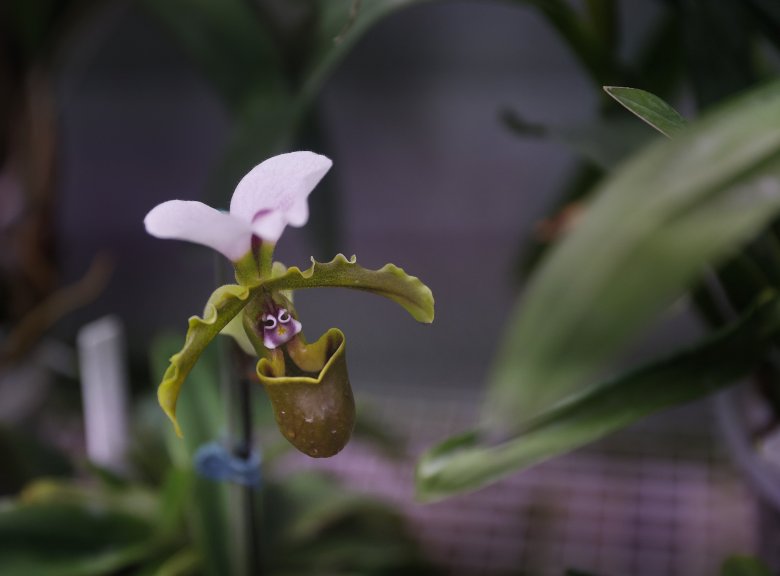
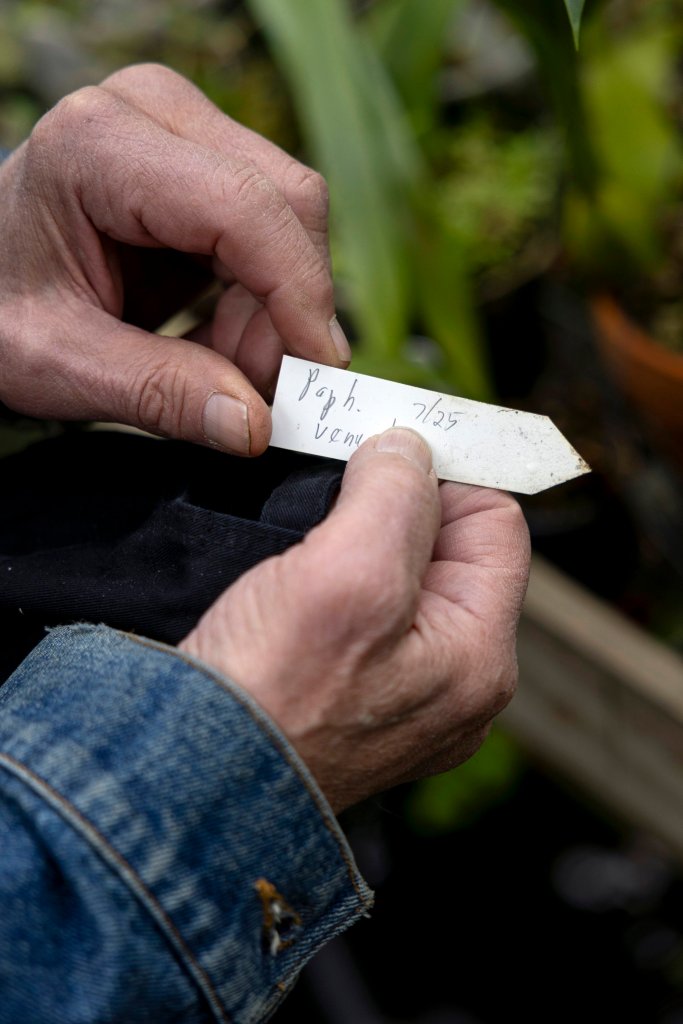
Orchids are notoriously finicky, each wild species (and to a lesser extent hybrids) demanding just the right light, air circulation, temperature, humidity, growing medium and watering schedule. Unlike a spider plant or a Christmas cactus, easygoing they are not. But for many serious collectors in Maine, retired Portland attorney Harry Pringle among them, that’s part of their allure.
“It’s the challenge of putting together a microenvironment that provides everything that a living organism needs in an environment that would otherwise kill that organism,” he said.
COMMUNITY OF ORCHID FANCIERS
On a cold night in early February, some 40 members of the Maine Orchid Society are attending the organization’s monthly meeting in Gorham.
Outside, it’s pitch dark and 22 degrees (the weather app says “feels like 9”) with at least a foot of snow. Inside a nondescript church basement, society members sit at plastic tables facing a screen, awaiting a Zoom presentation. It’s a sea of puffy down jackets, comfy muted sweaters, plaid work shirts and well-worn boots.
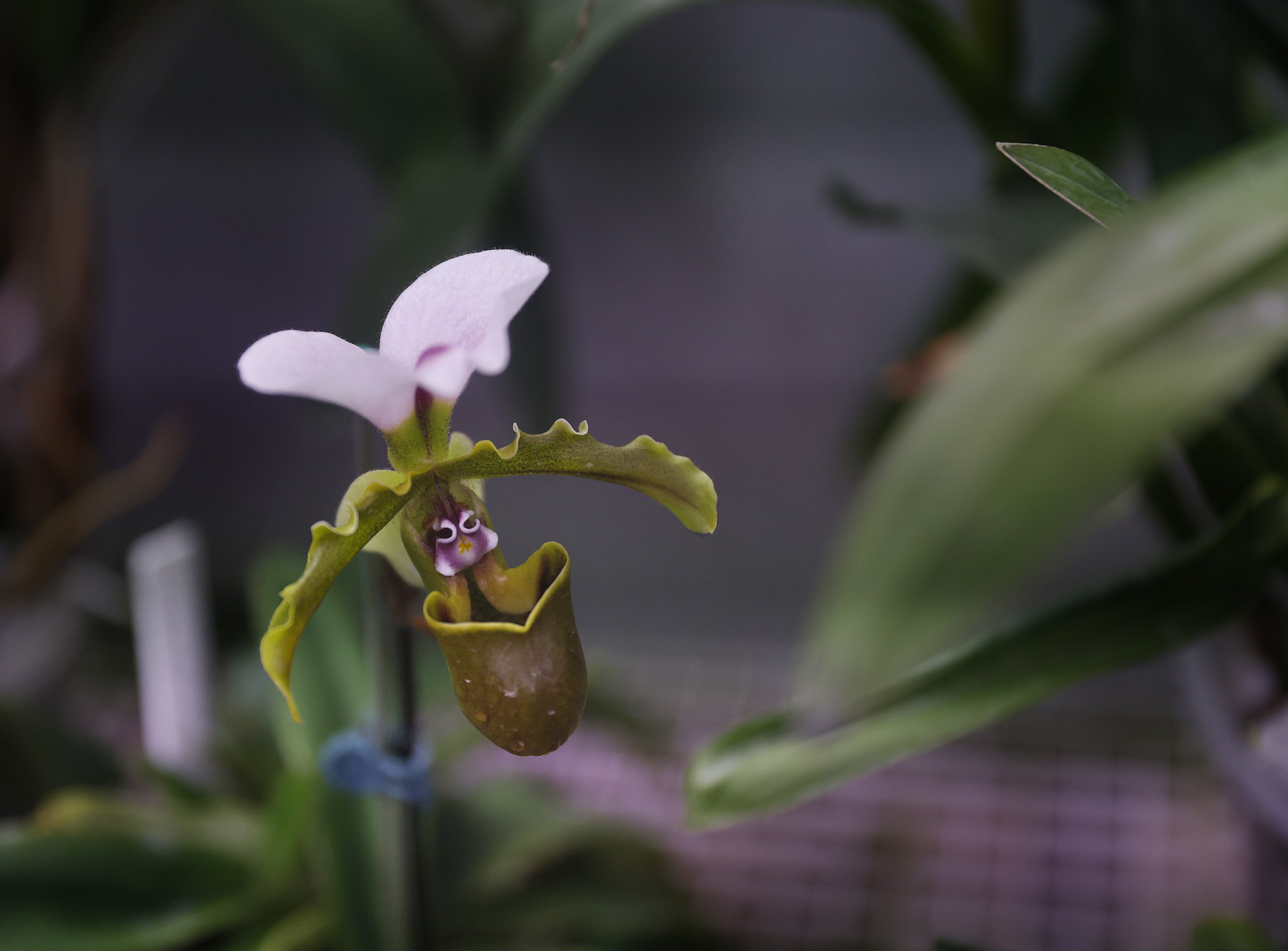
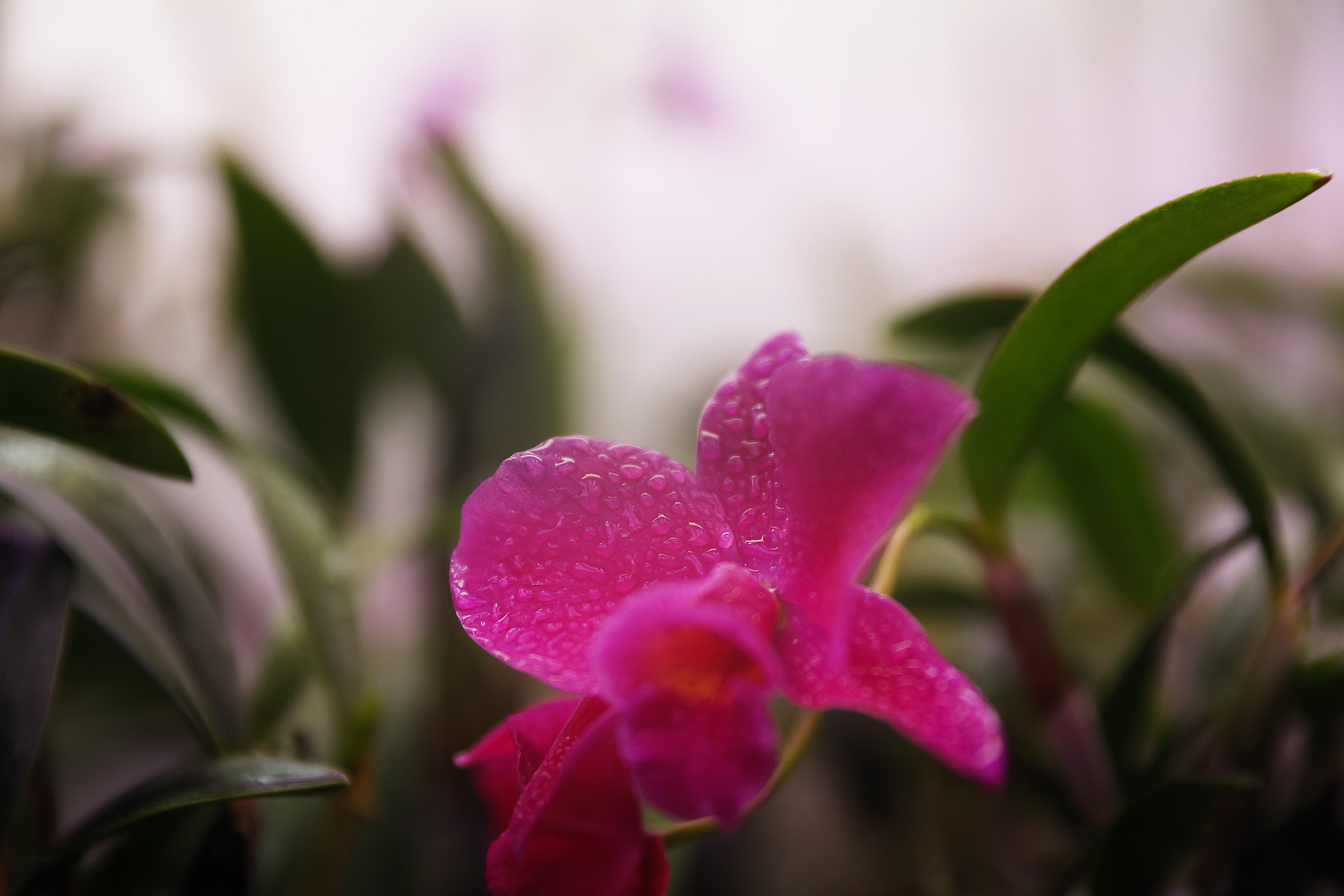
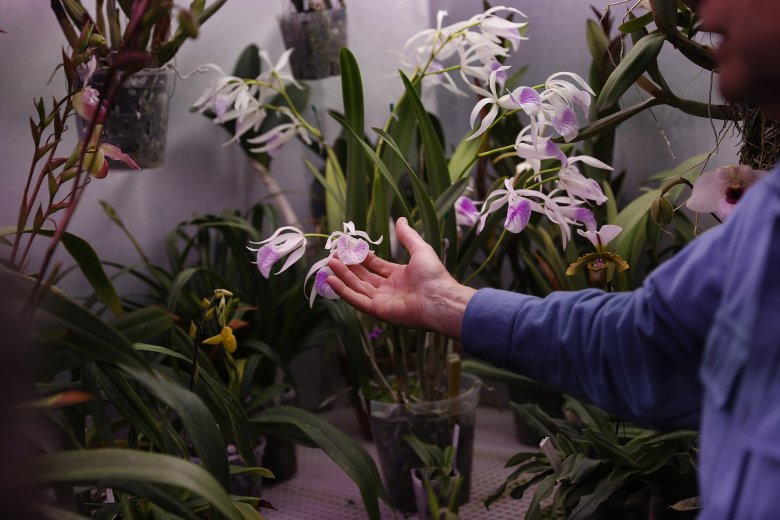
The flashy orchids in bloom on a table up front look as though they were beamed in from another galaxy: voluptuous mauve blooms and velvety burgundy ones; orange-yellow freckled flowers that resemble butterflies; delicate, cascading white blossoms; curving pouches, frilled edges, winglike petals, sunset colors. Members mention orchids with blossoms that look like bugs, bulldogs, Catholic bishops.
The orchids, which were bundled with handwarmers for transport, are here to be judged, auctioned or raffled off. Also for sale are small plants from Bob Cleveland — “grumpy old orchid grower :)” per his Facebook bio, and winner of dozens of American Orchid Society awards. He’s collected orchids in Mexico (“back then you could do that without special permits”), grown orchids from seed — an intricate, highly demanding business — and has developed and registered about a dozen hybrids; his fascination with the plants stems from an orchid his late first wife was given for her birthday in the 1970s.
Someone at the meeting asks him about a plant he’s selling. Cleveland, who lives in South Portland, calls up a photo of its blossom on his phone. “Other people have pictures of their children,” he says, smiling.
The speaker that evening, orchid expert Greg Giffis, is Zooming in from the British isle of Jersey, home of the world-renowned Eric Young Orchid Foundation. Bubbling over with enthusiasm, Giffis says things like, “We haven’t yet seen what phrags (Phragmipedium) can do for the world!” or, of a grower he admires, “The roots on his plants are incredible!” Nobody in the room bats an eye.
“Growing orchids is almost an addiction,” David Sparks, a former president of the society, says later. “You keep buying them. They stay in bloom for a certain period of time and then when they’re out of bloom, you want another one that’s in bloom. So you just keep adding and adding and adding, and before I knew it I had probably two or three hundred of them.”
ORCHIDACEAE
Some orchids emit fragrance only in the morning, others only at night. Their scents can be lovely, like grapefruit or cinnamon, or less so, like rotting flesh (enticing, however, if you are a pollinating fly).
A joke that experienced growers like to play on newbies is to fool them into taking a whiff of that rotting flesh Bulbophyllum orchid. “It’s a nerdy joke, OK?” explains Rachel Lemcke, the founder of a veterinary business consulting firm who grows a grows about 35 orchids in her home in western Maine. “But most orchid growers are very nerdy, if you can’t tell.”
Orchids grow on every continent but Antarctica. Most grow on trees; the scientific term is epiphyte. One grows entirely underground in the Australian desert.
Maine has nearly 50 species of wild orchids, to say nothing of the hybrids you can find at your local Shaw’s or Trader Joe’s. They can look like prom corsages — or weeds.
Blooms may last for months, or a single day. “People have missed them. They’ve missed the bloom!” said Dave Dewey, president of the orchid society. “They waited a year! Oh my god! Then they have to wait a whole other year!”
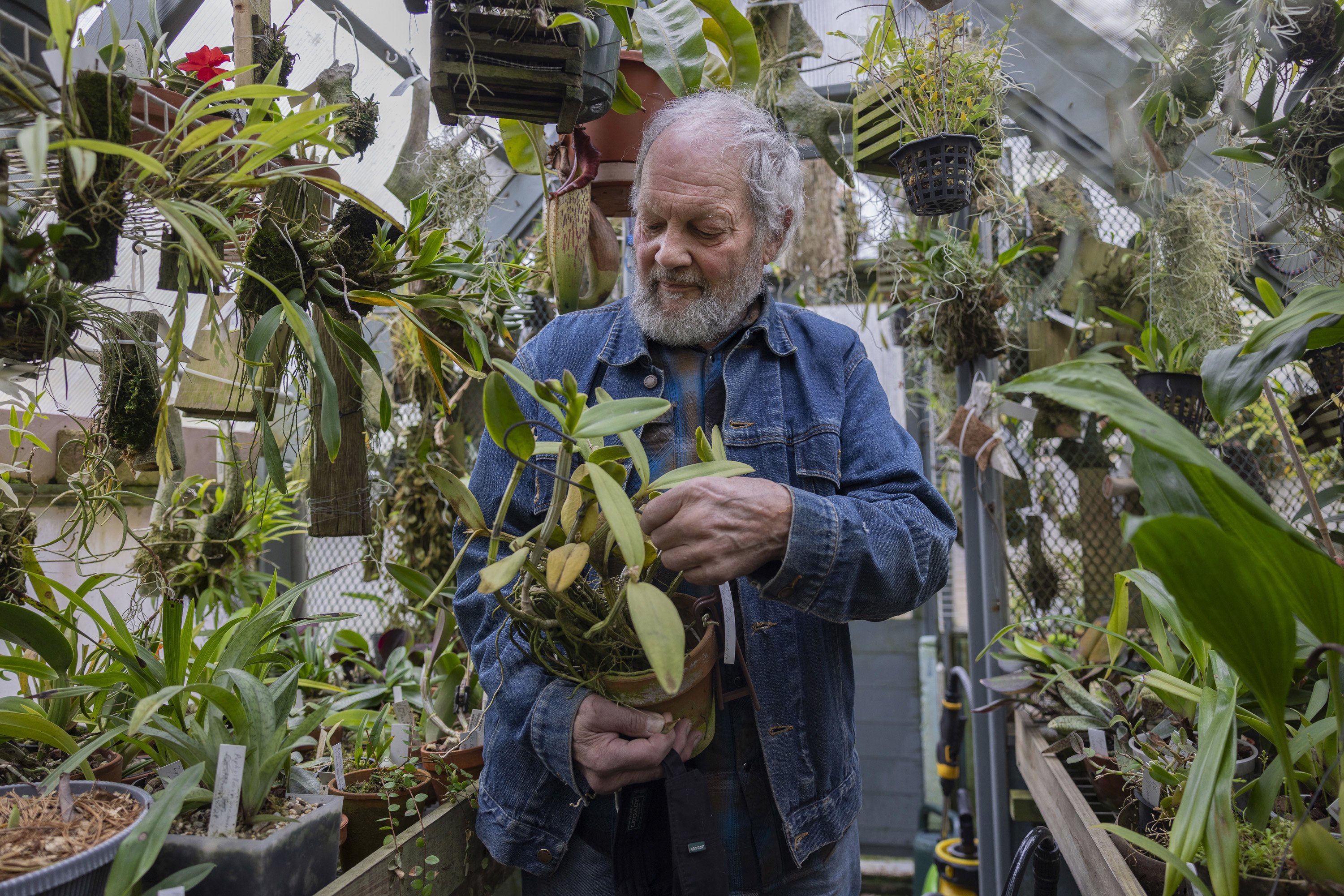
The Mainers who collect orchids seem almost as varied as the plants.
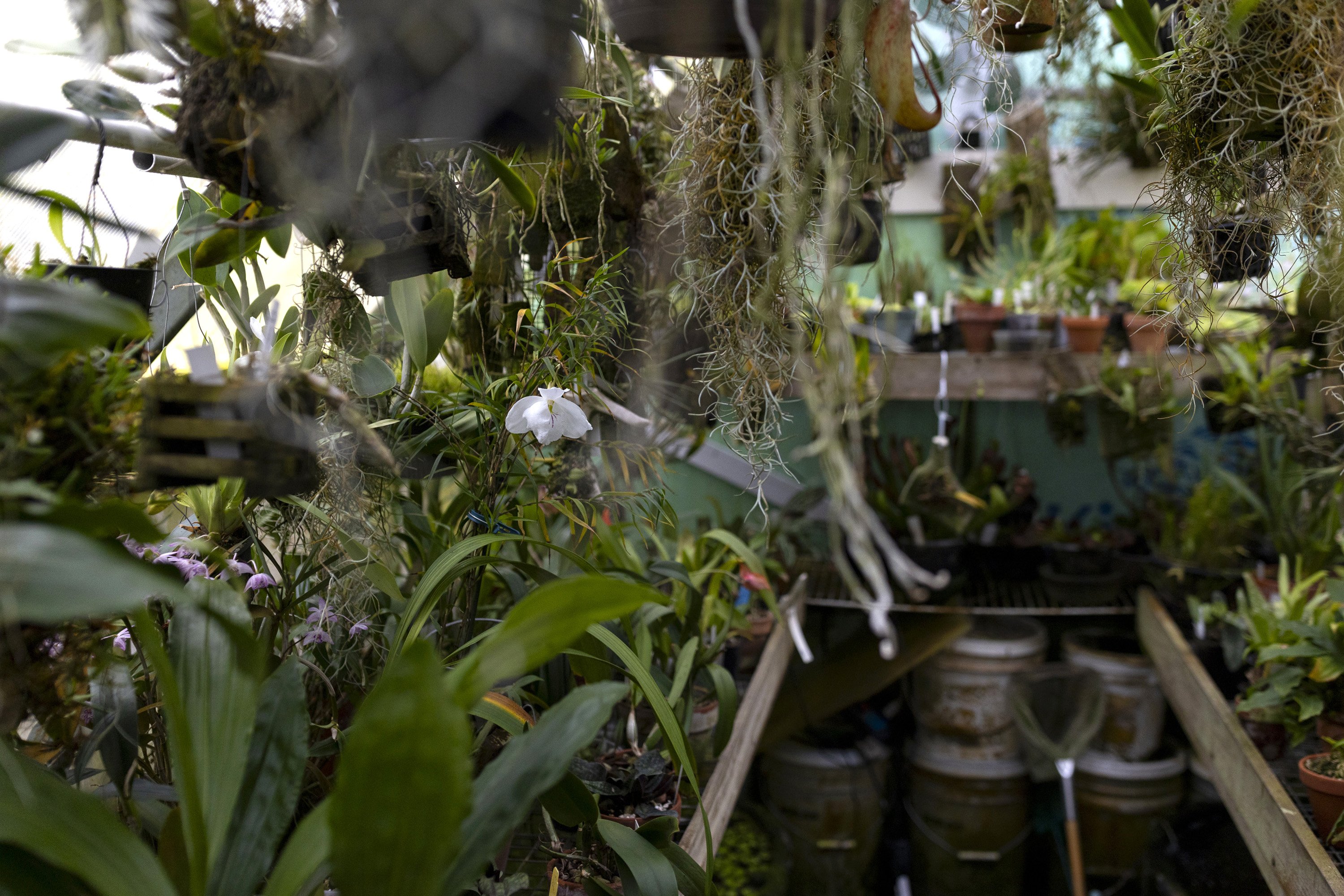
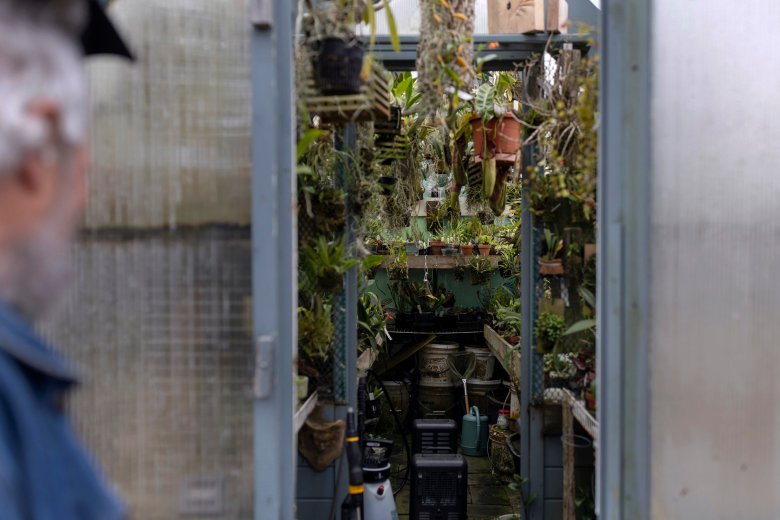
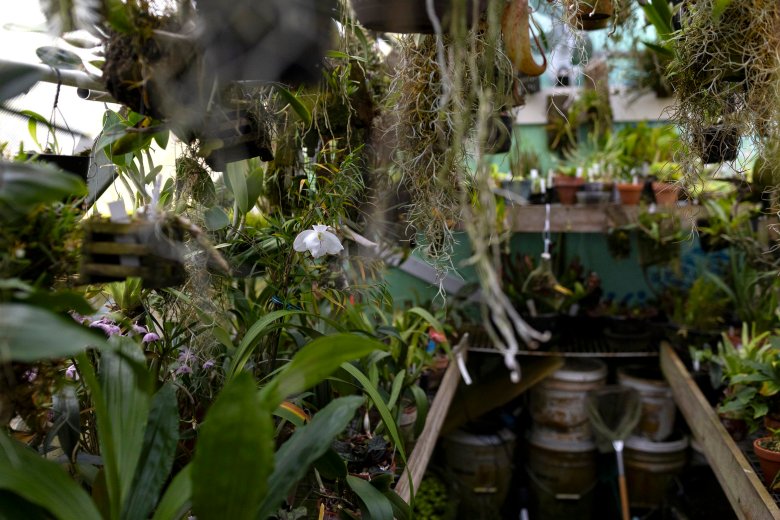
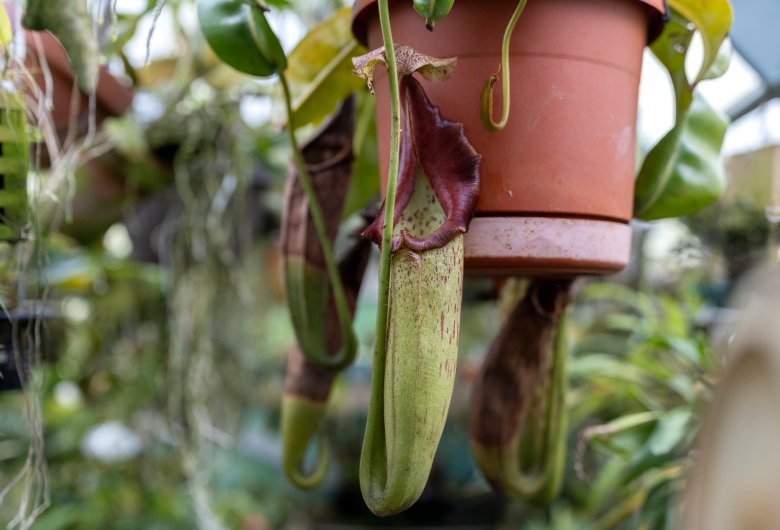
Before he retired, Sparks, who lives in Windham, was assistant manager at Bradlee’s, an animal control officer and a wildlife rehabilitator (he founded Sparks’ Ark, now run by his son). His enthusiasms extend beyond orchids and include tropical fish, animals “of every different kind you can think of,” and 60 to 100 carnivorous plants, which share the backyard greenhouse with the orchids.
Mother and daughter Barbara Simon, of South Portland, and Alison Bender, of Naples, call themselves “rescuers” — of dogs, people, orchids, “anything that needs rescuing.” Simon says that it was her daughter who kindled her own interest; she has about 20 orchids.
As a high schooler, Bender worked at Dartmouth College’s Murdough Greenhouse, which has an orchid collection. Her own collection grew in fits and starts: Others would throw out orchids, losing interest when the blossoms died or mistakenly thinking the plants were dead. The local Home Depot would discount ailing orchids.
“She would take them home and try to revive them,” her mother said, carefully tracking their progress in a three-ring notebook.
By the time Bender enrolled at the University of California, Berkeley for a degree in genetics and plant biology, she had about 20 orchids. At least one phalaenopsis accompanied her to school, secreted in a carry-on suitcase.
Today, Bender has “a ton” of houseplants but few orchids. Now that she and her mom have joined the Maine Orchid Society, though, she suspects “we’re probably going to end up with more.”
Pringle, a retired attorney and a Vietnam vet, knows about rescues. Like many other growers, he’s inherited more than a few “orphans.” “Somebody will say, ‘Harry, I heard you really grow orchids. I can’t grow this. Would you take it?’ And of course you have to. It’s like taking a kitten. You say yes.”
As a boy, Pringle spent time living in Latin America, where his mother grew orchids. “I thought it was an idiotic waste of time,” he says. When his wife gave him that birthday orchid, “she was sure that I would like it. She was wrong in the short term and right in the long term.”
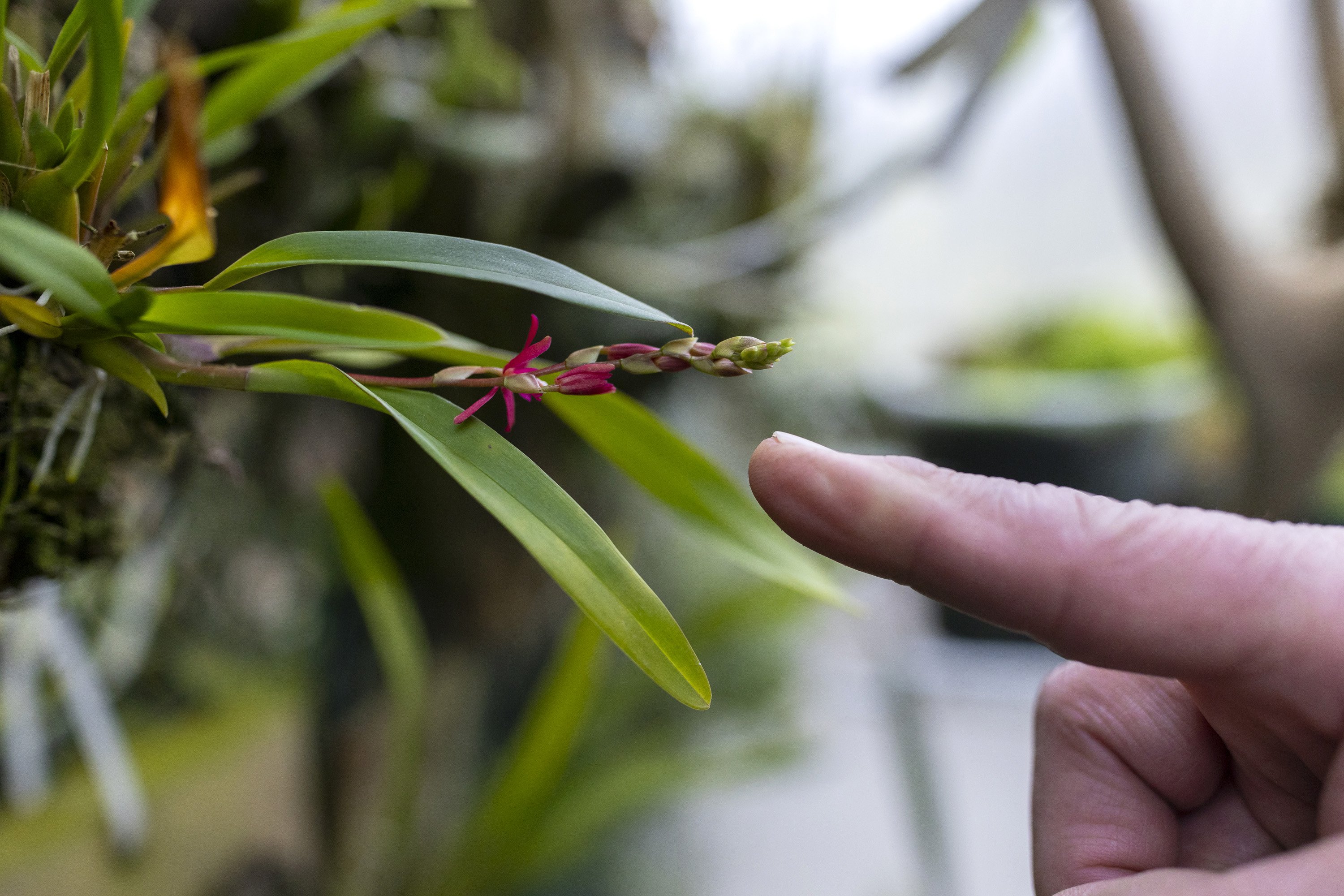
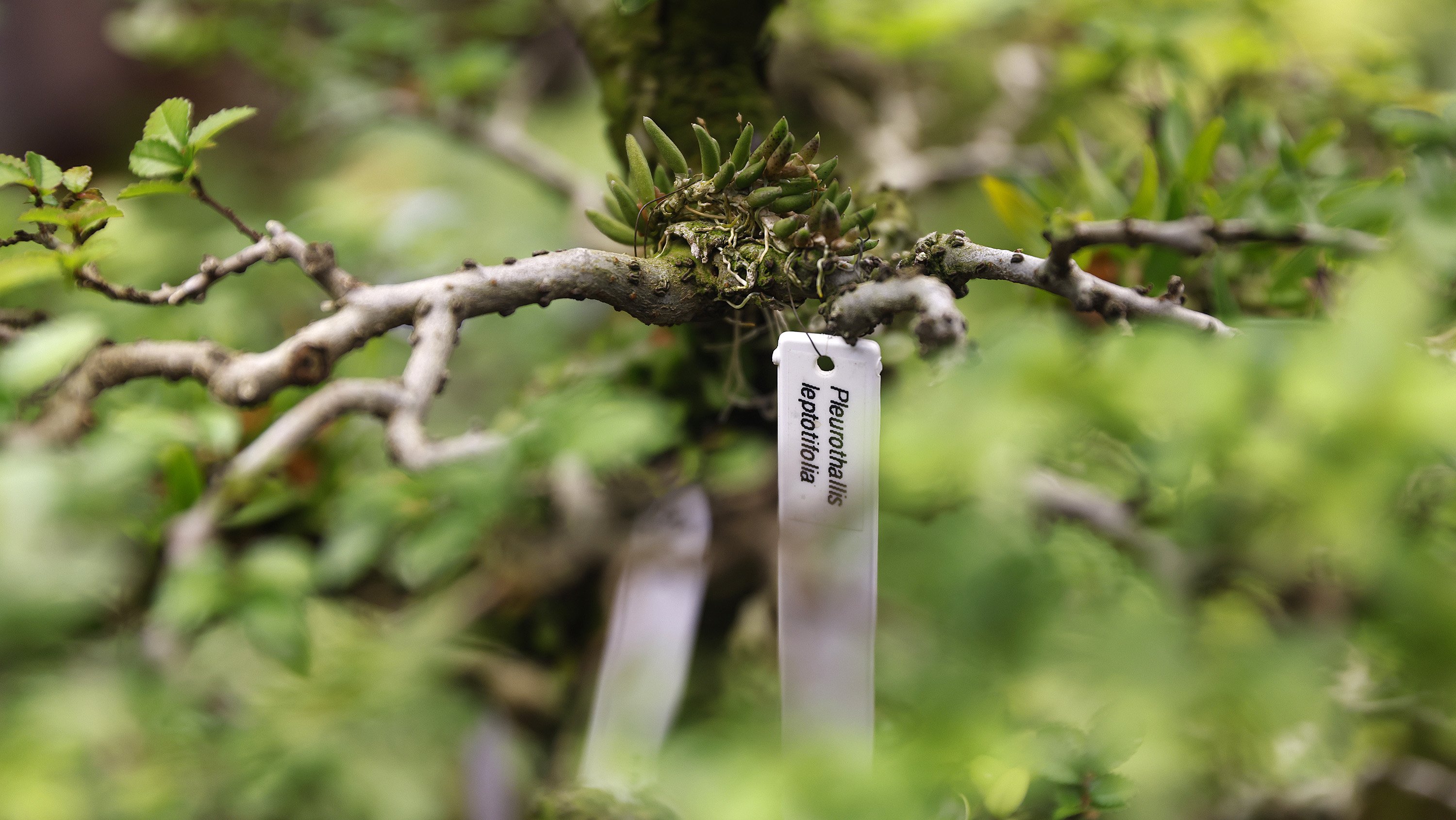
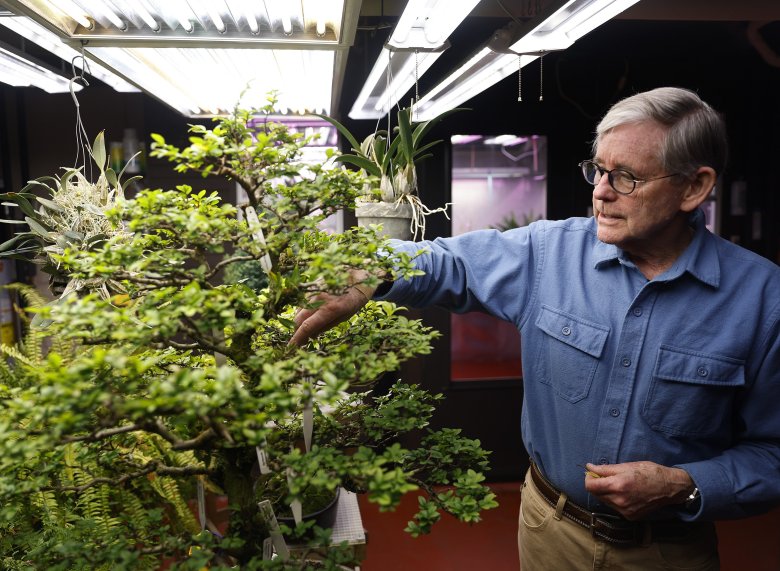
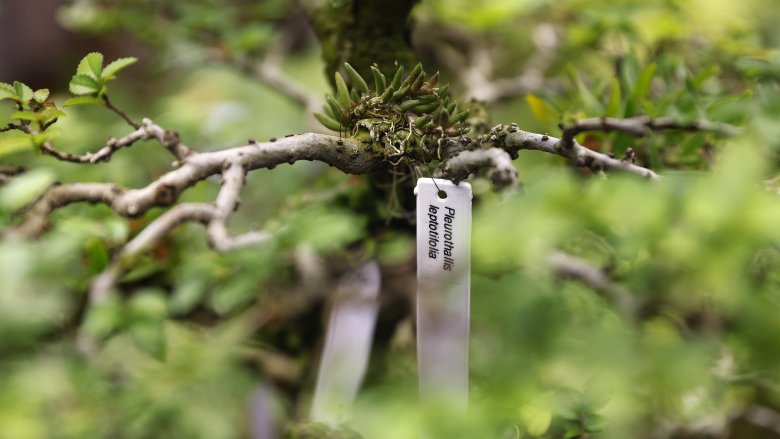
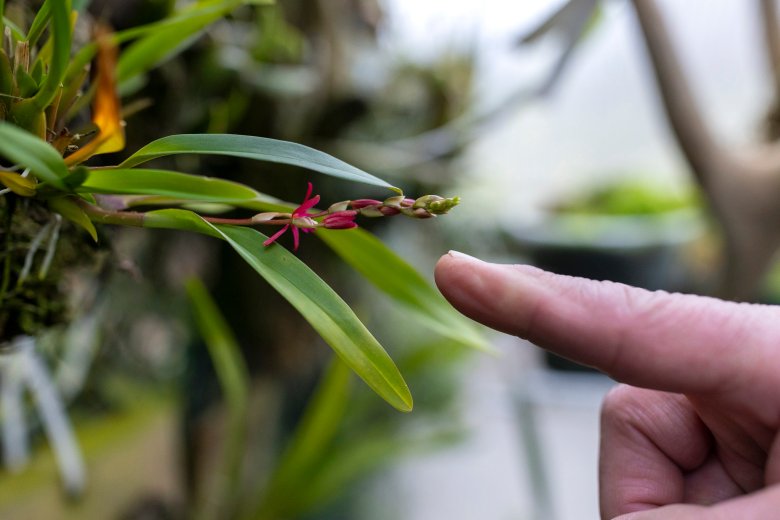
Pringle also grows bonsai. Several miniature trees sit on tables in the basement near the greenhouse. A year ago, he mounted a nearly 3-foot-tall, 60ish-year-old Chinese elm with seven kinds of miniature orchids, pinning each one to the tree with thin copper wire until their roots can take hold. “This,” Pringle said motioning the tree, “is an experiment to see if you can grow orchids on a bonsai and have an entire orchid collection on one tree.”
Even when the inch-tall orchids are in their vegetative state, the tree seems a small miracle.
LONG-TERM COMMITMENT
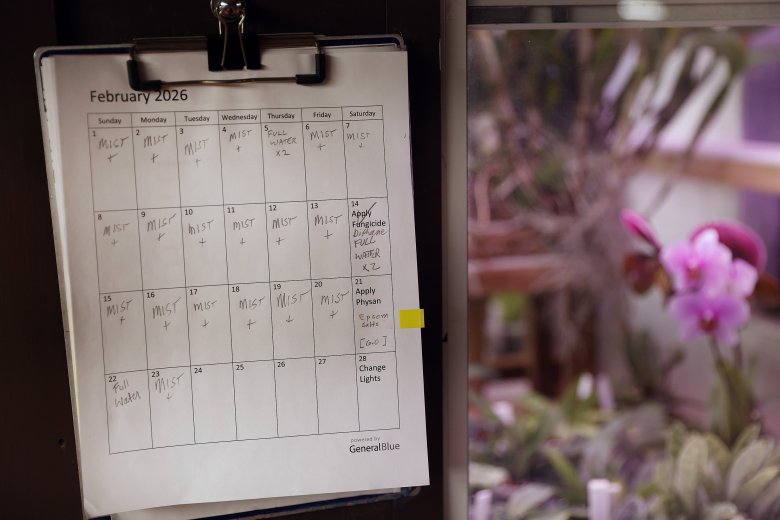
You are not a real grower until you kill at least 100 orchids, orchid enthusiasts say, indicating the learning curve. But collectors are by no means inattentive. When ordinary homeowners go on vacation, they may ask the cat sitter to water the plants. Orchidophiles roll out more serious plans.
“Welcome to one of the quandaries of the orchid world,” said Lemcke, who refers to her individual plants as “she.” Left on their own, her plants are fine for a week. “Longer than that, it can get a little dicey. You can either hope and pray,” she said, or enlist another grower to help.
“The first thing you do is train your neighbors and sometimes that involves large exchanges of wine,” Pringle said with a laugh. Actually, in his case, his son lives nearby and is “voluntold” to check on the plants.
Sparks, who checks the temperature and humidity of his greenhouse with a phone app which sends an alert if they stray to unsafe levels, said he tells his wife to have a good time.
“I don’t really go away for any large amounts of time,” he said.
What happens to a collection when a grower dies or can no longer care for her plants? Maine Orchid Society members skew older, which the organization is concerned about.
“Damn things are like parrots. They live forever,” Dewey said of orchids. Since his children “have absolutely no interest,” when Dewey and his wife updated their wills recently, they added a line to tell their son, their executor, whom to call at the orchid society in order to donate the plants.
“I didn’t tell him what to do with the lawn tractor,” he said, “but I had to tell him what to do with the orchids.”
Orchid societies periodically auction off such plants to members, which raises money and ensures the plants find nurturing new homes.
Meanwhile, is he still acquiring? “I have as many as as I want,” Dewey said.
In wintertime, his orchids take over the dining and living rooms; his wife doesn’t allow them in the kitchen. In the summer, he moves them into the backyard greenhouse he built. For a couple of years, he heated the greenhouse and the orchids stayed there year-round. The electric bill was prohibitive.
“Well, not not as many as I want,” Dewey said. “I have as many as I can take care of.”





We invite you to add your comments. We encourage a thoughtful exchange of ideas and information on this website. By joining the conversation, you are agreeing to our commenting policy and terms of use. More information is found on our FAQs. You can update your screen name on the member's center.
Comments are managed by our staff during regular business hours Monday through Friday as well as limited hours on Saturday and Sunday. Comments held for moderation outside of those hours may take longer to approve.
Join the Conversation
Please sign into your CentralMaine.com account to participate in conversations below. If you do not have an account, you can subscribe here. Questions? Please see our FAQs.