

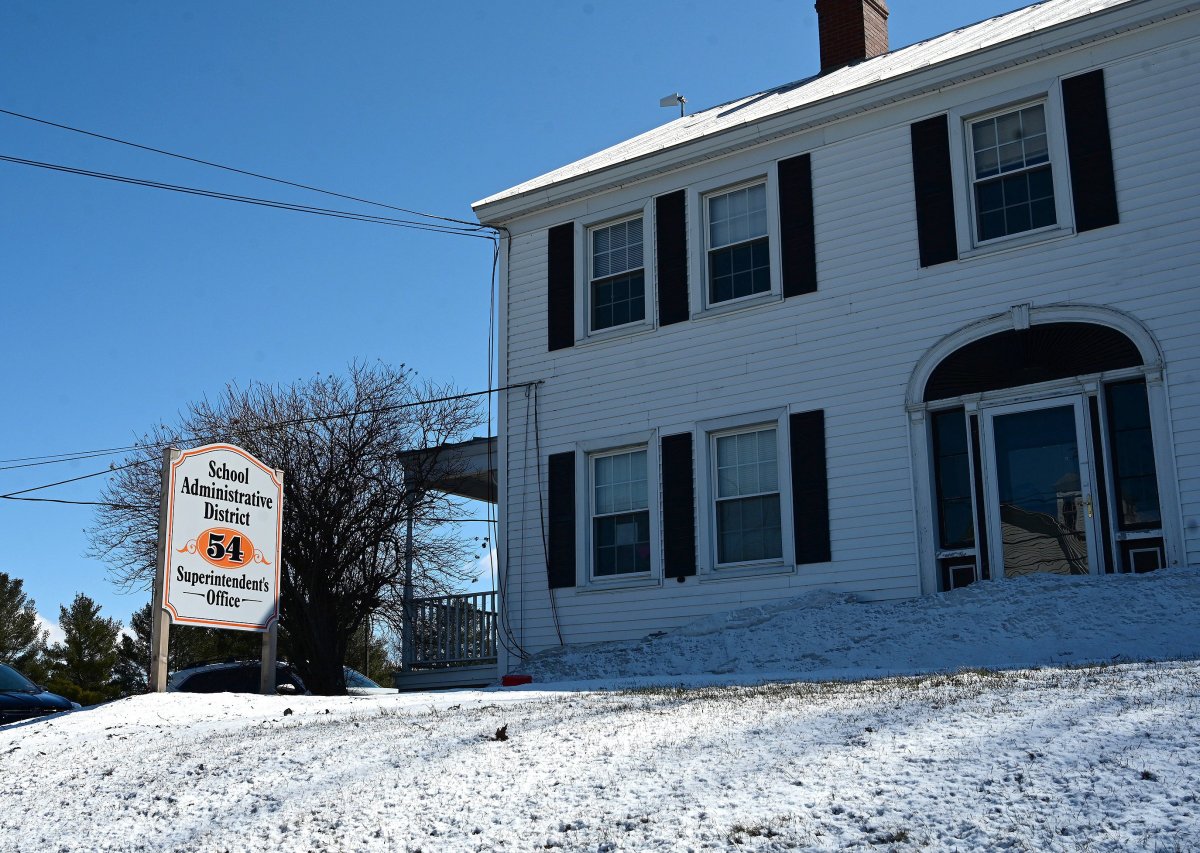
SKOWHEGAN — A new school district budget proposal would increase property taxes by about 2%.
Maine School Administrative District 54 officials say the increase largely comes from personnel costs, which make up most of the budget, along with unavoidable increases in insurance and fuel costs and what they see as unfunded state mandates.
Voters from the district’s six Skowhegan-area towns will first weigh in on the $53.9 million spending plan at the district budget meeting scheduled for Wednesday, May 20, at 7 p.m. at Skowhegan Area High School. Following that town-meeting style vote on individual budget articles, voters then can give the final “yes” or “no” on the overall budget at the ballot box on Tuesday, June 9.
Alongside the June budget referendum, voters can also have their say on a proposal to change the cost-sharing formula for a small portion of the school district budget funded by property taxes.
The budget proposal, which the board of directors unanimously approved April 16, comes in at $53,899,914, about 4.78% higher than the current fiscal year, budget figures show.
Of that total, local property taxpayers would contribute $16,811,650, an increase of 1.998%.
The rest of the budget is supported by $32,802,528 in state funding and $4,285,736 in other revenue, according to budget documents. The other revenue includes $1.75 million in unassigned fund balance, one-time funding from the state due to the district’s poverty level at just more than $200,000 and Medicaid billing for certain services anticipated to bring in about $870,000.
Superintendent of Schools Jonathan Moody said the taxation increase was minimized due to the board of directors’ hard work with long-range fiscal planning, including leveraging different sources of revenue and cuts from recent budget cycles.
“This is a responsible investment worth supporting,” Moody said.
The proposed budget includes the reduction of five positions, down from 15 last year and a total of 34.5 full-time equivalent positions across the three fiscal years before that, Moody said. About 85% of the budget is comprised of personnel costs, including wages and benefits.
Challenges in this year’s budget process included a 10.4% increase to health insurance costs, a roughly 10% increase in fuel and insurance costs and changes in state law that resulted in salary bumps for educational technicians and higher costs for Paid Family and Medical Leave, Moody wrote in a presentation.
Efforts to reduce the burden on property taxpayers included changes to how unemployment and retirement programs are administered, limiting purchases of supplies and seeking grants.
Moody noted that over the last eight annual budgets — his tenure as superintendent — the locally-funded portion of the budget has increased an average of 2.15% each year.
LOCAL IMPACT
Due to uneven changes in the state-determined property valuation of each town, how the 1.998% increase to the locally-funded portion in the proposed budget would affect tax bills varies by town.
Approximate allocations in the budget proposal would be as follows:
• Canaan: $1.35 million, up 3.16% over the current fiscal year
• Cornville: $983,000, up 6.74%
• Mercer: $711,000, up 5.75%
• Norridgewock: $2.31 million, up 6.10%
• Skowhegan: $10 million, down 0.46%
• Smithfield: $1.46 million, up 7.45%
COST SHARING
If voters approve the proposed change to the cost-sharing formula on the June ballot, those allocations would be slightly different.
The change in the formula would only affect what are known as “additional local funds,” a relatively small portion of the budget.
For example, in the proposed budget, about $13.6 million of the $16.8 million funded by local property taxes is set by the state Essential Programs and Services formula, which means each town pays the same amount regardless of the district it belongs to. The remaining $3.24 million are the “additional local funds,” which cover some spending like athletics and administration, budget documents state.
MSAD 54 has divided up the additional local funds to be raised among the six towns by using their state property valuations as a percentage of the total of the six town’s state property valuations.
Last fall, in response to concerns from some towns that have experienced an outsized impact in taxation despite modest overall budget increases because their property valuations have increased significantly, MSAD 54 followed the requirements outlined in state law to study changing the formula.
A committee of representatives from each of the six towns ultimately put forward a proposal that would change the cost-sharing calculation to a weighted formula of 90% property valuation and 10% pupil count for two years, and then 80% property valuation and 20% pupil count thereafter.
The initial change to 90-10 would go into effect for the fiscal year 2027 budget also on the June ballot. But the budget referendum and the cost-sharing formula question are two separate votes.
If approved, the 90-10 formula would affect the town allocations in the proposed budget as follows:
• Canaan: Increase of approximately $17,800
• Cornville: Increase of approximately $4,500
• Mercer: Decrease of approximately $2,400
• Norridgewock: Increase of approximately $16,100
• Skowhegan: Decrease of approximately $25,000
• Smithfield: Decrease of approximately $11,000
Those with questions or feedback about the budget or the cost-sharing formula proposals may fill out an online form or call the superintendent’s office at 207-474-9508.

We invite you to add your comments. We encourage a thoughtful exchange of ideas and information on this website. By joining the conversation, you are agreeing to our commenting policy and terms of use. More information is found on our FAQs. You can update your screen name on the member's center.
Comments are managed by our staff during regular business hours Monday through Friday as well as limited hours on Saturday and Sunday. Comments held for moderation outside of those hours may take longer to approve.
Join the Conversation
Please sign into your CentralMaine.com account to participate in conversations below. If you do not have an account, you can subscribe here. Questions? Please see our FAQs.