


AUGUSTA — State prosecutors made their case in court Tuesday to involuntarily medicate Megan McDonald, the woman accused of killing her son at their Sidney home in December 2024.
McDonald has not yet been found competent to stand trial after four evaluations from state forensic psychologists since she was arrested a year and a half ago.
Lawyers from the Attorney General’s Office argued Tuesday at the Capital Judicial Center that involuntarily administering antipsychotic medications to McDonald for her delusional disorder — she believes God directly communicates with her and told her to kill her son — is the only way to restore her trial competency.
State forensic psychologist Dr. April O’Grady said last year that McDonald did not understand the role her mental illness played in her thinking and that she hoped to plead guilty, ignoring the advice of her attorneys.
Antipsychotic medications have a “very good chance” of reducing or eliminating her delusions, Dorothea Dix attending psychiatrist Dr. Ira Scott testified.
“(If not,) the history of this particular kind of illness is that those remain. They would not change,” Scott said. “She would remain in a legal limbo. Eventually, the court would have to decide what happens with that.”
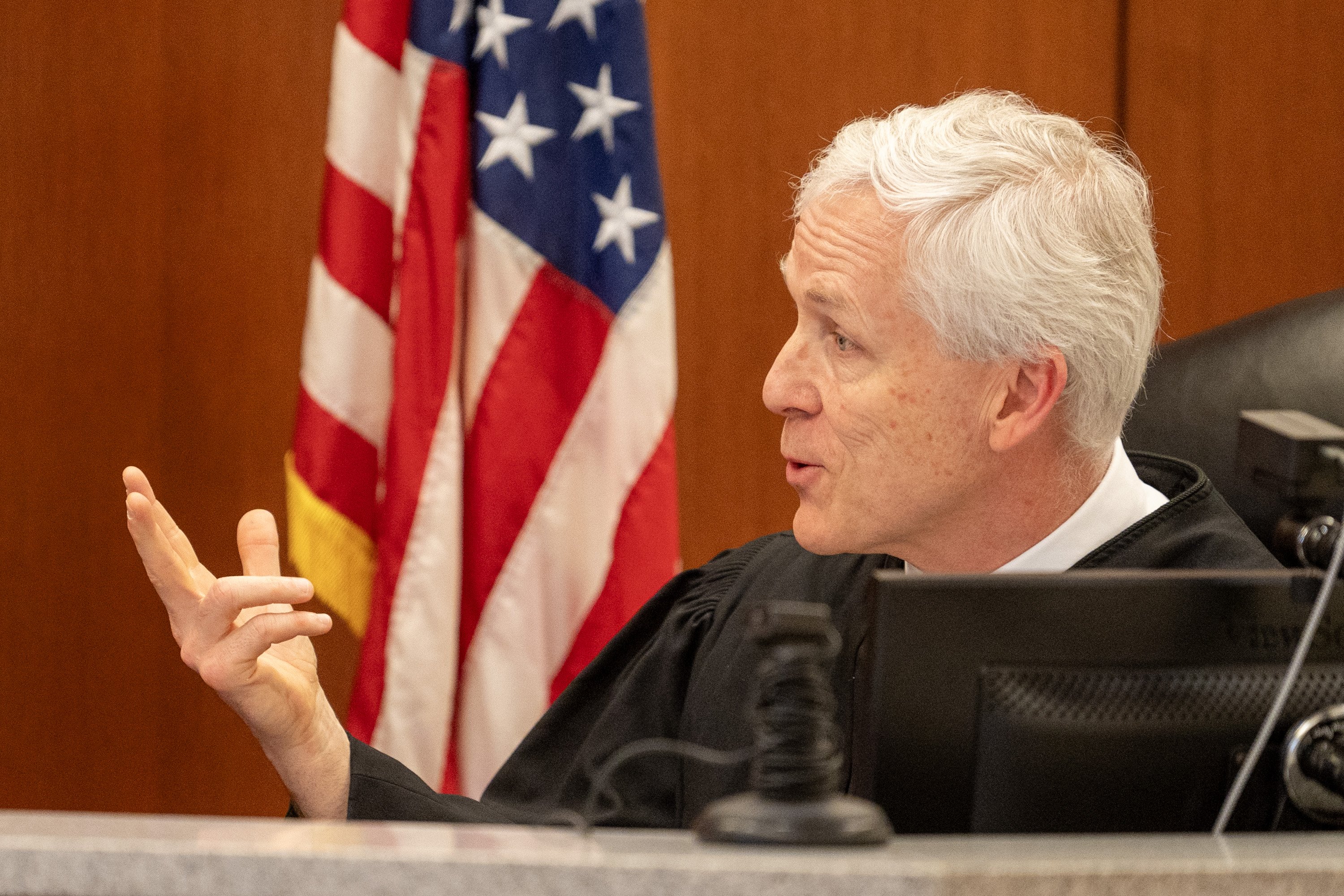
Superior Court Justice Daniel Mitchell did not make a ruling Tuesday. Prosecutors and McDonald’s defense attorneys have 30 days to file final arguments.
Scott and Dr. Daniel Potenza, clinical director at Dorothea Dix, wrote in an October report that they proposed using one of about 10 antipsychotic medications after McDonald refused to discuss medical intervention. Since arriving at Dorothea Dix last June, she has refused nearly all medical care and testing, including antipsychotic medication, Scott said.
McDonald previously stopped taking all prescription medications in April 2024, eight months after she suffered a spontaneous rupture of her coronary artery, which caused a rare kind of heart attack.
McDonald’s defense attorneys, led by Scott Hess, argued the antipsychotics would be risky, given McDonald’s heart condition; the medications come with warning labels for exacerbating some heart conditions.
Those conditions do not apply in McDonald’s case, though, her doctors testified. The medications’ risks are limited primarily to electrical issues in the heart, not to the structure of surrounding vessels.
Mitchell is expected to issue his decision later this spring.

Comments are not available on this story. Read more about why we allow commenting on some stories and not on others.
We believe it's important to offer commenting on certain stories as a benefit to our readers. At its best, our comments sections can be a productive platform for readers to engage with our journalism, offer thoughts on coverage and issues, and drive conversation in a respectful, solutions-based way. It's a form of open discourse that can be useful to our community, public officials, journalists and others.
We do not enable comments on everything — exceptions include most crime stories, and coverage involving personal tragedy or sensitive issues that invite personal attacks instead of thoughtful discussion.
You can read more here about our commenting policy and terms of use. More information is also found on our FAQs.
Show less