

Healthcare leaders from across the state were at a trauma care conference in Portland when calls about an explosion started coming in.
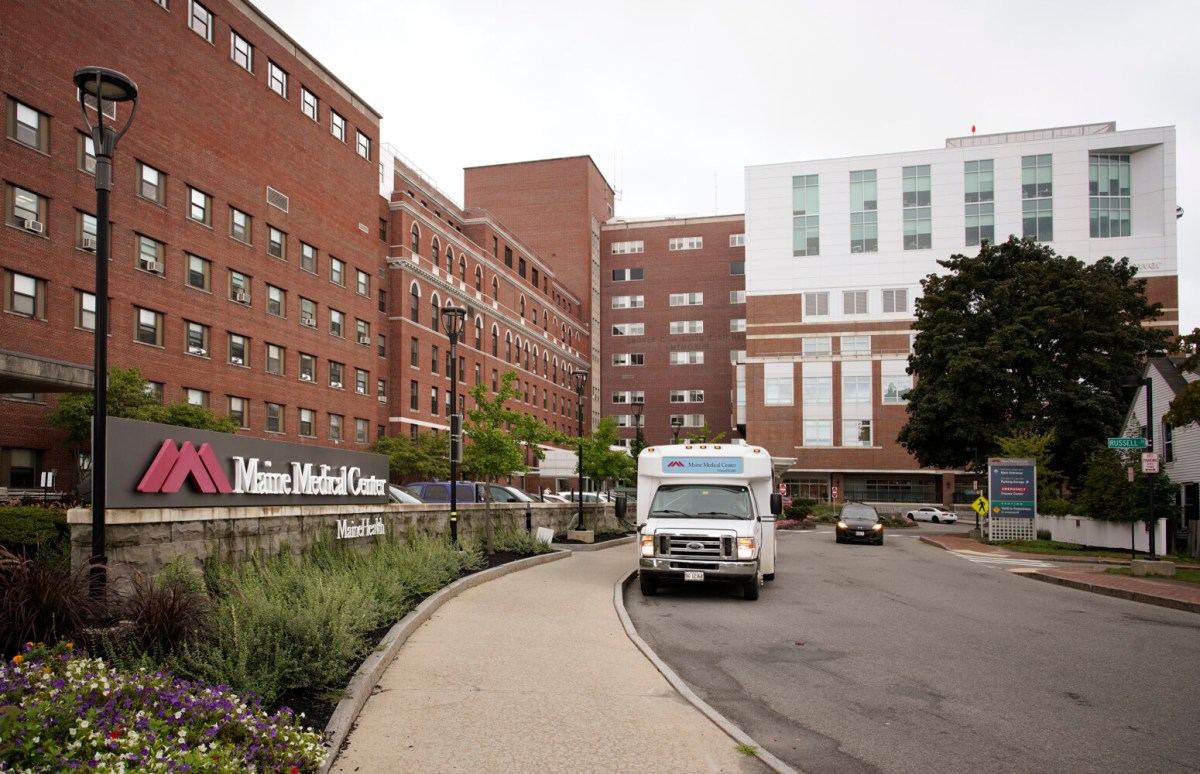
Dr. Bryan Morse, the trauma medical director at Maine Medical Center, had kicked off the day with a speech about the growing pressures on trauma care. There are only two hospitals verified to provide around-the-clock trauma surgery in Maine, and he said that Maine Med, a level one trauma center, takes on most of the burden.
By 11 a.m., Morse had ducked out to ready his emergency department for anywhere from six to 12 trauma patients burned in a lumber mill fire and explosion in rural Searsmont. Many of the victims were being stabilized at the nearest local emergency departments.
They would soon be transported to Maine Med from more than an hour away, through towns and down winding roads.
“That was actually able to give us some time to create a burn unit, start to make plans, make sure we had our systems and our teams ready to resuscitate and care for these patients,” Morse said.
Research has shown that early arrival to a trauma center considerably lowers the risk of a patient’s death. Trauma experts call it the golden hour: a critical window when doctors have the best chance of stopping bleeding or resuscitating a patient.
It’s becoming harder for Maine’s trauma network to beat the clock.
Cuts to trauma services in the last five years have left just two hospitals — about two hours apart — to provide advanced trauma care for the whole state. Patients are spending more time on the road, and healthcare leaders say EMS delays, driven by geographic challenges, rising costs and underfunding, leave many waiting at unequipped hospitals.
Morse said the system’s shortcomings put more pressure on Maine Med.
“When these other hospitals reduce specialty care like trauma coverage, or stroke or cardiac coverage, this impact is not linear,” Morse said. “The burden concentrates really disproportionately on level one centers. Reductions everywhere in the system increase transfer volume, operational pressure and burden on the workforce at Maine Medical Center in Portland.”
TWO OUT OF 35
Maine Medical Center is the only hospital in Maine required to provide around-the-clock emergency medicine, every trauma surgery specialty, and trauma research and education, as mandated for level one trauma centers by the American College of Surgeons.
Morse said the hospital’s trauma patients have nearly doubled since 2020, increasing from about 2,300 to 4,500 admissions a year. He said some of the increase was caused by a gradual decline in services at Central Maine Medical Center in Lewiston.
The hospital, which is owned by Central Maine Healthcare, stopped providing 24-hour neurosurgery in 2021, instead diverting patients to Maine Medical Center and Northern Light Eastern Maine Medical Center, the state’s other trauma center. Late last year, the Lewiston hospital dropped its level three trauma center designation entirely.
It is now one of 33 trauma system hospitals in Maine that are not required to provide any around-the-clock trauma care past emergency medicine. A Central Maine Healthcare spokesperson said the “expiration of the hospital’s trauma verification in December 2025 did not change the care available to patients arriving at CMMC.” The state has required the hospital to reestablish level three trauma center designation by April 2028.
But Morse said Maine Med has absorbed many of the trauma patients who arrive at the Lewiston hospital needing higher level care.
“They still have incoming trauma victims, but (for) more acute, critically injured trauma patients, we’ve had to take a lot of those patients in transfer after they’ve been stabilized at Central Maine Medical Center,” Morse said. “They come here for neurosurgical services, trauma services, interventional radiology, orthopedic trauma.”
Level one centers spend an estimated $10 million to $12 million a year on trauma readiness costs alone, according to a 2017 study of Georgia’s trauma system. Costs have likely climbed since. And because Maine only has one level one trauma center and one level two trauma center, Maine Medical Center pays a disproportionate share of the state’s trauma costs, Morse said.
Eastern Maine Medical Center in Bangor, a level two center, provides around-the-clock emergency care, trauma surgery and some but not all surgical specialties.
Dr. Amy Fenwick, trauma medical director at EMMC, said the hospital admits roughly 450 transfer patients a year, especially from smaller trauma system hospitals without the capacity for general surgery. Occasionally, she said the hospital transfers patients for surgery at Maine Med.
Without a trauma center in the middle of the state, though, thousands of additional patients are caught more than an hour from both Bangor and Portland. Fenwick said interfacility communication between Maine’s trauma centers and trauma system hospitals is “still excellent.”
Delays in EMS transfers, however, are more frequent.
“It’s an under-recognized profession, and it’s under-supported,” Fenwick said. “And all the hospitals feel the same way, that trying to get someone here, just for appendicitis, can take a really long time.”
READINESS ON THE ROAD
EMS agencies in Maine face mounting pressures to staff, coordinate and sustain patient transportation, at a loss.
A medley of EMS agencies — including those based in hospitals, private companies, and local fire and emergency departments — transport patients between emergency scenes and hospitals in Maine.
Like trauma centers, most are ready to respond around the clock, but Joe Kellner, CEO of air ambulance service LifeFlight of Maine, said low call volumes and insurance reimbursement rates make it impossible to break even without other funding.
Staffing and services fall by the wayside.
Kellner emphasized that Maine’s emergency system is still functioning. When a Mainer calls 911, “somebody shows up.” But he said delays in interfacility transfers cause a domino effect across the system.
“What you see is patients getting boarded in the ER,” Kellner said. “They’re being treated as an inpatient, but there’s not a bed for them.” He said waiting rooms fill up and patients leave without being seen, “which leads to patients getting more sick.”
Kellner said LifeFlight’s transports take an average of 1.4 hours, generally carrying patients directly to trauma centers due to the extent of their injuries. He said being in the air means they can “overfly community hospitals to get the patient to the trauma center.”
On the ground, though, Morse said, some communities can lose their ambulance coverage for hours.
“When you only have a limited number of trauma centers and vast ground to cover, the transport of patients from one place to another can be a challenge,” Morse said. “If you have to transport a patient from one area of Maine to Portland or to Bangor, that takes an ambulance out of service for that area, so then that area becomes unserved and creates what we call a trauma desert.”
EMS agencies can’t predict when long transports will be needed. Between staffing, supplies and fuel, Kellner said there is a “tremendously high cost to be ready to respond to an emergency.” LifeFlight sent six crews — more than 20 responders — to Searsmont on May 15.
Then they got ready to do it the next day.
EVERY DAY
When the Searsmont alert came in, Morse said Maine Med set up a second burn unit to make room for several transfer patients. EMMC added more trauma bays before receiving a patient straight from the scene. EMS transporting agencies brought three patients to Massachusetts General Hospital in Boston.
But Morse said trauma does not always come in the form of a single emergency.
“On a random Tuesday in May, we had 15 trauma victims come in that were probably more critically injured than the people from the Searsmont event,” Morse said. “Trauma is something we do every day.”
Maine Medical Center invests in trauma so, on a slow day, patients can still get the advanced emergency care they need. Morse said his emergency medicine doctors, facing burnout, come in each morning prepared for the worst. He hopes that pressure will lessen, especially as Central Maine Medical Center reestablishes its trauma center.
But he said state and local leaders also need to invest in trauma like it’s an everyday occurrence. Like it’s their family member that needs emergency surgery. Like the closest transporting service is an hour behind.
Because it could be.

Comments are not available on this story. Read more about why we allow commenting on some stories and not on others.
We believe it's important to offer commenting on certain stories as a benefit to our readers. At its best, our comments sections can be a productive platform for readers to engage with our journalism, offer thoughts on coverage and issues, and drive conversation in a respectful, solutions-based way. It's a form of open discourse that can be useful to our community, public officials, journalists and others.
We do not enable comments on everything — exceptions include most crime stories, and coverage involving personal tragedy or sensitive issues that invite personal attacks instead of thoughtful discussion.
You can read more here about our commenting policy and terms of use. More information is also found on our FAQs.
Show less