

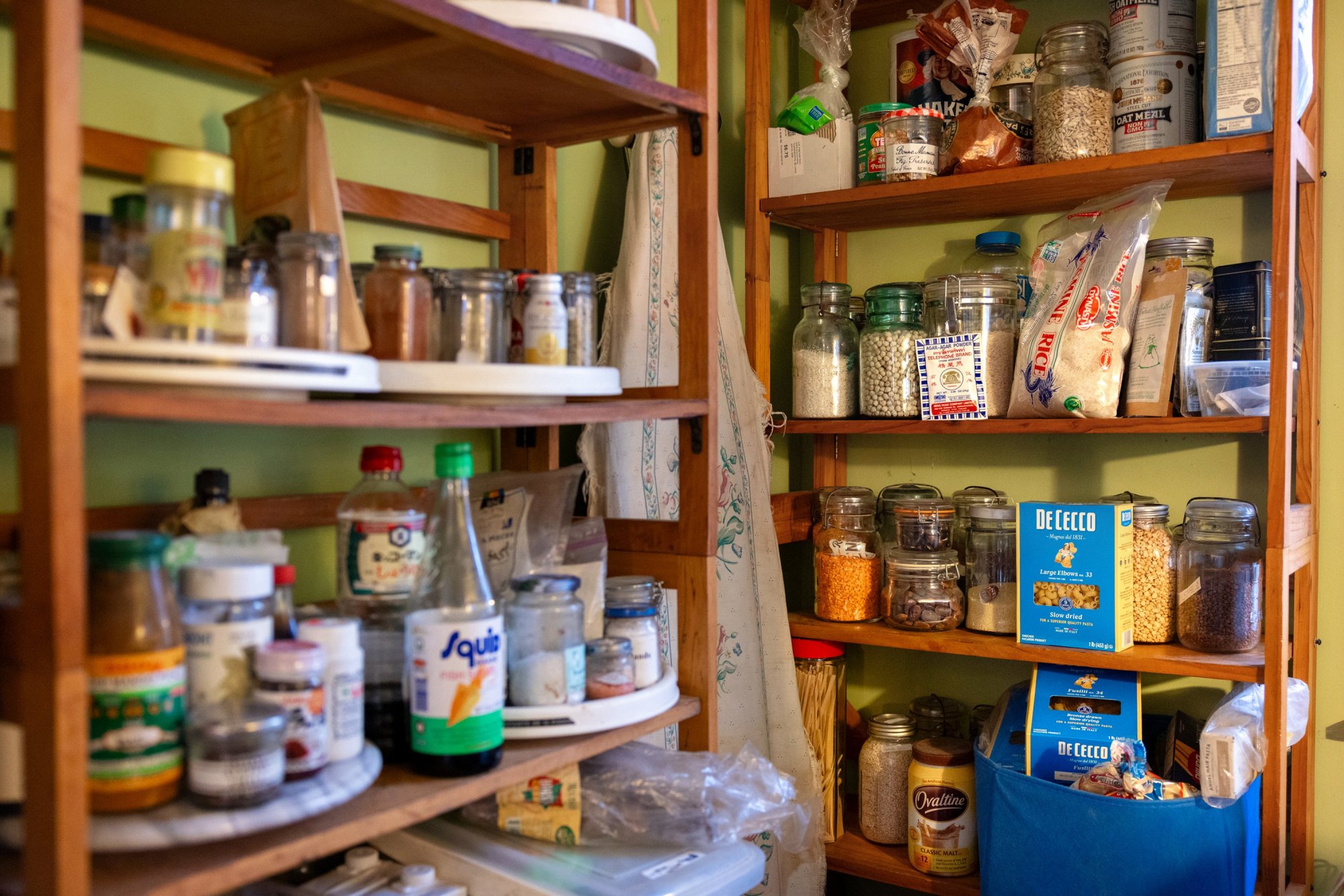
My groceries are far better traveled than I am.
I discovered this recently when I took an exhaustive inventory of the contents of my pantry, refrigerator, liquor shelf and fruit bowl, checking every label for country of origin. Here is a complete list of the places I have never visited where the food items in my home were grown or manufactured:
Afghanistan, Australia, Belgium, Brazil, both Casablanca and Morocco, Chili, Columbia, Costa Rica, Honduras, India, Indonesia, Iran, Iraq, Korea, Latvia, Lebanon, Madeira, Malawi , Mauritius, Oman, Peru, Philippines, Sardinia, Sicily, South Africa, Tunisia and United Arab Emirates. If you ignore two hours I spent at a hotel in the middle of the night because of a flight debacle, you can add Turkey to this list, too.
Also represented are an additional 16 countries that I have had the good fortune to visit, among them Canada, Ireland and Japan, as well as one product, dried porcini mushrooms, from the generically labeled “Europe.” If I’m doing the math right, some 40 countries live in my kitchen with me, alongside a few autonomous regions. And I didn’t even try to trace my spices.
The globe-spanning nature of my groceries does not surprise Mike Cauvel, associate professor of economics at the University of Southern Maine. After he gave me a succinct Tariffs for Dummies crash course, I asked if there was anything to add.
“Just the degree to which all of the stuff we have comes from so many different places,” he said. “That’s something we often underestimate.”
I undertook this inventory to see if I could figure out how the Trump administration tariffs are affecting just one segment of my life: the food and drink I consume at home. If you’re looking for the definitive answer, you won’t find it here.
GLOBAL PANTRY
The far-ranging food and drink found in my home – and probably in yours, too – is exhibit A of America’s 21st-century global pantry. It’s a far cry from the relatively small list of ingredients used in classic Maine cookbooks as late as 1969, when Marjorie Standish‘s “Cooking Down East,” called for items like beets, sliced American cheese, green peppers, margarine, clams and salt pork. The most “exotic” ingredient in that cookbook’s poultry chapter may have been the “No. 2 can Chinese noodles,” which in fact is not something any Chinese cook would recognize.
Compare that to “Big Heart, Little Stove,” the popular, pointedly Maine cookbook written by Lost Kitchen chef Erin French in 2023. Although the ingredients are largely local, she blithely calls for Maldon salt (England), dry-cured chorizo (Spain), seasoned rice vinegar (Japan) and Castelvetrano (Sicily) and Nicoise (France) olives.
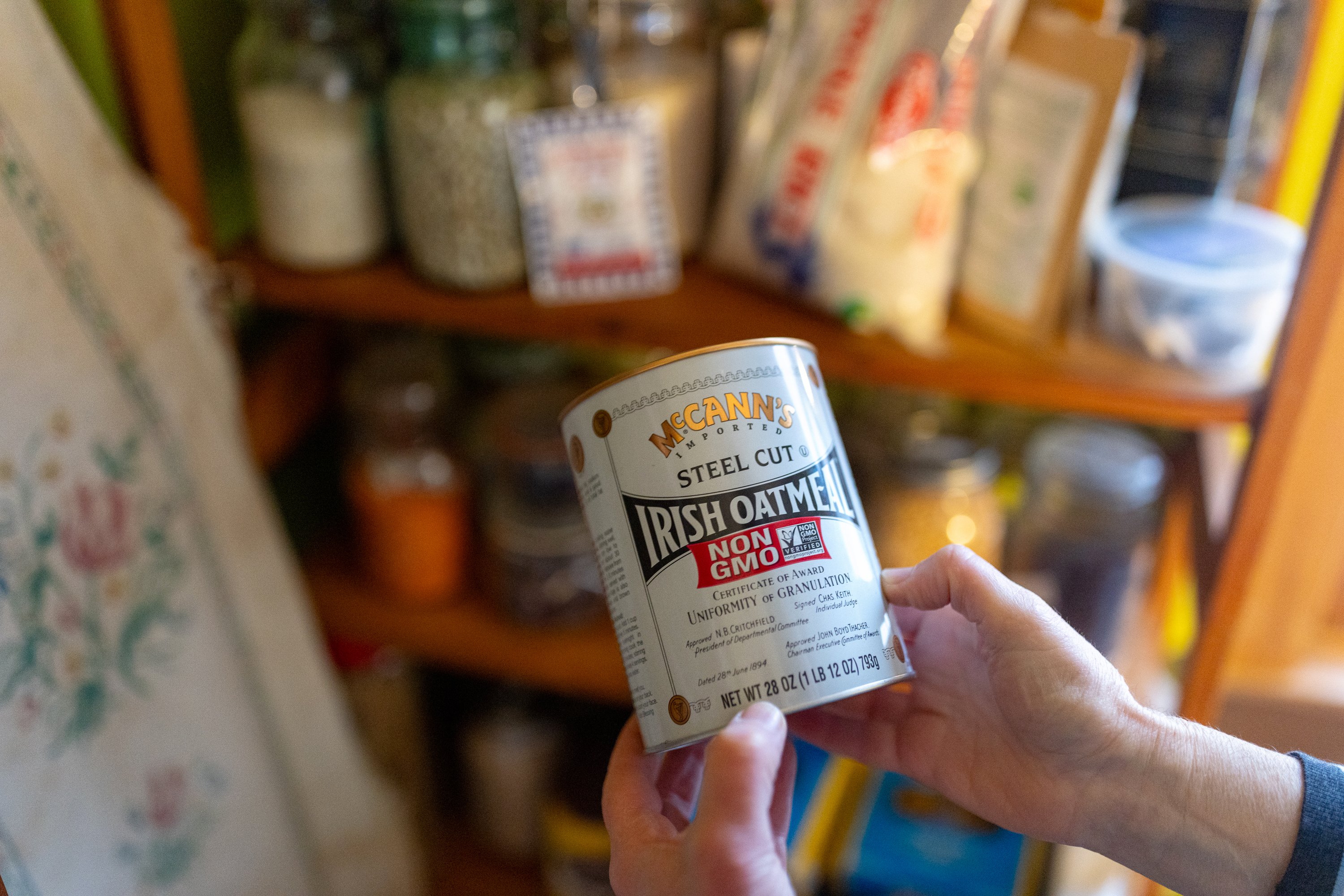
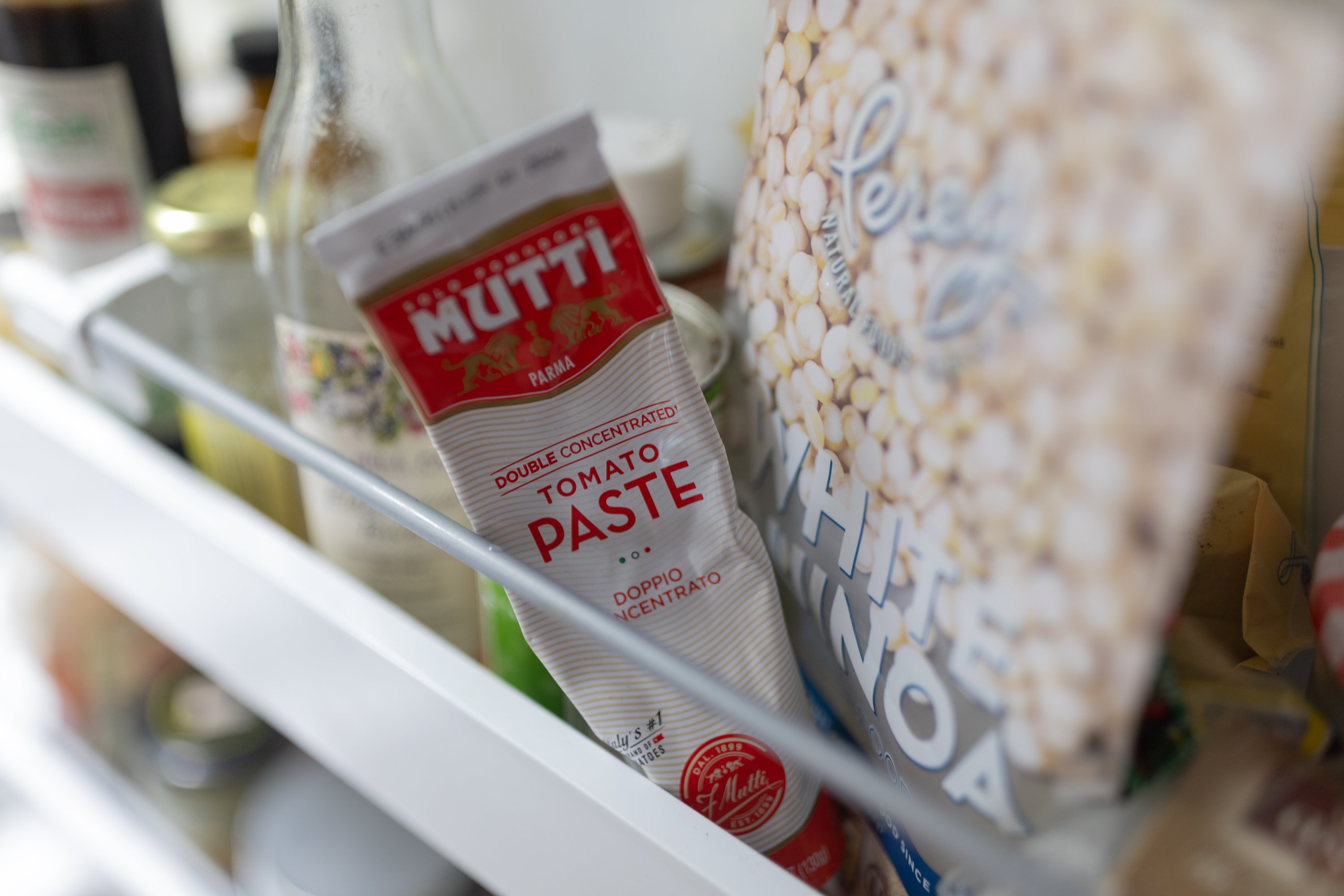
Today, Mainers cook and eat many international items without a second thought. This is probably true even of those of us who count ourselves locavores. Consider soy sauce (Japan), basmati rice (India), olive oil, pasta and Parmesan cheese (Italy), coconut milk and chili crisp (Thailand), bananas (Honduras), avocados (Mexico) and many, MANY more.
Granted, I am passionately interested in food — plus it’s my job — so the contents of my kitchen may be more exotic than most. Chances are you don’t stock poha (India), grape molasses (Lebanon) or dried limes (my bag doesn’t list a country of origin, unless it’s in a language I can’t read, but the internet says these limes likely came from Oman, Iran or Iraq).
LONG-HAUL SUPPLY CHAIN
I reached out to the offices of the U.S. Trade Representative for help understanding the impact of tariffs on my kitchen. I did not hear back. But my bill at the grocery store keeps going up.
For the past year, tariffs are probably “the main reason” for that, Cauvel said. He cited data from the Bureau of Labor Statistics measuring the cost of food at home in the Northeast region: From November 2024 to November this year, the prices have risen 2.7%, more than double the rate of the previous 12 months.
But food prices are always volatile, he cautioned. From 2020 to November of this year, prices increased (gulp) 25.9%, according to the same data set; the pandemic and the war in Ukraine played a part. Adding these new tariffs to already high prices, Cauvel said, “presents a huge challenge for people.”
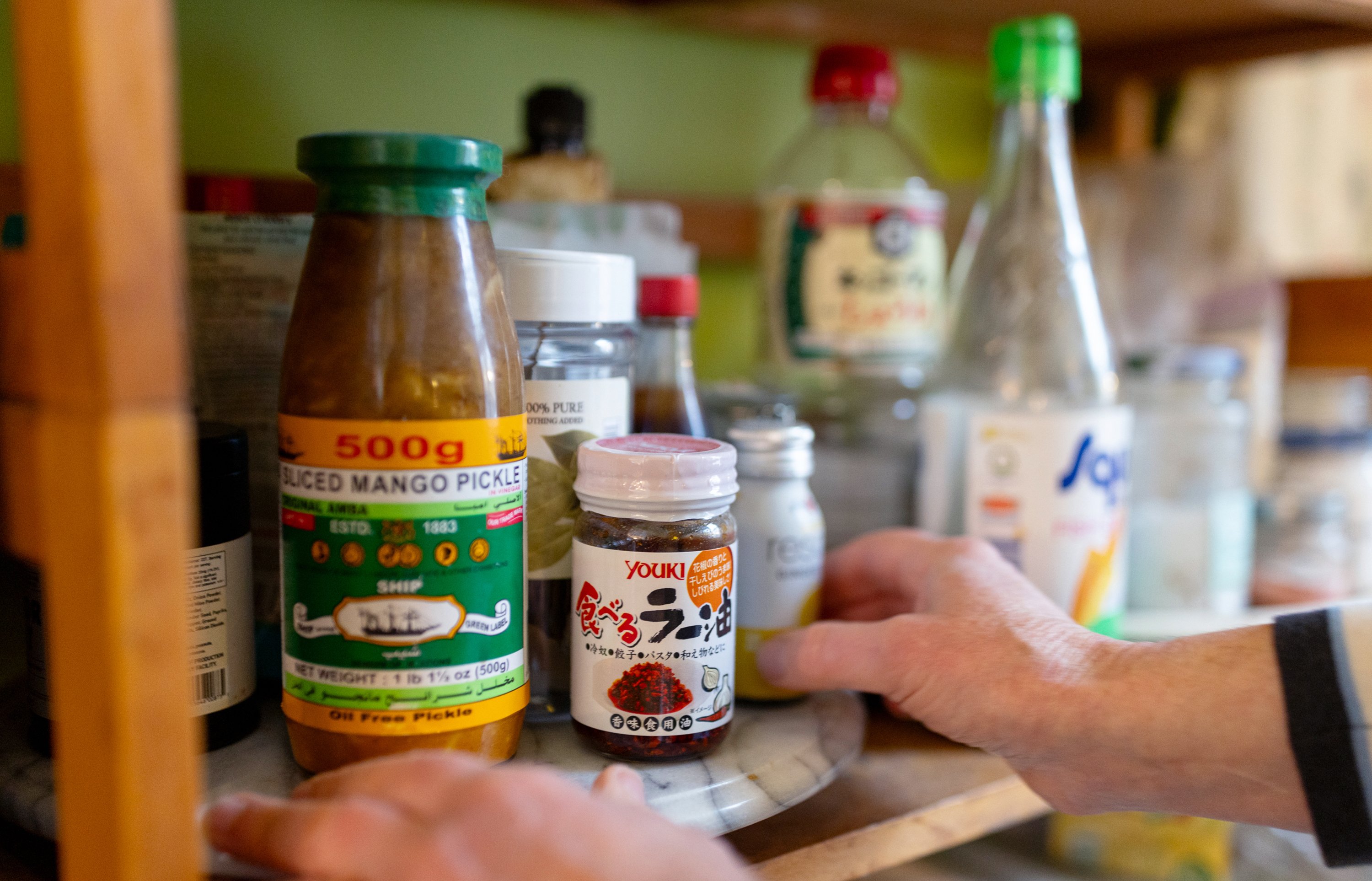
My soy sauce, as an agricultural product, is now subject to 15 percent tariffs, as far as I can tell. Maybe not if Kikkoman uses American ingredients? The basmati rice is tariffed at 50%. That could change, and not for the better from the perspective of my food budget; earlier this month, President Trump threatened to increase the tariffs on rice, claiming that India was “dumping” the lovely, fragrant grain in the U.S. (Please dump some in my pantry, Indian rice farmers.)
My olive oil and Parmesan cheese face 15% tariffs. Thankfully, my four boxes of De Cecco pasta will not be subject to the tariffs of more 107 percent (!) that Trump has threatened to impose on 13 other major Italian pasta brands sold in the U.S.
In mid-November, the administration lifted previously imposed tariffs on coffee and tea, tropical fruits and fruit juices, cocoa and spices, and bananas, oranges and tomatoes. Foodies everywhere heaved a giant sigh of relief. But please don’t ask me whether coconut milk is in the category. Coconut water is exempted, according to that 98-page document of revisions. Possibly coconut meat, too? The latter is listed under a heading that I’d need a team of high-powered attorneys to understand:
“All products that are properly classified in the provisions of the Harmonized Tariff Schedule of the United States (HTSUS) that are listed in this Annex are not covered by the duties imposed by Executive Order 14257.”
But as for coconut milk, I can’t find that in the document at all. It’s complicated.
Speaking of complicated, I’m not surprised that my jasmine rice comes from Thailand, my almond paste from Denmark and my matzoh from Israel. This last item, incidentally, was also exempted from tariffs by executive order of the president in November, in this case because of its use in religious ceremonies. But I am surprised by the origin of other items I stock.
The Bar Harbor Wild Herring Fillets and Smoked Sardines are, per the label on the tins, manufactured in … Latvia?! The ginger root I use almost every day and my box of unflavored Knox gelatin both come from Brazil. The graham crackers to make crust for a cheesecake were baked in Mexico. My Ducktrap River Rainbow Smoked Trout comes from Colombia. And the jar of cornichons that live in my refrigerator door — that staple of classic French cuisine — is labeled “Product of India.”
“Even for someone who does think they have a pretty basic American diet,” Cauvel said, “probably a lot of that stuff is imported.”
INTERCONNECTED
These country of origin labels don’t even tell the whole tariff story. Many foods that are processed in the United States are made from foreign raw ingredients that are subject to tariffs, the palm oil in Crisco, for instance. Indonesia, a major producer of palm oil, is trying to persuade the U.S. to roll that tariff back.
Can I at least figure out if the price of my groceries will stabilize, or — pretty please — go down? Since tariffs on many foods were rolled back in November, it seems reasonable that my grocery bill will roll back, too.
A tariff is a tax, Cauvel reminded me. “If a tax gets repealed, that might lower the cost.”
Yeah, don’t break out that bottle of (imported) French Champagne yet. Companies, having seen that consumers are willing to pay a little more, may decide to leave prices where they are, Cauvel said. Add to that, “It’s possible that some of those costs will go down at least temporarily, but again, the tariffs could change again next month.”
So far, they’ve been a moving target.
In hindsight, it was naive to think that in a few weeks, with zero background in economics, I’d be able to neatly answer the question that prompted this story: How do the U.S. tariffs imposed this year on food affect my Portland kitchen, and by extension, yours?
But tallying up the contents of my kitchen proved useful in an unexpected way. It was a concrete reminder that however fractured the world feels, the food we eat for breakfast, lunch and dinner is profoundly, inextricably, intertwined.

We invite you to add your comments. We encourage a thoughtful exchange of ideas and information on this website. By joining the conversation, you are agreeing to our commenting policy and terms of use. More information is found on our FAQs. You can update your screen name on the member's center.
Comments are managed by our staff during regular business hours Monday through Friday as well as limited hours on Saturday and Sunday. Comments held for moderation outside of those hours may take longer to approve.
Join the Conversation
Please sign into your CentralMaine.com account to participate in conversations below. If you do not have an account, you can register or subscribe. Questions? Please see our FAQs.