

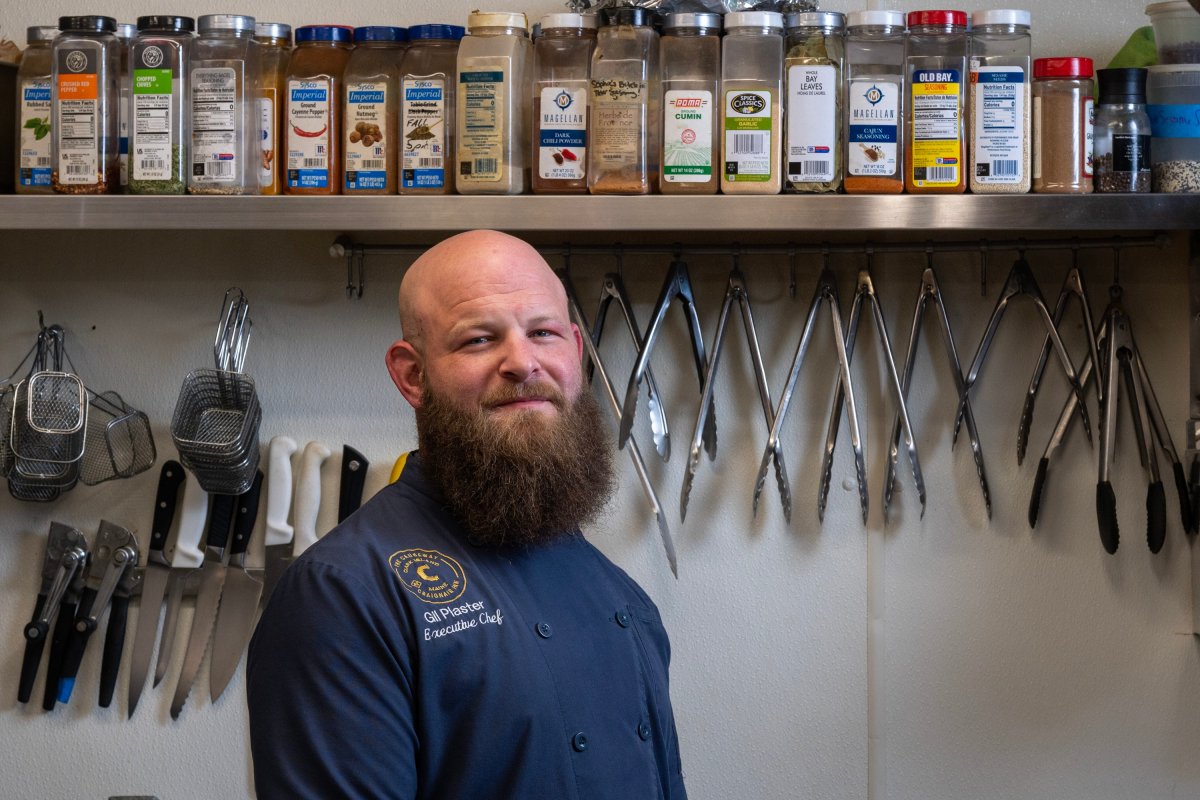
In the past, when Chef Gil Plaster of The Causeway restaurant at the Craignair Inn in Spruce Head needed some help brainstorming dish ideas or researching a cuisine, he’d spend hours scouring cookbooks.
For the past few years, though, Plaster has leaned into artificial intelligence. So when he needs to learn about international dishes for his Winter Passport Dining Series, which spotlights selected global cuisines, he consults with AI programs like ChatGPT, Grok and Gemini.
“It takes away hours of research, and does it for me in five minutes,” said Plaster, who was named HospitalityMaine’s Chef of the Year for 2025. “It’ll tell me, ‘These are the top five traditional dishes of this country. This is how the country executes this dish. These are the main ingredients you’ll need to execute this dish. These are the tasting notes you’ll look for when you make the dish.'”
When Plaster wanted to learn about vegan cooking so he could put more plant-based dishes on the menu, AI explained how to make a vegan crab cake using chopped artichoke hearts, grated mushrooms and shredded hearts of palm in place of shellfish.
“There are chefs who will never abandon the old-school way of doing things,” Plaster said. “They think AI is cheating and if you go online and look for recipes, you’re not really a chef. But you have to evolve and keep up with the times, or you get left behind.”
“If restaurants and food establishments aren’t embracing AI right now,” said Dustin Caron, owner of Culinary Roots Consulting in Auburn, “they’re going to be eaten up by those who do.”
A TOOL TO BOOST EFFICIENCY
At this point, it’s hard for anyone in modern society to avoid using AI. The technology is embedded in so many devices, apps, platforms, programs and services we use everyday. Plaster is at the vanguard of chefs who are using AI to help in the kitchen, but many Maine restaurants employ AI technology to answer phones, take reservations, schedule staff, generate want ads, vet potential hires, design logos, crunch numbers and more.
HospitalityMaine Executive Director Becky Jacobson estimated that at least 50% of Maine restaurants are intentionally putting AI to work. “It’s still early days for a lot of these restaurants,” she said, noting that HospitalityMaine held a couple of AI seminars at its annual summit in November. Caron puts the number at 75%, even if it’s being used in limited ways at some places, like composing and scheduling social media posts.
The advancement in technology comes at a pivotal time for the restaurant industry, which is facing extreme economic challenges. Restaurant labor costs are up 35% since the pandemic, and food costs are up 38%, according to the National Restaurant Association. In 2024, the typical full-service restaurant had a profit margin of just 2.8%, down from 4% before the pandemic. Limited-service restaurants’ profit margin is down to 4% from 6% in the same period.
Industry consultants and restaurateurs agree that AI can save hospitality businesses significant time and money. “I think it can help,” said Caron, whose company helps new Maine restaurateurs launch their businesses. “I don’t necessarily think it’s a savior for the industry. It’s a tool that restaurants can use to make their daily process easier and more efficient and to save some money.”

David Turin, chef-owner of David’s in Portland and David’s 388 in South Portland, said in the current economic climate, his venues have had to increase the volume of their business to stay viable. Their AI-assisted reservations system has been a key part of helping them turn more tables efficiently and fluidly.
“AI has helped us to cope with rising costs and decreased margins, and that is big,” said Turin, who also uses AI occasionally to brainstorm ideas for specials or to stay on top of what produce is in peak season in southern Maine.
Jacobson said some restaurateurs and chefs aren’t yet comfortable with the new technology and are pushing back on it. “I won’t say it’s generational, but there is a bit of that,” she said. “What I see is a younger population much more willing to embrace it, and there are people of older generations who say ‘I’m not going to listen to a machine tell me what to do.'”
It’s possible the holdouts are working with AI unwittingly anyway. “I think a lot of restaurants might be using it and not know it in some ways,” said Chad Moutray, chief economist for the National Restaurant Association. “We’re still so early on that if you were to ask your typical restaurateur if they’re using AI, they might not realize they’re using it as much as they are.” Moutray noted that the systems that restaurants use for point-of-sale, reservations, food and supplies ordering, and deliveries all use AI tools that run in the background.
There are also ways restaurant customers may not realize they’re interfacing with AI technology. Caron says AI talks you through your order at many fast food drive-thrus, and some restaurants also use it to post responses to Google reviews.
Caron finds the online review response particularly helpful when harried restaurant owners receive a bad review. Rather than reacting emotionally in the moment, “The AI bot will really be genuine and respond to a bad review in a kind manner where you look professional and it looks good on you.”
KEEPING THE PERSONAL TOUCH
AI phone answering services are one of the most impactful uses for AI in restaurants right now. Plaster said the Craignair Inn started using such a service last summer, linked with the reservations app Resy.
Plaster said the AI system helped “tremendously,” saving about 40 hours of work a week. In the height of the season, Craignair staff are fielding 1,000 to 1,400 phone calls a week. “You’re taking phone calls seven days a week, 18 hours a day. It’s one of the reasons we lost our last manager.”
AI call answering services can cost several hundred dollars a month, depending on the volume they’re designed to handle and the features they’re equipped with. But some Maine restaurants have already found them indispensable.
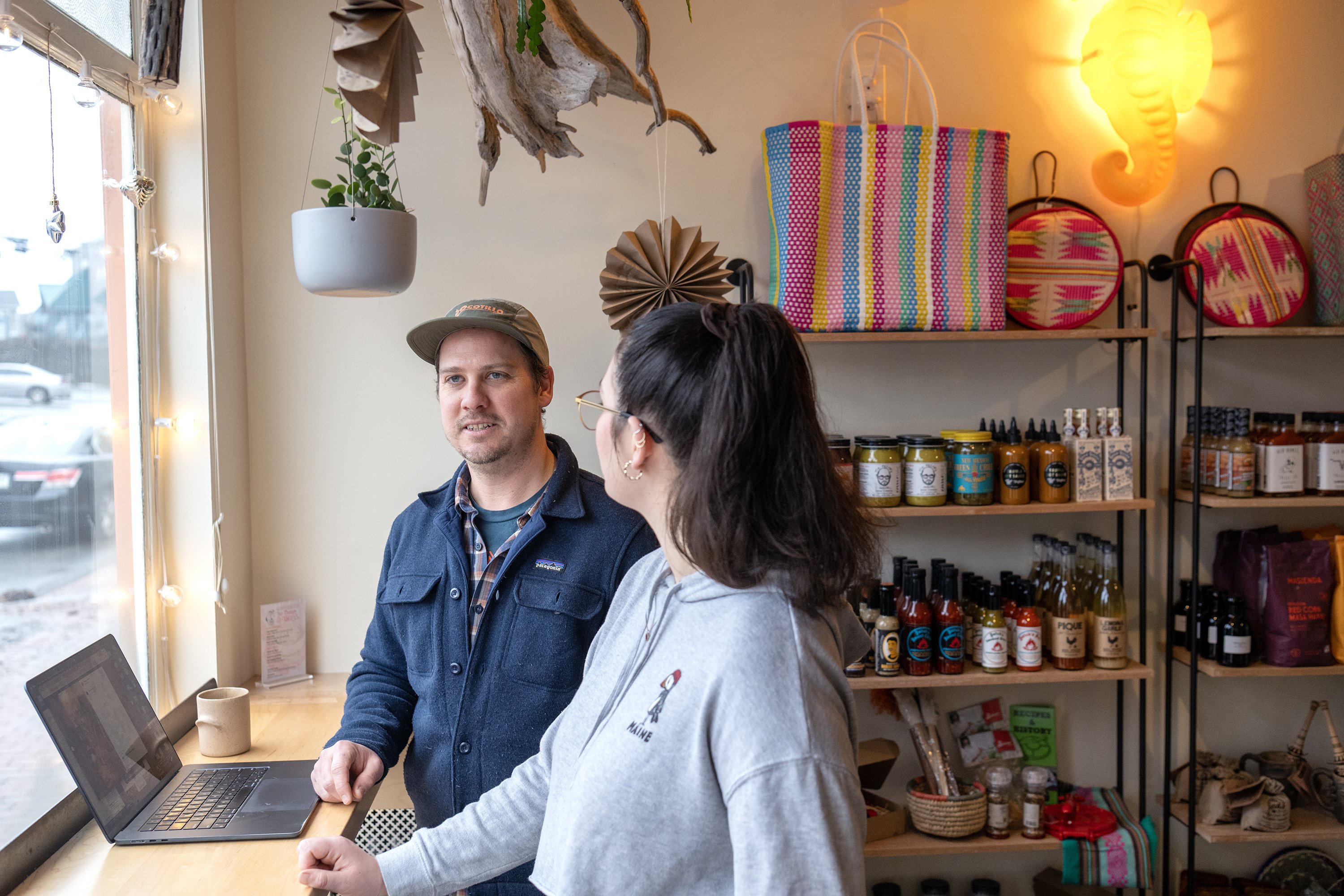
Justin DeWalt, chief operating officer for Portland’s Saddle Up Hospitality Group (Terlingua, The Terlingua Outpost, Ocotillo) said his restaurants started using an AI phone service from AddSalt last summer.
“I think largely people understand it and have a successful encounter with it,” DeWalt said. “Overall I see it as an improvement to hospitality in ensuring that guests are not wasting their time trying to play phone tag.”
Still, it needed some tweaking at first. “We had people feel like they were kind of being duped when they realized they were talking to AI halfway through their conversation, and that doesn’t feel good,” he said. “So we prompted the AI assistant to name that they’re an AI in their first sentence.”
DeWalt says the Saddle Up restaurants don’t use AI to develop creative language for newsletters or menus, job descriptions, recipe and menu development or photo enhancement. “It’s been a helpful tool because we’re being very mindful about how we’re using it. I’d rather use it less if it means maintaining the personal touch.”
But DeWalt has found the AI tool on their point-of-sale system, Toast, to be a game-changer.
“I can use it to collect data much faster and more in depth than I was ever able to before,” he said. When preparing for a recent managers’ meeting, for example, DeWalt asked the AI program for year-over-year sales comparisons in their major revenue areas.
The AI bot delivered the data within 30 seconds. “And then it asked me if I wanted it to be broken out individually by top sellers,” he said. “Then it asked me if I wanted to target highest and lowest months for each item; then it showed how to account for the drop or increase in sales of a given item based on store closure or holiday weekends.”
The blizzard of data AI produced almost instantaneously saved DeWalt hours of collecting and parsing data, and the subcategories it suggested touched on topics he might not have thought of himself under deadline pressure.
“That enabled me on the fly to create three slides with this specific data to bring to the meeting on time,” he said. “I find it to be incredible and a real efficient way of using time.”
THREAT TO THE WORKFORCE?
DeWalt said one potential drawback to AI is that it can lead to overdependence and lazy, short-cutted thinking. “There’s a way to stop using the receptors in our brains, and there’s a way to actually use AI as an enhancer of efficiency and creativity, and that’s the direction I want to take.”
An AI phone answering service can free up restaurant staff to tend to other, more pressing tasks during service. This way guests in-house can have the staff’s full attention while at the same time, the callers get their questions answered.
Used this way, AI is more of an assistant than a replacement for restaurant staff. But AI advancements pose a potential threat to jobs in all sectors, including hospitality.
“If you know how to use AI to its full potential, I think you could save on one or two employees in a small restaurant,” Caron said.
Jacobson disagrees. “It’s a people business, first and foremost. In the hospitality industry, you need that personal connection. I don’t see it supplanting many jobs at all.”
But Caron points to the robotic bartenders currently being tested out in some markets around the country that are programmed to check IDs, mix, pour and serve drinks. “I’m not sure everyone will like that,” Caron said, “and I would agree with that.”
“I have one word to say about a robot bartender,” Turin said. “Gross. I think it’ll be a long time before AI can substitute for a truly empathetic bartender or server. ”

We invite you to add your comments. We encourage a thoughtful exchange of ideas and information on this website. By joining the conversation, you are agreeing to our commenting policy and terms of use. More information is found on our FAQs. You can update your screen name on the member's center.
Comments are managed by our staff during regular business hours Monday through Friday as well as limited hours on Saturday and Sunday. Comments held for moderation outside of those hours may take longer to approve.
Join the Conversation
Please sign into your CentralMaine.com account to participate in conversations below. If you do not have an account, you can register or subscribe. Questions? Please see our FAQs.