
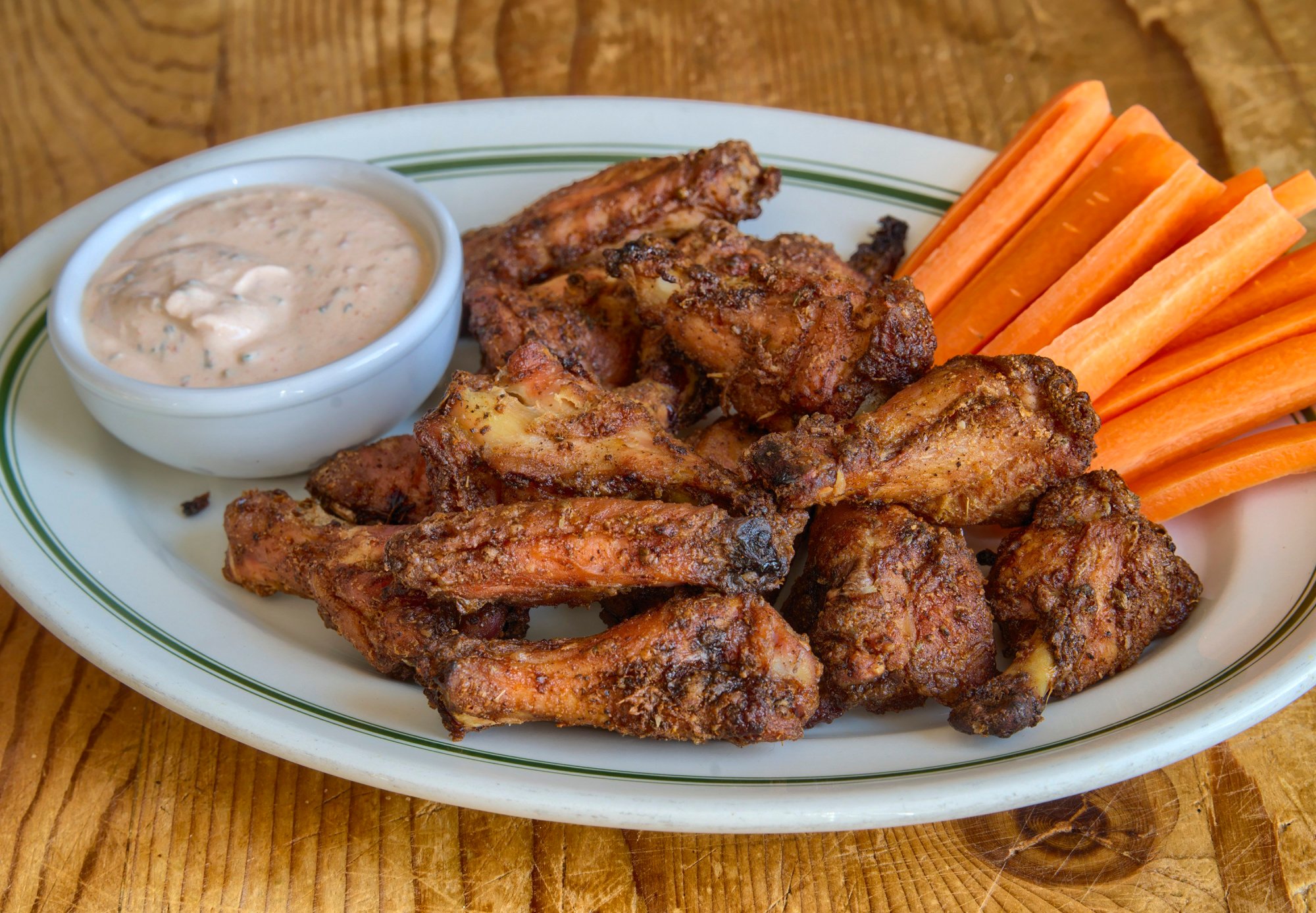
The National Chicken Council, a nonprofit trade association that lobbies for the broiler chicken industry, has predicted for 10 years running that Americans will consume well over a billion chicken wings every Super Bowl Sunday.
In 2016, the council’s number reached 1.3 billion wings. Last year, it was up to 1.47 billion. That amounts to 4.2 wings per capita. But take out the vegans (3% of the U.S. population), the vegetarians (another 8%), and 15 million children under the age of 4 for whom the bones are considered a choking hazard, and the number goes up to 5.1 wings for every eligible carnivore.
If you laid out the spent bones end-to-end, the line would stretch about 270,000 miles. That’s enough to circle the globe nine times. Or, in New England Patriot fan parlance, that’s how many frequent flyer miles you’ d need to secure four round-trip airplane tickets from Boston and San Francisco to see the big game in the flesh.
As you can see, wings in America are big business. My question is: How can we make more room for the little guy, your local farmer?
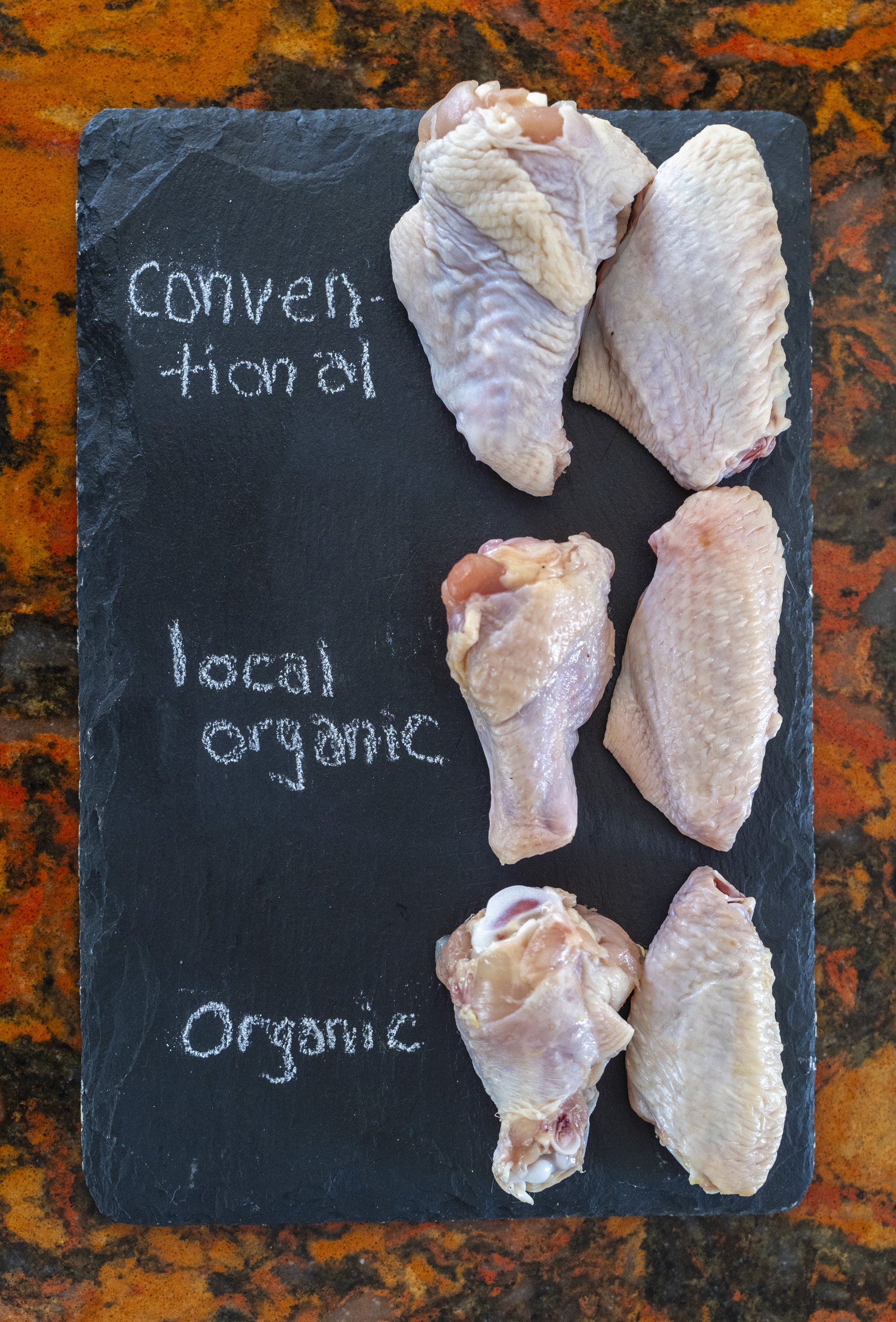
The poultry industry is a very concentrated sector of the American food system. Four large corporations rule the roost, so to speak. Based in Arkansas and Maryland, respectively, Tyson and Perdue control most of the retail market. Pilgrim’s Pride in Colorado is the largest exporter of American-raised chicken. Sanderson Farms in Mississippi is the preeminent supplier to food service wholesalers.
Owners of several wings-heavy restaurants in Maine say they buy wings from restaurant suppliers like Sysco, US Foods, and Performance Food Group for their reasonable cost and availability.
“On average, we go through 500 pounds of wings a week,” said Todd Fortier, co-owner of Bubba Frye’s, a takeout joint in North Berwick. He doesn’t know of a single farm or farm collective in Maine that could consistently meet his volume requirement.
The kitchen at Binga Wingas in Yarmouth runs through 16 to 20 (40-pound) cases of antibiotic free chicken wings each week. Owner Alec Altman says when he started the business in 2004, a case cost about $40. During the pandemic, he was paying $200 per case. He remembers smaller increases during bouts of avian flu but says the price is now holding steady around $88 per case.
“Since wings are about half of my business, to use locally sourced wings, I’d have to get a comparable price,” Altman said, “and I just haven’t been able to find that.”
The wings may be from away, but both Fortier and Altman say the dozens of dry rubs and sauces each offers, letting customers mix and match flavors, are made in-house.
Chef Jim Fitzgerald at Oddfellahs Sportsbook & Bar in Portland is able to serve local chicken wings every night. He sources them from Tide Mill Organic Farm in Edmunds, which sells about 80,000 whole wings annually to small, independent markets as well as directly to home cooks. Oddfellahs’ are no ordinary wings: Fitzgerald first applies a dry rub to draw out the moisture and then confits the wings, cooking them slowly in chicken fat until they are fall-apart tender. He crisps them in the oven to order, and serves them with bespoke sauces like strawberry–scorpion pepper or Thai chili.
“The difference between these wings and more conventional ones is hard to put your finger on,” Fitzgerald said. “They are generally a little smaller, yes, but they are just a nicer product. It has a cleaner flavor.”
He goes through about 30 pounds each week and pays $3.50 per pound. It’s a special wholesale price, which Tide Mill farmer Carly DelSignore said she gives Fitzgerald to help move the wings out of her operation’s freezer. Home cooks can buy about 12 pounds of chicken wings on the farm’s website for $80, or $6.66/pound. Tide Mill delivers the wings every week to the Belfast Coop, the Portland Food Co-op and Rising Tide in Damariscotta. The retail stores sell them in smaller amounts, but expect to pay more.
At Farmers’ Gate, a whole animal butchery in Leeds, co-owner Rebecca Buckley buys about 1,000 whole broilers annually from Dorolenna Farm in Montville. Farmers’ Gate sells about 200 of the birds whole, then breaks the rest down into breasts, thighs, drumsticks and wings.
“The breast and thighs go quickly, but we’ve got to be a bit creative to move packages of the others,” Buckley said. For Super Bowl LX, they’re offering a $60 special made up of five (1-pound) packs of wings, three (1-pound) packs of drumsticks, and 1½ pounds of ground beef. That math on that comes to $6.31 per pound of meat.
I regularly buy chicken wings from Apple Creek Farm at the Brunswick Winter Market, where I pay $22 for 2½ pounds. Farmer Abby Sadakus says they taste meatier than conventionally raised birds because her certified organic chickens “are out on pasture where they both get to spread their wings and do chicken things — flapping, lifting, stretching, and using their wings for balance.”
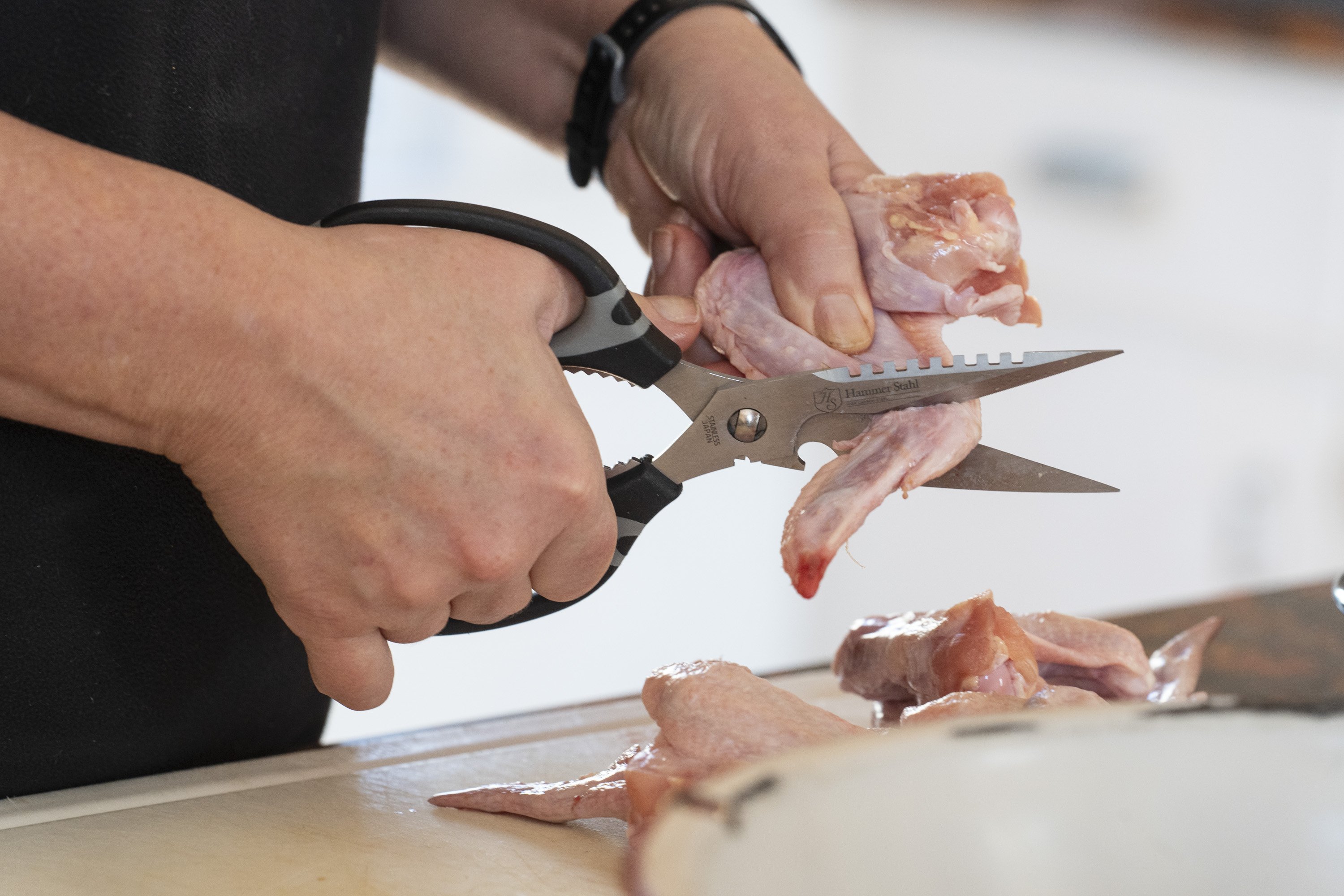
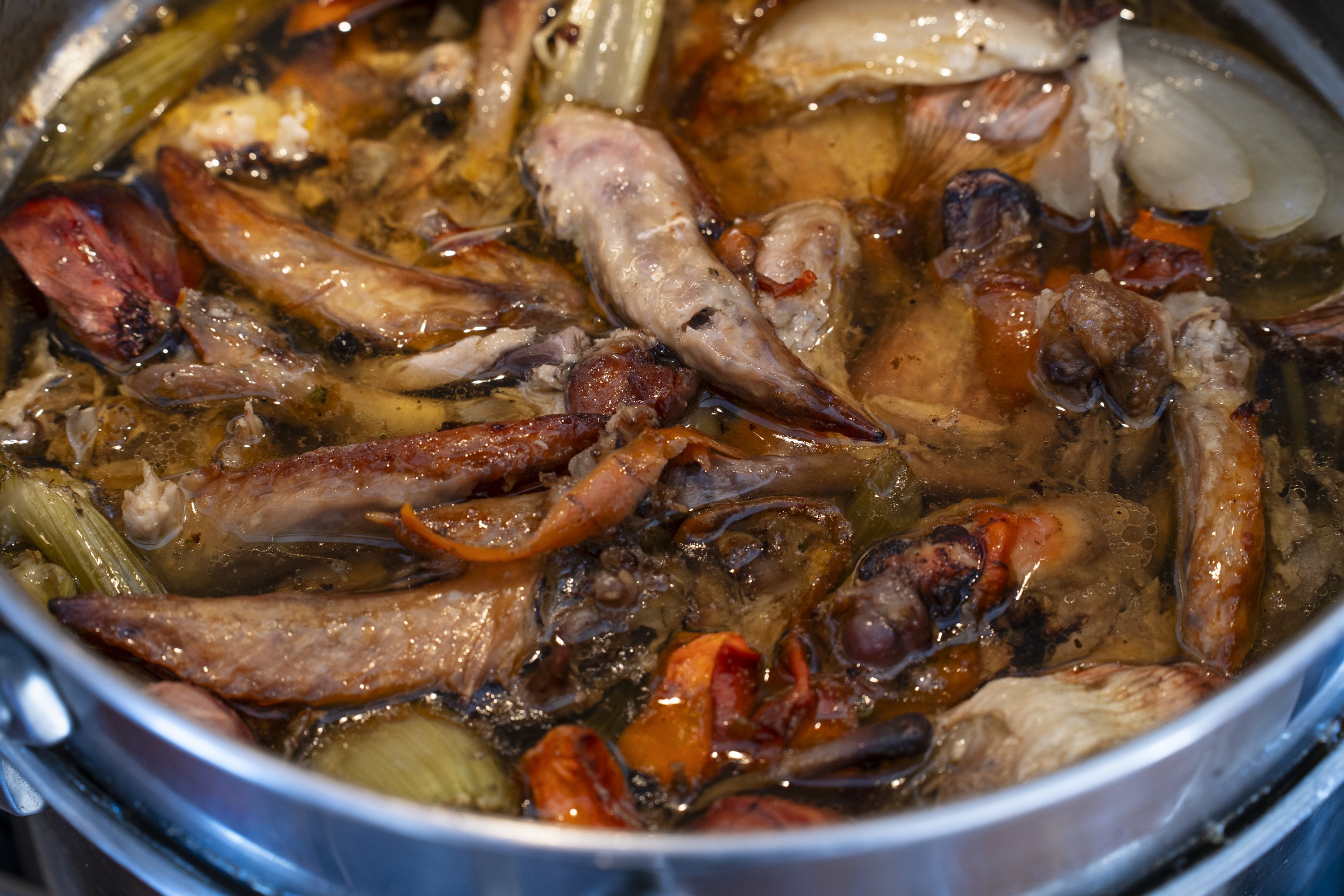
The wings come whole, but I make quick work of them with my kitchen shears, breaking them down into three parts by cutting through the white cartilage bulb at each joint. The tips go in the stock pot, where they boost the flavor and collagen in my broth. I toss the drumettes (the single boned bit that resembles a small drumstick) and the wingettes (the other two-boned bit) with neutral oil, salt, a mild spice blend, and a pinch of sugar; that last encourages browning in the oven.
I toss them again, this time with a couple tablespoons of baking powder, a trick that makes baked wings super (get it?) crispy, a trait you’ll appreciate if you are pairing them with a sticky BBQ, spicy Buffalo, or soothing, sour-cream based dipping sauce.
Go Pats!
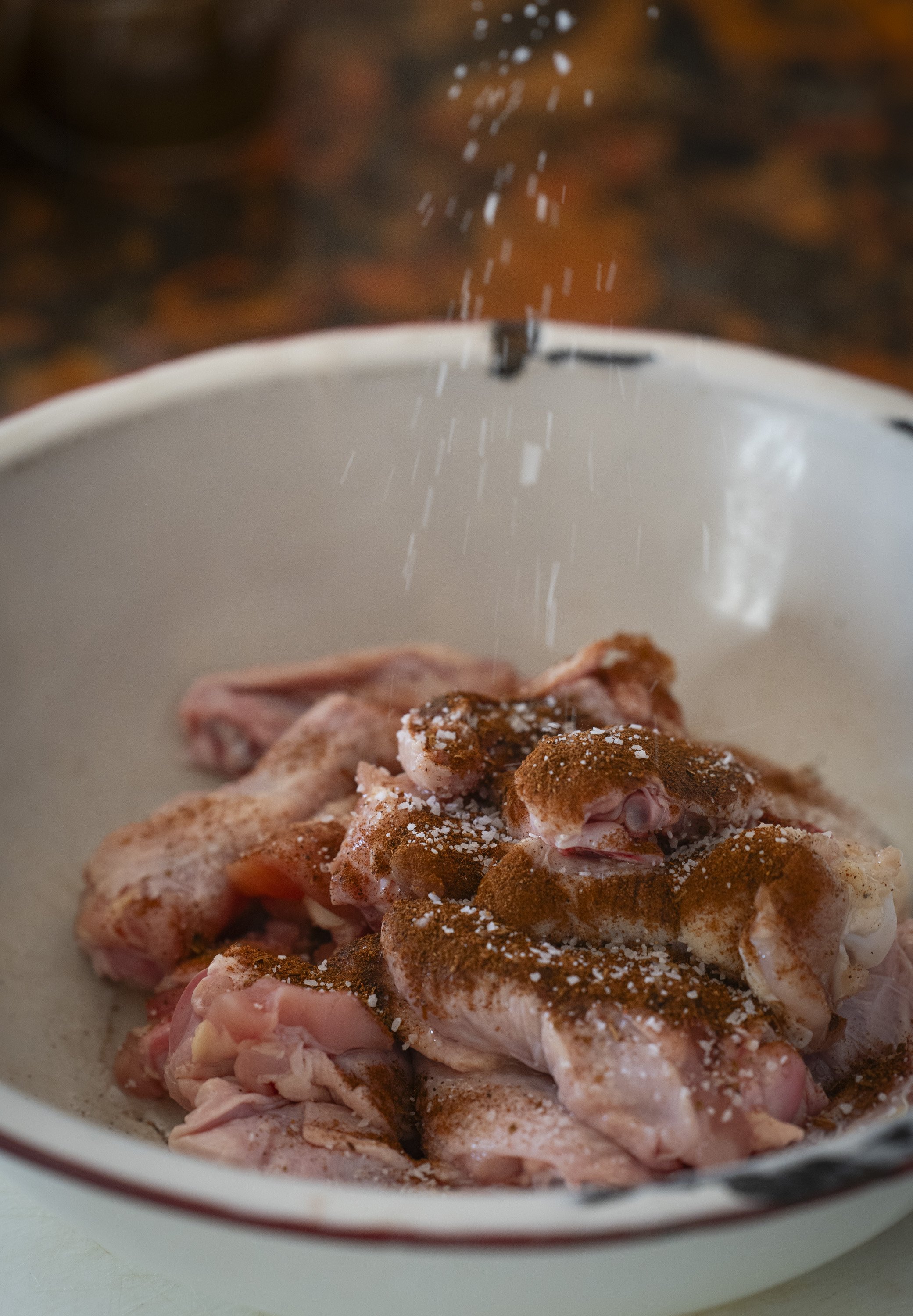
Mild But Mighty Crispy Chicken Wings
I could run about three dozen local spice blends on rotation with this recipe, including Gneis Spice’s Adobo Southwestern Mix, Skordo’s Baja Spice Mix by Central Provisions, and Captain Mowatt’s Big Lou’s Diamond Island Spice. But chicken wings remind me of my son because he’ll eat platefuls, and Gryffon Ridge’s Senor Pistole’s Mild Chile Seasoning is his favorite. It’s mild, so I serve these with a spicier dipping sauce like Chipotle Ranch.
Serves 4-6 as an appetizer
2 pounds chicken wings, cut into wingettes and drumettes
2 tablespoons mild chile spice mix
2 teaspoons kosher salt
1 teaspoon granulated sugar
2 tablespoons neutral vegetable oil, like canola or grapeseed
3 tablespoons baking powder
Preheat the oven to 400 degrees. Set a rack in a large baking pan.
Use a paper towel to dry chicken wings completely.
Combine the spice mix, salt and sugar in a small bowl.
Place the wings in a large bowl. Add the oil and stir to coat. Sprinkle half of the spice mix over the wings and stir well to distribute the spices. Sprinkle the baking powder and the remaining spice mix over the wings. Mix well so that all of the wings are evenly coated.
Spread out the dressed wings on the rack in the pan, making sure none are touching. Slide the pan into the hot oven and bake for 30 minutes. Use tongs to flip the wings over. Continue cooking until the wings are very crispy, 12-15 minutes more.
Serve hot.
Chipotle Ranch Dipping Sauce
When I buy a can of chipotle chiles in adobo. I immediately dump the contents into my food processor and pulse them until smooth. I divvy up the puree into the slots of an ice cube tray, and retrieve frozen cubes whenever I need them.
Makes 2 cups
1 cup plain Greek yogurt
1 cup sour cream
2 tablespoons chipotle chiles in adobo
2 tablespoons lime juice
2 tablespoons very finely chopped cilantro
1 teaspoon garlic powder
½ teaspoon dried dill
½ teaspoon kosher salt
Combine all the ingredients in a medium bowl. Cover and refrigerate for 30 minutes. Serve the sauce with the wings.
Comments are not available on this story. Read more about why we allow commenting on some stories and not on others.
We believe it's important to offer commenting on certain stories as a benefit to our readers. At its best, our comments sections can be a productive platform for readers to engage with our journalism, offer thoughts on coverage and issues, and drive conversation in a respectful, solutions-based way. It's a form of open discourse that can be useful to our community, public officials, journalists and others.
We do not enable comments on everything — exceptions include most crime stories, and coverage involving personal tragedy or sensitive issues that invite personal attacks instead of thoughtful discussion.
You can read more here about our commenting policy and terms of use. More information is also found on our FAQs.
Show less